A ROLLING STONE, PATIENTLY GATHERING MOSS

Posted on May 9th, 2016 by Nader Tehrani

Posted under: Things We Like

as_189_d0

Entering the work of Adam Silverman

Nader Tehrani, 2016

It is always comforting to be able to enter into someone’s work –to make it legible, available, and accessible. And yet, much of the substance of art is to resist easy entry, if only to defer consumption on the one hand, or at least to delay it in the service of the many forms of cognition that art can release. In this delay, one can see a form of redemption, something that can challenge, produce new forms of knowledge, or even just tweak our subjectivity. Coming from the architectural realm, I will invariably slip into interpretations that are biased by my disciplinary predispositions; it may not hurt that Adam Silverman comes from a common background, but that would also limit the reading in the context of his panoramic capacity. The work of Silverman denies the immediacy of access, deferring meaning in any strict sense to capture the attention of its audience in a state of anticipation, beckoning readings of his artifacts in a delicate suspense between objects and the processes that make them come to life.

Silverman emerged from the arts into architecture, but then took a turn towards the world of apparel, and not without significant success. His eventual departure from XLARGE, the clothing company he co-founded, to the realm of pottery and ceramics would seem like a complete reversal of direction. However, if all these disciplines suggest media that are substantially different, they all come together in an investment in “making” as an intellectual enterprise. Maybe the one difference that pottery offered Silverman was the element of personal control: the power to calibrate the content of his work, while patiently building its audience as part of the act of making. If the biographical is not a convincing route from which to map this trajectory, then what it demonstrates, at least, is a protean sensibility that is able to navigate questions of materiality, fabrication and the means and methods that each chapter in his life has brought to him. Though the varied media in which he has worked have their own instrumentality, one can also see the way in which certain themes may be translated from one to the other: namely, the way in which the idea of structure and surface establish a dialogue through each art form. While each medium will offer a radically different set of technical constraints, they come together in an intellectual dialogue that Silverman weaves together across time.
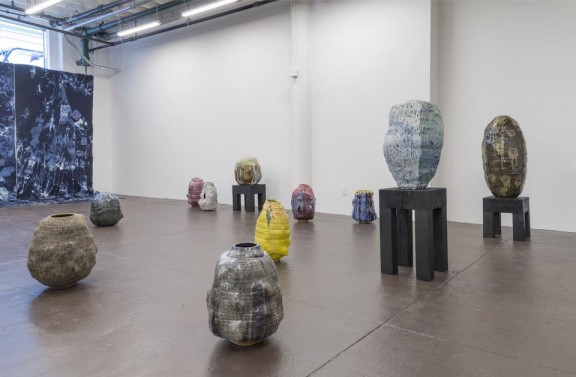
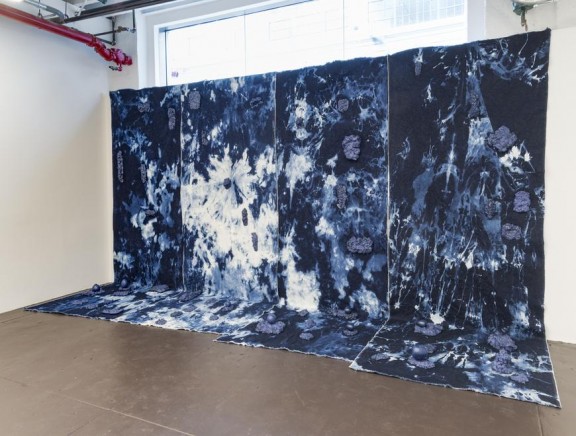
Silverman_Ground_Control_070

Silverman_Untitled_FB22697_033

If the discipline of architecture has always required a mediated relationship to the things we build –by way of models, drawings, and mockups, the realm of apparel bridges the gap between the meticulous control of the tailor on the one hand, and the advent of mass production on the other. In his transition to pottery, the entire relation to industry, collaboration and external constraints are somehow reframed, as he, himself focuses on guiding the challenges of building through the internalities of the medium itself—by way of the hand, the kiln, and the material composition of clay as foundation. Effectively, the trajectory brings him back to the irreducible aspects of a medium: spinning, firing, and the post-production aspects of surface manipulation, all elements of production that can become the basis of a patient inquiry.

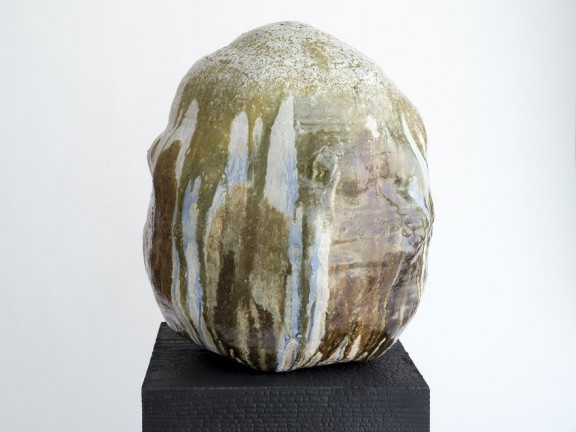
In pottery, spinning offers the centrifugal inevitability of a figure in the round; it also produces constraints that guide proportion, shape and reach. However, maybe more importantly, it defines the certainty of an objet-type around which Silverman can experiment; it’s platonic clarity and archetypical qualities are, at once, pure, recognizable and incontestable. They neither offer resistance, nor need for elaboration, at least as a point of departure. From there on, it is pure warfare and uncertainty; with mallets, baseballs bats and fists, Silverman unleashes his own force onto the orbs he has handled with such care, pushing them just short of their yield point. Then, added layers of clay, varied in thickness and color are applied onto the bruised foundational shell, melding into its constitution. Silverman produces a tension between the configuration of the surface and the figure of the vessel such that the qualities of the former begin to challenge the structure of the latter.

as_172_a0

It is here that his platonic geometries are confronted with the advent of nature, by way of artifice: through a layered process of glazing and firing, Silverman dissimulates the effects of perfection that are an innate part of his craft. Each glaze and chemical admixture has different results, some more or less desirable, and yet they all play a critical part in the game of improvisation, systemic play, and an outcome that has as much to do with the identification of an uncanny artifact as its stealth presence –camouflaged as a geological mass. That nature should serve as an inspiration for art is nothing new, since many eras have grappled with seeing the world through varied lenses, groping with vision through mimesis, perspective, color, and figuration. But if each process involves its own techniques, then they also are in service of a representational aim. Instead, Silverman takes nature as geological substance, and the systemic pulverization of his surfaces, the crafting of sedimentation, and the erosion of the geographic terrain on which he works is not so much in conversation with representational goals (even if that is it’s delightful by-product), but rather a recreation of natural phenomena through an alchemic process. The tension between artifice and nature, then, is one of the curious and productive aspects of his process; in turn, each object can be seen as an index of the experimental protocols that they undergo. In a medium that is, more often than not, part of a “kind and gentle” culture of craft, it is also a refreshing advent to witness the punishment and brutality of a process that can yield aesthetic reappraisal –tipping it into critical discourse.
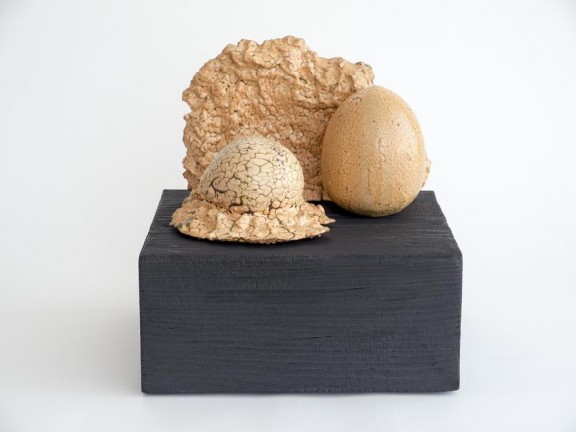
as_219_a0

Adam Silverman’s investment is in the process of working his process. He shows no anxiety of getting ‘there’, as his pleasure is precisely in the incertitude of the working path. Though the results may vary and even fail, his greatest moments come at the threshold of collapse. He is neither married to medium, nor to the singularity of discipline; however, he is adopting and internalizing the constraints of each to its maximum potential. As he travels from one art form to another, his ceramic orbs are akin to rolling stones, but with the luxury of gathering the moss of the varied disciplines he carries as part of his kit of intellectual tools.

Read more about Silverman’s current exhibit below.

Comments Off on A ROLLING STONE, PATIENTLY GATHERING MOSS
A HOUSE FOR HEJDUK

Posted on February 11th, 2016 by Nader Tehrani

Posted under: Press

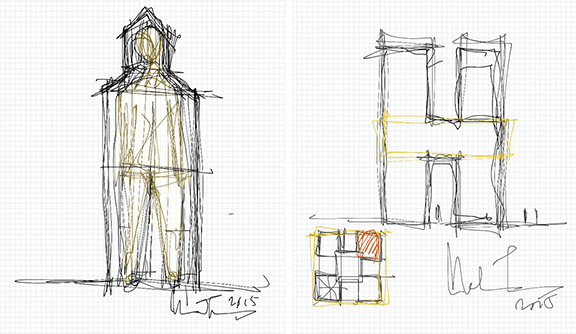
The German magazine [ark] recently asked Chris Precht, Krysztof Ingarden, and I: “for whom (architect, famous star e.g.) would your office like to build a house and what would it look like?”

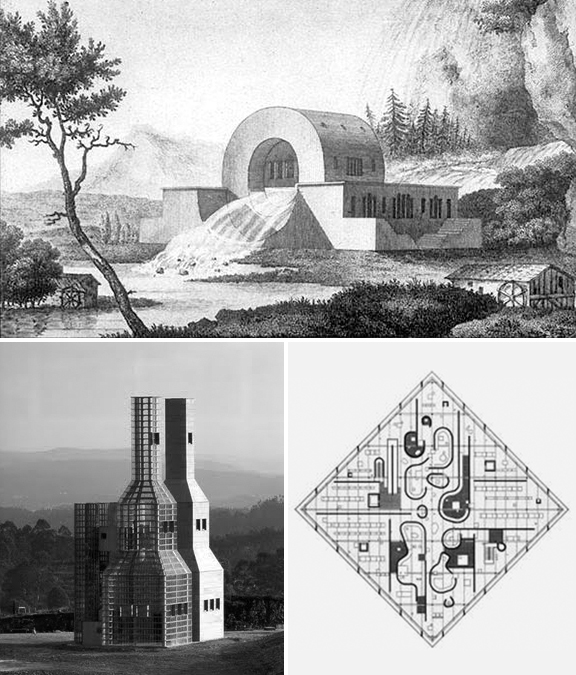
Designing a house for an individual is quite often misconstrued as requiring the kind of specification that is becoming of a suit, as if the house is made to ‘fit’. Ledoux raised the stakes through a series of polemical proposals under the banner of “architecture parlante”, invoking the idea that architecture speaks, communicates, embodies as part of a broader social contract. Between these two realms sits the generic found object –resilient, timeless, flexible, and trans-historical.

These divergent realms capture attitudes displayed by John Hejduk in the many chapters that defined his intellectual preoccupations, at once a deeply introspective poet, but also a discursive pedagogue whose didactic calisthenics defined not only an era, but a way of debating form, organization, and an architect’s education as part of a collective discourse.

hejduk blog-final

In these two sketches, I capture two modalities of that thinking: the first an industrial shed, encasing and memorializing his monumental figure, and the second, the paradigmatic exercise of nine-square grid, transformed three-dimensionally to suggest not only the configurative play of typological transformations based on monolithic aggregations, but also the building of the colossal figure that befits such a character: H.

John Hejduk House 1-blog4

Comments Off on A HOUSE FOR HEJDUK

‘drawing ambience’ opens tomorrow at the Cooper Union

Posted on October 12th, 2015 by Nader Tehrani

Posted under: Academic, Installations + Exhibitions, The Cooper Union

Opening tomorrow evening in the Arthur A. Houghton Jr. Gallery. Details here.

‘Ambient Speculation’

As I landed in London in late 1986, I felt I had just missed the party. With the aura of some of the greatest hands of this exhibition still lingering in “the bar,” a good many of them had already packed their bags and moved on to greener pastures. Not only had the economy picked up in Rotterdam and Paris – among other places – but the political support that the voice of architecture was gaining in the European sphere was having a significant impact on the shape of things to come, providing the opportunity for the ambient speculation of this generation to be translated into physical reality. The rest is history, and we are still living out an extension of that narrative some three decades later, but the preamble to the political and economic turnaround is probably the telltale part of this story.

In the early 1970’s, Alvin Boyarsky’s Architectural Association was marked by a sudden internationalization of the institution, at a time when the British Government could no longer subsidize the school. This coincided with a broader cultural shift toward the alignment of economies across borders and time zones – which, in turn, proved a fecund opportunity to make the AA a platform for the architect as global citizen. If economic pressures seemed to be the reason for the urgencies of the moment, they were not cast as limitations. This was perhaps the most productive historic moment of the AA, when a new intellectual opportunism was found in the generative moment of architectural inception: the drawing.

OMA

Drawing by OMA, circa 1984

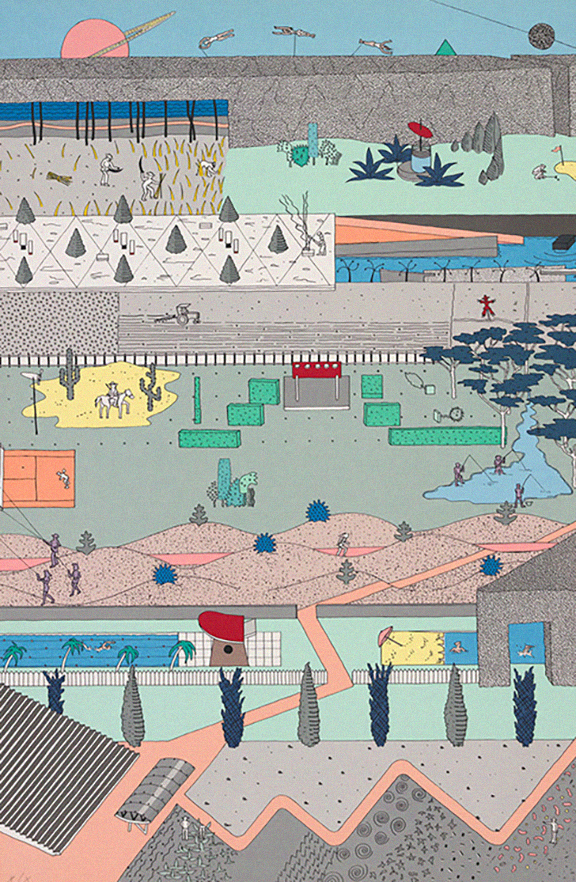
Significantly, the drawings presented here have a great range: from the hand sketch to the meticulously constructed, from the poetic to the realistic, and from the utopic to the polemical. The heterogeneity of media deployed suggests the richness of the environment within which these architects were operating. If some drawings were entrenched in the theater of real competitions, they were nonetheless deeply invested in architectural ideas that could produce new forms of knowledge. If those ideas seemed distant, theoretically hermetic, or relegated to the realm of “paper architecture” at the time, then the turn of events in subsequent years has proven to make those very projections both the beneficiaries and victims of reality. For this reason, we not only see these images as prophetic in their ability to be translated beyond the terms of their medium, but, in fact, as instruments in their own right. The drawings speak, they cast shadows, and they emanate vastly different ideological predispositions. Between representation and generation, the drawings oscillate from conditions known to conditions unprecedented. Within this space of speculation, they also suggest how the drawing, as instrument, positions itself within discourse – and Boyarsky understood the power of that agency.

Boyarsky’s curatorial ingenuity did not come so much from the tailoring of a new curriculum, but rather the assembly and overlay of critical architectural voices, most often in a symphony of dissonance. In the context of this exhibition those voices take shape with the alignment of the mind and hand through a series of architectural projections that see the instrumentality of drawing as perhaps the most potent political act of architecture. The drawings are neither subservient to building, nor marginal to them; they underline that the practice of architecture is rooted in a cultural process that begins long before the project at hand, and ends long after we are all gone. Boyarsky’s pedagogical strategy may also serve us well today with the recognition that a powerful school of thought is not necessarily rooted in the control of the singular voice, but rather the building up of a discursive platform with the certainty of uncertain results.

Nader Tehrani, 2015

Dean, The Irwin S. Chanin School of Architecture


Comments Off on ‘drawing ambience’ opens tomorrow at the Cooper Union

THE INDISCRETIONS OF MIES

Posted on September 28th, 2015 by Nader Tehrani

Posted under: _Daniels Building, Things We Like

siza in Toronto

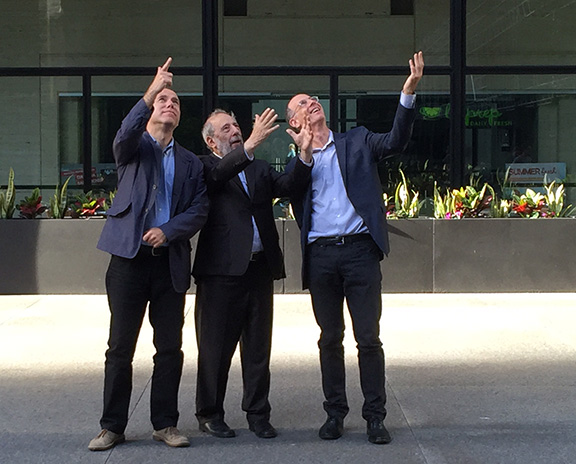
Álvaro Siza Vieira visits the Toronto Dominion Center, guided by Dean Richard Sommer and Professor Robert Levit.

As he points to the cornice line, Siza sees the reflection of the Banking Hall at the base of the building, noting the flat coffered ceiling, and the entasis of beams which enable its flush profile. Commenting on the maximum moment of span, he acknowledged the play of structural forces that invariably put the acclaimed Modernist into a dizzying predicament, forcing him to make a difficult choice at a critical point in his career –between the optimization of steel and the reduction of visual stimulus.

Imagining the hidden indiscretions of Mies, Siza asks his guides: What came first, the entasis, or the flat ceiling?


Comments Off on THE INDISCRETIONS OF MIES

THE DAY OF ELKHOURY

Posted on September 24th, 2015 by Nader Tehrani

Posted under: Things We Like

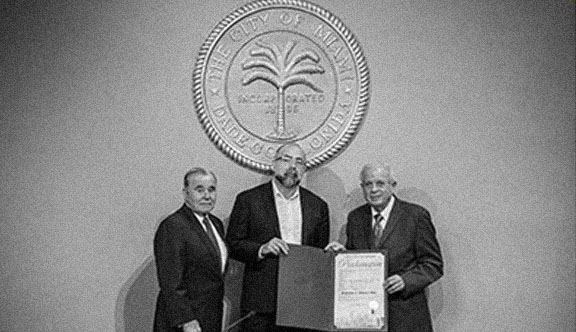
The City of Miami has proclaimed September 24 “Rodolphe el-Khoury Day”! Congratulations Friend!

City of Miami Proclamation "Rodolphe el-Khoury Day"

Comments Off on THE DAY OF ELKHOURY

Triptych! Hat-Trick! Triad! Troika! Three-some!
Ménage à trois!

Posted on September 9th, 2015 by Nader Tehrani

Posted under: Awards, Press

download

NADAAA is ranked number 1 in Design for the third year in a row! and 16th overall in Architect Magazine’s 2015 Top 50.

“the projects exhibited a very unique, sincere, and sophisticated voice… made me feel convinced and happy that architecture with a capital ‘A’ is alive and well.”

– 2015 Design Judge


Comments Off on Triptych! Hat-Trick! Triad! Troika! Three-some!
Ménage à trois!

Final Opportunity to See Urban Timber at BSA

Posted on September 28th, 2014 by Nader Tehrani

Posted under: Events, Installations + Exhibitions, Things We Like

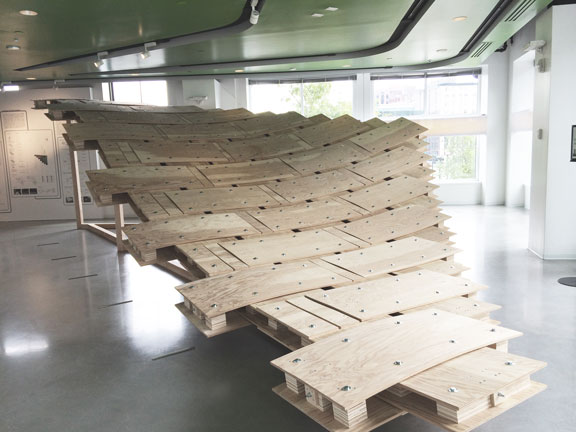
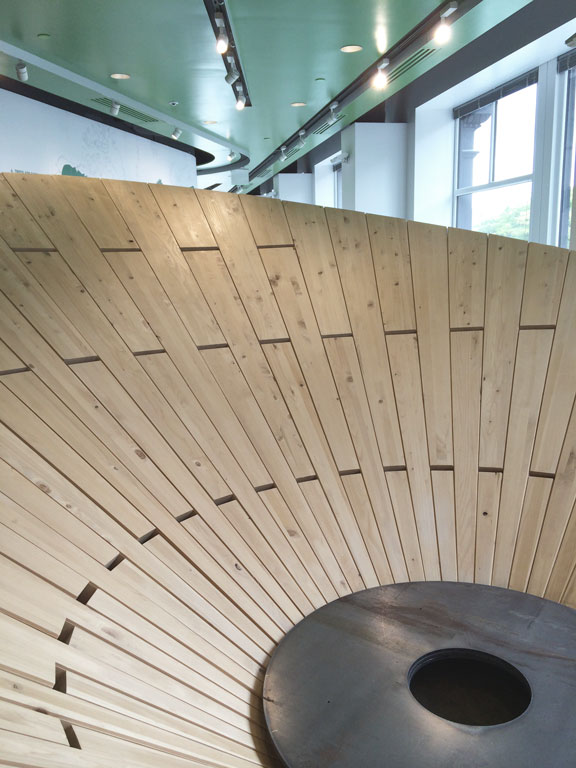
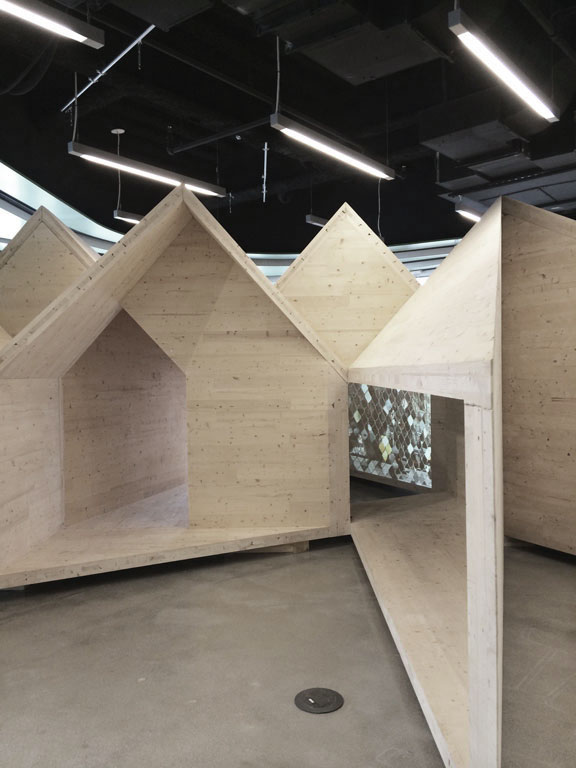
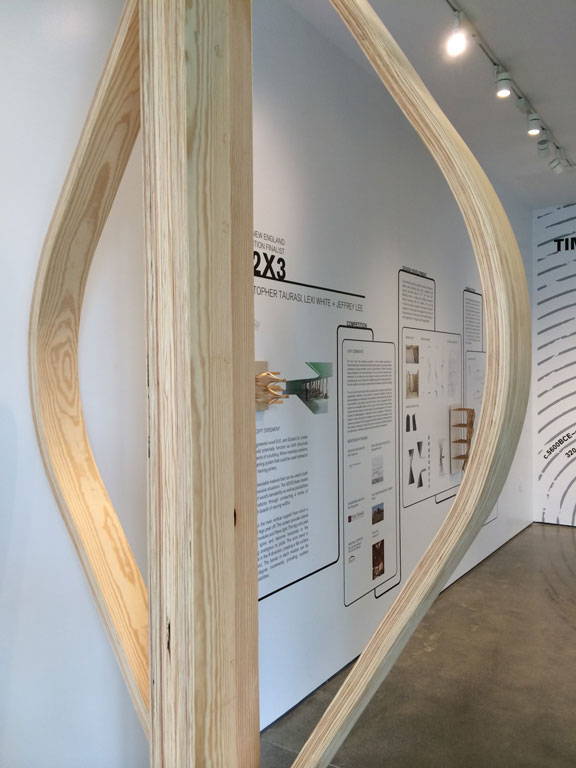
A final opportunity to view Urban Timber, in what is the final week of the exhibition at the BSA Space. Curated and organized by Yugon Kim, the exhibit was the result of a competition, resulting in dozens of submissions. Targeting innovative ways of building with wood, the agenda of the competition was to assemble four design teams to develop their proposal with the guidance of architectural mentors —Alan Organschi, Alex Anmahian, Andrew Waugh, and me, Nader Tehrani– towards full scale mock-ups that demonstrate through making. With the four projects, also an expansive overview of the uses of wood in history, new means and methods developed in recent times and the range of products that are the result of the wood industry. Not to be missed!

I helped mentor Christina Nguyen and Sean Gaffney, two brilliant young designers who took on the structural challenge of fabricating laminated plywood slabs –post-tensioned– that could take on variable geometries to construct a landscape: a new ground. Also participant to their project, C W Keller Associates, who have done amazing work with us in the past, with Steven Holl and Mark Goulthorpe.

http://www.architects.org/bsaspace/exhibitions/urban-timber-seed-city


urbantimber-2014

Duck-Work: Sean Gaffney, Christina Nguyen


urbantimber2-2014

Coopered Column: Timothy Olson


urbantimber3-2014

Four Corners: Yasmin Vobis, Aaron Forest, Ultramoderne


urbantimber4-2014

M2X3: Christopher Taurasi, Lexi White, Jeffrey Lee


Comments Off on Final Opportunity to See Urban Timber at BSA

Meejin Yoon Finalist for Dudley Art Commission

Posted on March 3rd, 2014 by Nader Tehrani

Posted under: Things We Like

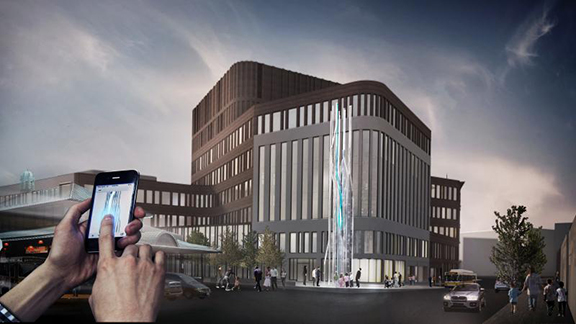
Meejin wins the art commission for the Dudley Municipal Center and in turn, gives the public a platform to engage, interact and put their content onto the public stage!  Her work, part of Howeler + Yoon Architecture and MY Studio, have always sought to include the public as an element of the experience and not just as a viewer.  We are excited to see the final installation which is only a couple blocks from NADAAA’s studio.

See full article on the project and finalists here.

meejindudleyart

Image as found on www.publicartboston.com

Comments Off on Meejin Yoon Finalist for Dudley Art Commission

el Bulli at MIT

Posted on February 18th, 2014 by Nader Tehrani

Posted under: Events, Things We Like

Ferran Adria and his crew of el Bulli were at MIT last week. Working with the master plan developed by Enric Ruiz Geli, the MIT team comprised of Anton Garcia Abril (our coordinator) and myself, along with Cristina Parreno, Lorena Bello, Kent Larson, Meejin Yoon, Neri Oxman, we developed a series of interventions on the el Bulli site, on the coast of southern Spain, in Cala Montjoi.

The Spanish government has approved plans for the development of the site, and the MIT team has contributed a series of installations, protocols, and spaces that speak to the ethos of el Bulli– framing the relationship between experimentation, art and the senses.

After the MIT charrette, Adria opened his exhibit at the Museum of Science with an extraordinary feast of gastronomical experiments.

The next steps are still to be developed. Stay tuned!

elbulli01

elbulli02
Top image: Ferran Adria En Construcion. El Palais Semanal. February 2014. p32-43.

Comments Off on el Bulli at MIT

Working out of the Box

Posted on February 3rd, 2014 by Nader Tehrani

Posted under: Things We Like

Archinect’s Working out of the Box series previously featured Moneta Ho, a classic MIT grad, who has taken her architectural knowledge base as a platform for other parallel practices beyond the realm of buildings.  Along with other peers, such as Matthew Trimble (Radlab founder), Axel Kilian and Carl Lostritto, MIT continues to imagine alternative futures for architectural applications.  Read more on Archinect!
monetaho2

Image via Archinect

Comments Off on Working out of the Box