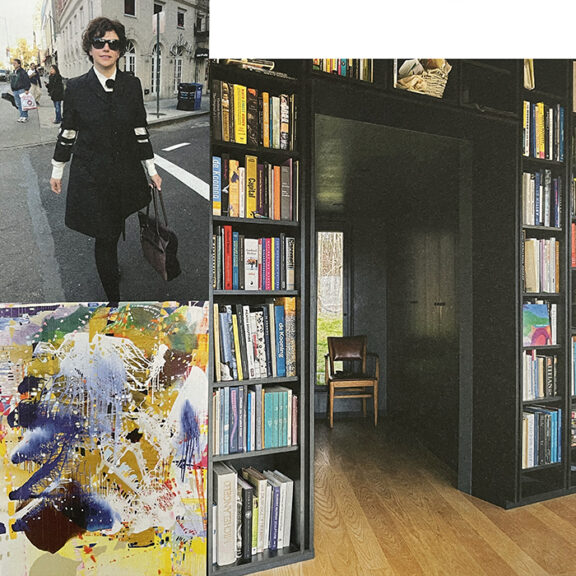
Our dear friend Carl d’Alvia’s tribute to Jackie Saccoccio, and Jackie’s last gift to Carl
Upstate Diary documents the life, love, and art shared by this couple, and in turn, the house they built together. In dialogue with Laurie Simmons, Carl speaks to the life they shared, the challenges of this project, and the friendships that survive. With love from all of us to Carl, Jackie, and Maddalena!
A tribute to Michael Sorkin requires words, the very instruments he crafted with meticulous discipline and mischievous delight—alas, something none of us can do justice to with any measure of parity.
I followed Sorkin’s thinking from his early days at The Village Voice, where he served as its architectural critic, the very same years he taught at The Irwin S. Chanin School of Architecture at The Cooper Union. I was still a student at the time, but his articles were an event to which we all looked forward, each taking on the canons and conventions of the discipline. For a decade, from 1983 to 1993, he taught alongside all the classic thinkers who we know to be The Cooper Union—among them Diana Agrest, Raimund Abraham, Diane Lewis, Anthony Candido, Richard Henderson, Michael Webb, Ricardo Scofidio and of course the dean, John Hejduk. While he taught in the second and fourth year studios, as well as Thesis, he was already beginning to build his intellectual arsenal around the theme of urbanism, the very topic that launched his first semester at our school—a seminar on Town Planning. His focus on the environment, sustainability, the politics of public space and urban culture, as well as his critique of modernist urban planning became the cornerstone of his efforts to come—both in teaching and his practice, Terreform and Michael Sorkin Studio.
A graduate of MIT in 1974, Sorkin’s thesis, titled “Some Impressions of the Department,” was a reflection not only on MIT pedagogy, but on architectural education in general. His interest in teaching methodologies led him eventually to The Cooper Union, where the “education of an architect” was the very preoccupation of the school. His continued emphasis on pedagogy led to his many academic appointments, among them at Harvard’s GSD, Yale, the Architectural Association and, of course, The City College of New York. The work of his own students was a testament to his legacy. With the new Cooper Union Student Work Collection database, some of it can fortunately be accessed here.
An architect, critic, teacher and polemicist, Sorkin understood the delicate and complicated relationship between images and words. His practice displayed this dual commitment through a preoccupation with representation at large, both visual and literary. His architectural projects were composed as polemics, imagining projected worlds, visions and futures that defied the very conventions with which he was confronted in the profession. Still, it was his command of language and mastery of rhetoric that made him the eloquent architect he became. Words flowed seemingly effortlessly with incisive precision, belying the actual intellectual efforts that preceded his theoretical labor. He reminded us that ideas come in many forms, but moreover that they do not exist outside of the medium in which they are communicated. His words were the instruments of his ideas and he demonstrated that his ideas relied on the very lexicon he was able to manipulate. He made us love language and the allusive nature of meanings, references, and the worlds of associations they impart.
A champion of the city and the social vocation of architecture, Sorkin’s life was cut short, the result of complications from the Coronavirus; ironically, the very phenomenon that has taken our access away from the city, and our ability to congregate, is the very same thing that has led us back to language to unite us in communication. Both of these worlds belong to Michael Sorkin, and lamentably, we will not be able to enjoy his last words on the city, evacuated as we know it today.
Nader Tehrani
Also shared by The Cooper Union HERE. Also shared by Architectural Record HERE.
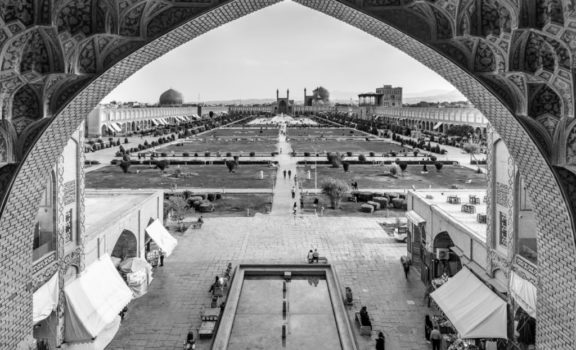
Naqsh-e Jahan Square in Isfahan, Iran. (Amirpashaei/Wikimedia)
In a manner befitting of the current American presidency, Donald Trump’s casual tweet “….we have targeted 52 Iranian sites (representing the 52 American hostages taken by Iran many years ago), some at a very high level & important to Iran & the Iranian culture, and those targets, and Iran itself, WILL BE HIT VERY FAST AND VERY HARD. The USA wants no more threats!” aired some forty-eight hours ago. In fact, the president’s threat does not merit further comment beyond what has been articulated widely in the press: to destroy cultural sites would be an illegal act, and moreover a war crime. Trump’s threat has already been retracted by the Pentagon in what is, by now, a common pattern of contradictory communications so endemic of this administration.
The fifty-two target sites in Iran are claimed to be symbolically linked to the fifty-two American citizens that Iran held hostage in 1979, as if those individuals asked for retribution after forty years. For those of us who remember the hostage crisis and the 444 days of suffering it created, the trauma was real and the political implications have remained intact for over forty years. But for those who remember a generation prior, we are reminded of the infamous 1953 American intervention in Iran that sowed the seeds of systematic mistrust, when a U.S. administration participated in a coup that overthrew a democratically elected Mossadegh to reinstate the Shah’s dictatorship that would guarantee American access to oil. Indeed, the Iranian Revolution may have crested in 1979, but its roots can be linked to an earlier upheaval where the American involvement cannot be understated. As the White House scrambles to justify recent actions, we are wise to recall that the direct U.S. involvement and complicity in the creation and destruction of nations is not restricted to the Iranian experience. Iraq is now reliving its own trauma, the result of rogue American judgment and the coercion of a prior U.S. administration, whose facts were not only flawed but intentions clearly motivated by an a priori decision to occupy a foreign land without any appeal to the truth.
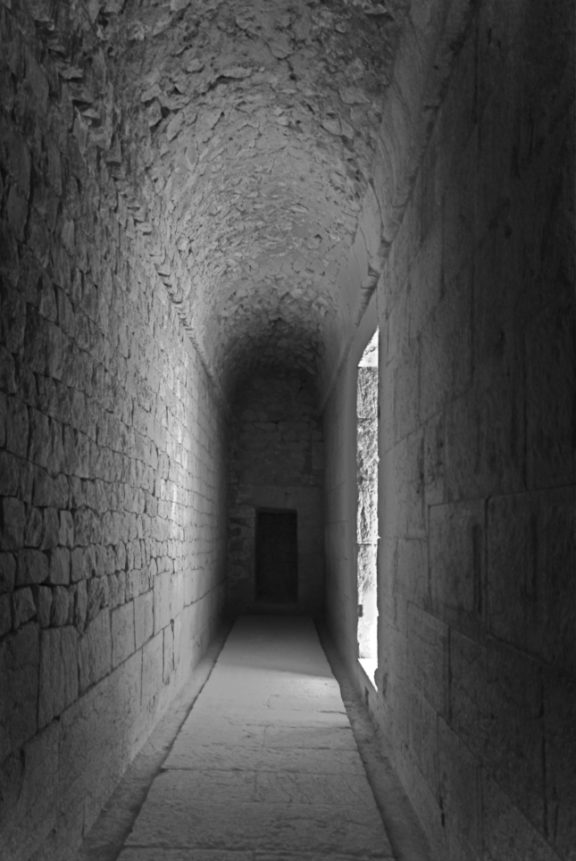
Inside of a qanat at the Temple of Anahita in Iran. (youngrobv/Flickr)
The more significant question that underlies this premise is to what degree the United States can be held accountable in the International Court of Justice in the Hague for its crimes. The United States is not a State Party to the Rome Statute which founded the International Criminal Court. By refusing to participate, the U.S. also sees itself as exempt from the international system that attempts to bring to justice the perpetrators of war crimes, crimes against humanity, and genocide, when national courts are unable or unwilling to do so. Insofar as the destruction of cultural sites continues to fall under these protective measures of the World Court, then the aim of this piece is also to demonstrate a broader link between cultural heritage, foreign policy, and a system of governance on which we can rely for checks and balances, both national and international. Though not visible at first sight, the environmental policies that drive foreign affairs is also at the center of this narrative, making important links between the American way of life and its reliance of fossil fuels, the very factor that is coming to challenge how we view the environment, whether in cultural or ecological terms.
A rudimentary scan through the various heritage sites in Iran unearths a wide variety of cultural significance, protected by both World and National Heritage registers, identifying the very diversity of this region’s history. Indeed, even if the current regime’s theocracy has only enjoyed about forty years of leadership, Iran is composed of many people, tribes, and religions including Zoroastrians, Christians, Jewish, Bahai, and of course Muslims, both Sunni and Shiite. The country’s cities are known for the many contributions they have made to art, science, and architecture, as made apparent through works of infrastructure, urbanism, landscape, architecture, sustainability, and building technologies. The “Qanat” of Gonabad is estimated to be 2700 years old and an early invention of an underground aqueduct, an infrastructural system designed for arid climates –allowing provisions for agriculture, bathing, drinking water, and human survival. In turn, the urban promenade that binds Naqshe Jahan Square, the Bazaar, and the Si-o-se-pol Bridge on the Khaju River in Isfahan forms one of the most significant examples of urban design known to the discipline.
The housing fabric of Kashan and their contained landscapes, “Hayats” and “Baghs”, are the basis for some of the early doctrines of landscape architecture. The wind-catching “Badgir” towers of the Yazd houses are some of the earliest examples of sustainable cooling strategies of this region’s architecture. Of course, beyond public monuments like the well-known Shah and Sheikh Lotfollah Mosques, there are many other classic icons, like the Soltanieh Mosque, whose double-shell dome is one of the most innovative engineering feats of its time, built some one hundred years prior to Brunelleschi’s in Florence. Some of the earlier passages of the region’s heritage go back to Antiquities, and Pasargad, Persepolis, and the cube of Zoroaster take us back to a time when Persia’s international relations formed a completely different dynamic with Greece. Of that era, the Cyrus Cylinder, dating back to the 6th century B.C. remains maybe one of the earliest artifacts to document the idea of a unified state under higher governance with a direct appeal to human rights as part of its contribution to humanity. Thus, while examining the current political predicaments of our moment, it is important to look at this culture’s history, with over 3000 years of documented heritage, to establish how the diversity of its people come to contribute to the legacy of world culture, and indeed, part of its living history.
While few will challenge American generosity in the Second World War and its seminal role in building an alliance that addressed war crimes that defined the 20th Century, the White House’s self-entitlement today is a means to escape the very standards of law and democracy that stoke our national pride and the civil values foundational to American society. Ironically, this sense of entitlement is also foundational to what has allowed the Trump administration to relieve itself of accountability for other questionable actions over the past three years—a factor that prior generations of American leaders could neither have calculated nor fathomed. Sadly, this administration’s hubris is now part of this nation’s ethos; reversing it will be a task to reckon with in the coming years, if not decades, and it will fall on the collective shoulders of the entire nation to address.
As we ponder the American omnipresence in the Middle East, Australia burns with a vengeance, a disaster seemingly unrelated to Iran in both cause and effect. And while it burns, the country’s Prime Minister returns from a family vacation in Hawaii, only after being compelled by mounting political pressure, too little too late. With all the scientific evidence behind the sources of global warming and its impact on climate change, Prime Minister Morrison remains unswerving in his commitment to the investments of fossil fuels, coal and the many policies his party holds dear in its commitment to profit. In this sense, Morrison follows a path no different than that of his American cohorts, whose military presence in Iran, Iraq, Kuwait, Saudi Arabia, among other places in the Middle East has defined American foreign policy for decades. Beyond the social, economic, and cultural upheaval, industry-first policies have produced the injustice of climate inequity, the very phenomenon that stands to compromise not so much humanity (although it will) but the ecosystems, flora, and fauna that do not have the legal instruments to protect themselves. Thus, the American immunity to the World Court is no small issue, because the scale of its ramifications can only be measured in relation to global forces, not merely national ones. It will only be a matter of time when the balance of world economies in Asia take a turn towards other super-powers whose might will define America’s position in the future world order. However, the imposition of their reign may not be paired with the promise of democracy, equity, or a civil society; it is at that junction when we, as Americans, will regret to have abandoned the very values for which we would want to be known today and for history to have recorded for the future. By absolving ourselves of international responsibilities in the World Court today, the US guarantees precedence for others to do the same in the future. Moreover, the current U.S. administration’s abandonment of collaborative dialogue with the United Nations, UNESCO, The Paris Accord and other world bodies only exacerbates the possibilities of other rogue states, whose strategic interests in the future might be to establish their primacy over the greater good of a global community.
The Ka’bah-e Zardusht, or Cube of Zoroaster, in Marvdasht, Iran. (Diego Delso/Wikimedia)
Trump’s disregard for democratic institutions, collective processes, and legal frameworks is only radicalized by his penchant to isolate individuals or smaller interest groups as a basis for assault. His current bombast on Iran is no different from what we have witnessed him unleash on African Americans, women, Mexican immigrants, the LBGTQ community, and many others whose diverse backgrounds, belief systems and ways of life differ from his own. Within this context, the destruction of cultural heritage sites can only be interpreted as a targeted attack on the very significance of cultural diversity, and the role that monuments play in the representation of a people.
I am reminded of the vacuous niches that once held the monuments of Bamiyan. Magnificent Buddhas were destroyed in 2001 by the Taliban in an act of brutality, using cultural artifacts as pawns to eviscerate an ‘other’ culture than that of their own. Among other things, the Rome Statute was put in place precisely to protect from such eventualities. Trump’s prejudicial pattern of destruction is perhaps even more sinister because it is inflicted without pause. Some have misperceived Trump’s thuggish mockery of Greta Thunberg—an enlightened embodiment of the next generation—as an assault on an individual. Indeed, it was, but it was also a concurrent assault on the collective: on civil society, on a cultural heritage, on critical discourse, and in the age of Thunberg, on the global environment. Within this context, it is virtually implausible to make a case for the protection of cultural heritage without reinforcing the very foundations on which they rely: A global environment that is sustainable, and a faith in governance and policies of stewardship that can uphold it.
The individual and the collective take on a different resonance in the context of Trump as a person and the system of governance that supports him. It is completely understandable that an individual may not be able to comprehend the basic tenets of fairness, decency or democracy; less digestible is witnessing an entire political party that shuts its eyes to a pattern of behavior that has demonstrated itself to be no accident. There may be no larger strategy to this president’s actions, but there is nothing unpremeditated: Trump behaves the way he does by design. More alarmingly, an entire Republican party behind him, composed of hundreds of individual leaders, support his illegal actions, whether in enunciated defense or silence. Without a restoration of democracy, in the way in which this country’s founders had imagined, it is hard to conceive how its politicians can advance collective agendas that transcend the terms of party lines, and moreover world politics, whose relevance to the United States should be heeded.
The Iranian Revolution occurred in 1979, and its current regime is well-aware of its statute of limitations; with a population of 81 million people –that is, 43 million more than the time of the revolution—the Iranian government understands that its youthful majority can only thrive with a completely different interaction with the international sphere. Despite its acrimony with the West, the achievements of the nuclear deal set in place with the former U.S. administration demonstrated wisdom from both the East and the West. Gain can only come from good communication, collaboration and an appeal to an expanded discursive field. Here, I would argue, the nuclear deal (JCPOA) was not actually the only target, but the means to develop a discussion that could be temporally transported to future administrations: effectively to build better collaborations over time.
Ironically, the Mullahs clearly understood the impending dangers of obsolescence; in order to survive, they could no longer isolate themselves from the world. The current isolationist doctrine of the United States has not only alienated its conventional adversaries; recklessly, but it has also distanced itself from the very allies that hold their connection to America so dear. For America to remain relevant to these audiences, the first step will be to recognize the all-important inter-relationship between global phenomena that sees no borders. Whether considering climate change, economic equity, fair trade policies, or the mutual respect of other’s heritage, an integrated view of world interests might be the only way for securing American priorities in a meaningful way. The monuments that populate seemingly remote regions of the world are not the ‘other’ of America; they are its foundation, its source, and its reference, and once we recognize America’s diversity again, we can also re-enter the global dialogue. An understanding of shared governance may also be the only path towards a strategic plan for survival: there is no America once the global sphere is compromised beyond repair. The disengagement of these relationships can only help to obscure the many causalities that have given rise to the dire state of affairs today.
Comments Off on Cultural sites under attack in the age of unaccountability
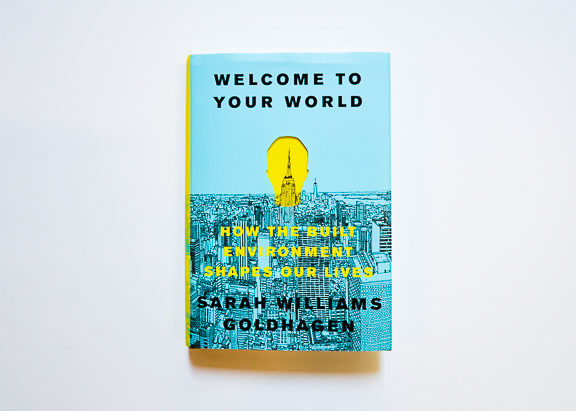
Sarah Goldhagen brilliantly prompts the allegory of “blindsight” to show how the recent findings of cognitive neuroscience and neuropsychology can become the basis for a thoroughgoing paradigm shift in the understanding and construction of the built environment. In explaining the connection between human experience and the world as an embodied phenomenon, she reconfigures the foundations of thinking that have dominated the scholarly, design and building professions. But she does more: bringing the sciences deep into the humanities, she reconceptualizes our understanding of the built environment’s profound effects on individuals, communities, and societies.
Goldhagen’s sharp eye as a design thinker maps out this new terrain through an array of specific and illuminating architectural, landscape, and urban explorations, offering examples that span ages, styles, and sensibilities. In reading this book, architects and planners will continually be asking themselves to rethink their own design practices and methodologies. Even more importantly, the tenets of the book stand to have a sweeping impact on a much broader audience of policy makers and the general public by helping us to gauge how we build, construct policy, integrate disciplines, define design agency, and produce rich and ennobling environments in a rapidly changing world around us.
Lucidly written in beautiful prose, this book will stimulate and delight professionals, students, and non-professionals alike. A must-read for all of us, there is much to learn from it!
It is with profound grief and a heavy heart that I share this communication with my students, colleagues, and alumni of The Cooper Union. Today, we lost one of the most beloved and influential voices of our community, architect and Professor Diane H. Lewis.
Diane Lewis came to The Cooper Union as a student in the Art School in 1968, transferring to Architecture in 1970, and completing her studies in 1976. Immediately upon graduation, she was awarded the Rome Prize in Architecture, making her one of the youngest members to be honored by the American Academy in Rome. Upon her return to the United States, Lewis joined the offices of Richard Meier and Partners and later, I. M. Pei and Partners where she received her early training – this, while also launching her teaching career. Initially, a professor at the University of Virginia, Lewis went on to teach as a visitor in many respected programs including Yale University, the Technical University of Berlin, the Harvard Graduate School of Design, and the University of Toronto, where she held the Frank Gehry Visiting Chair in 2006. But it was here at The Irwin S. Chanin School of Architecture that she planted her foundations as a radical and committed educator; Lewis was the first woman architect to be appointed to the full-time faculty, and later tenured in 1993. In an age when few dedicate themselves to teaching as a craft, her focus on creating a transformative space of learning will be a central part of her lasting legacy. Indeed, as much as Lewis was a product of Cooper Union, today we can look back at more than thirty years of her contributions and come to realize that we are, in fact, defined by the culture of her teaching.
As a practicing architect, Lewis set up her own office in 1983 under the banner of Diane Lewis Architects PC, and she has since led a focused and critical practice concentrating on competitions, urbanism, and built projects known for their exquisite refinement in both plan and detailing. Of those projects, the Studiolo for Colomina and Wigley, the Mews project for Professor Dworkin, and the Kent Gallery all demonstrate the nuance and skill that Lewis brought to her sense of materiality, figuration, and occasion. With a protean intellectual profile, Lewis’s work spoke to the panoramic range she held within her scope; a writer, designer, film-maker and urbanist, Lewis brought passion to her many activities, often synthesizing her investigations into the many publications she edited and authored. Her most recent book, including the work of several generations of students, Open City: Existential Urbanity is one such example, featuring not only her written work, but also her research on Neo-realist cinema, the role of the civic institution on the making of urbanity, and even book design as a central part of its argument. The practice of Diane Lewis served as a conduit for her inter-disciplinary interests, and she seamlessly navigated between professional practice, scholarly work, and her teaching projects as part of a larger commitment to the discipline. Naturally, as co-editor of the Education of an Architect, Lewis shared a vision about how the commitment to teaching was also part of a social contract to give back to society in productive ways.
Exhibited widely, including at the Cooper Hewitt Museum, the Van Alen Institute, and the Galerie Aedes in Berlin, Lewis also gained many accolades such as the John Q. Hejduk Award and nominations for the National Design Award from the Cooper Hewitt and the Daimler Chrysler Award. Diane Lewis was widely recognized as a consummate architect and professor. Loved by students, respected by professional colleagues and debated by academic peers, Lewis defined architecture with equal parts passion and erudition. In recent years, her Design IV urbanism studio was known for its often twelve-hour long final reviews – each one of them a marathon discussion of critical precision and clarified architectural thought.
On a more intimate note, I can only say that I will personally miss Diane dearly, most especially the tenacity with which she engaged in fierce architectural debate. Diane’s persevering intellect and commitment to leadership were so ever-present in the School, I can only imagine that both John Hejduk and Anthony Vidler felt her almighty strength in the administration of the school. She led the school symbolically, and when things did not go her way, she led a parallel school of thought alongside the very deans that gave rise to her platform. Her agency represents the very ethos of the key protagonists that a school would want inside its walls. She had a voice, she used it, and she led with it.
In the past days and weeks, I have been touched by the many students, alumni, and academic associates who have reached out to me inquiring about her well-being. Diane was loved by many and respected by all. She was fiercely loyal to her students, and she made no secret of her advocacy of the many friends she held dear in both personal and intellectual complicity. To that end, I can only see that this loss is shared far and wide by many. As the Dean of The Irwin S. Chanin School of Architecture, I have the honor of bringing words to the collective sentiments that I believe everyone has voiced to me, and yet, I know that these words do not suffice in face of a deep, collective grief. The presence of our beloved family and friends is real and profound, but in their absence, we also discover that their every lesson, their words of wisdom, humor, and sensibility is something that takes on even more vivid presence precisely because they are no longer here in body. Diane may have left us in person, but her presence will be very much part of the education of many architects to come, and she will continue to speak with strength and clarity in the halls of this institution. As we miss her deeply, we will also have the benefit of her ongoing guidance, the fulfillment of over thirty years of generous giving.
Nader Tehrani, Dean of The Irwin S. Chanin School of Architecture
Comments Off on In Memoriam: Professor Diane Lewis
Introducing the work of John Hejduk at The Cooper Union would appear to be an easy task, if a bit redundant, but if measured by the many protagonists that emerged from the generations that have walked these halls, then it would seem even more challenging coming from the one voice whose difficult mission it would be to occupy his shoes. Now almost two decades after his departure, the sheer advent of time has invariably forced us to revisit his presence, but this time through the lens of history.
The work of Hejduk was multi-faceted; it came in the form of words, drawings, installations, buildings and, more importantly, pedagogies. His definition of the social contract came through the act of giving: he gave his time, patience and ideas through the production of knowledge, and over thirty-five years of dedication produced a “school of thoughts” that has created many teachers, architects and thinkers of exemplary qualities. In great part, that is arguably Hejduk’s greatest achievement, giving life to the myriads of voices through whom we now experience new forms of debate, architectural inventions and emerging pedagogies.
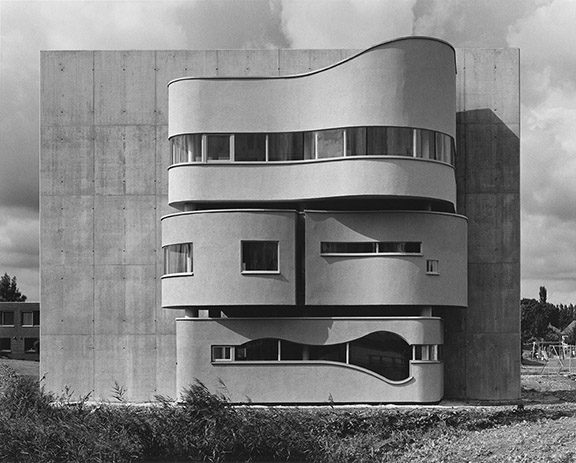
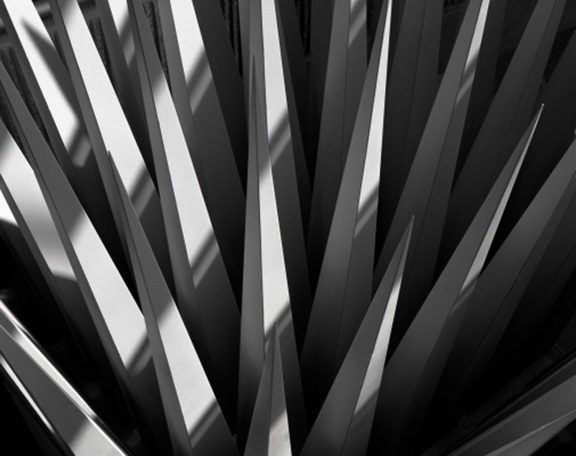
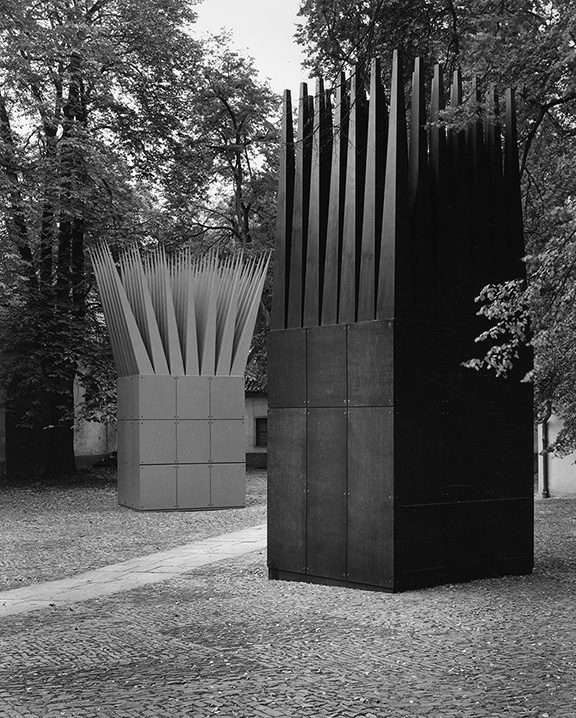
With Hejduk’s generosity came a space of dialogue and collaboration. It was David Shapiro’s words that would prompt Hejduk to give formal, spatial and material substance to the House of the Suicide and the House of the Mother of the Suicide. It would require the tectonic tenacity of Jim Williamson to situate and translate raw sketches into constructive drawings for the eventual fabrication of the two structures. Certainly, it would also require the eyes of Hélène Binet to reinvent the structures: to give light, weight and depth to them as our eyes could not otherwise see.
This exhibition brings these forces together in Cooper Square, where the Jan Palach Memorial has been installed, in the Second Floor Gallery where the timeline of its various iterations gain historical clarity, and in the Arthur A. Houghton Jr. Gallery where the work of Hélène Binet sets the stage for the work as part of a larger body. While Binet is often introduced as the documentarian of Hejduk’s work, this exhibition demonstrates inversely how she also adopts him as muse, if only to manifest a sustained and patient temporal gaze on a dedicated oeuvre.
From our perspective today, the lens of history offers us this opportune overlay of four characters whose strength of vision and commitment brings forth a collaborative narrative that sustained over three decades, while commemorating events of 1968 that sparked an era of resistance. If the social and political messages that are ingrained in these structures do not sufficiently demonstrate the ways in which an architectural project embodies a commitment to varied forms of disobedience and defiance, however obliquely, then their reconstruction can be a simple reminder of the political transitions that we are living through today, if only that it prompts us to gauge the very predicaments and decisions that surround us as history is being recast on a daily basis.
As we revisit the forms of the Jan Palach Memorial, we see in their strangeness a certain familiarity; that is the plight of architecture, as history situates—and saturates—its forms with particular associations. But we are reminded constantly of their once de-familiarizing presence, anthropomorphic characters invented to act on the urban scene as no other architecture could, if only to remind us of other possible realities we could inhabit. But, it is also a reminder that we face this very challenge again today, projecting against a new reality.
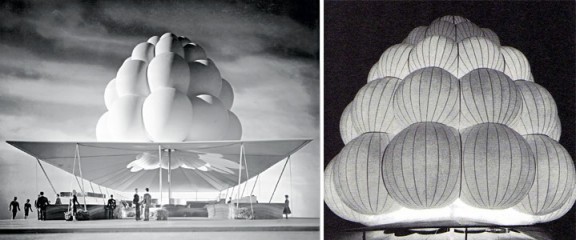
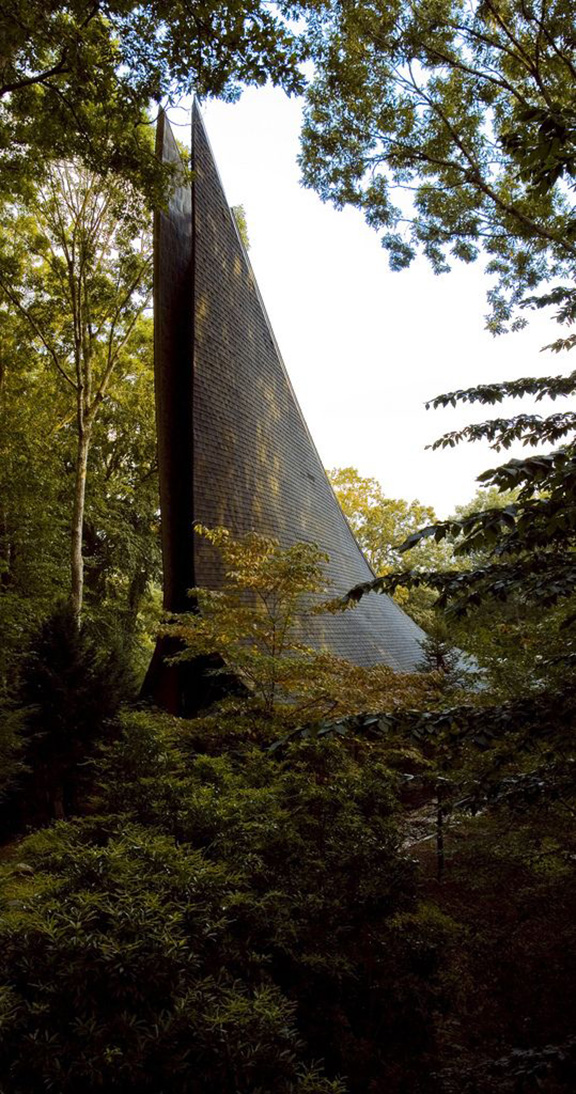
Curated and prepared by Michael Meredith, the ‘Beyond The Harvard Box’ exhibition and Symposium, now a decade old, included a range of critical voices from the Modern era –among them, Edward L. Barnes, John Johansen, I.M. Pei, Ulrich Franzen, Paul Rudolph and Victor Lundy– whose voices were an important part of the evolution of the canons to which they responded.
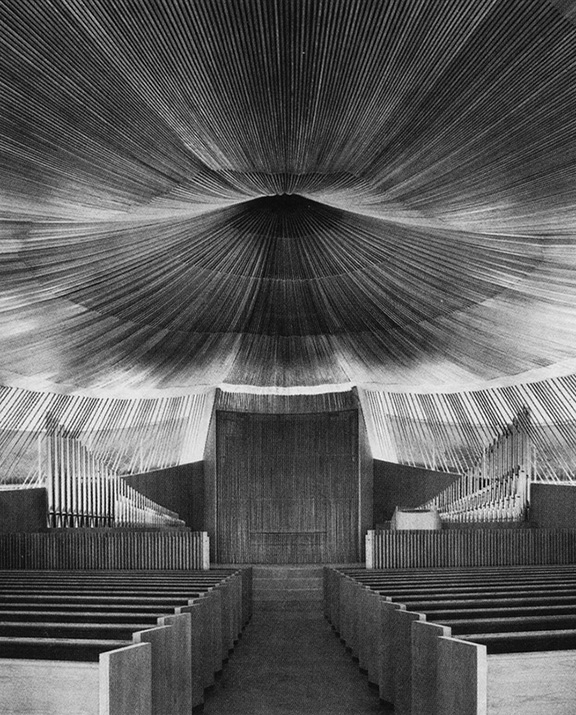
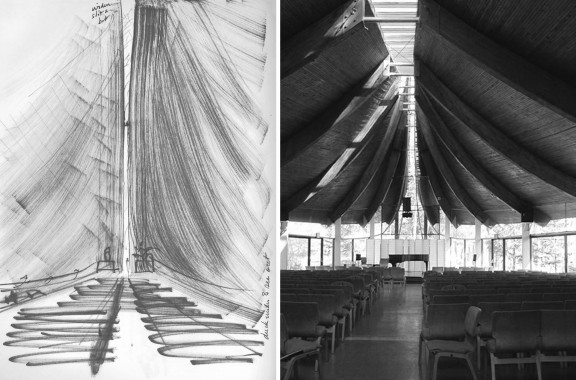
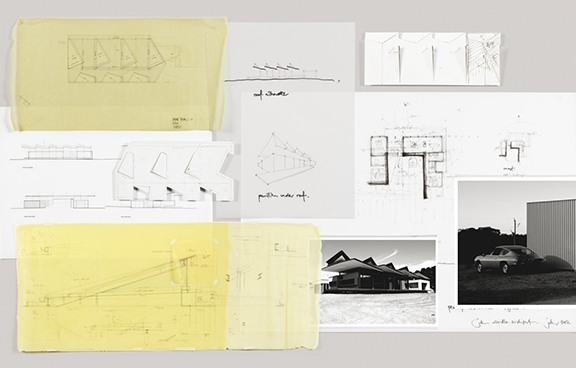
Of them all, Lundy stands out for his persistent attention to material agency: the careful engagement of material technologies as the prerequisite to design. What Lundy’s work demonstrates is the possibility that rules of composition, whether classical or modern, do not necessarily need to preempt design approaches, but rather that the discrete and incremental unit of material organization can become the DNA that enables multiple compositional predispositions. For this reason, even though many of Lundy’s buildings manifest well-known figurative and monumental strategies, they also reveal how material units offer many alternative formal, spatial and organizational potentials.
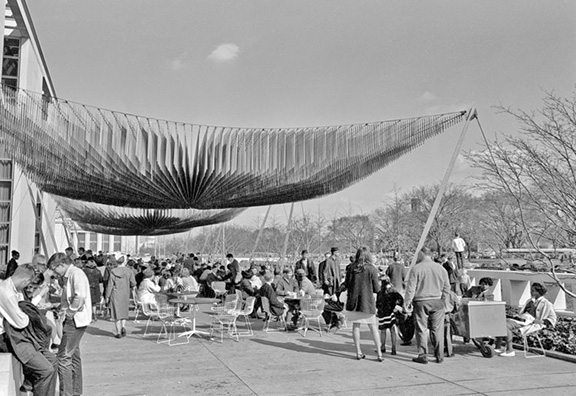
Canopies, Museum of History and Technology, now known as the National Museum of American History, c. 1967
The work itself is also characterized by an authorship that denies signature in the form of a common style or singular voice; instead each project achieves a material sensibility that emerges from operations on material behavior, methods of aggregation, and their requisite formal malleability. As such, its part to whole relationships enjoy the same precision as Mies Van der Rohe’s work, but its formal and figurative ambitions are more aligned with the type of exploration that Le Corbusier might have entertained. At the same time Lundy’s materiality suggests a texture and density that only Aalto would have engaged, but in Lundy’s hands it is much more intellectually targeted and materially restrained. These composite characteristics make Lundy less prone to easy characterization and, in turn, less consumable. In great part, this is why he did not reach the pantheon of the great modernist architects or achieve a wider audience, but if seen from the viewpoint presented here, he exemplifies a paradigmatic position that in hindsight has become a classic.
First Unitarian Church, Westport, CT, 1960
From the perspective of our own research, the connections are obvious, but one can extend this lineage to protagonists like Herzog & de Meuron before us who realigned thinking in relation to materials— to a younger generation of architects after us, like Skylar Tibbits who have been rethinking material behavior at the molecular level. Looking back at the video of the Symposium, what is startling, and humorous, is my desperate attempt to draw out this thesis from Lundy himself, alas to futility. His intellectual project is implicit, even in those moments when he refutes them, or so I hope, as they emerge from the precise constructive composition of the work itself.
IBM Garden State Office, Cranford, NJ, 1965
Comments Off on Reflecting on Victor Lundy and ‘Beyond the Harvard Box’
From John Wardle Architect’s newly released book, This Building Likes Me. BUY HERE.
In what turned out to be a fortuitous turn of events, John Wardle was out of the country when we were to lecture together at the University of Melbourne – this in a bid to win the commission for the new Melbourne School of Design (MSD) building. John was unfazed, although he understood how important it was for us to speak as one on the same podium. Coming together – not as the traditional, international-local shotgun marriage, but as a true collaboration – we had yet to prove how we could bridge the Pacific to convene on the same conceptual platform. Though we shared a common intuition, we had not actually worked together; we could only interpret commonalities through a series of projects that, in our minds, could be construed as blood relatives, no matter how far apart they were conceived and built.
John imagined his absence as an opportunity – the chance for me to speak to his projects without his presence, outside of his voice, and, in doing so, to overcome any perceived or actual gaps. This was the only genuine way to establish parity, kinship and a grounded collaboration. This short essay recollects that talk and how the collaborations that came later embellished those instincts.
I had visited Melbourne Grammar School a year earlier, without the corollary pleasure of meeting its architect. In that building, I witnessed a conceptual affinity that I attributed to a set of common intellectual projects, concerns that are engrained in the discipline of architecture and thus span generations, geographies and mentalities.
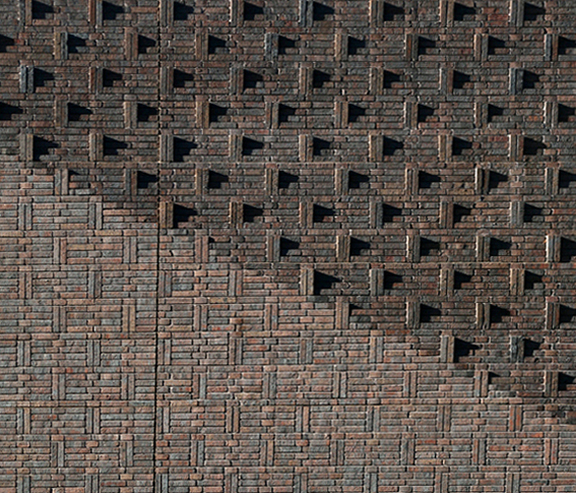
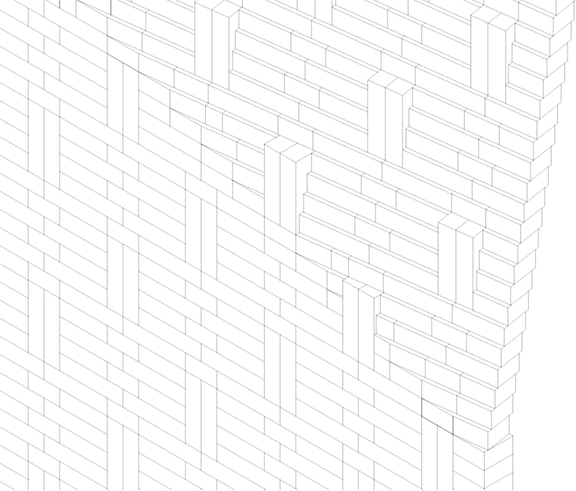
A complex and rich work, the Melbourne Grammar project is, in great part, known for its powerful face onto the city. This is more than a facade for the school. It encompasses the panoramic vista to the Royal Botanic Gardens, acknowledges the monumental importance of the Shrine of Remembrance, and works from the outside in as well as from the inside out. As such, the scale and grain of the glass panels and the adjoining brick wall both reflect the content (expressing its interior) and provide a mirror onto the city: a backdrop for the foliage and an edge that is larger than the school itself. The brick-bonding pattern constructs a relationship between part and whole, oriented at once perpendicular and parallel to the street. The running bond is oriented lengthwise along the street edge (as is customary), but this pattern is interjected with a systemic series of soldier courses, composed as duets that face the street. Through a cunning twist, the wall plane folds at the end of the building, forcing the running bond to corbel back while the ‘soldiers’ read as objects against the canted face of the wall. This enables the wall to reinforce the street edge, while also confronting it.
From this short visit, I recognised an affinity for the work, and also realised how that sensibility is shared among a larger authorship – Stefan Mee, whose drawings bring to light the work’s tectonic depth, and the collaborators who are central to JWA. These commonalities can also be traced within the larger arc of history, providing a lineage of intellectual strands. In particular, I focused on one simple technique: the use of the architectural ‘grain’. This is the conceptual tool with which JWA masterfully weaves the constructive composition of the Melbourne Grammar facade.
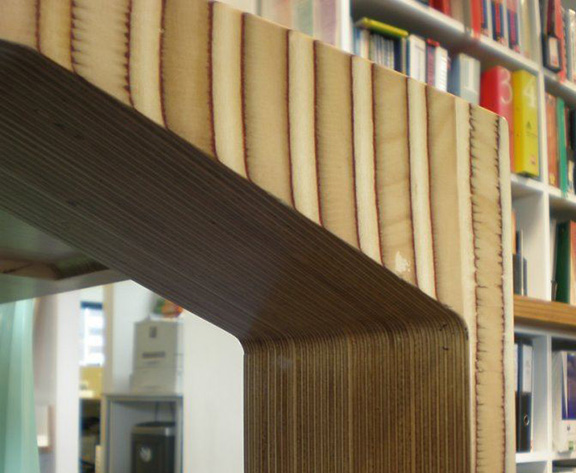
The grain is present in JWA’s work at many scales. We see it in the aggregated butcher-block grain of stacked plywood in John’s office table – rich in texture from the cross laminations, the tables are cut at each end, slightly oblique to the grain of the laminates. The plywood grain runs parallel to the orientation of the building, while the tables themselves are oriented oblique to the other office furnishings, making them a figurative presence within the space. Here, the grain materialises the figurative potential of a simple four-legged furnishing, in its formal misalignment, and in the end-grain detail that emphasises that orientation as a meticulous index.
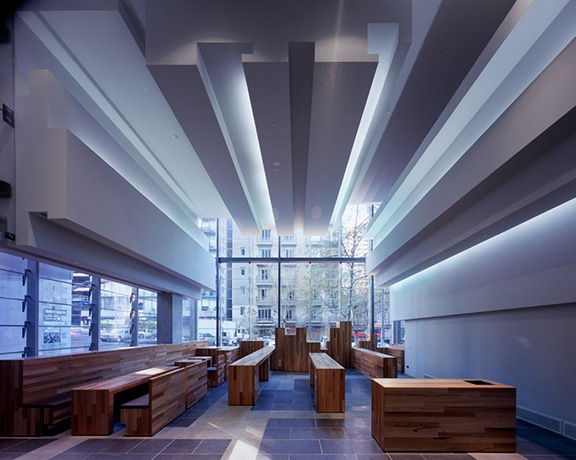
As the work shifts in scale, there is a deliberate formal connection between furnishings and broader architectural strategies. In the lobby of the Urban Workshop, the grain materialises at both macro and micro scales. The entire space is a monumental extrusion – the formal expression of benches, tables, counters and lighting is suppressed under a regime of non-referential figuration. (And yet, all fulfil their function without compromise.) Within this, the elements are expressed in relation to material tectonic logics; wooden floorboards are laid length-wise in relation to the extruded logic and reinforce the striated organisation, while the plaster overhead maintains an immaterial presence, formally extruded yet materially a-tectonic.
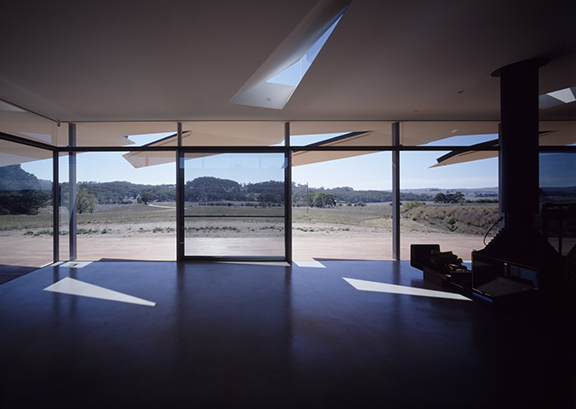
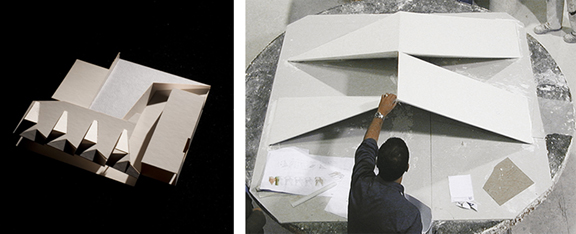
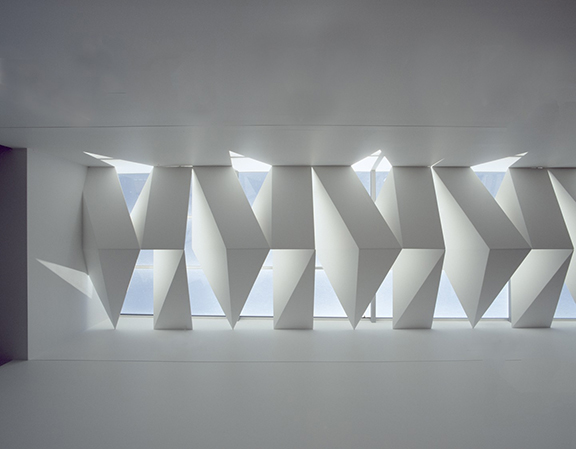
This focus on materiality and the cleverness of tectonic play is underpinned by the sophistication of abstraction. JWA toggles back and forth between tactics of representation, models of form generation and actual building industry collaborations. The use of the model, in the nimble hands of Andy Wong, exemplifies this. The technique of paper folding takes on a life of its own, as thin laminate is scaled ten-fold and translated into the building industry. The Kyneton and Yarra Bend houses both take on this approach. While the Kyneton house radicalises the folded planarity of the white ceiling plane, the field of skylights in the Yarra Bend house gives depth and weight to the thinness of the plaster face that supports them. Both look impossible. Yet both are built impeccably well, and are even better crafted at an intellectual level, making the seemingly implausible real.
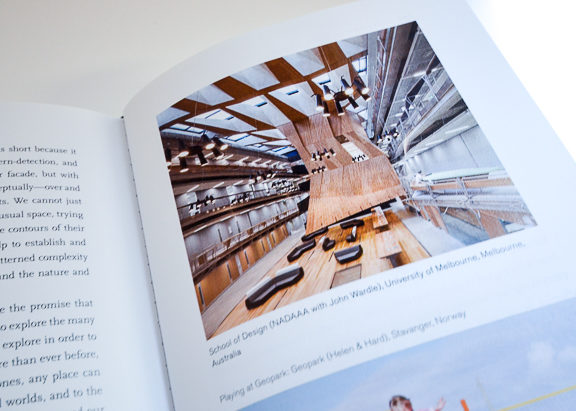
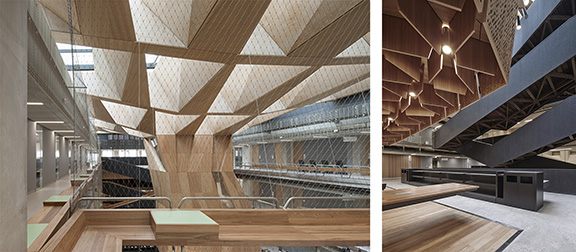
These reflections were formed somewhat off-the-cuff in the context of courtship, but they have evolved as an operative intellectual instrument and an extension of our mutual interests in the design process. It is no accident then that the Yarra Bend house came to influence our collaborative thinking on the MSD, completed in 2014. If Yarra Bend’s ceiling gains delight in its abstraction, MSD reverts to the material grain of wood laminates to help bridge a twenty-two meter span. Moreover, Wardle’s humorous account of D. H. Lawrence’s Upside Down at the Bottom of the World eventually gave form to the inverted tectonic of the suspended studio at MSD. This totemic wood object extends the grain of the structural ceiling back towards the ground; incrementally reducing the depth of wood towards its nadir, where thin laminates of wood fins produce a counter-coffering of acoustic tiles at the bottom of the suspended structure. Thus, the studio maps out the reduction of structural forces – from thick to thin, from compression to tension, and from materiality to abstraction – in a linear narrative from top to bottom. Located asymmetrically, the figural geometry of the suspended studio torques, as if in contrapposta, while its formal configuration simply extends the logic of the two-way coffering overhead into the body of the vertical shaft. Thus, the mat grain of the ceiling is translated into the singularity of vertical forces on the shaft. This is expressed in the grain of the wood veneer, and in the proportions of wood panelling that enables its construction.
The grain of Wardle’s work takes on many faces and interpretations. While he works with graining in its most material sense, it is also a conceptual platform from which experience is constructed. The grain is an intellectual ploy; it works ‘against the grain’ of facility to require conceptual friction. In this feat, Wardle displays virtuosity, rigour and invention.
Comments Off on JOHN WARDLE ARCHITECTS RELEASES NEW BOOK, ‘THIS BUILDING LIKES ME’
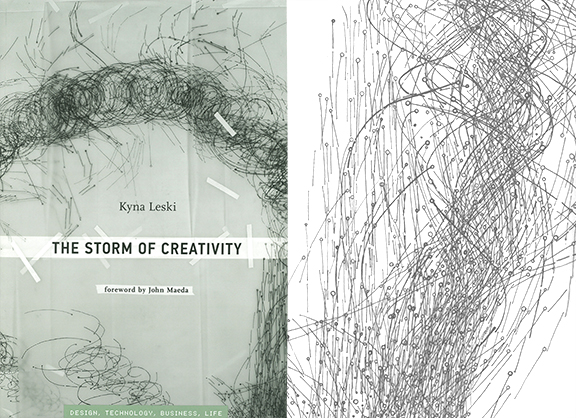
There is perhaps no intellectual who is as in tune with the vulnerability of the creative process and the uncertainty from which innovation emerges as Kyna Leski. On the one hand, her focus on ‘unlearning’ takes us back to our most elemental moments of learning as a child, but also, on the other hand, to our most corrupted ideological predispositions… Find the book through the MIT Press here.
Comments Off on The Storm of Creativity by Kyna Leski
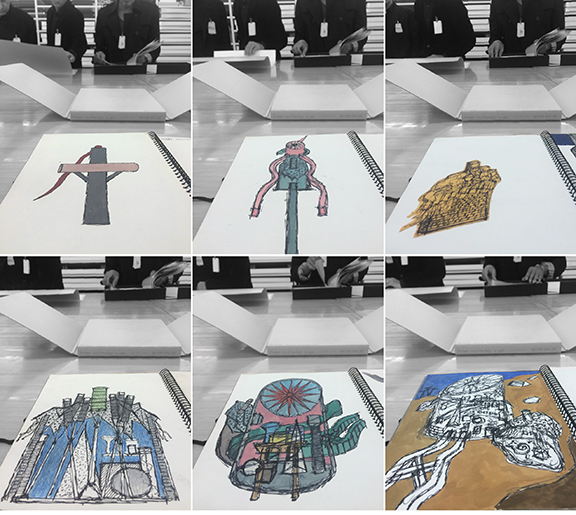
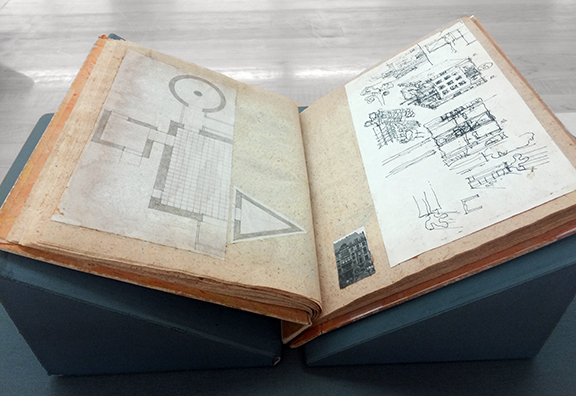
On a recent visit to the CCA to take in the Archaeology of the Digital exhibit I took the chance to look through their large archives, a collection which hosts the work of over 140 artists and architects. The collection includes work by Peter Eisenman, Cedric Price, and Aldo Rossi to name a few. I was struck by two of John Hejduk’s sketchbooks….
Some of these works are available in the CCA’s online archive through the support of the Andrew W. Mellon Foundation. A selection of Hejduk’s work can be viewed full screen here.
Comments Off on CCA Archives: John Hejduk sketches