to the BSA space, this week
Comments Off on Coming: the Compressive Catenary
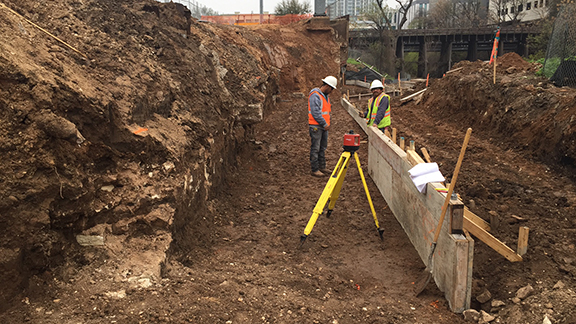
Under construction in the heart of downtown Austin, Texas, a one-thousand four-hundred foot screen wall is taking shape. Situated along Shoal Creek and several adjacent developments including the New Central Library, the project helps to secure an active power station and create urban spaces along its perimeter. The wall will employ over eight hundred 8 x 8 x 12 foot tall integrally colored concrete posts with varying patterns and rotations.
Process color studies


Comments Off on Seaholm Wall Progress
Another dispatch from the 1 Spadina jobsite in Toronto: structural demolition work is now complete along the original north wall of the Knox College heritage structure (constructed 1875). At the time of our site visit, a few existing openings remain to be infilled with masonry; attachment of weather protection (see in bright orange) at recent Phase 1 concrete and block walls around the central stair block was ongoing. The site is now ready for shoring and excavation activities in preparation for Phase 2 construction.

Panoramic view of the north side of 1 Spadina: all additions to the original heritage building have been demolished.
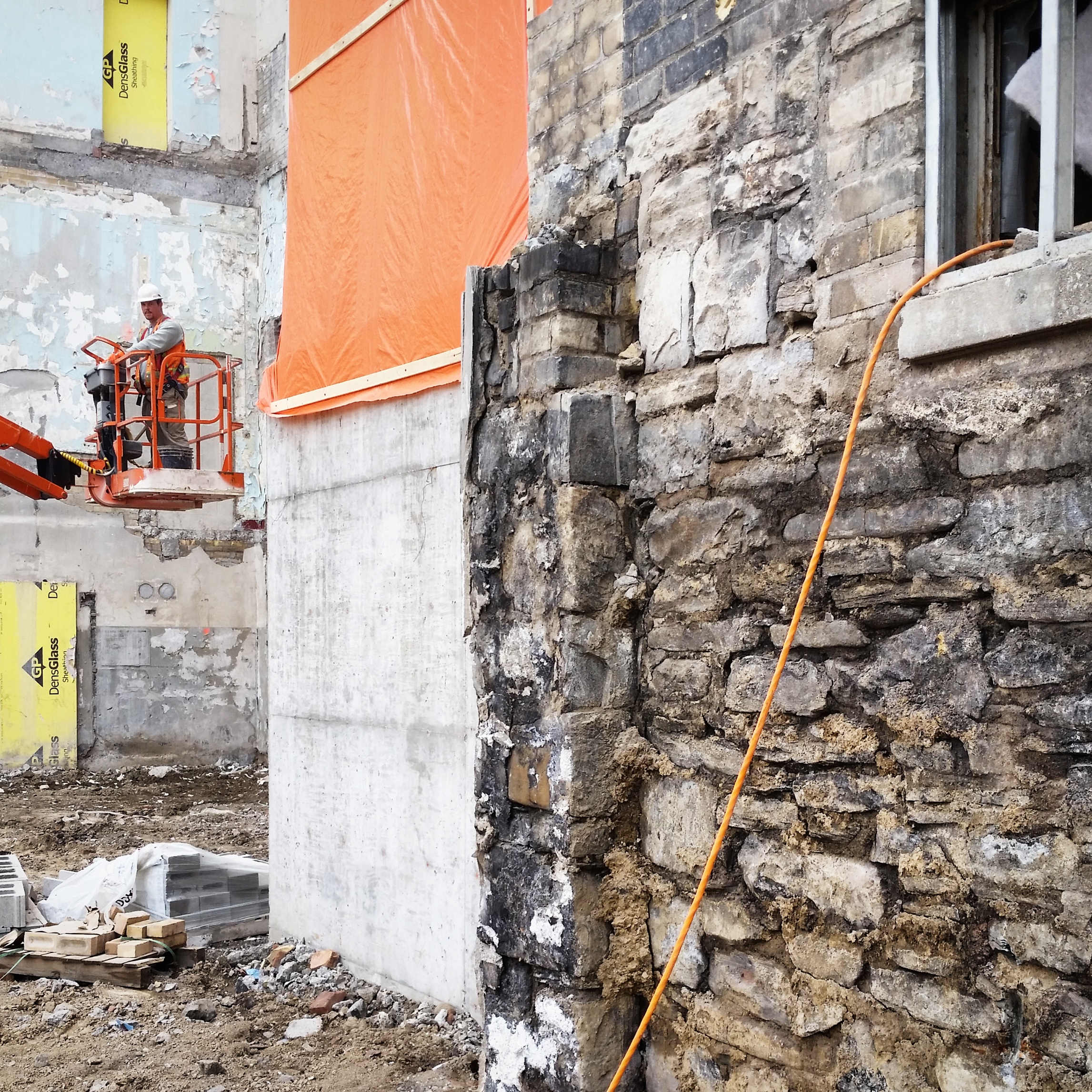
View of the central stair block in the foreground, and heritage masonry work occuring in the background. The removal of existing additions has revealed original ruble foundations, as well as new concrete foundation walls completed as part of the Phase 1 renovation work.
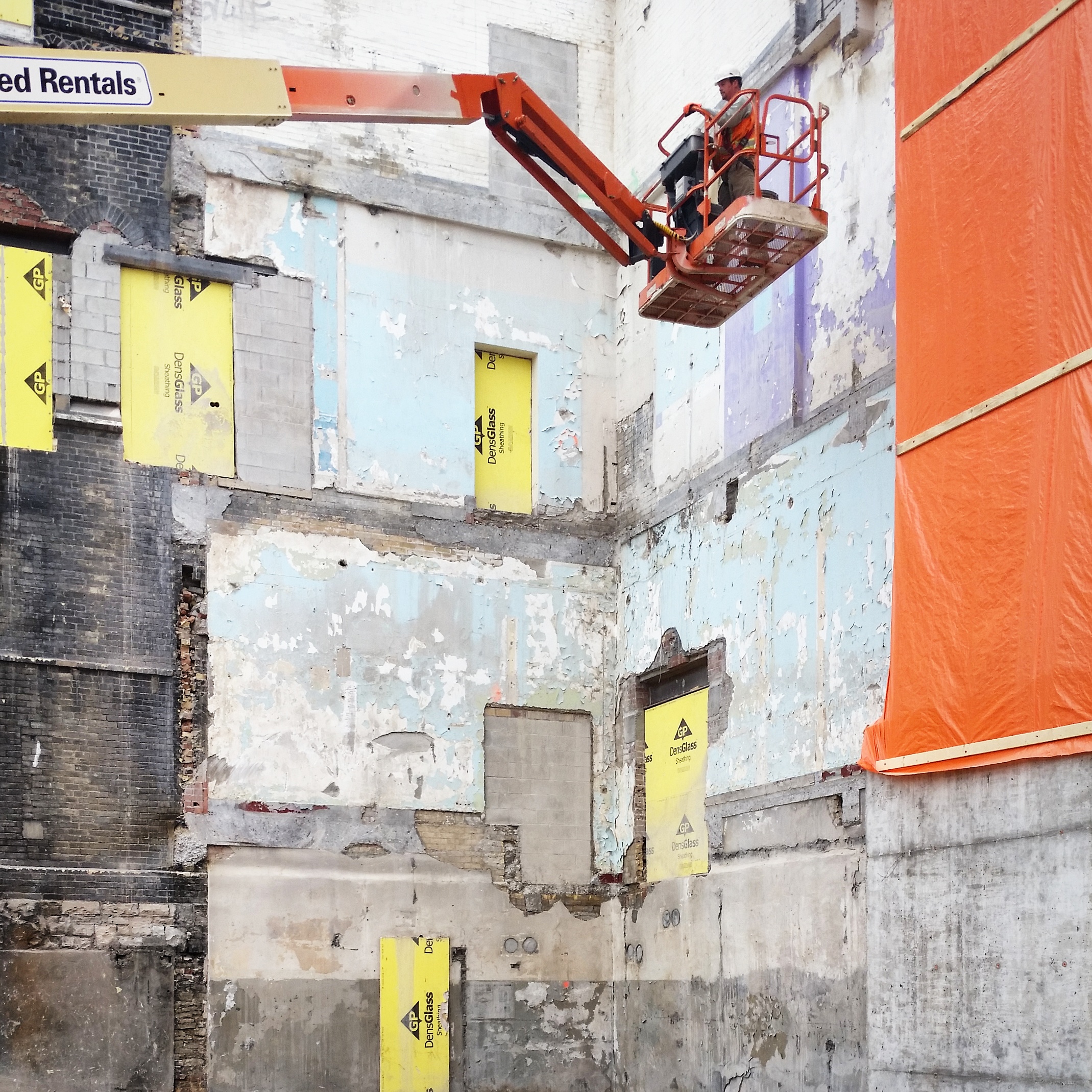
Openings that will connect to the new Phase 2 addition have been hoarded with sheathing; existing openings have been infilled with block and occasionally support lintels for new openings, as seen at left. The dark exposed masonry at far left is the remaining wall of a former airwell that was formed by the demolished Connaught laboratory addition.
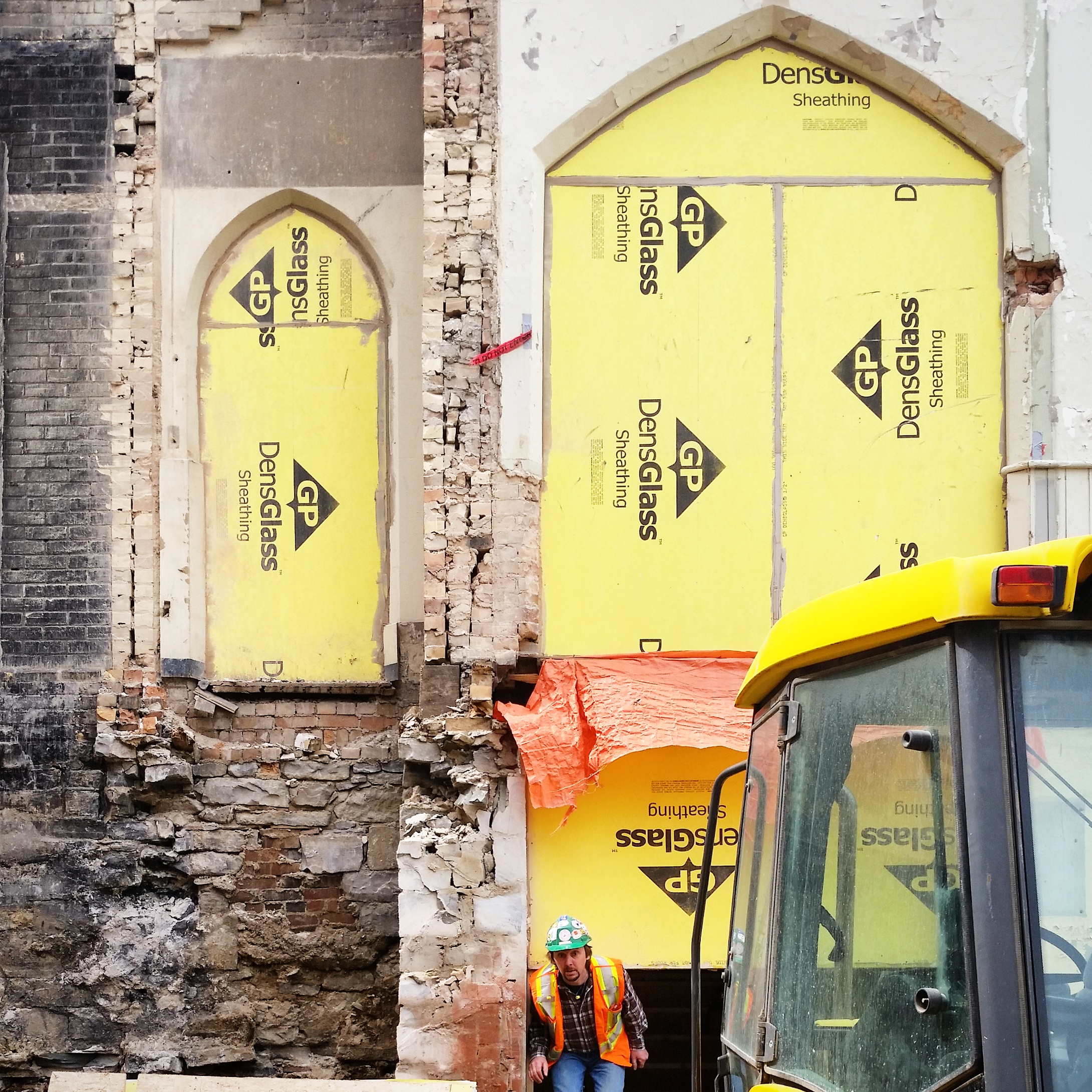
Sawcut rubble foundations and 2 to 3 wythe masonry walls have been exposed at the location of the demolished military hospital wing. Holes in the existing fabric will be filled at the time that access is enabled by the Phase 2 addition concrete slabs.
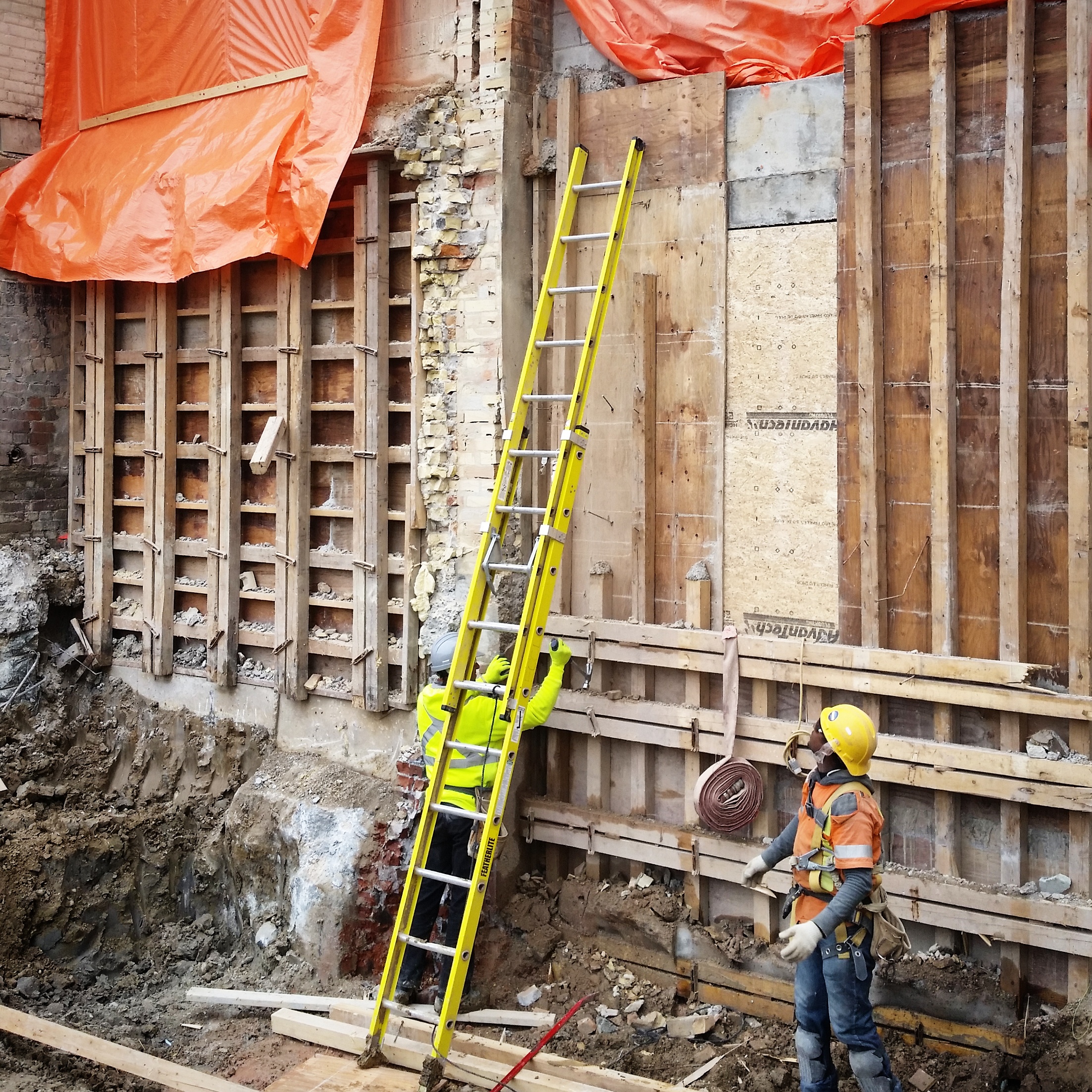
Formwork was being released at the Phase 1 concrete foundations formed to support new janitor, electrical and IT closets surrounding the central heritage stair block.

Existing interior finishes are now exposed on the exterior in several locations.
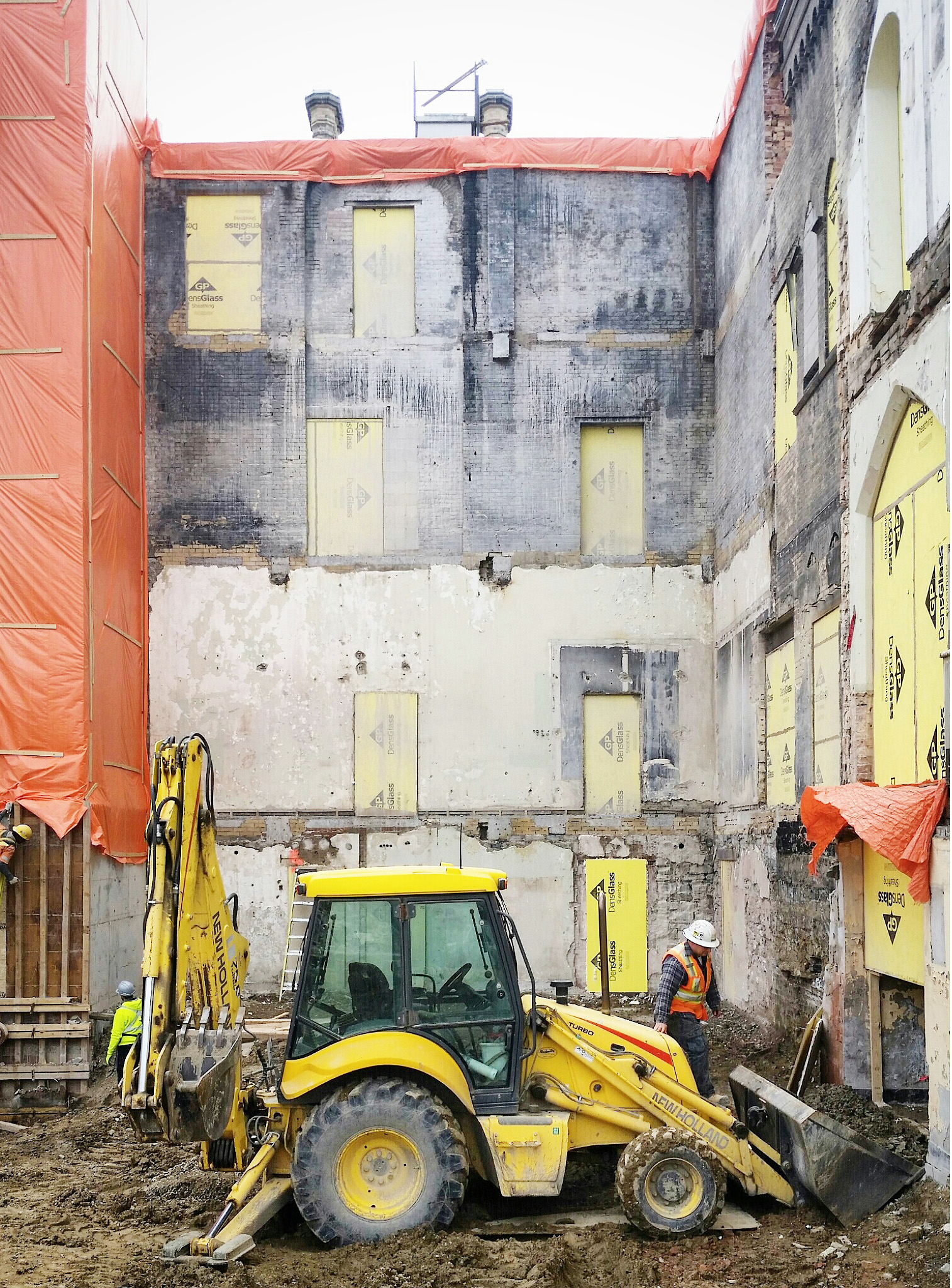
Weather protection has been installed along the roofline, in anticipation of the Phase 2 addition roof tie-in.
Comments Off on Demolition Sublime 2
Dispatches from 1 Spadina: ongoing demolition work has almost completely exposed the original north wall of Knox College (constructed 1875), which has revealed the layers of nearly 150 years of alterations and retrofits to serve uses as varied as academic, hospital, military, research, and mechanical plant space.
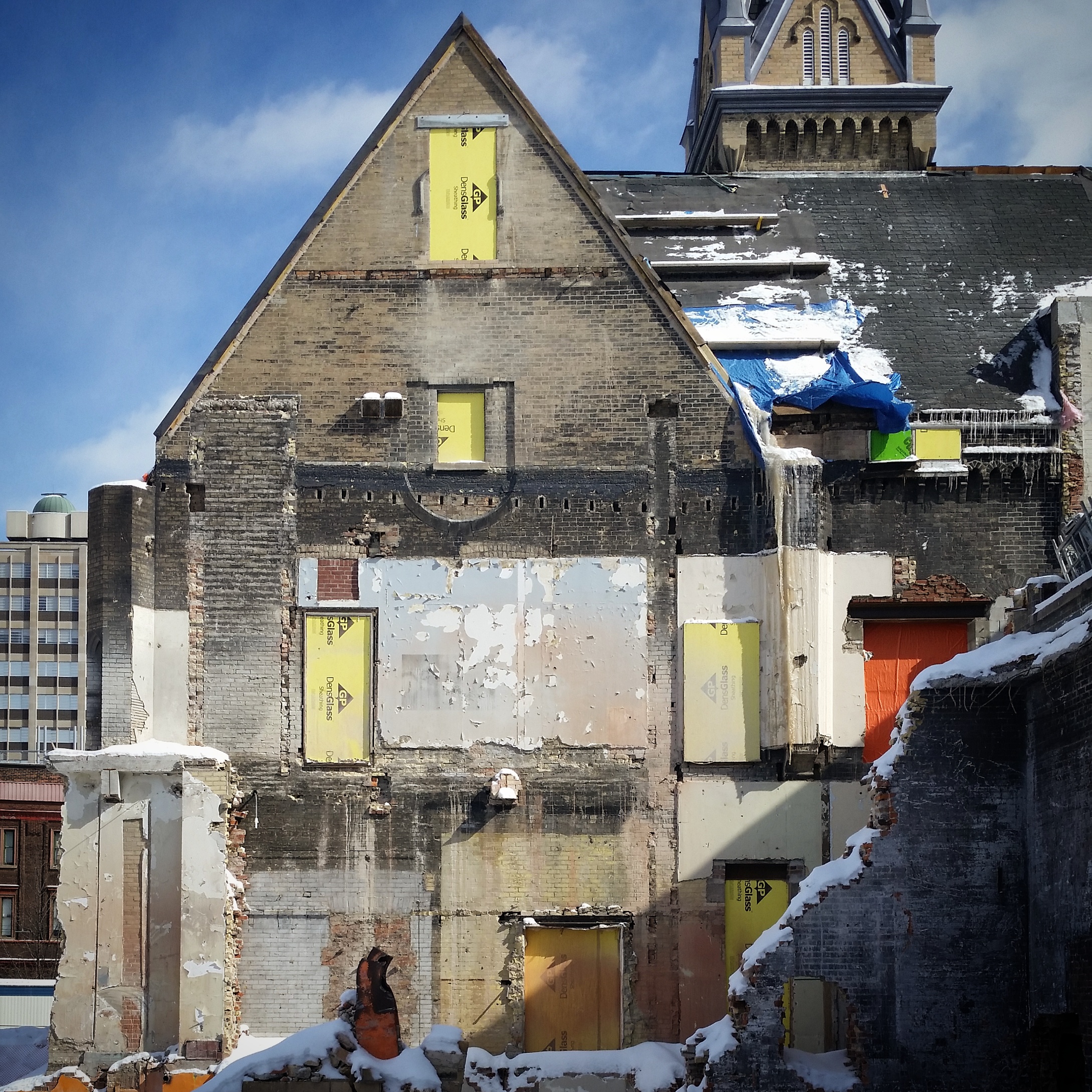
West face of the 1 Spadina east heritage wing, after demolition of 20th century additions.
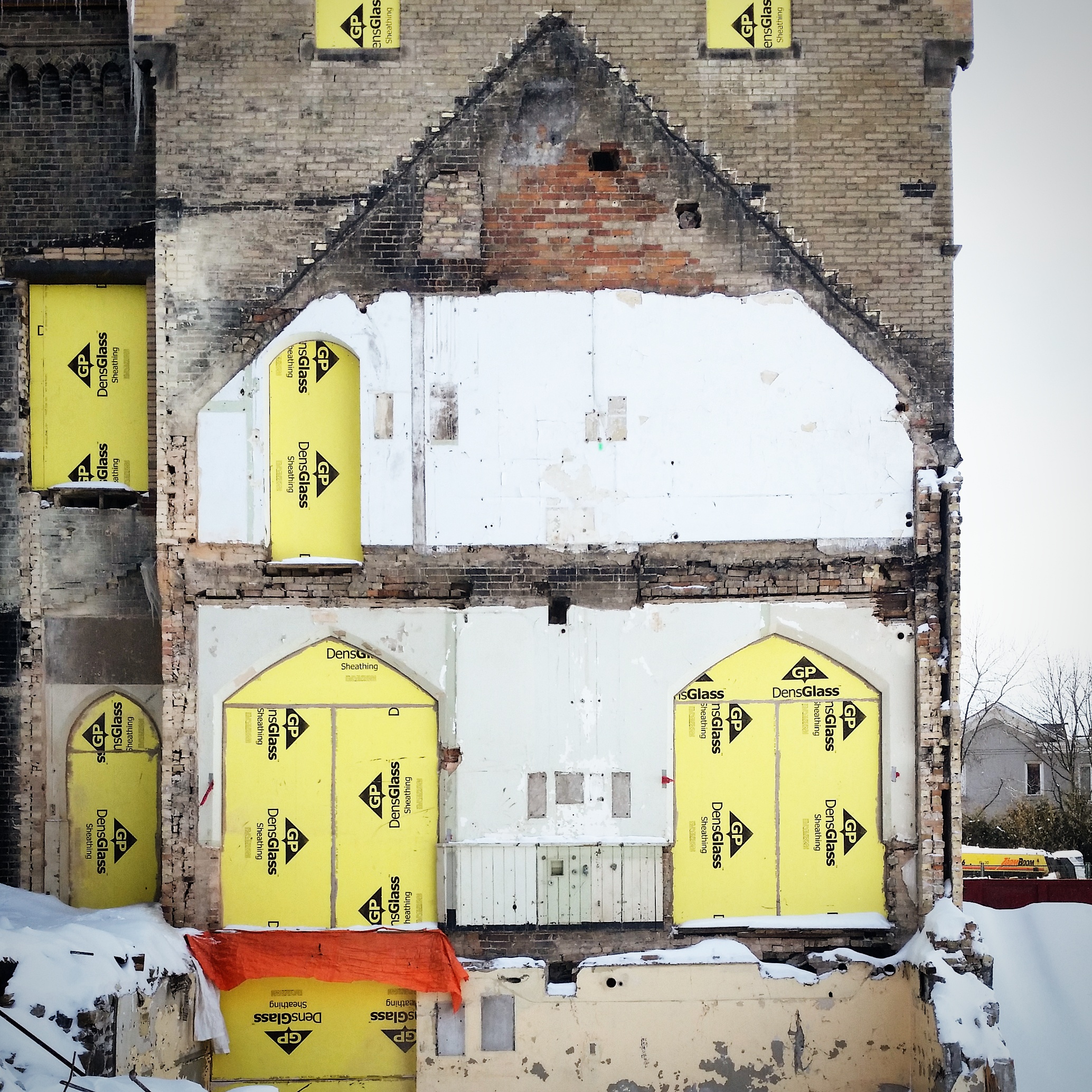
East face of the 1 Spadina west heritage wing, after demolition of 19th and 20th century additions.

A view of the central tower block, looking south-east from the third floor level of a 20th century addition in the process of being demolished. Existing gothic arches are evident in the right foreground, which were originally expressed on the exterior. The larger relieving arch had been truncated by the installation of a concrete slab, which is now visible as a saw-cut section (with some reinforcing steel remaining to be cut). The new DFALD addition will lap over this slab edge onto the heritage roof beyond. New concrete blocks are visible at left, which enclose a retrofitted elevator shaft. Beyond, new buff replacement brick are visible at the gable of the central block.
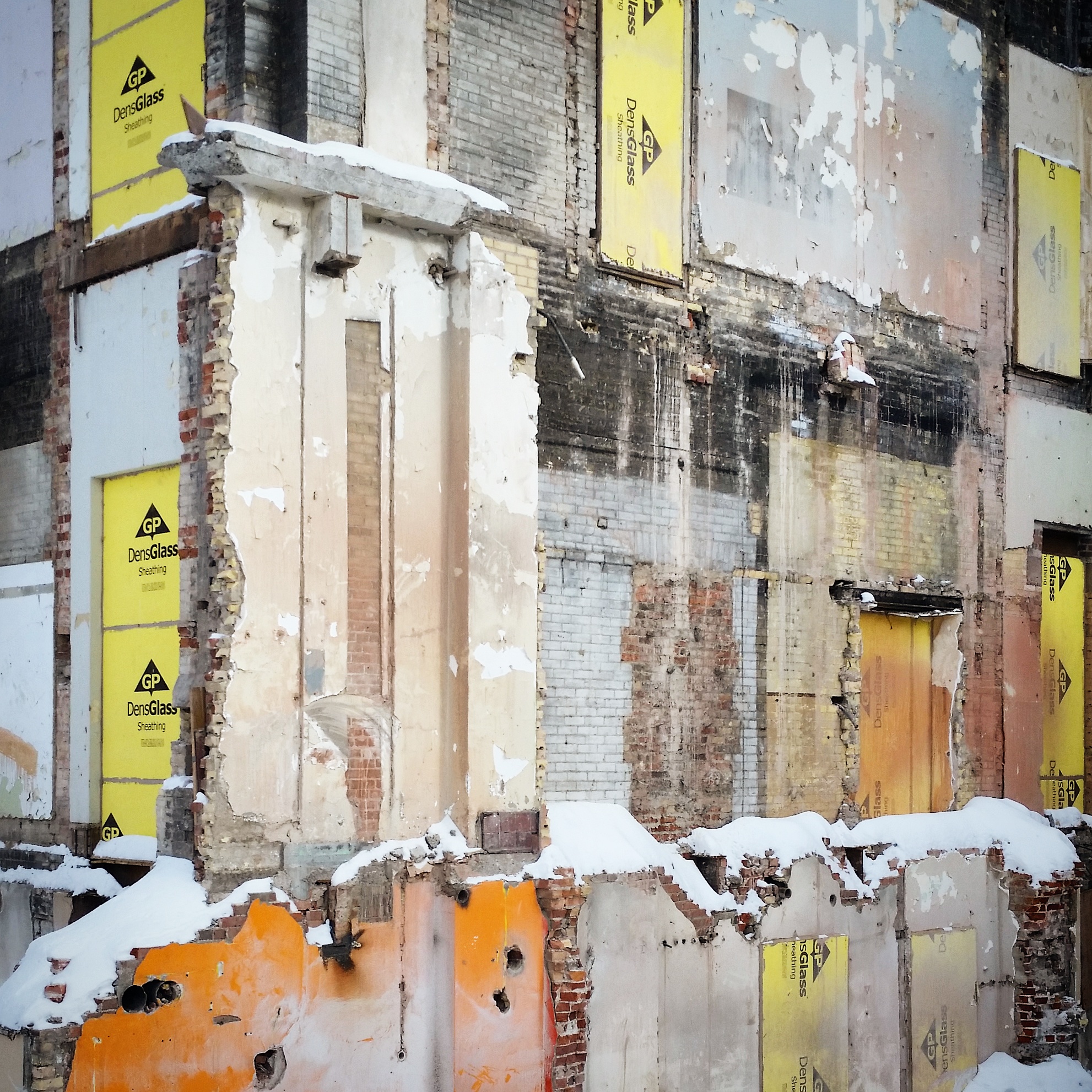
View of the west wall of the original east wing. A palimpsest of previous interior wall finishes and various cut slabs and masonry construction has appeared between new and existing opening hoarded temporarily with sheathing.
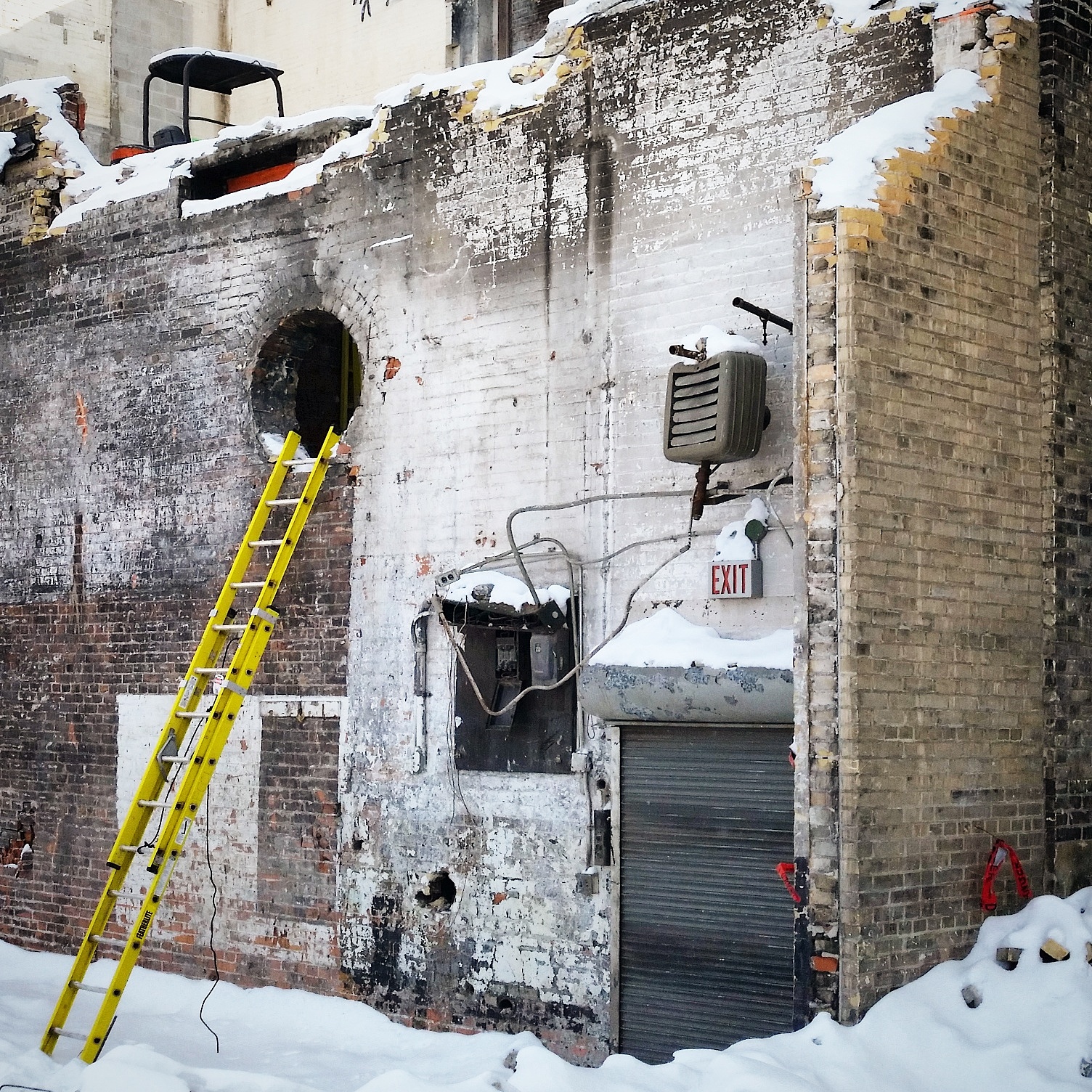
View of 20th century addition at the southeast corner of the original 1 Spadina courtyard. Over the course of demolition, access has become restricted; here, ongoing structural separation work beyond the masonry wall in the foreground is accessible only via ladder through an existing portal. A slab-chipping machine is visible beyond at upper left.
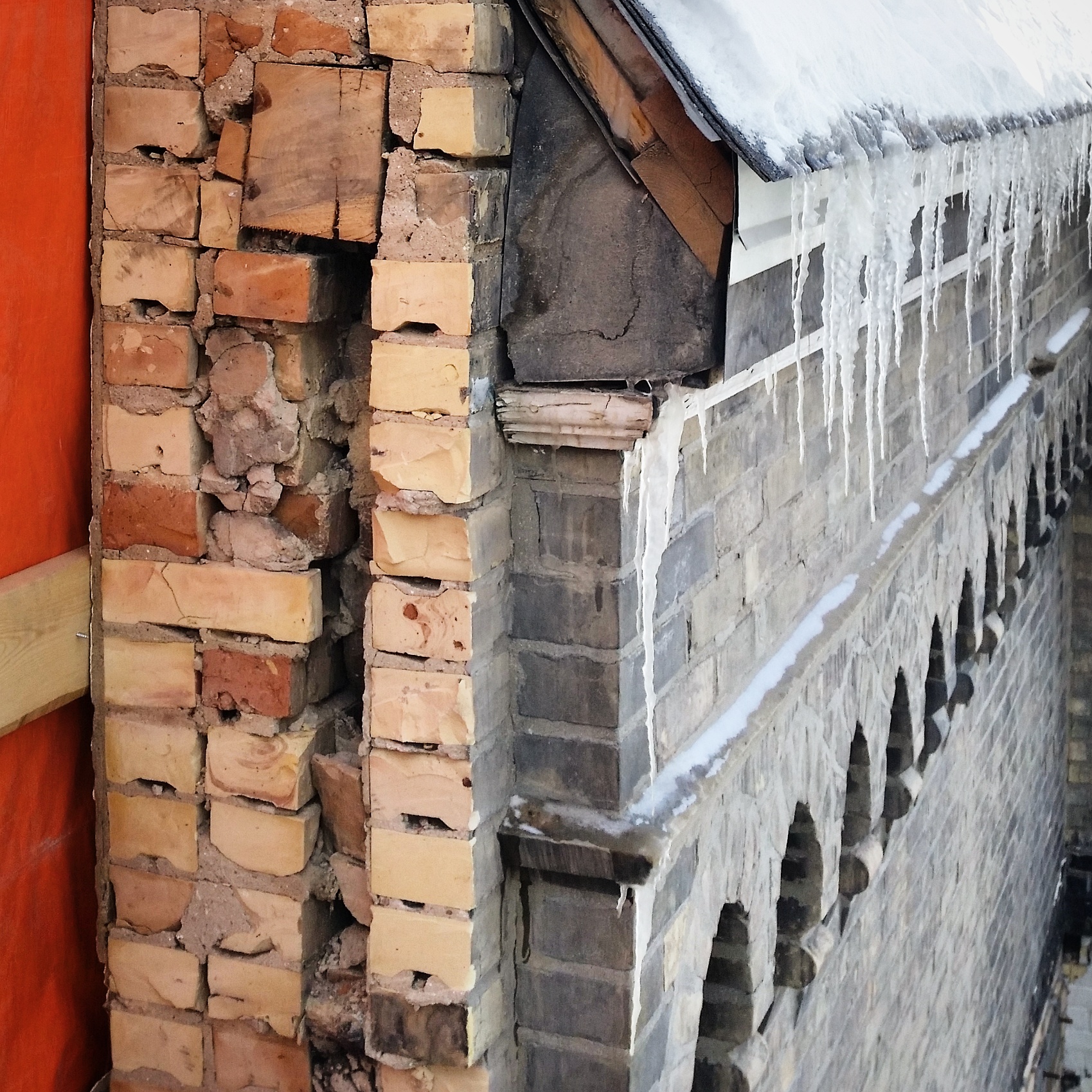
Brick wythes are visible at a section of wall to host an enlarged opening for a doorway. Outer wythes are often infilled with rubble in the original construction. A section of former wood lintel is evident.
Comments Off on Demolition Sublime
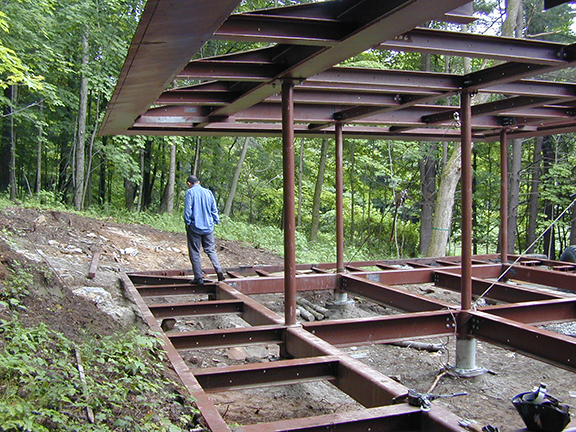
Reviewing structure in western Massachusetts
Comments Off on NADER SANDWICHED
Down in our shop, work has begun on a custom table made of aluminum and anigre-faced plywood. The client commissioned us to design a table where their family of five could work and study together. The pinwheel form provides each user with a dedicated space and routes computer cables through an opening at the center. The pieces of the table flat-pack for easy shipping and are bolted together with specialized custom fasteners.
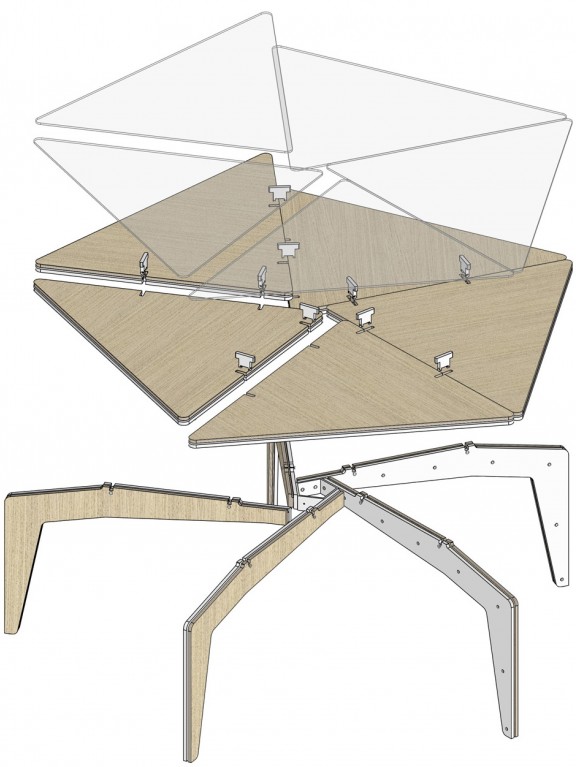 Exploded Axonometric drawing showing the assembly logic of the table.
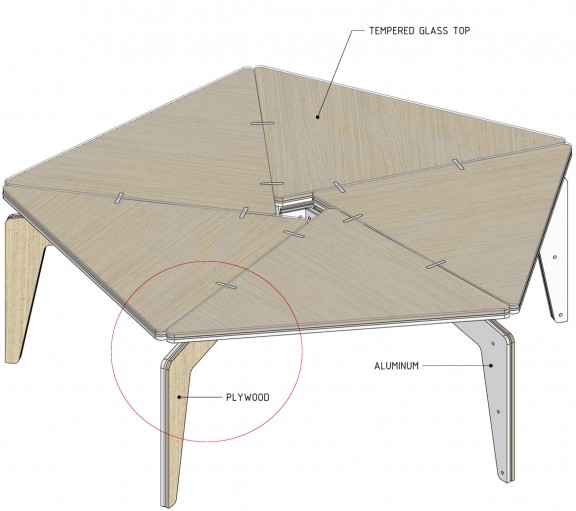 A mock-up was built to evaluate the material choices and test the custom fasteners.
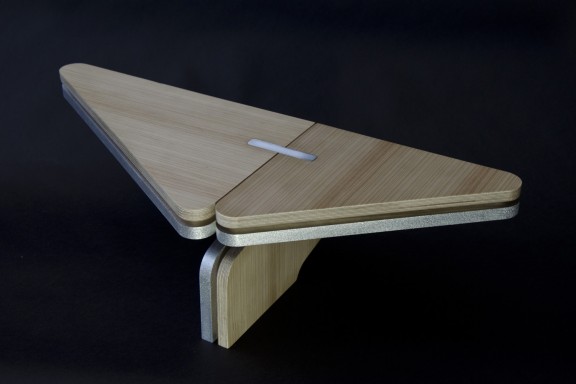 Waterjet-cut 6061 Aluminum features a non-directional satin finish. CNC-cut Plywood with an Apple-ply core is faced with White Anigre.
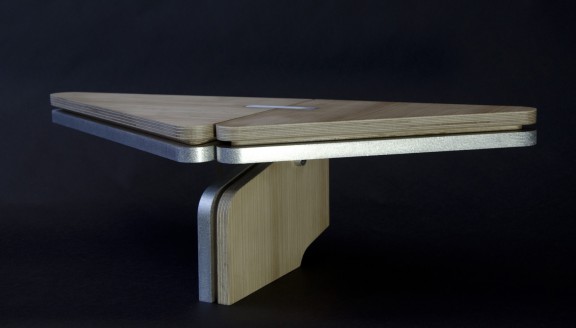 The wood and aluminum are laminated together with Marine Epoxy.
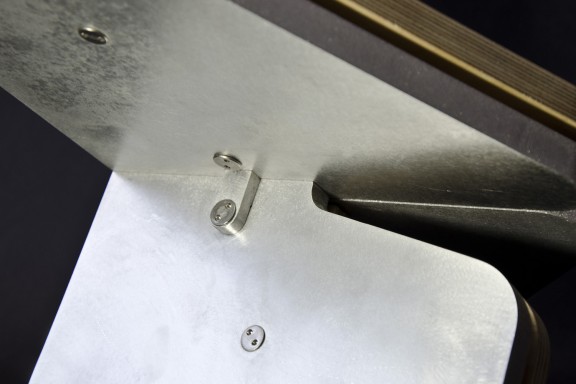 Tight tolerances are critical for the precision attachments.
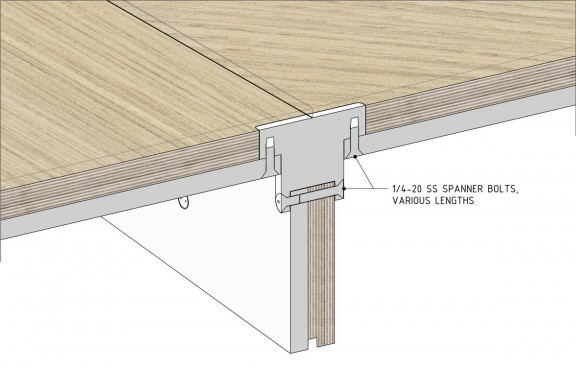 Detail Axonometric Section through the Leg / Table-top connection.
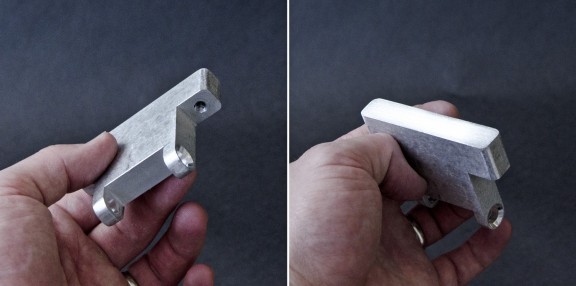 The unique aluminum fasteners are machined by hand in our shop.
Comments Off on Study Table Mock-up
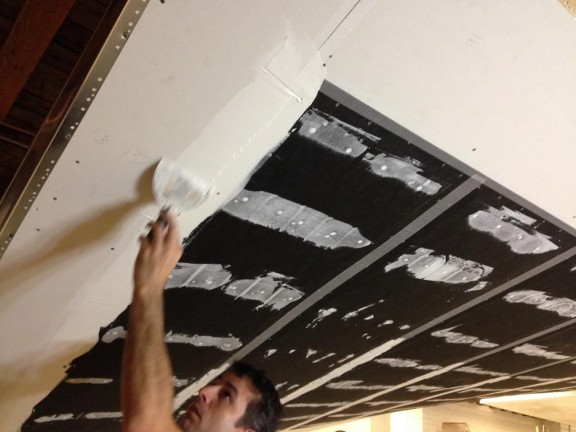
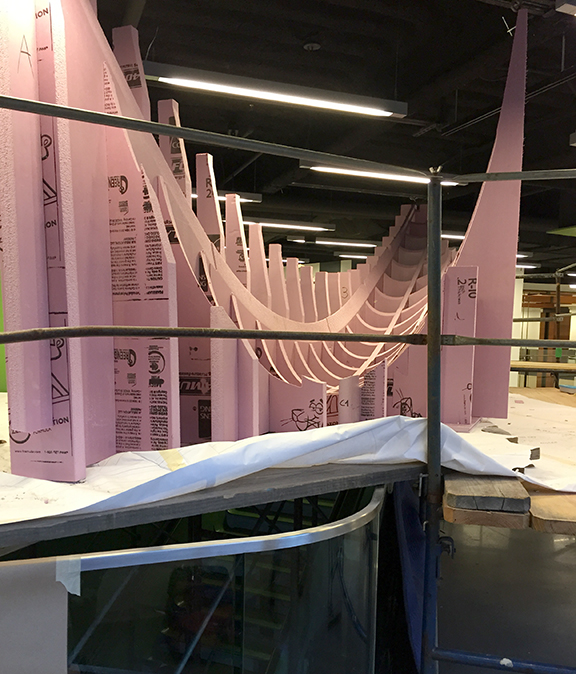
A year ago, NADAAA blogged about our hyperbolic paraboloid ceiling mock-up, which will be featured above the third floor design studio at the new Daniels Faculty of Architecture, Landscape and Design. Since that time, the client has charged us with an additional mandate: to reduce projected mechanical energy through the incorporation of radiant mechanical systems throughout the building. This mandate presented a unique challenge for our feature ceiling: radiant chilled panels are almost always flat, where our design distinguishes itself through a subtle ruled curvature.
Radiant panels are widely used in Europe, but are less common in North America. Nevertheless, we corresponded with several vendors, all of whom were enthusiastic about helping us resolve this technical hurdle. This fall, we provided space and support to enable Twa Panel to replicate our mockup, only this time using a new graphite-core radiant panel product with embedded copper hydronic tubing, provided by SGL Group. Twa Panel gambled that the graphite panel and tubes would be flexible enough to conform to the gradual curvature, which is smaller in degree (approx. 550″ radius) than it appears when viewed in composite across a surface. The mock-up proved successful, as the panels twisted with relative ease:
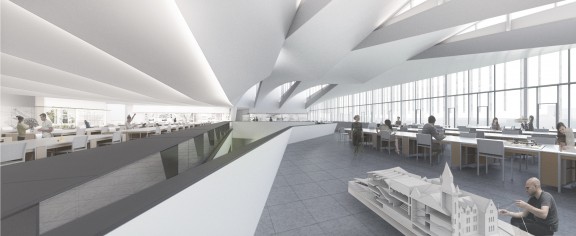
Rendering of the Level 03 Design Studio feature ceiling at the new Daniels Faculty of Architecture, Landscape and Design at the University of Toronto
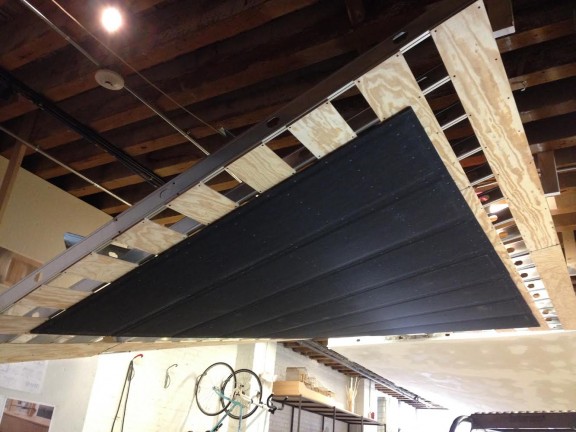
HyPar Mockup No.2: 2’x8′ radiant graphite-core panels on 1/4″ plywood strapping, over light gauge stud backup framing. NADAAA’s original mockup is seen beyond.
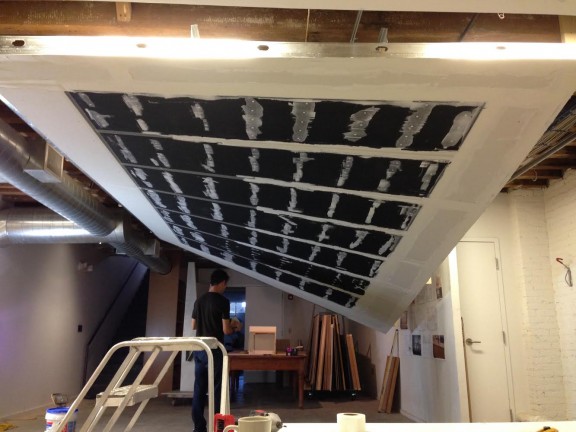
In this image, the radiant graphite panels are mudded and taped against a perimeter of conventional 1/2″ thick gypsum board, ready for a standard paint finish.
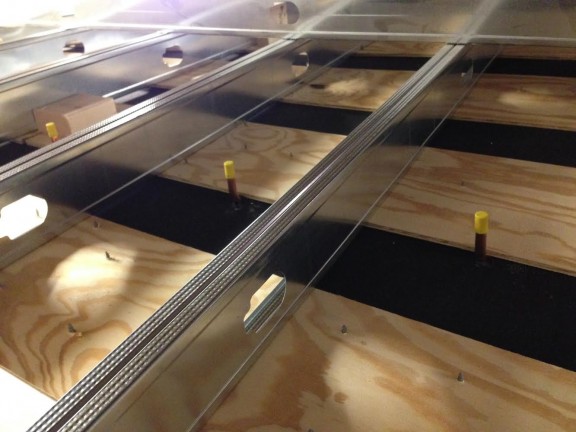
This image shows the backside (top) of the mockup, where copper leaders penetrate the backside of the panels for connection to hydronic tube supply/return connections.
Comments Off on DFALD Hyperbolic Paraboloid Ceiling Mockup #2 – Radiant Panels
The results of vine removal and ongoing masonry cleaning at 1 Spadina Crescent, as part of the Phase I Renovations for the University of Toronto Daniels Faculty of Architecture, Landscape + Design. (In collaboration with Adamson Associates and ERA Architects).
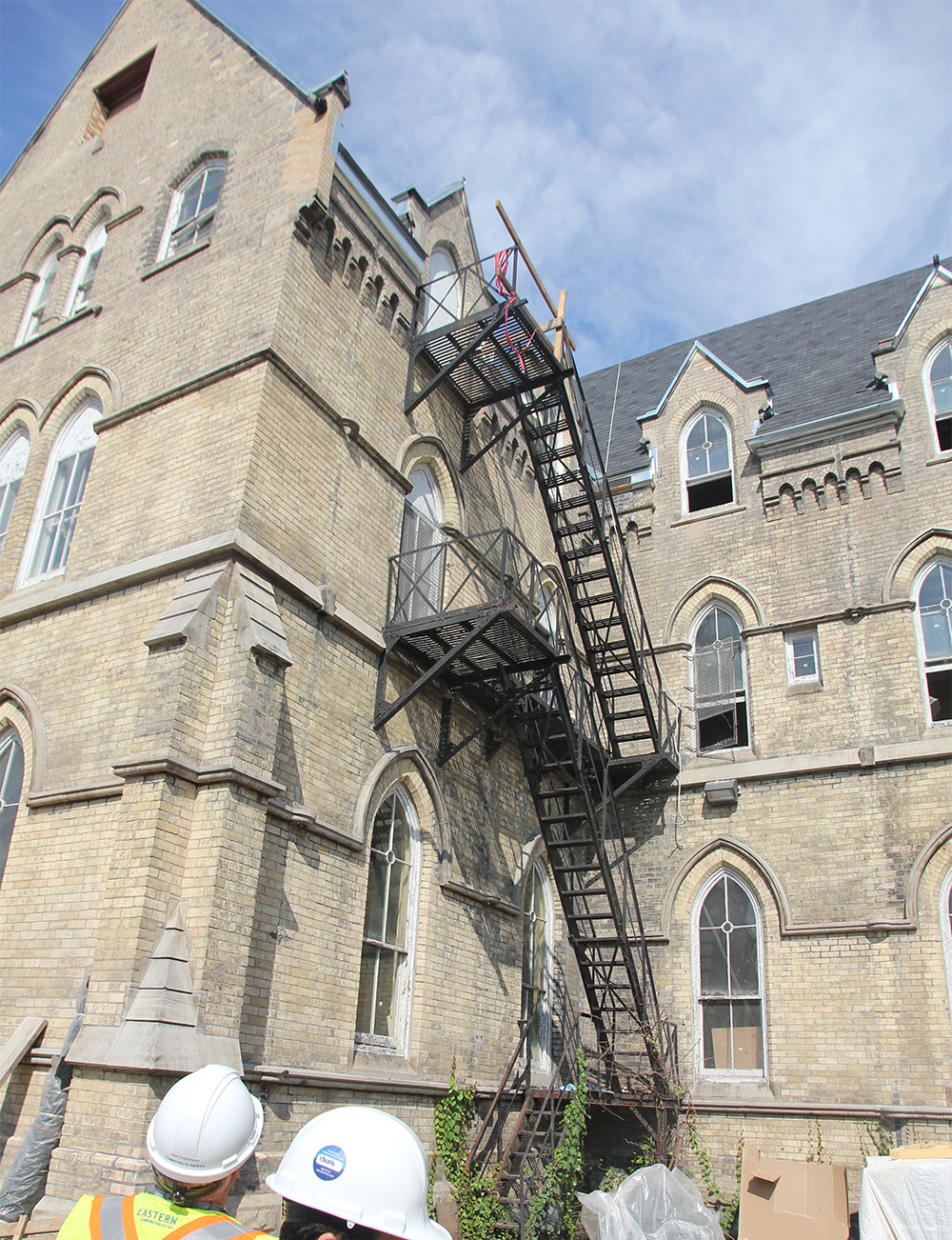
AFTER: 1 Spadina Crescent, west wing pictured after vine removal and masonry cleaning (August 2014)

BEFORE: 1 Spadina Crescent, west wing pictured (December 2012)
Comments Off on NIGHT AND DAY
Nader gives his lecture ‘Pedagogical Constructs’ at UCLA Architecture & Urban Design on October 27, 2014 at 6:30pm.
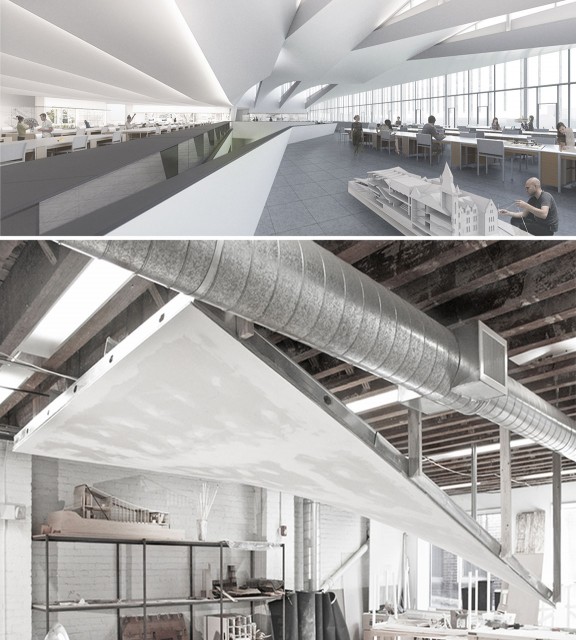
The above image is a rendering and mock-up for the Daniels Faculty of Architecture, Landscape and Design. See our NADLAB post on the mock-up for further details.
Comments Off on Nader lectures at UCLA
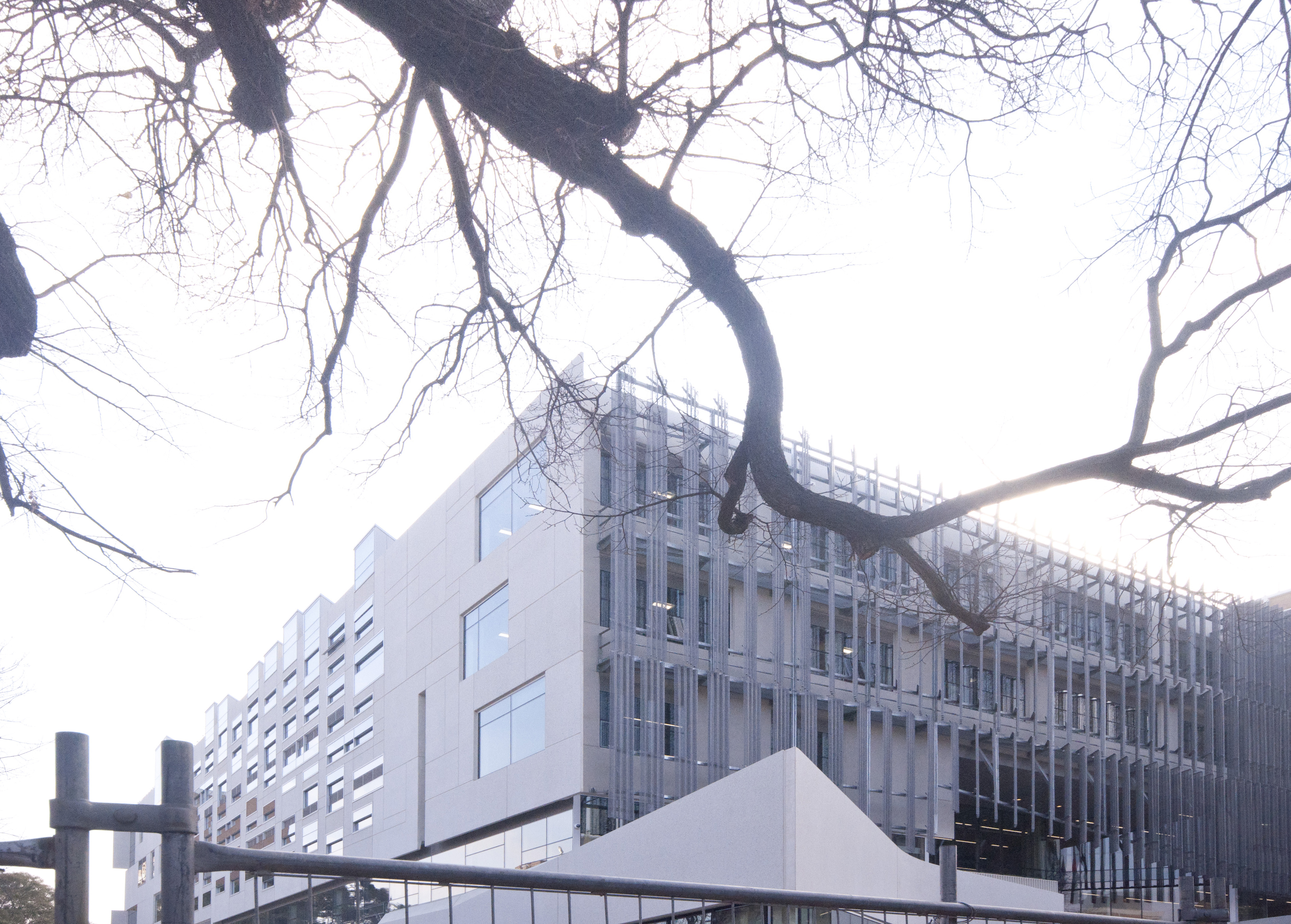
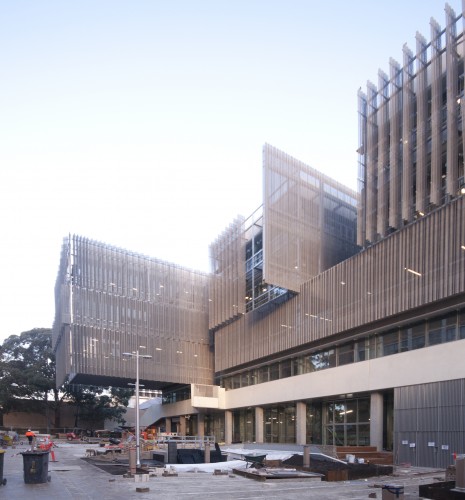
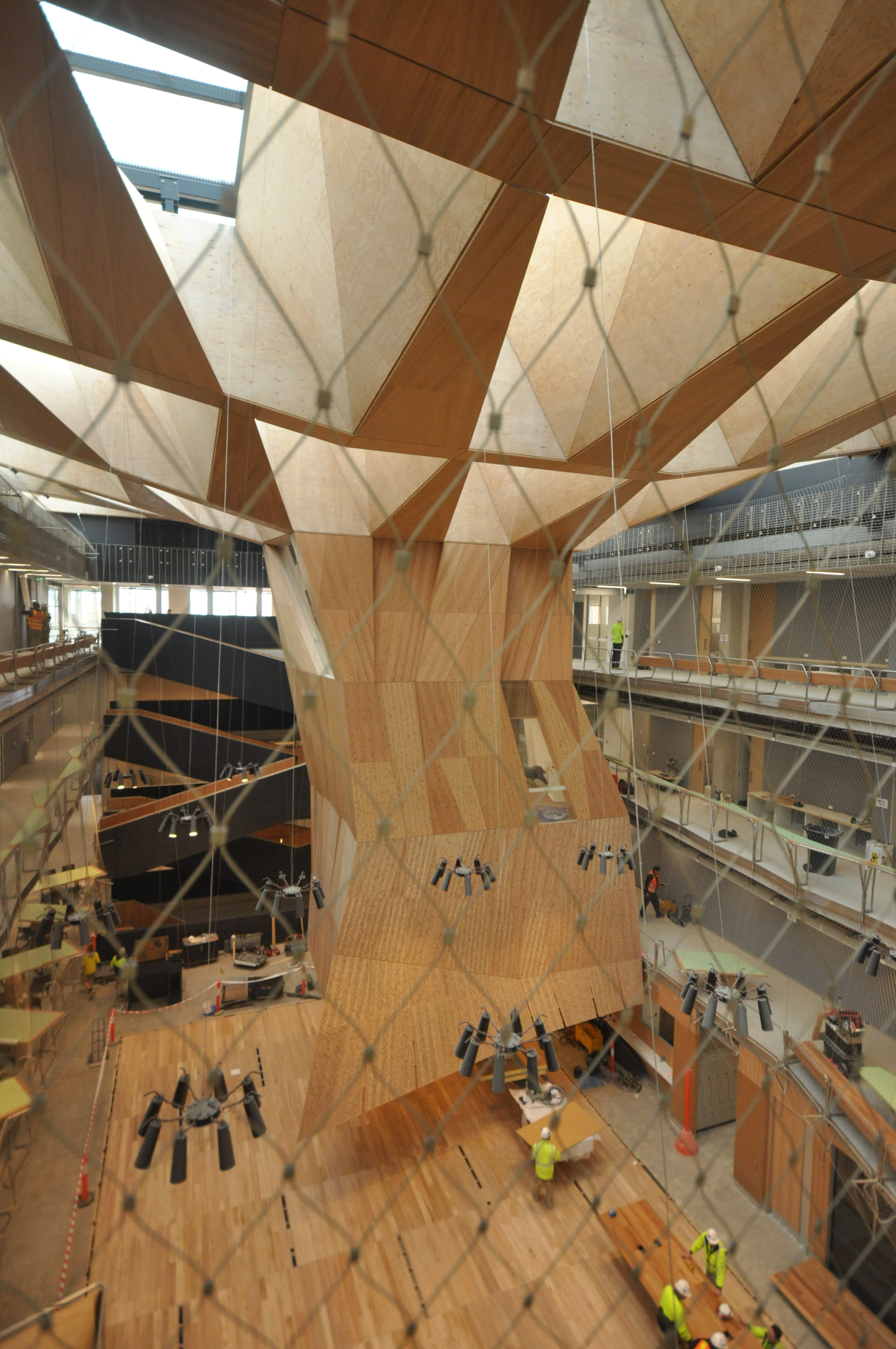
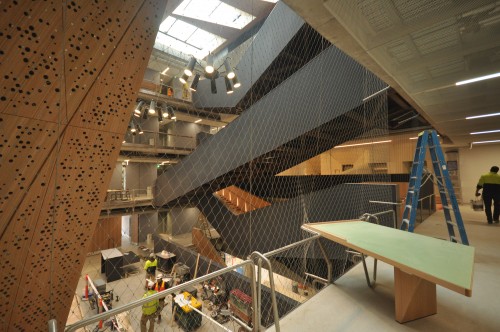
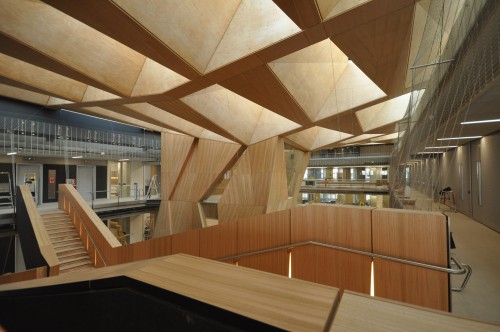
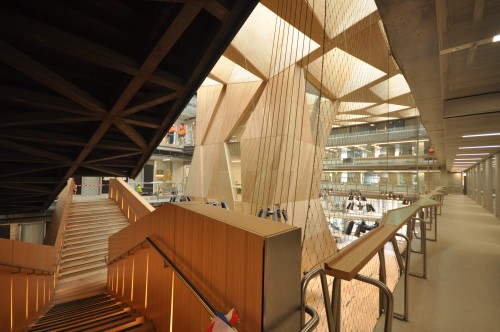
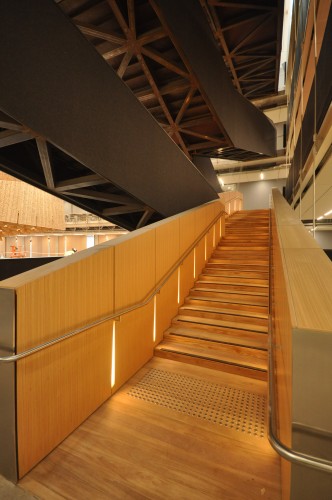
In the summer of 2009 John Wardle Architects invited us (then office dA) to collaborate on a open design competition for University of Melbourne’s Faculty of Architecture Building and Planning. Through the competition the University’s mission was to select a design team rather than a completed design. So our trans-global collaboration extended through an extensive re-evaluation of program and budget, complete redesign, documentation and construction. Today, 5 short years later, delivered by Brookfield Multiplex 6 months ahead of schedule and with a 6 star Greenstar rating, the building is nearly complete.


Comments Off on Almost done……..