FLEXIBLE CLADDING – MATERIAL STUDIES

Posted on January 8th, 2014 by pmacdowell

Posted under: construction, Installations + Exhibitions, NADLAB

The architectural explorations of NADAAA are launched with a bias towards material behavior—tapping into a material’s predisposition, whether it is malleability, translucency, structural rigidity or another property. These properties, in turn, offer geometric opportunities, freeing up the architectural figure from the constraints of the orthogonal box, while also enabling a more reciprocal relationship between form and program, figure and organization, or function and envelope.

Our in-house fabrication capabilities allow us to interrogate our conceptual inclinations toward material in immediate and physical ways.  Our interest in flexible, shingled cladding systems has spurred several trajectories of material exploration, shared below. These preliminary exercises inform our design process, catalyzing the dialogue between ideas, materials, tools, and making.

This work is currently exhibited at the SCIN Gallery in London.
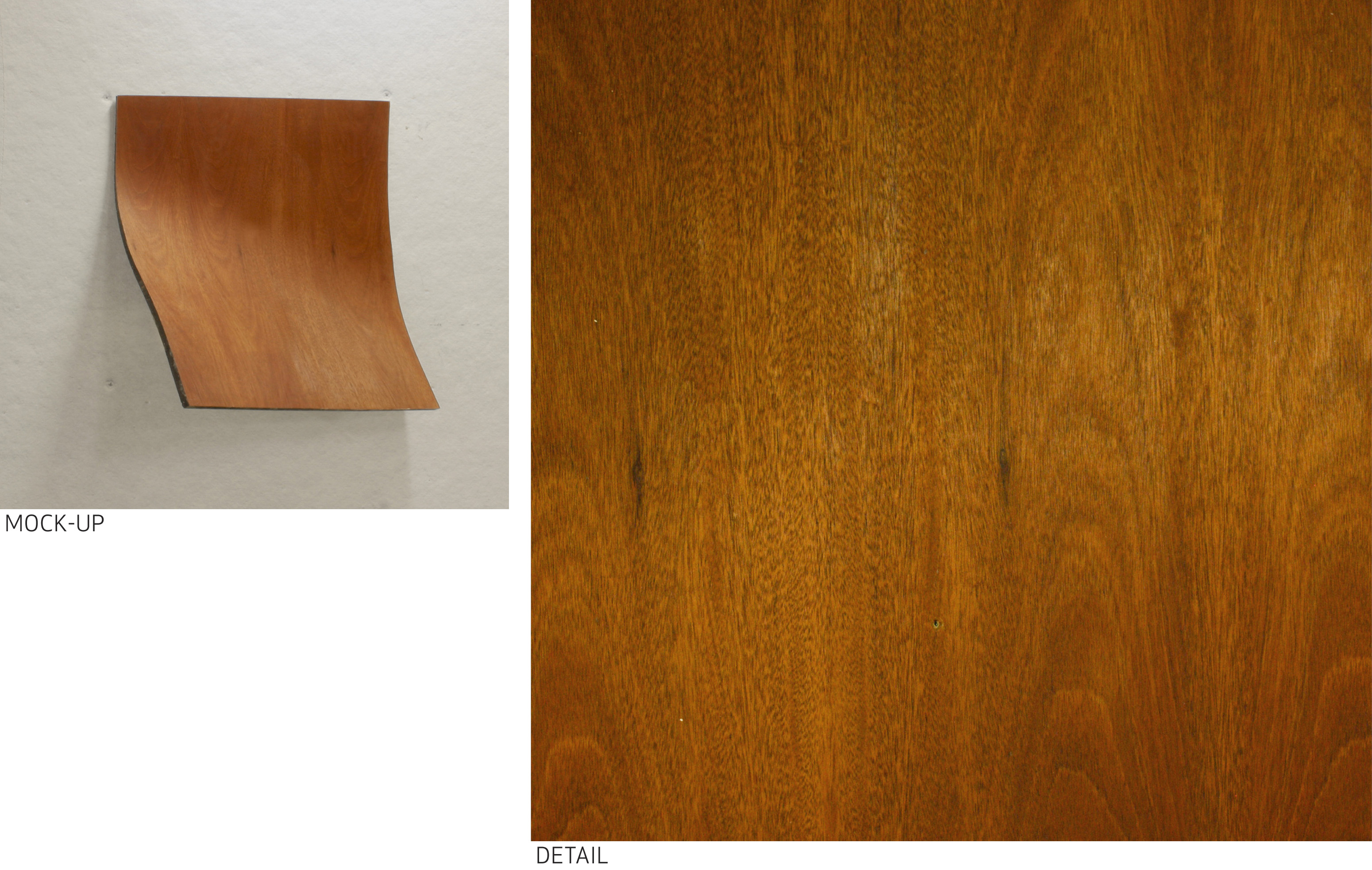
 

1Flexible composite panel: Cherry veneer bonded to a rubber substrate
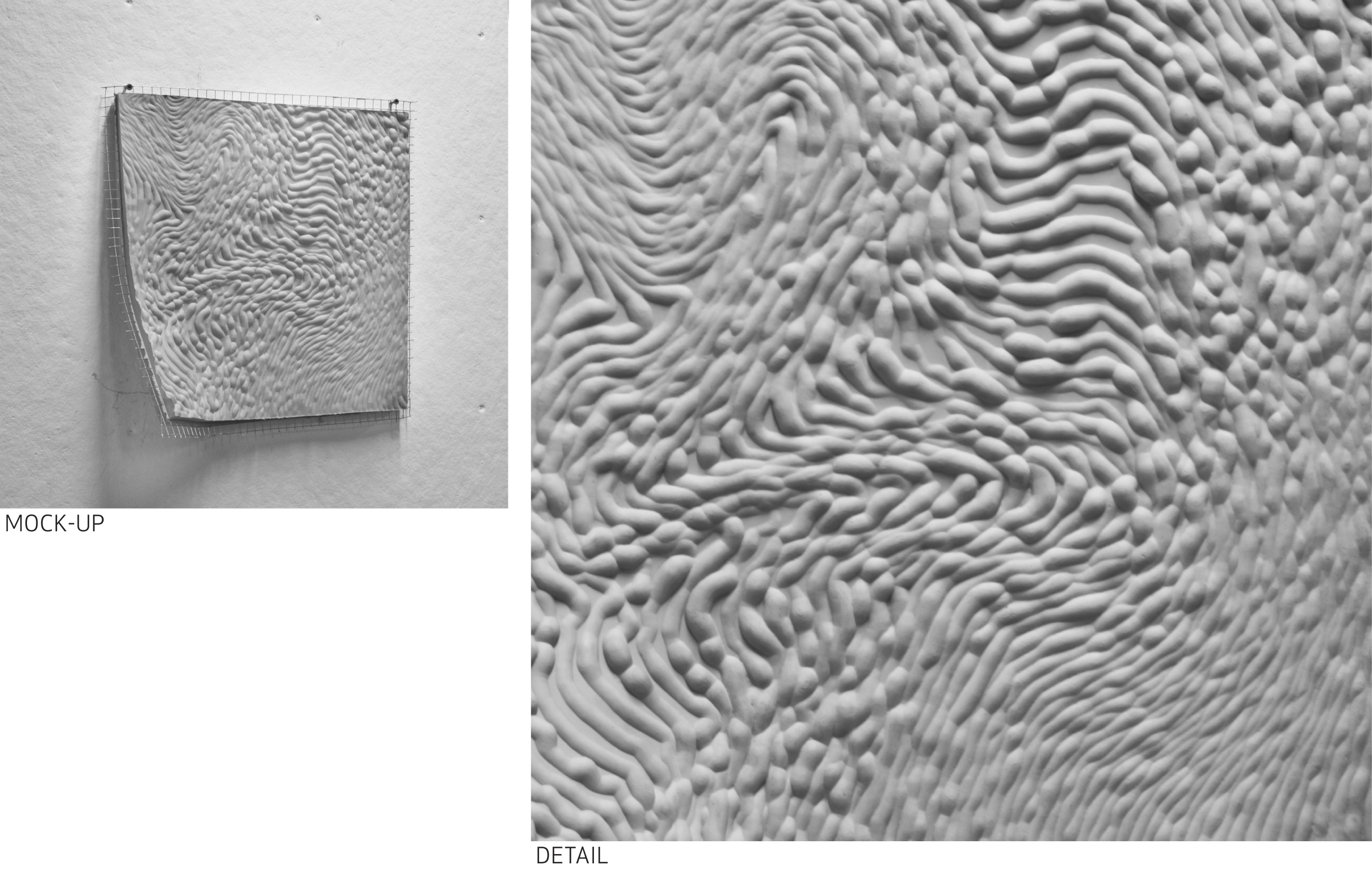
 

2
Flexible composite panel: Silicone rubber, cast in a digitally fabricated mold, reinforced with steel wire mesh.
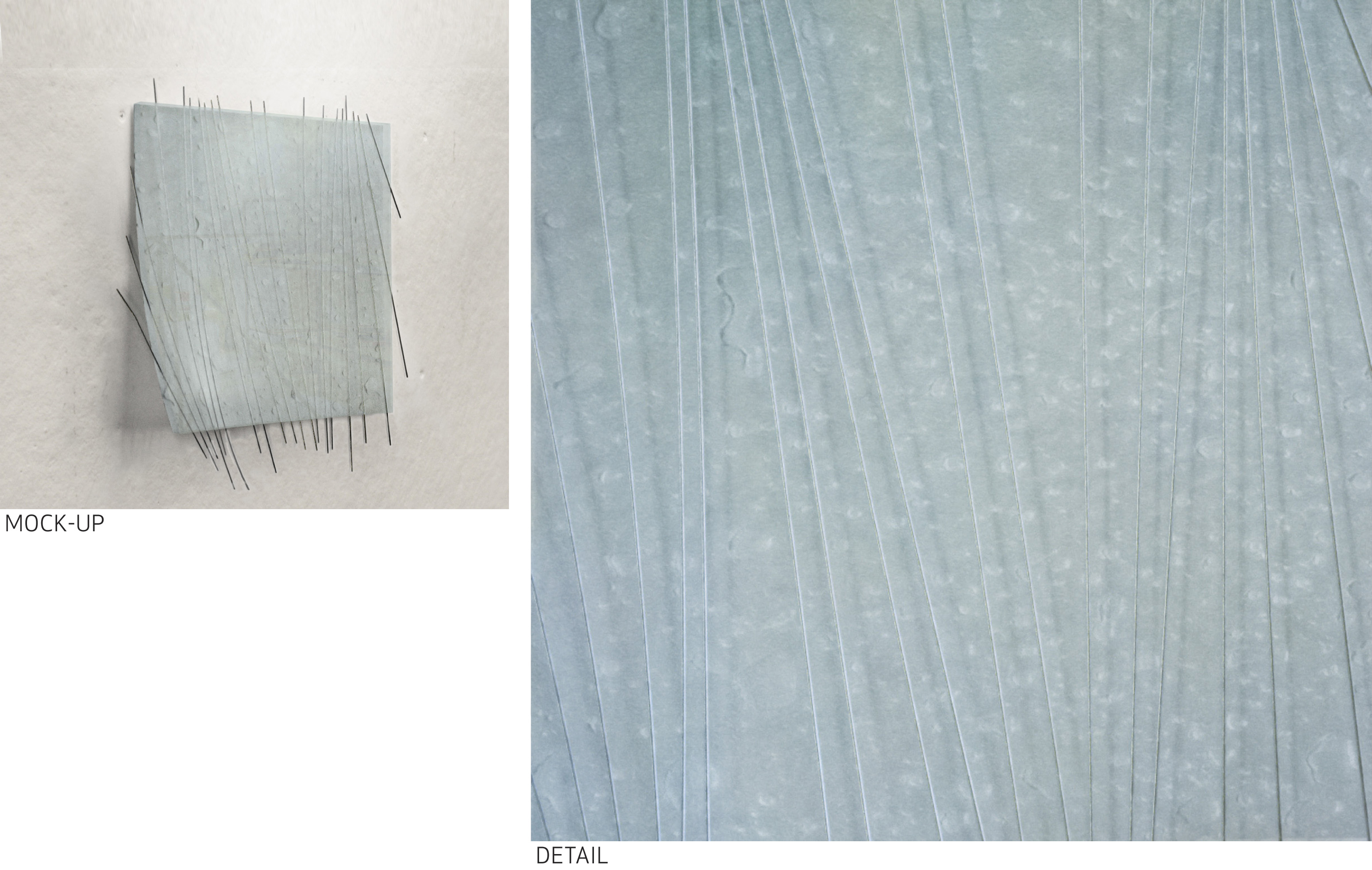
 

3Flexible composite panel: Translucent urethane rubber, directionally-reinforced with stainless steel wire.
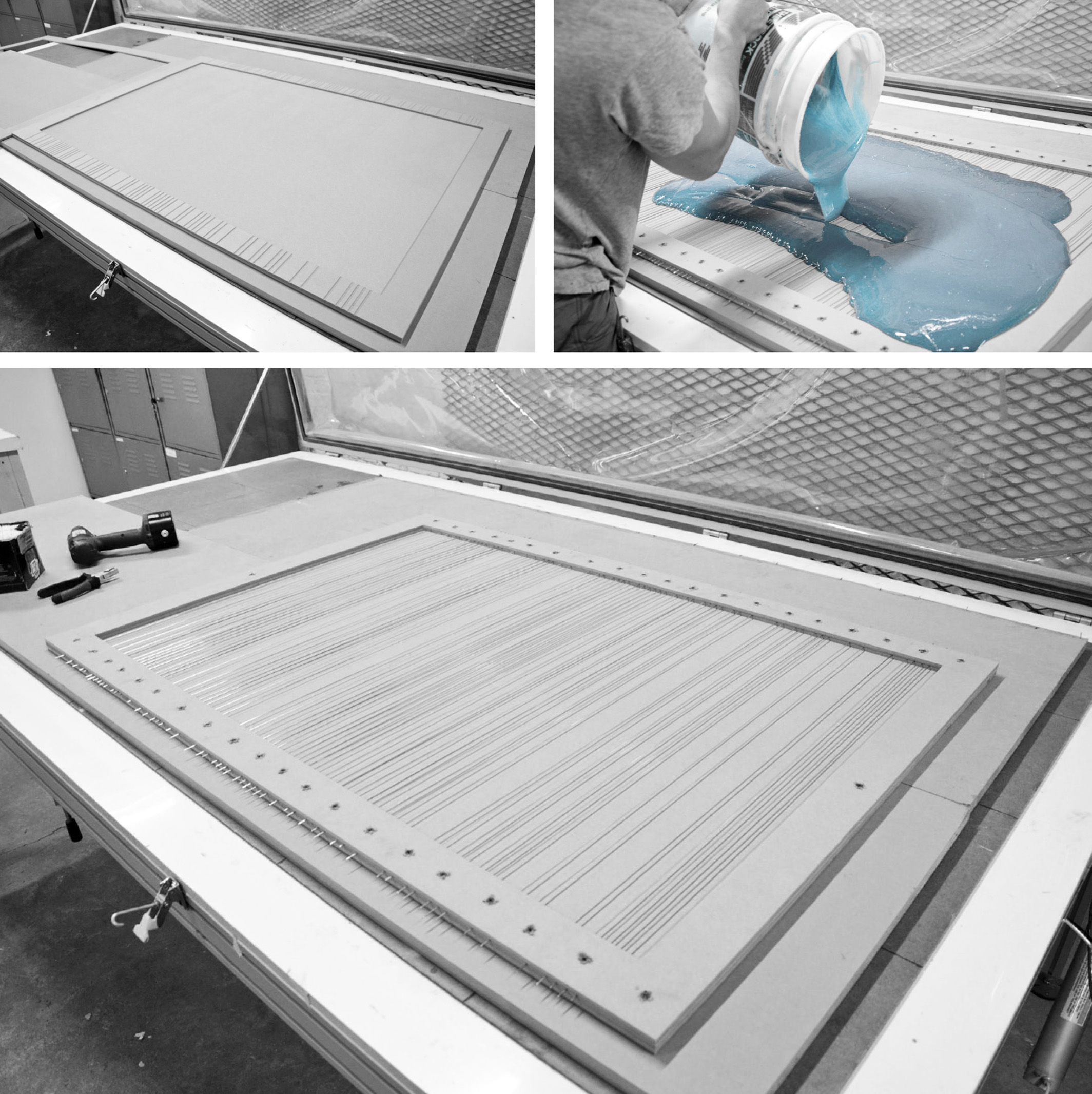
 

4The flexible composite panel pairs the malleability of silicone rubber with the strength of stainless steel.  The panel’s translucency reveals the architecture of its directional-reinforcement.
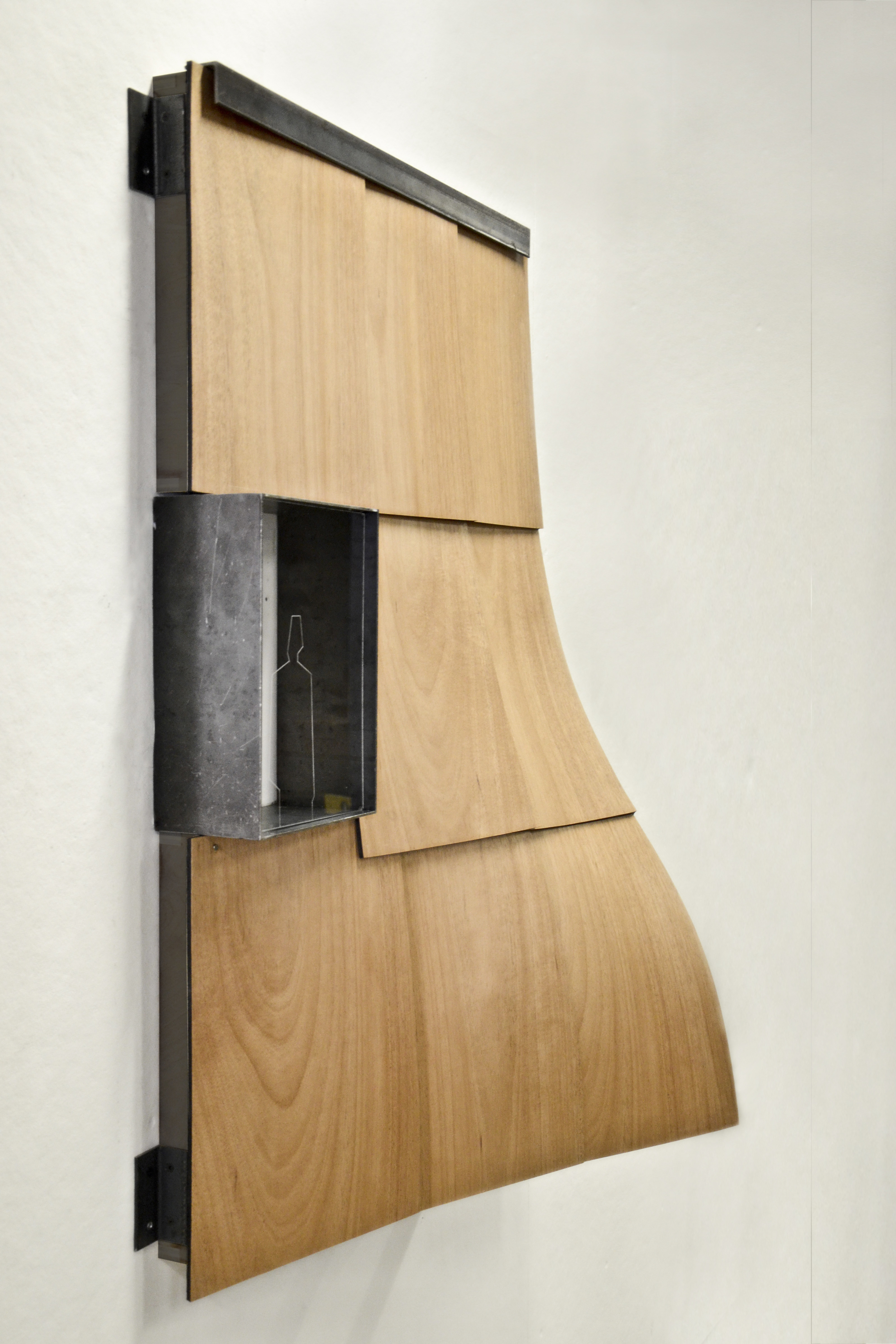
 

NADAAA_021:4 scale rainscreen mock-up.  The flexible shingle displayed in this system is a wood veneer laminated to a recycled rubber substrate with marine epoxy.  The veneer is sealed with satin exterior-grade polyurethane.  Dims: 45″ x 30″ x 15″

 

NADAAA_03Full-scale flexible shingle made of translucent silicone rubber, directionally-reinforced with stainless steel rods.  The panel is hung from a steel frame with integral lighting.  Dims: 45″ x 30″ x 5″

Shingle_Arrangements2-ARC

Geometry emerges as negotiation between material and fabrication processes, while also proving to be a figurative device that is larger than the sum of constructive parts. As such, as the research develops from the scale of the installation to the scope of buildings, the complexity of wall and assembly systems assume broader responsibilities, synthesizing environmental aspects of the building with programmatic goals while also addressing the civic presence of the building within its context.
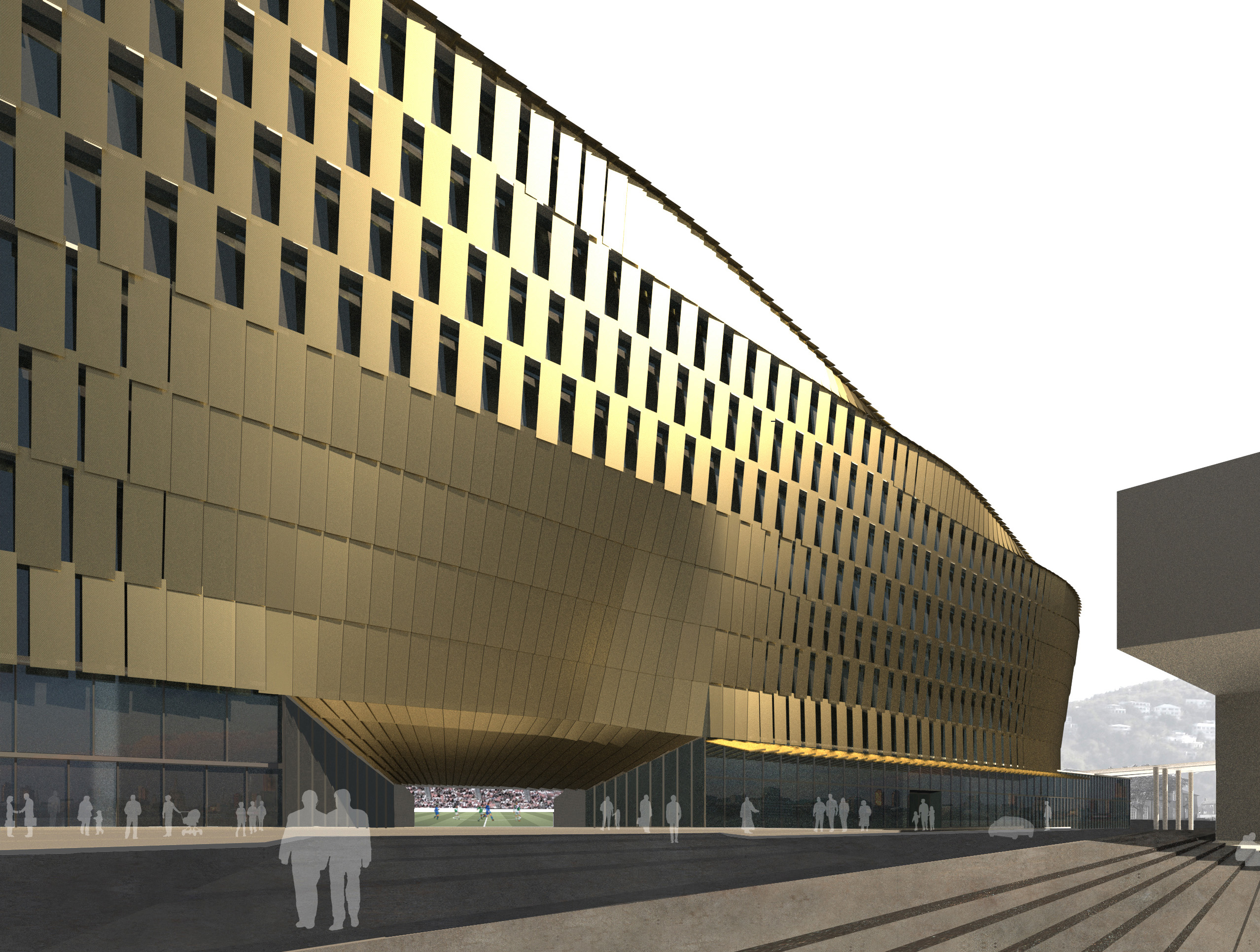
THU_REN_019aOur concept proposal for Thunder Stadium features flexible-shingled cladding similar to the prototypes shared here.  The project employs this versatile  envelope toward the reconciliation of various forces: materials, tectonic systems, programmatic pressure as well as the urban presence of the stadium within the historic core of St. Paul.


Comments Off on FLEXIBLE CLADDING – MATERIAL STUDIES

Aesop East Hampton

Posted on January 2nd, 2014 by pmacdowell

Posted under: construction, Installations + Exhibitions, NADLAB

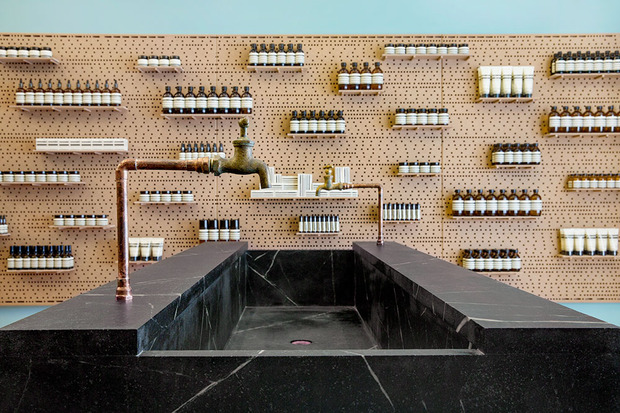
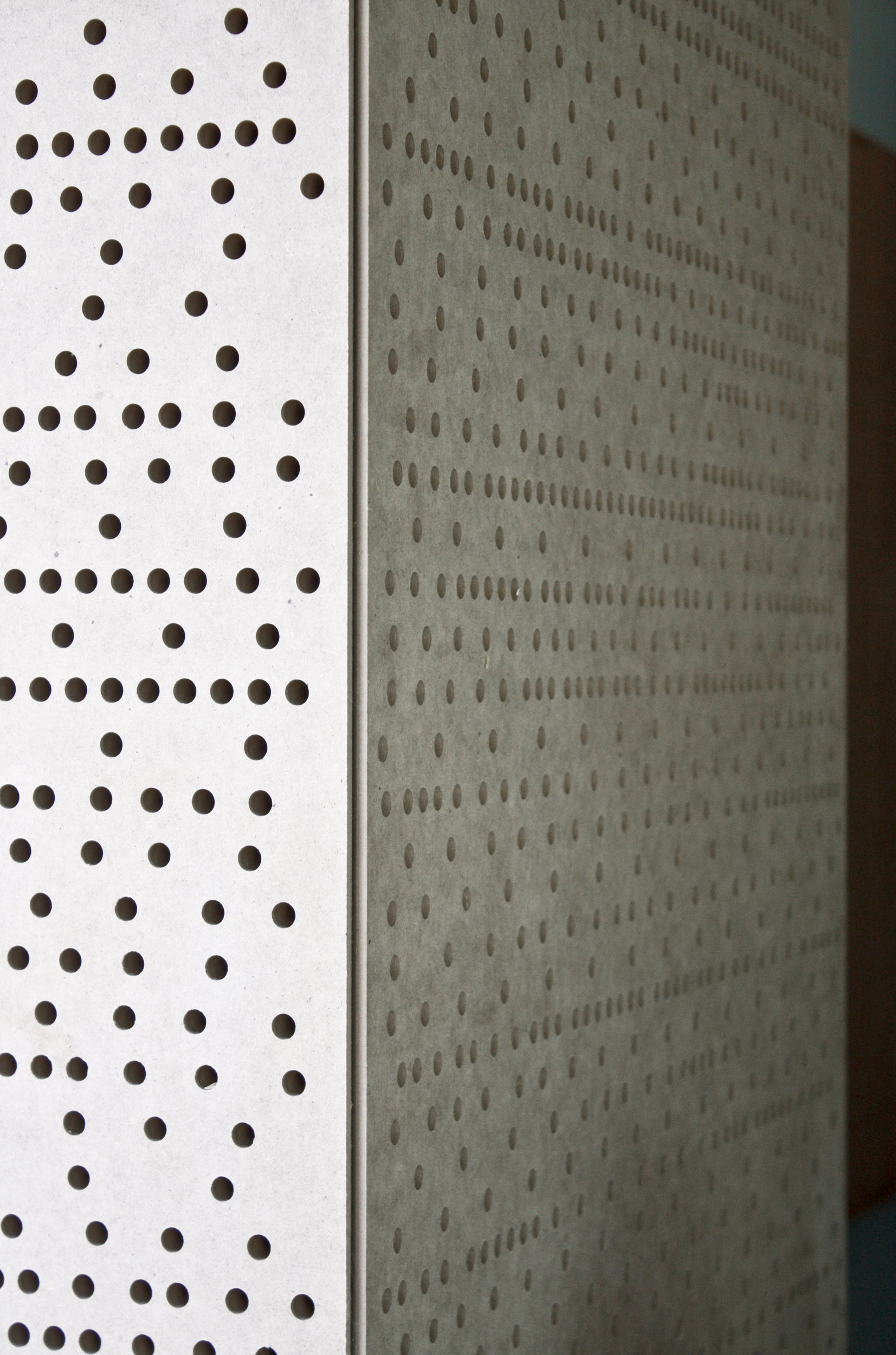
The carefully articulated textures of Aesop East Hampton leverage novel detailing to deliver a visually and tactilely engaging retail space. A band of digitally-fabricated pegboard shelving panels emerges from the  large window at the fore of the space, providing a flexible means of displaying product and embedding hidden Morse code messages.  A large soapstone basin with vintage garden taps sits on a steel base in the center of the room while the point-of-sale island anchors the rear of the space. The feature elements of the project were fabricated in-house at our Boston office and installed onsite by the NADAAA team.

01_beauty_newsThe completed retail space.

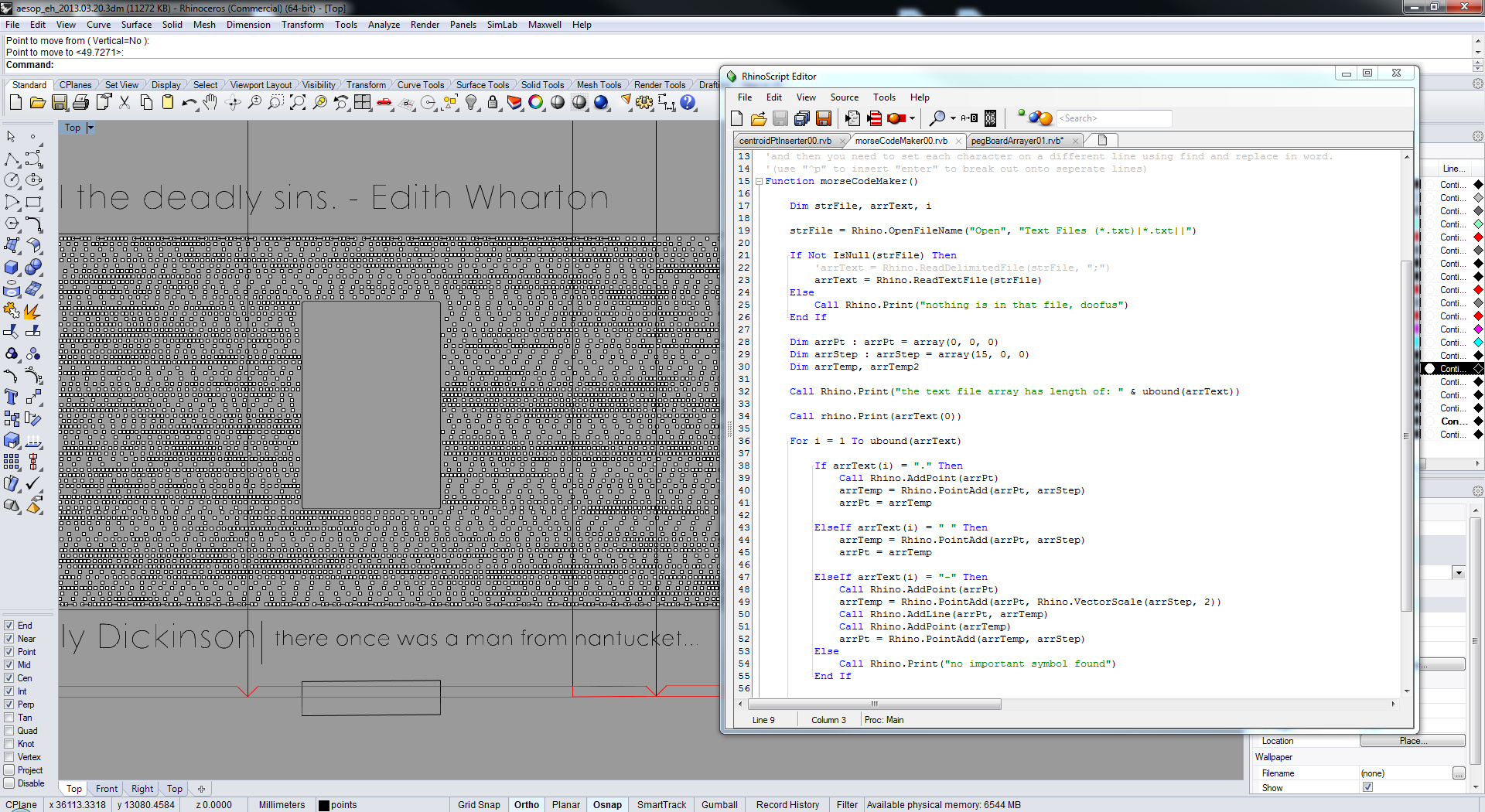
rhinoscriptingPatternCustom computer codes generate the varied peg-board pattern and hidden morse-code messages.

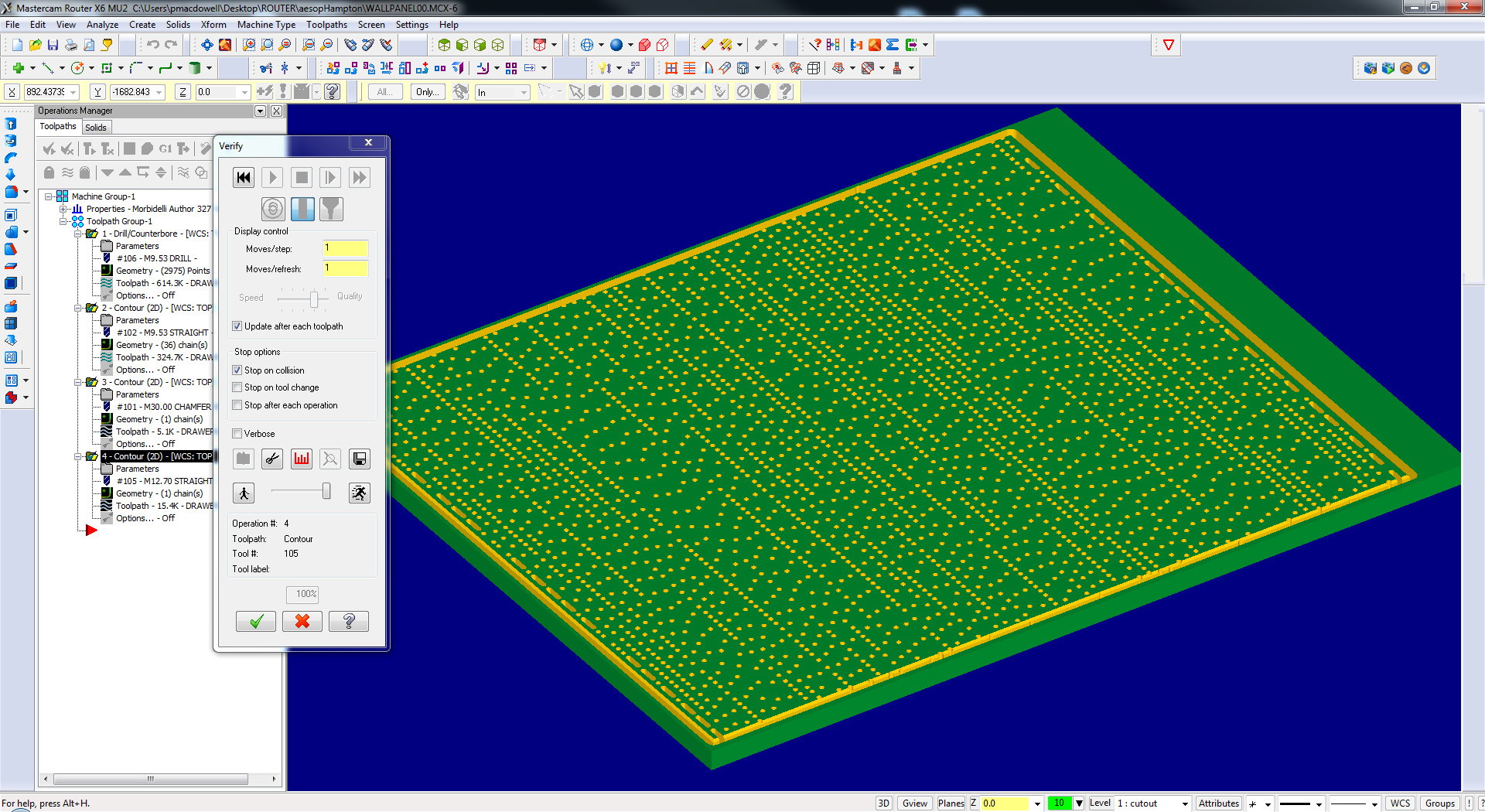
toolpathVisualizationThe CNC-cutting process for each wall panel is digitally simulated before fabrication.

_MG_0090Finished panels are staged in the shop, awaiting transport to the project site.

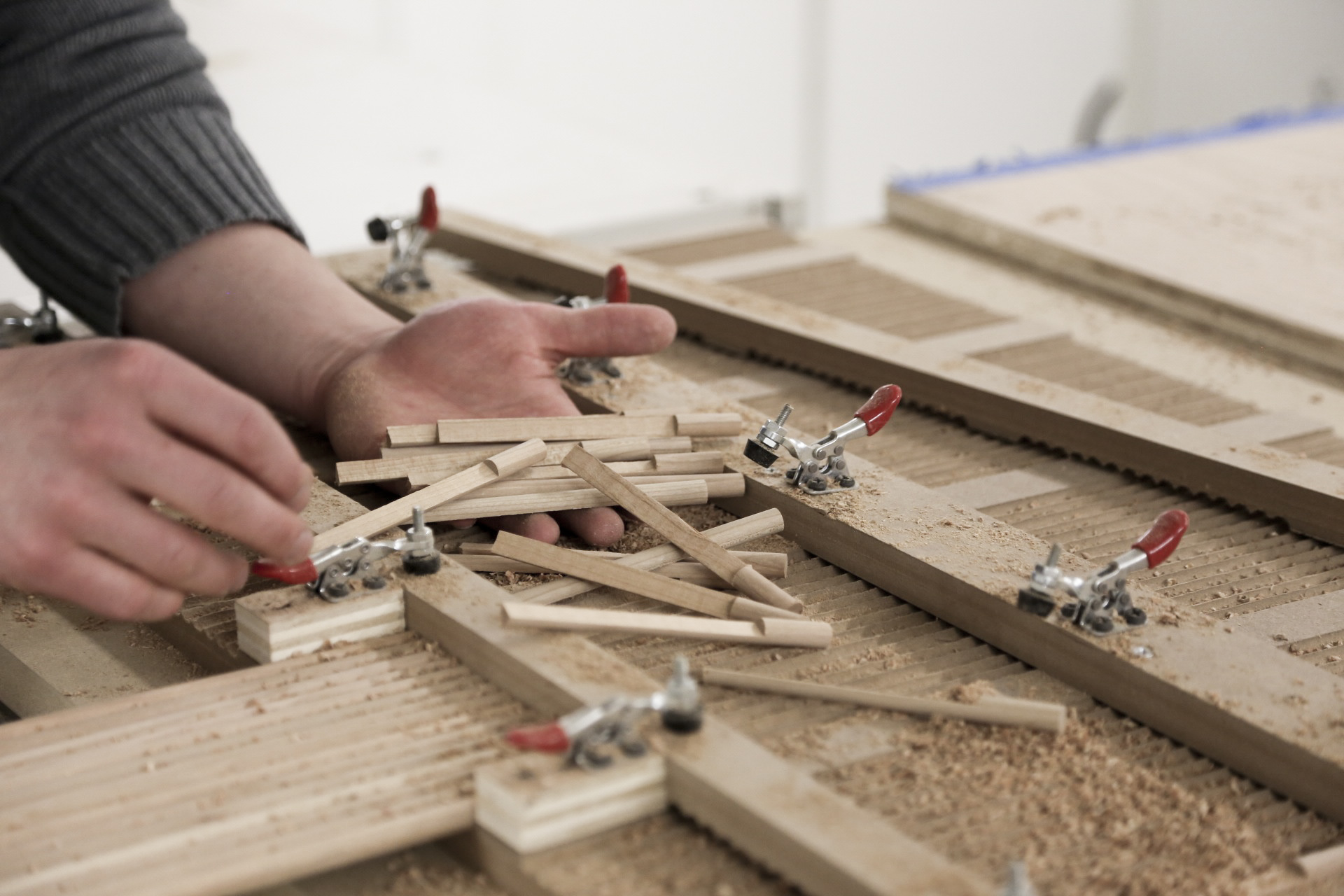
IMG_2210A specialized jig is used to cut the shelving pegs for the wall panel system.

IMG_0485Welding the steel base for the soapstone sink.

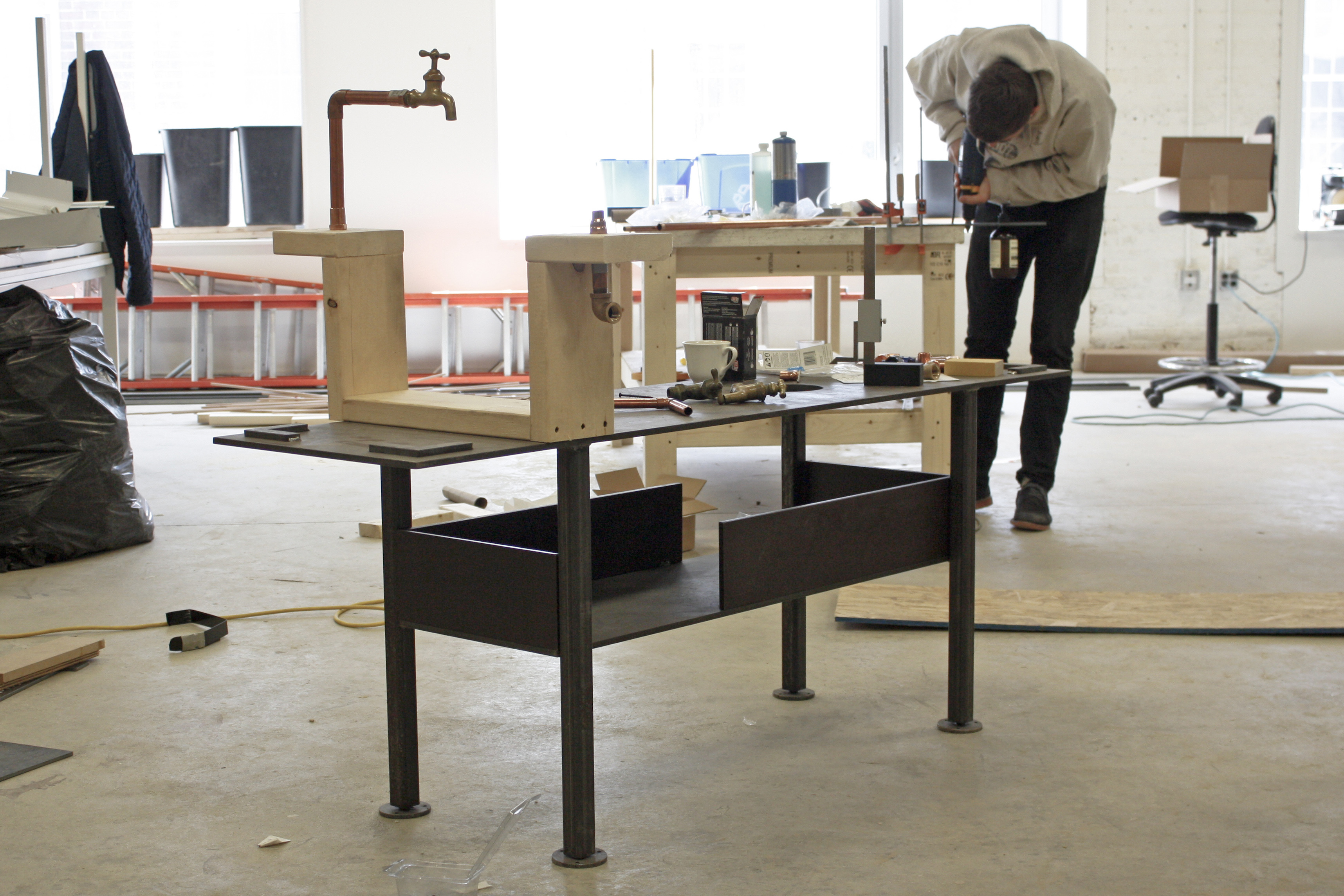
_MG_0095A timber mock-up representing the soapstone sink is used to evaluate faucet design.

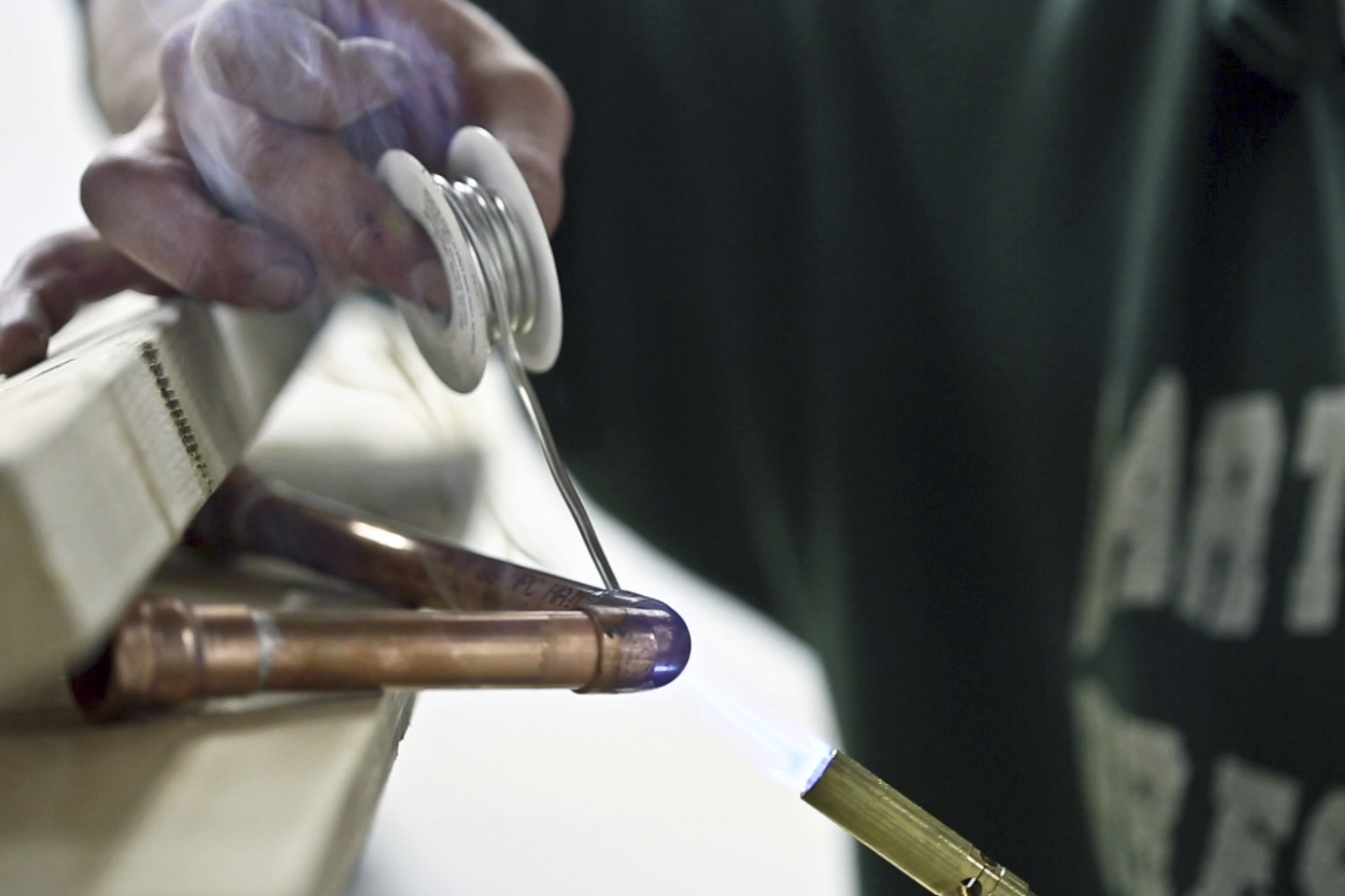
solderingThe faucet hardware for the sink is soldered on site.

aesop-east-hampton-4-thumb-620x413-58808The custom soapstone sink is centrally located in the retail space.

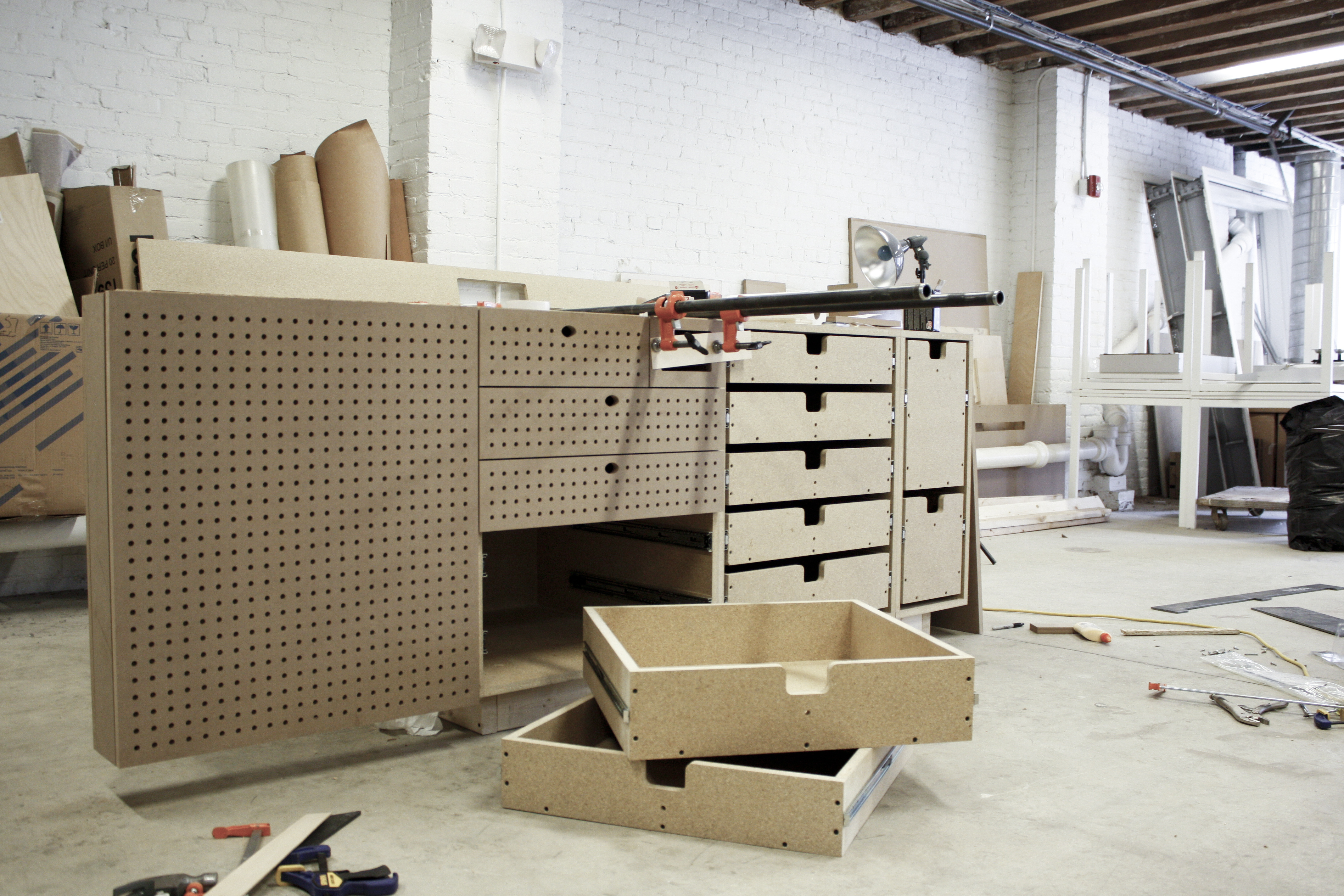
_MG_0087The point-of-sale counter is fabricated in the shop, then disassembled for transport to the site.

EDIT01The point-of-sale island secrets the necessary retail electronics and tools behind a variation of the perforated scheme used on the walls of the store.

EDIT02The wall panels mounted to the wall with z-clips on furring strips.

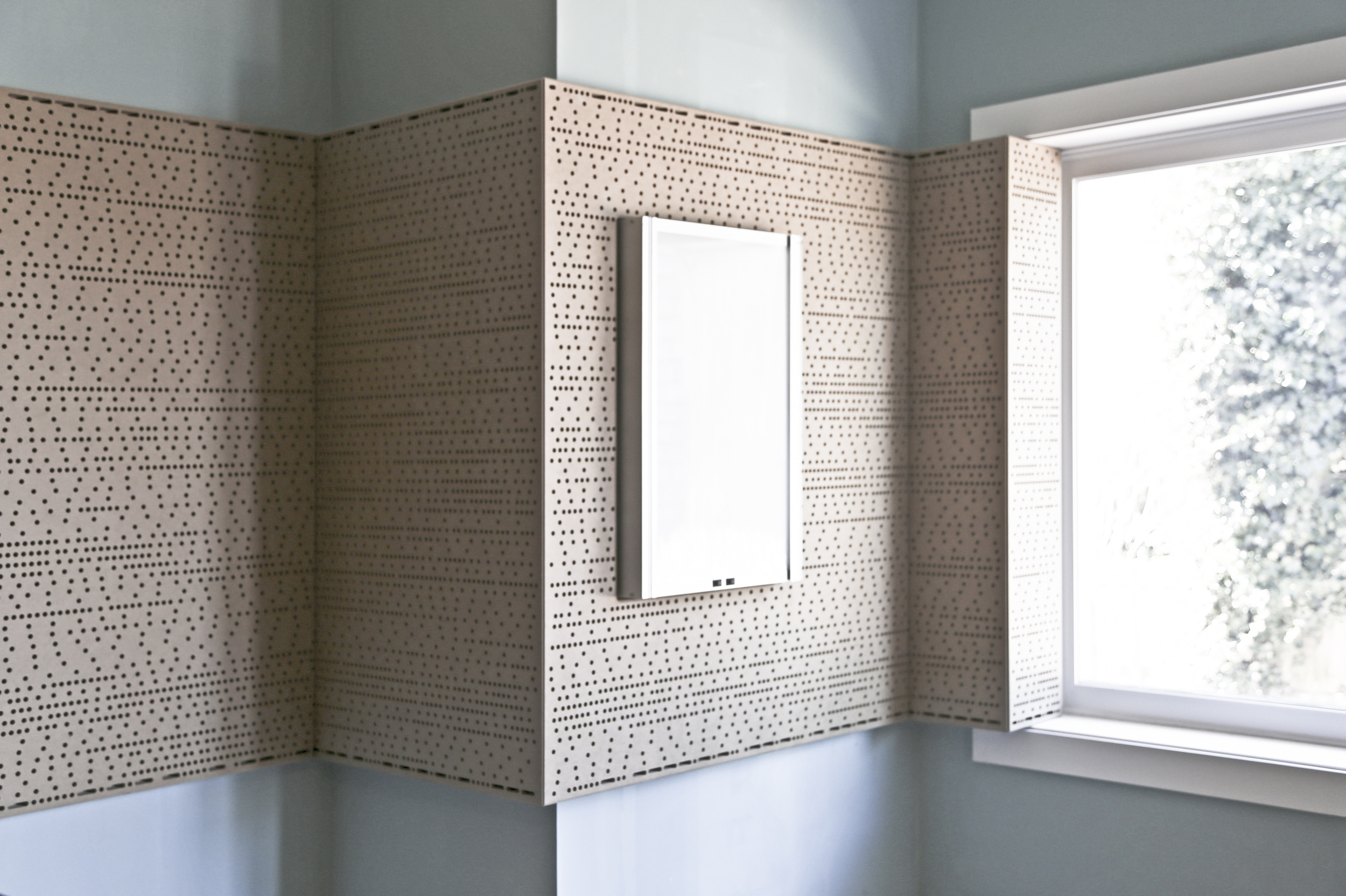
aesop_eh_millworkinstall_17The wall panel system emerges from the window to wrap around the retail space.

aesop_eh_millworkinstall_04Corner detailing.

aesop_eh_millworkinstall_13

02_beauty_news_1The pegboard pattern maps continuously over panel seams.  Shelving can be easily reconfigured to accommodate evolving product lines.


Comments Off on Aesop East Hampton

Makers in the Making Soft Opening

Posted on November 30th, 2013 by Lisa LaCharité

Posted under: Installations + Exhibitions

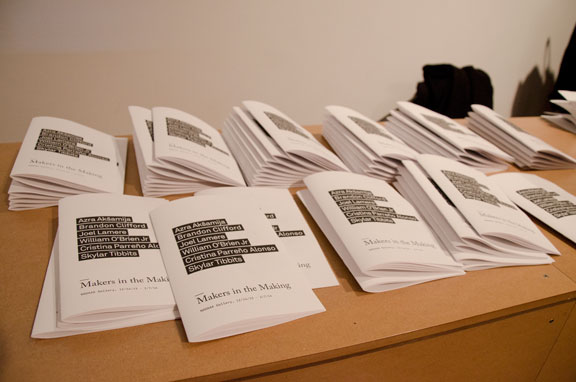
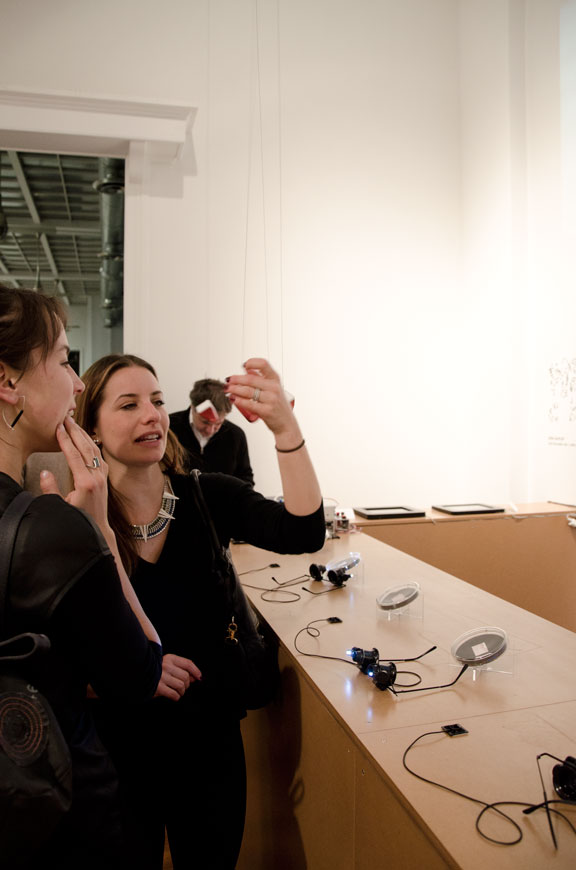
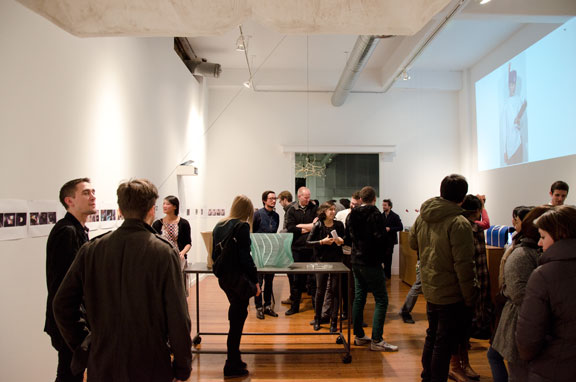
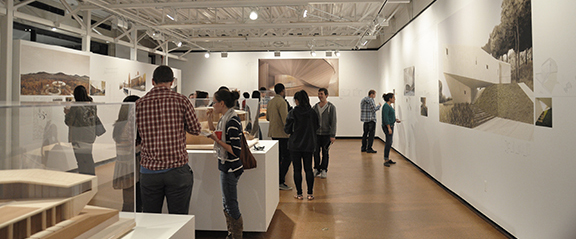
In recent years, the privileged role of representation has given way to other critical forms of pedagogy within the Academy of Architecture. Beyond acts of drawing, specification and communication, the architect’s role has not only been expanded to include a political domain that challenges the industry’s means and methods of fabrication, conventional protocols of building, and a subservience to the construction industry at large, but also a re-evaluation of the instruments of analysis to include tactics from the arts, sciences, and cultural media to expand the critical terrain of the discipline at large. Architects are, more than ever, researching, making, testing and simulating with materials – both physical and cultural– as a foundation for imagining other ways to transform practice as we have come to know it. In the Academy, instead of preparing students for a practice on the verge of obsolescence, our faculty is taking on material practices that invent alternative ways of creating architectural organizations, smart systems, interactive environments and an architecture that is responsive to complex social and cultural demands. This is MIT, and these are Makers in the Making. Nader Tehrani

MIT SA+P tweet from Makers in the Making soft opening on November 14, 2013:

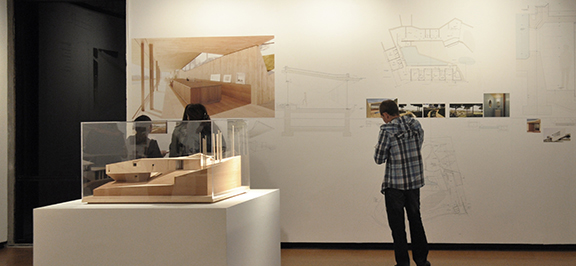
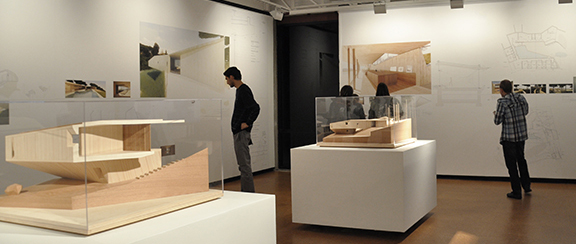
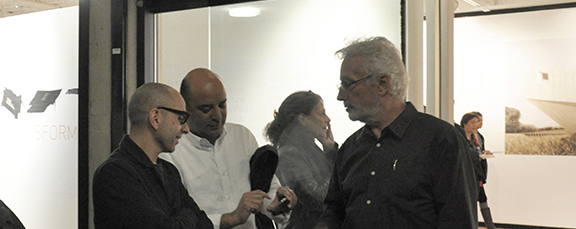
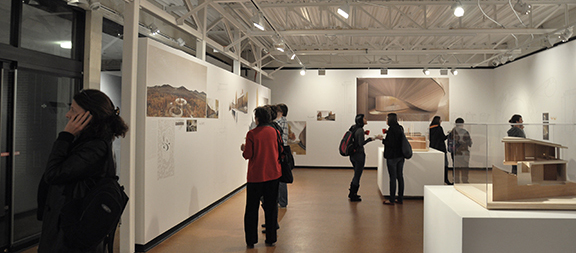
NADAAA Gallery and MITM exhibitors are now in preparation for the Makers in the Making (MITM) opening in December. The NADAAA Gallery doors will be open to visitors after December 13 for regular viewing. More details to come. See photos from our soft opening in November below.


mitmitm-13

mitmitm-12

mitmitm-11

mitmitm-10

mitmitm-9

mitmitm-8

mitmitm-7

mitmitm-6

mitmitm-5

mitmitm-4

mitmitm-3

mitmitm-2

mitmitm-1

Comments Off on Makers in the Making Soft Opening

DFALD HYPERBOLIC PARABOLOID CEILING MOCK-UP

Posted on November 26th, 2013 by pmacdowell

Posted under: construction, Installations + Exhibitions, NADLAB

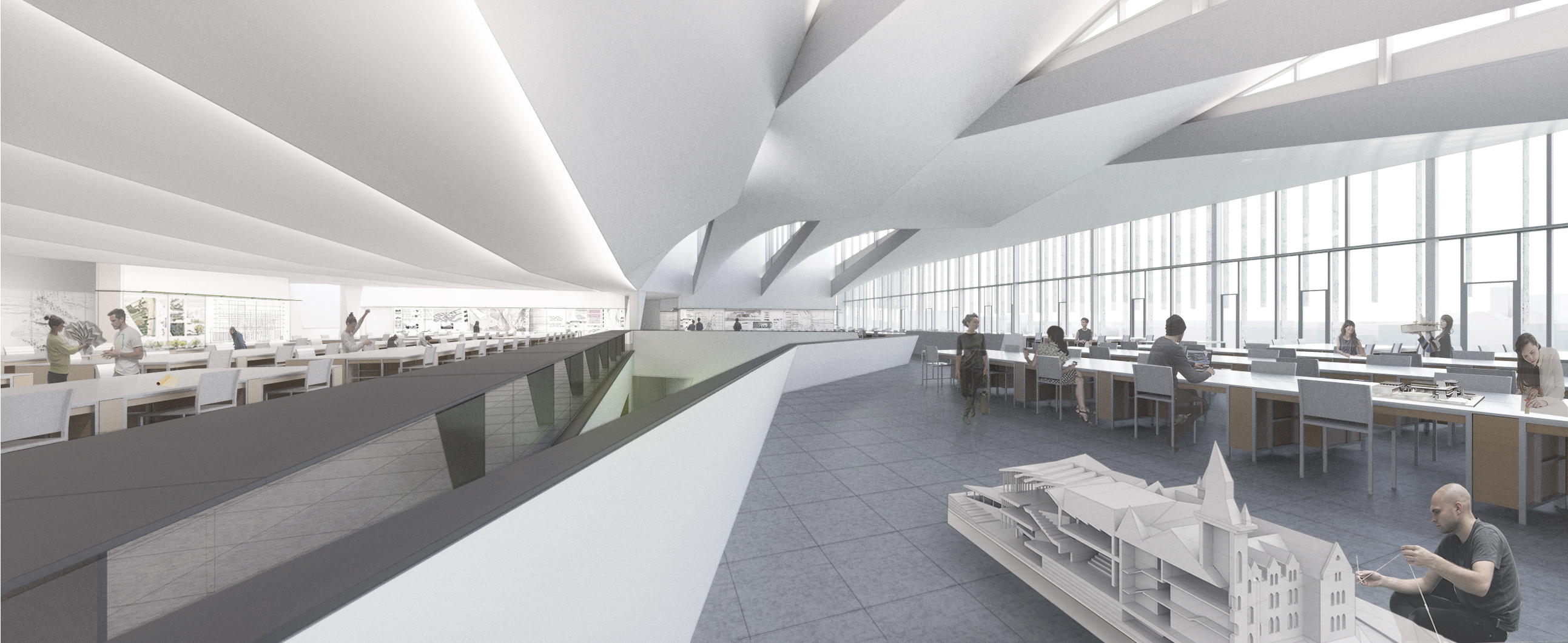
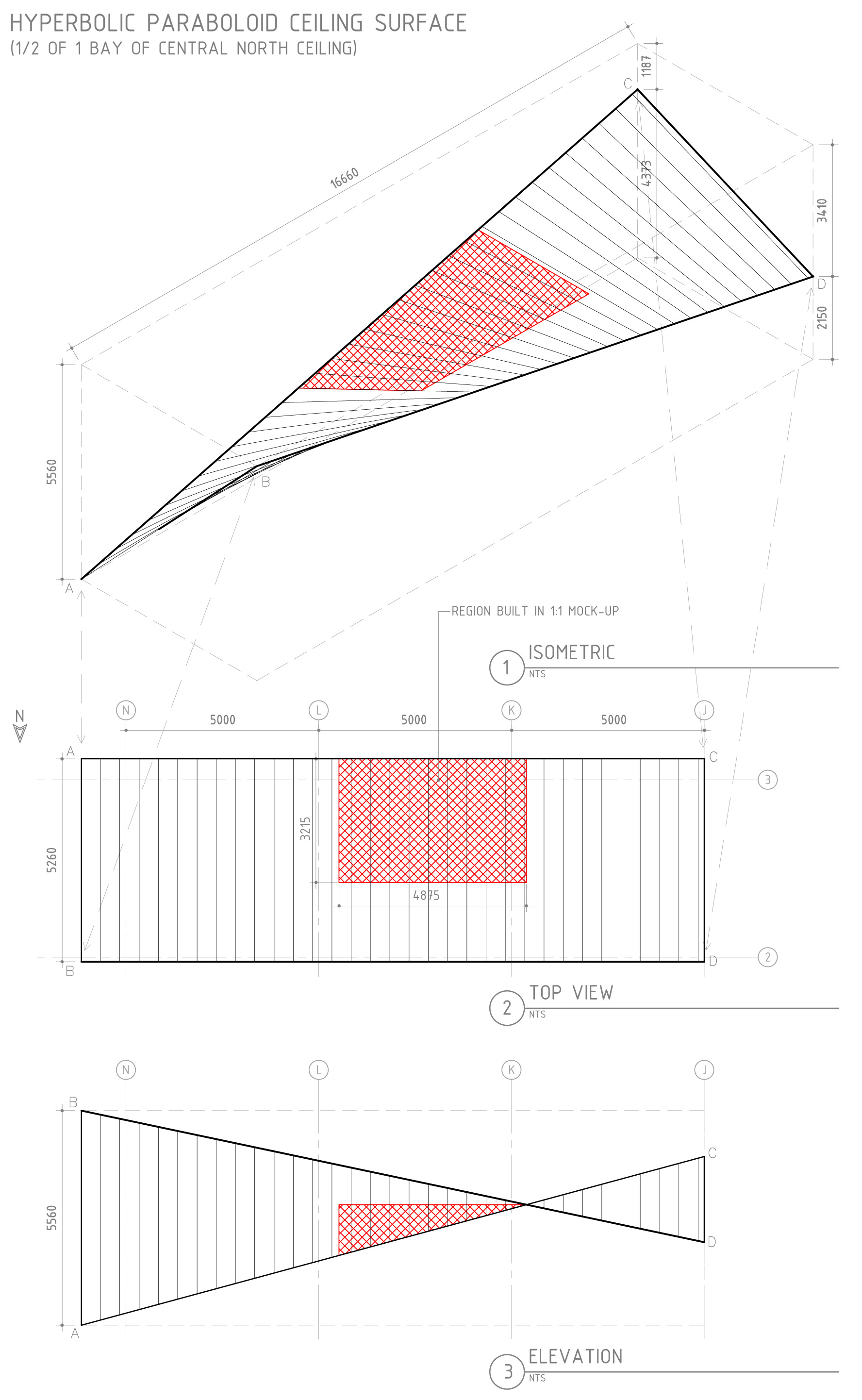
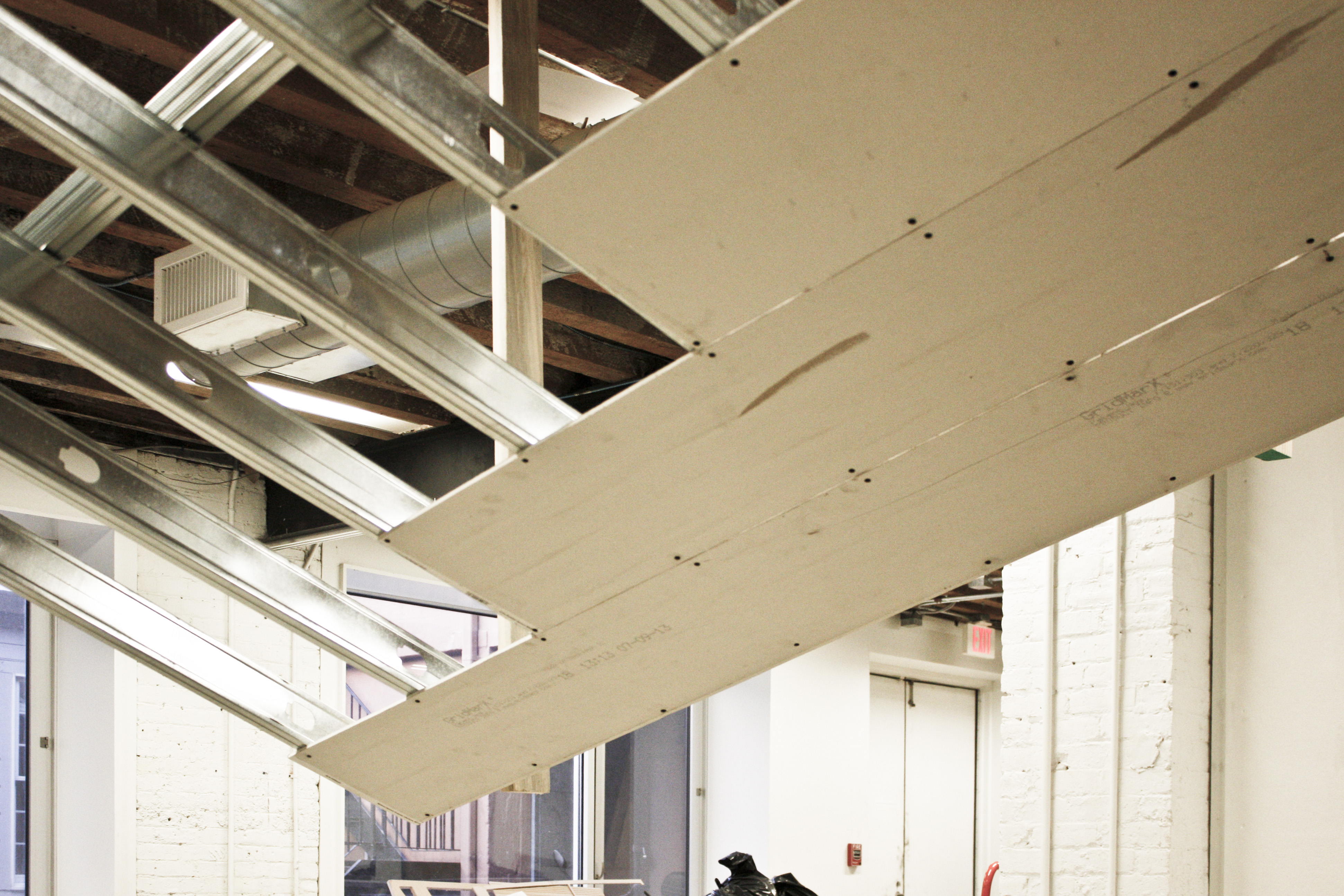
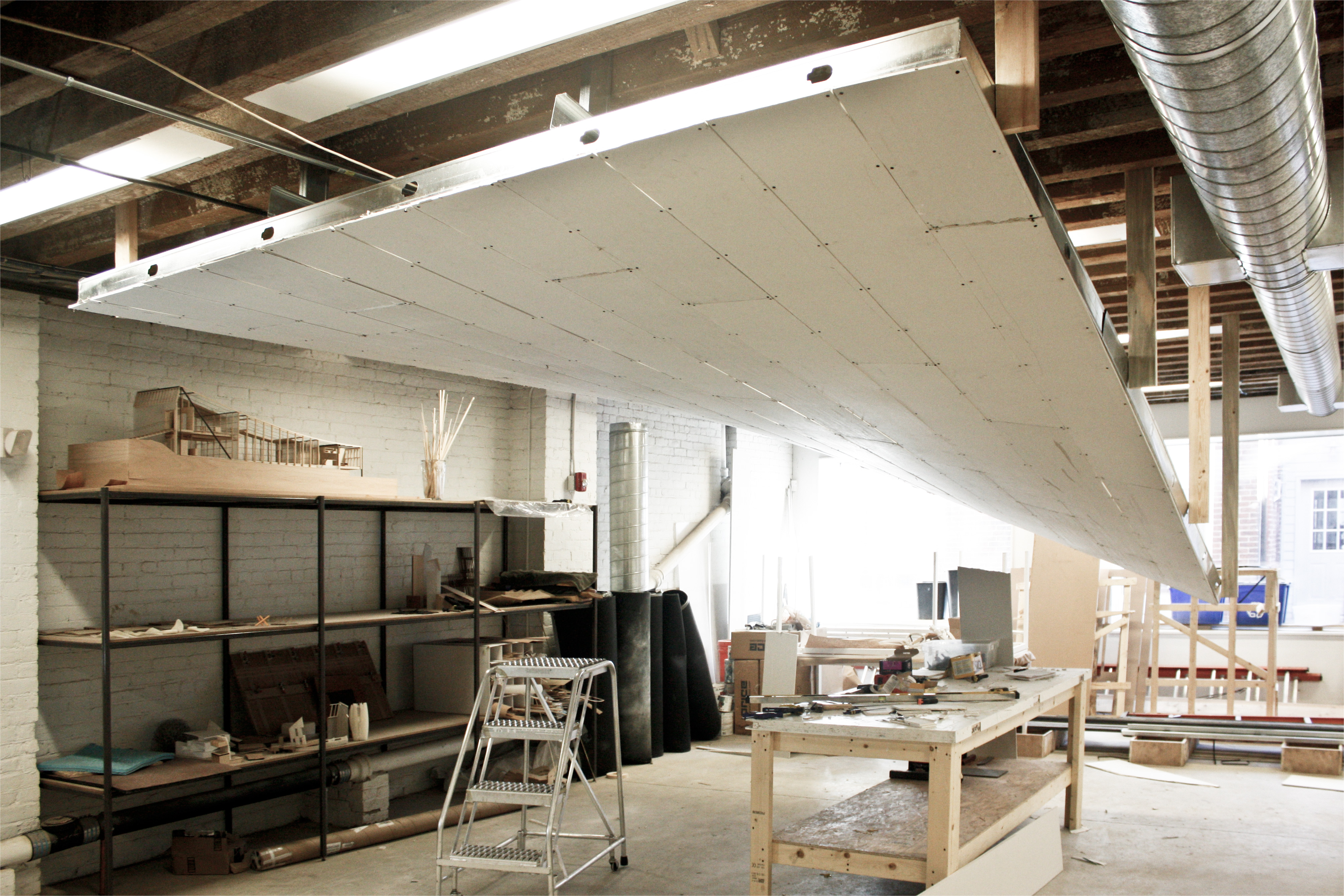
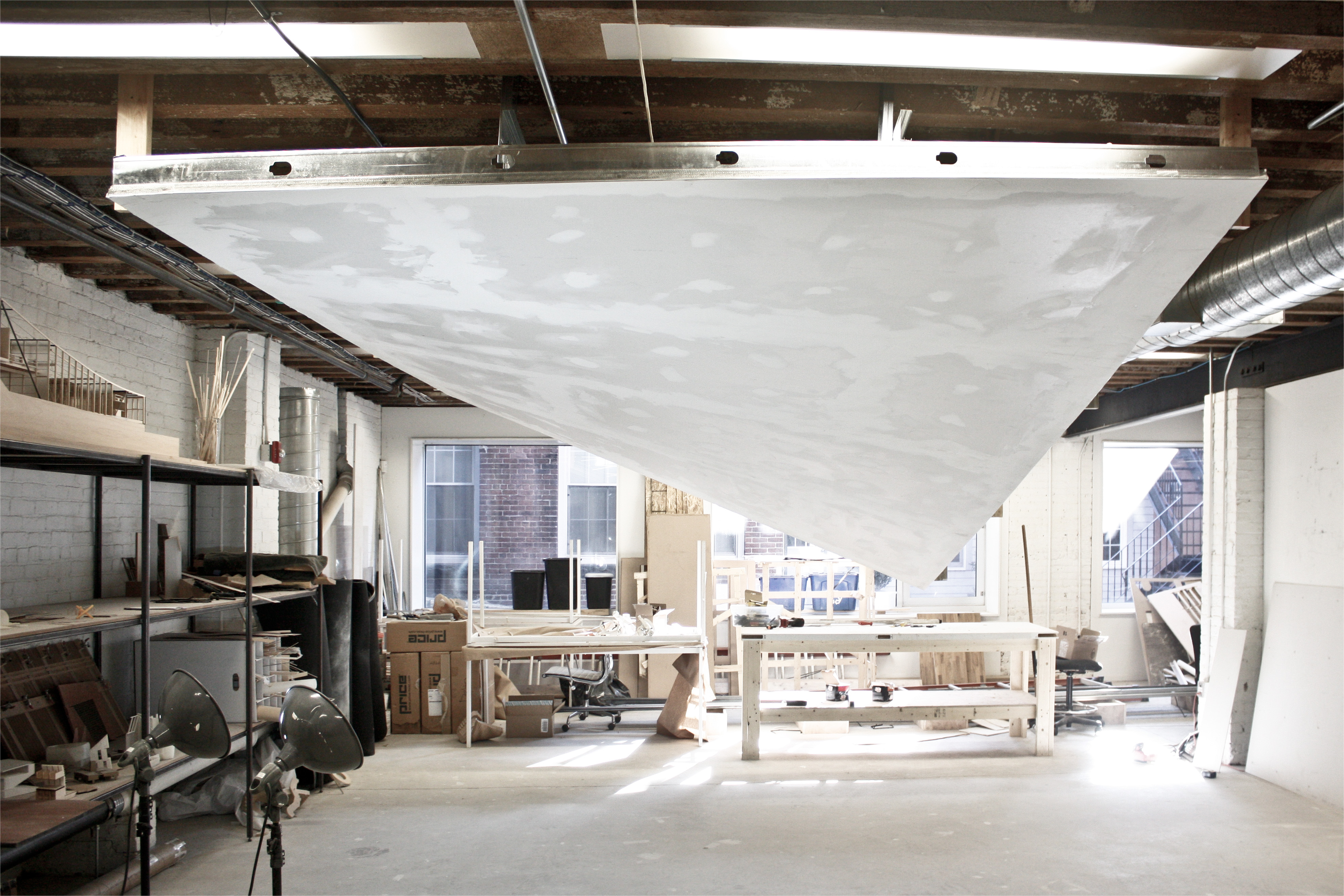
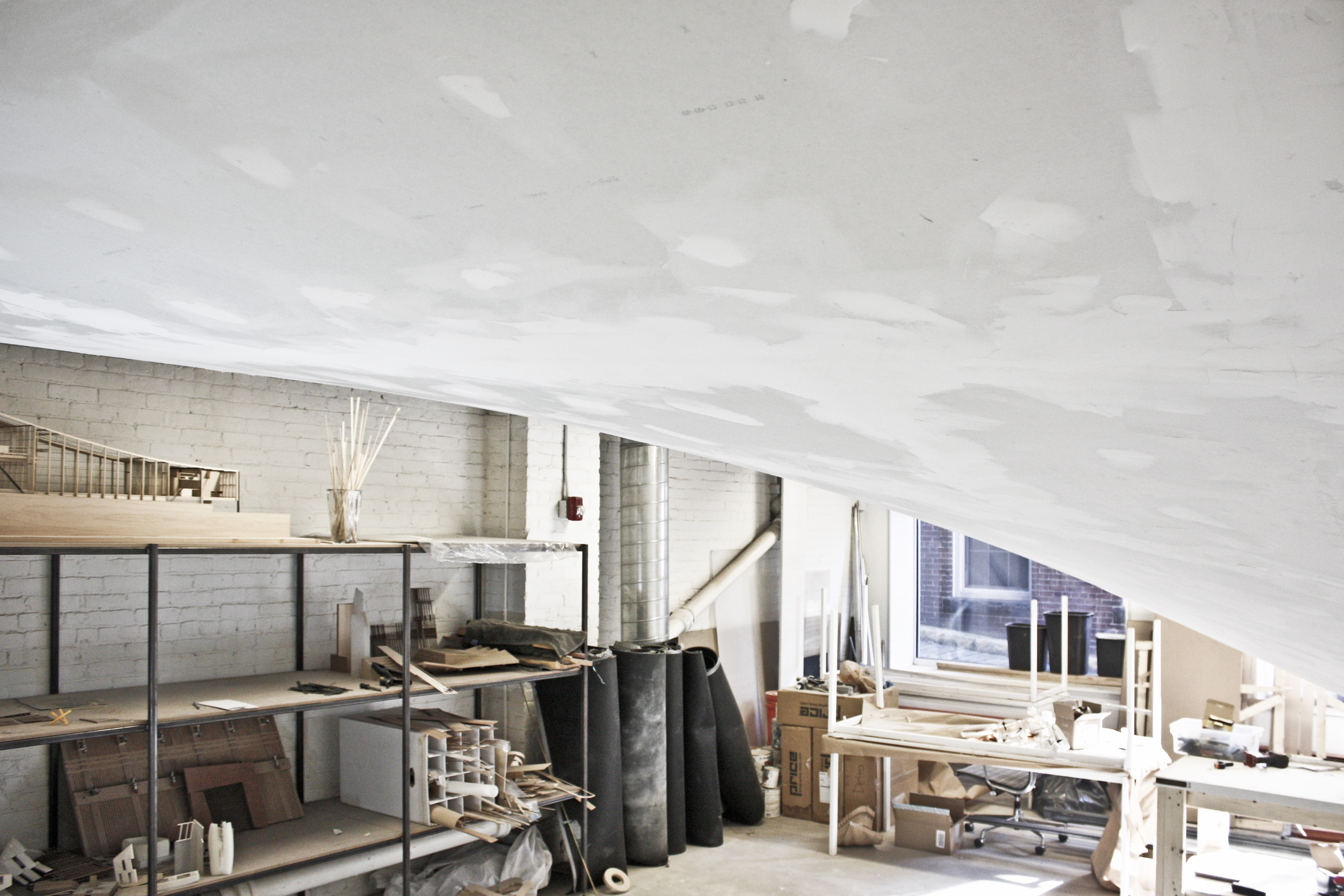
Recently, the warped ceiling surface of the DFALD Level 3 design studios came under scrutiny as a major cost item during DD cost estimating.  Conventional building practice suggested that the complex form could only be achieved with hand-troweled plaster on metal lathe.  We proposed an alternative methodology using simple framing with cost-effective sheetrock and proved the viability of the concept with a 1:1 mock-up, fabricated in-house.  The mock-up convinced the construction team and reduced estimated costs by more than 50%.

STUDIO RENDERING 01

ceilingMockUp.3dm


ceilingMockUp.3dm

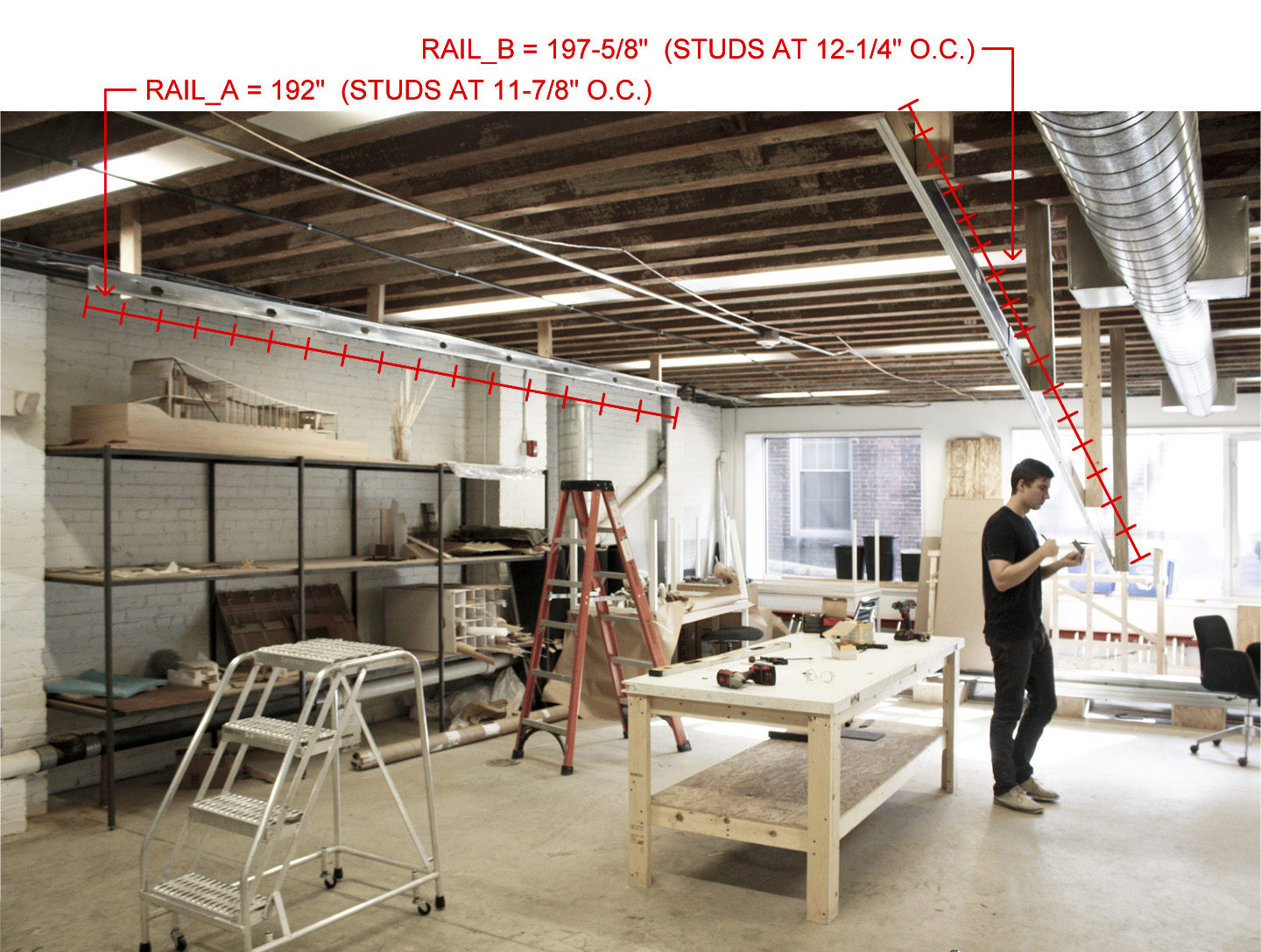
UT_mockup_01c2×4 metal studs are cut to length and attached in the proper orientation for mounting rails.  Stud locations are measured and marked on the rails.  Because they are different lengths, stud spacing is 11-7/8” o.c. on one rail and 12-1/4” o.c. on the other.


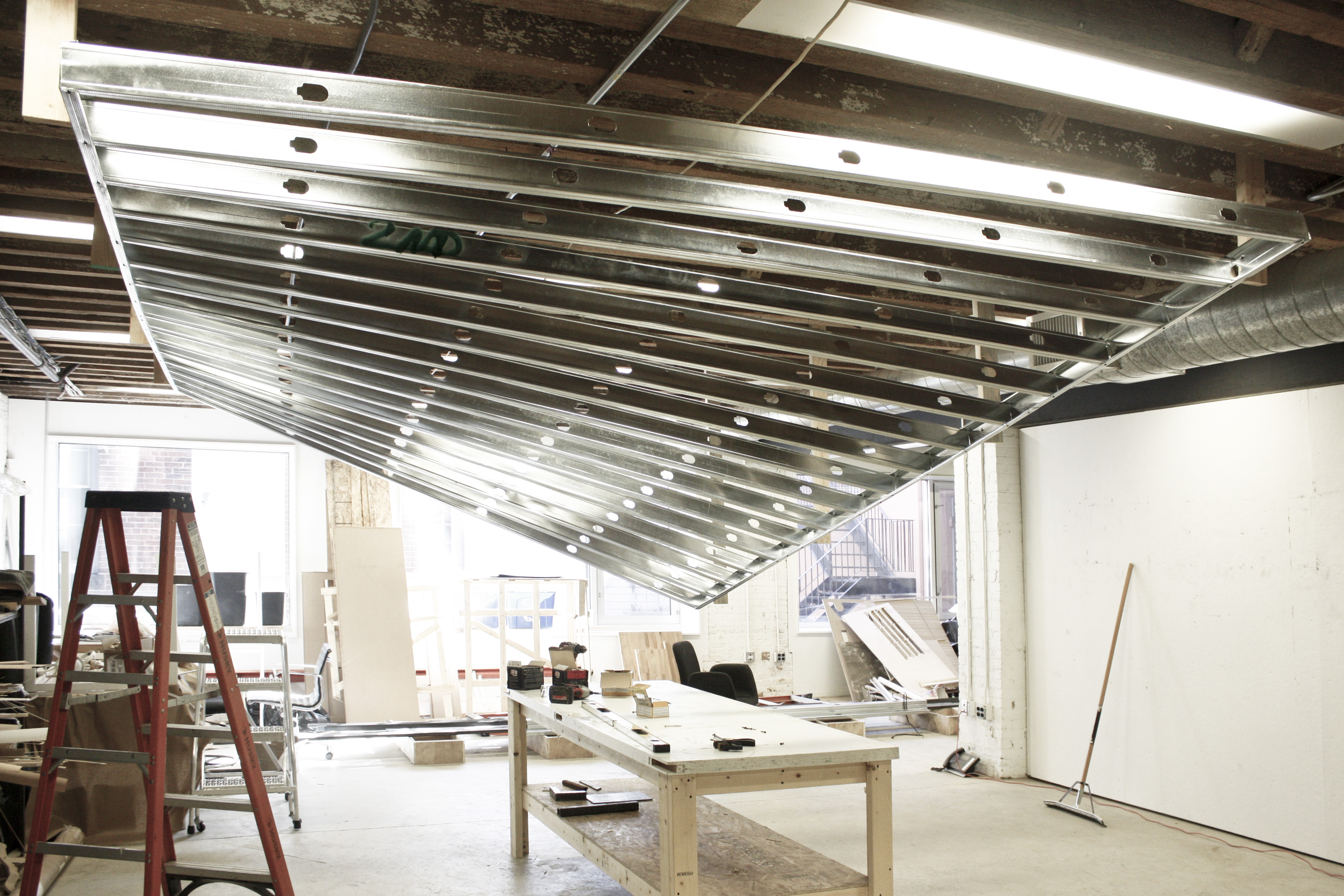
UT_mockup_02Spanning studs are attached to the mounting rails.  As the geometry twists, the studs get longer, so each stud must be cut to a unique length.  The shortest stud, in the foreground, is 126-1/2”.  The longest, at the far end of the structure is 135-1/4”.


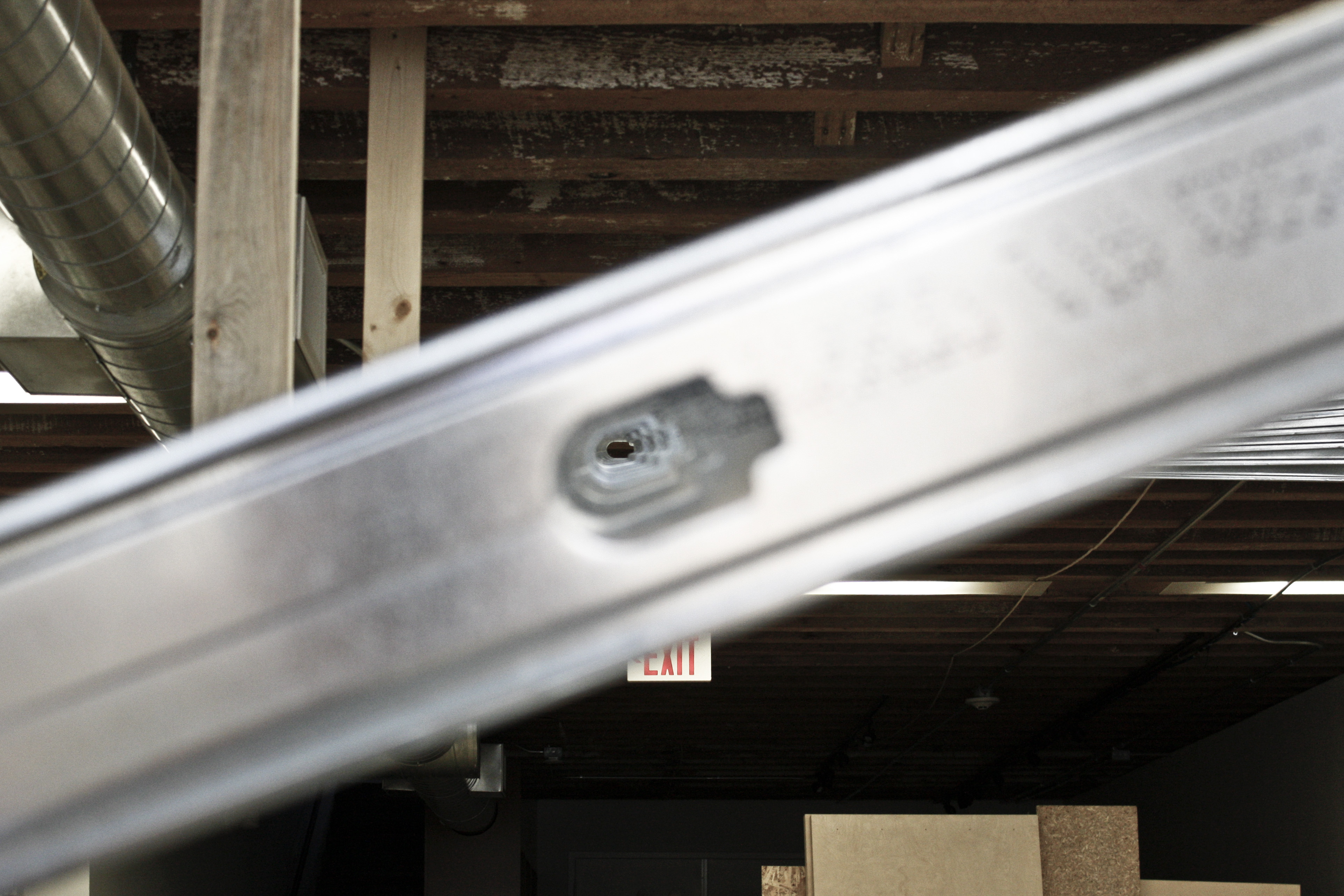
UT_mockup_03Because the studs have been spaced equally along both mounting rails, straight lines can be struck across the twisting surface.  Support members may be run through the knock-outs of the studs to reinforce the structure.


UT_mockup_06We chose to unify the structure with more 2×4 studs above the spanning members.  We achieved straight lines by dividing the first and last spanning members into thirds and running the reinforcement between those points.  Additional members attach the system to the structure above.  Note that both the mounting rails and the spanning members twist to accommodate the curvature of the surface.


UT_mockup_08Gold Bond “High Flex” gypsum board (1/4”  thick) is cut into 12” wide strips and attached to the frame, perpendicular to the spanning studs.  We did not need to score or wet the gypsum boards. The joints between boards are staggered to reduce the appearance of facets on the surface.

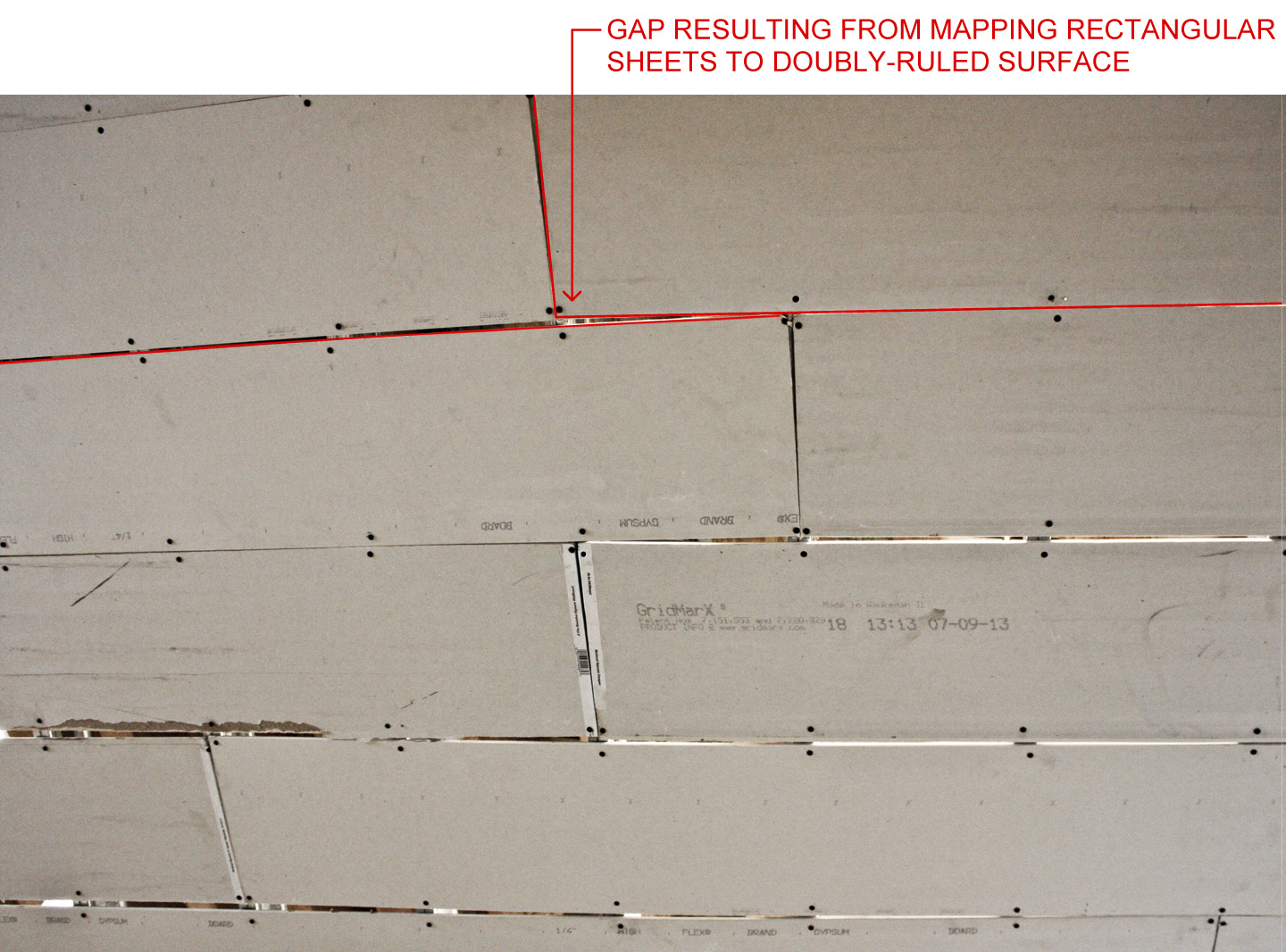
UT_mockup_09BThere are inherent geometric errors when mapping  rectangular sheets onto a doubly-ruled surface.  The maximum gap size we observed was approximately 3/4”.


UT_mockup_10Gaps between panels are relatively inconsequential at this stage, as this layer of gypsum will simply act as a substrate for the second, final layer.

UT_mockup_15BThe second layer of gypsum is hung perpendicular to the first.  These sheets are screwed directly to the first layer, avoiding the studs everywhere except the perimeter of the surface.


UT_mockup_20The rough edges of the sheets are cut back to the bounds of the surface and trimmed with corner bead.  Joints and screw holes are taped and mudded.


UT_mockup_21The surface is shown here after a single application of joint compound (Level 2 finish).  The joints are still wet and are not sanded.


UT_mockup_22The form is clean, with no apparent  inconsistencies or planar facets.


Comments Off on DFALD HYPERBOLIC PARABOLOID CEILING MOCK-UP

Aesop Toronto, Yorkdale

Posted on November 18th, 2013 by pmacdowell

Posted under: construction, Installations + Exhibitions

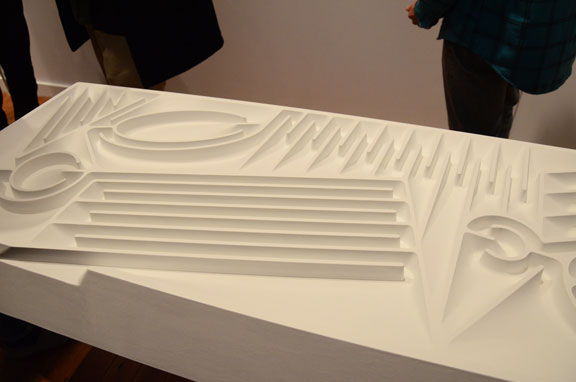
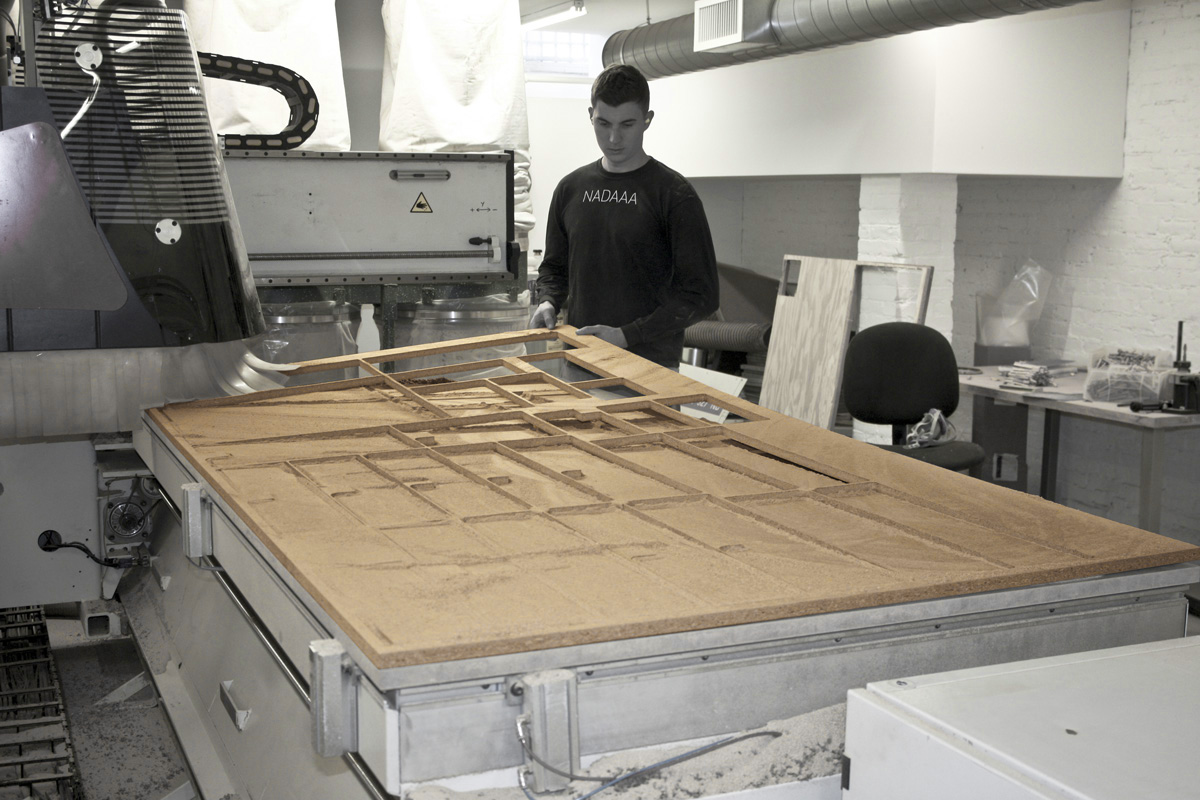
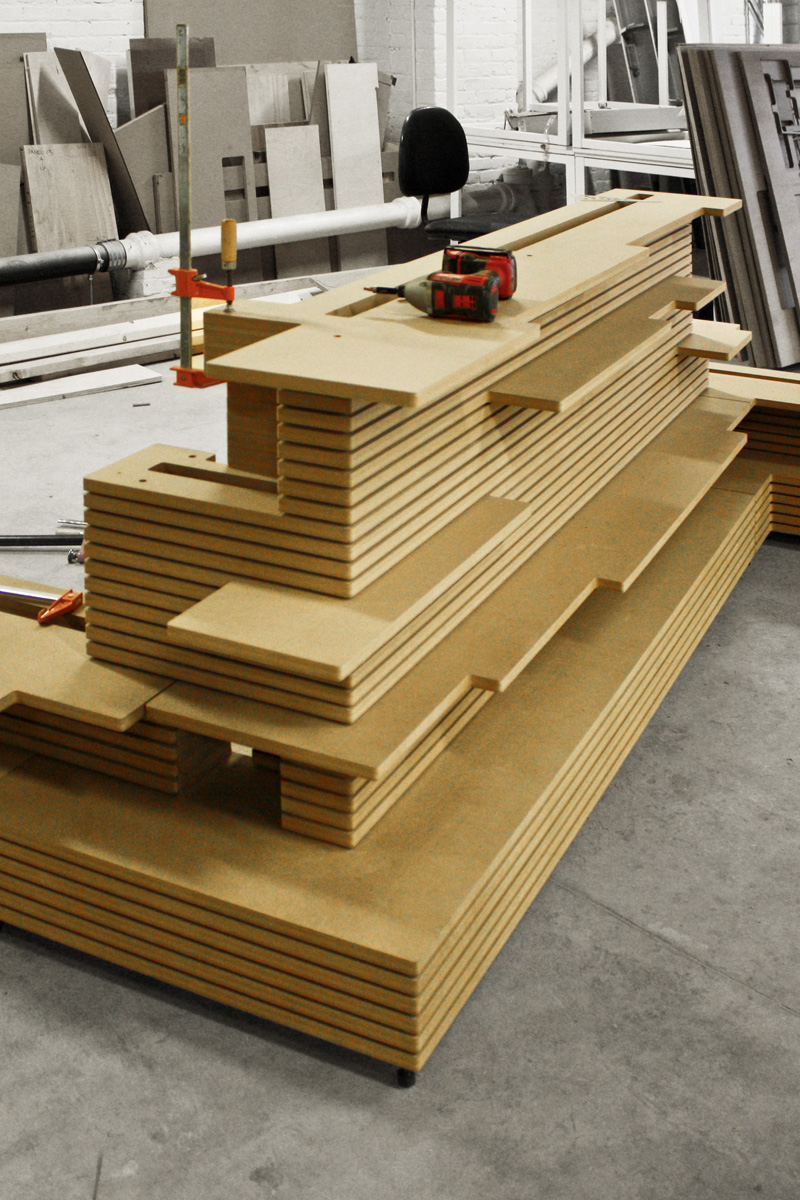
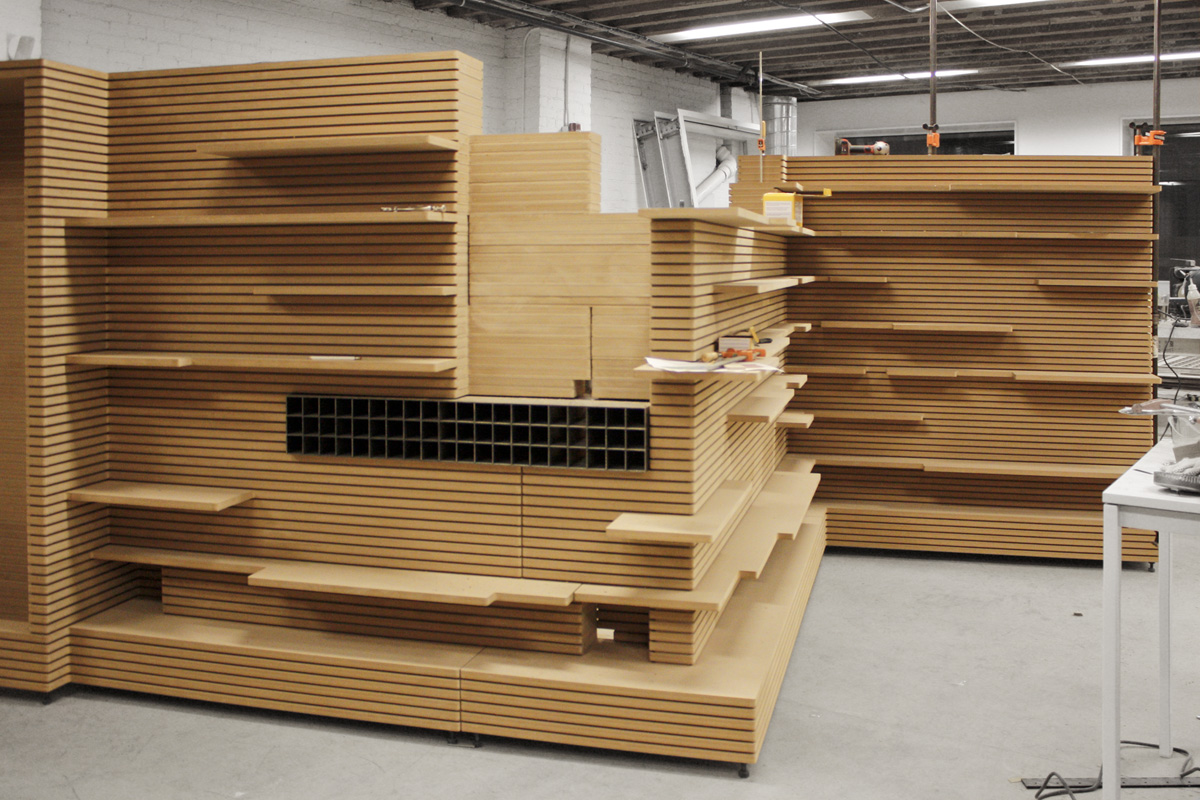
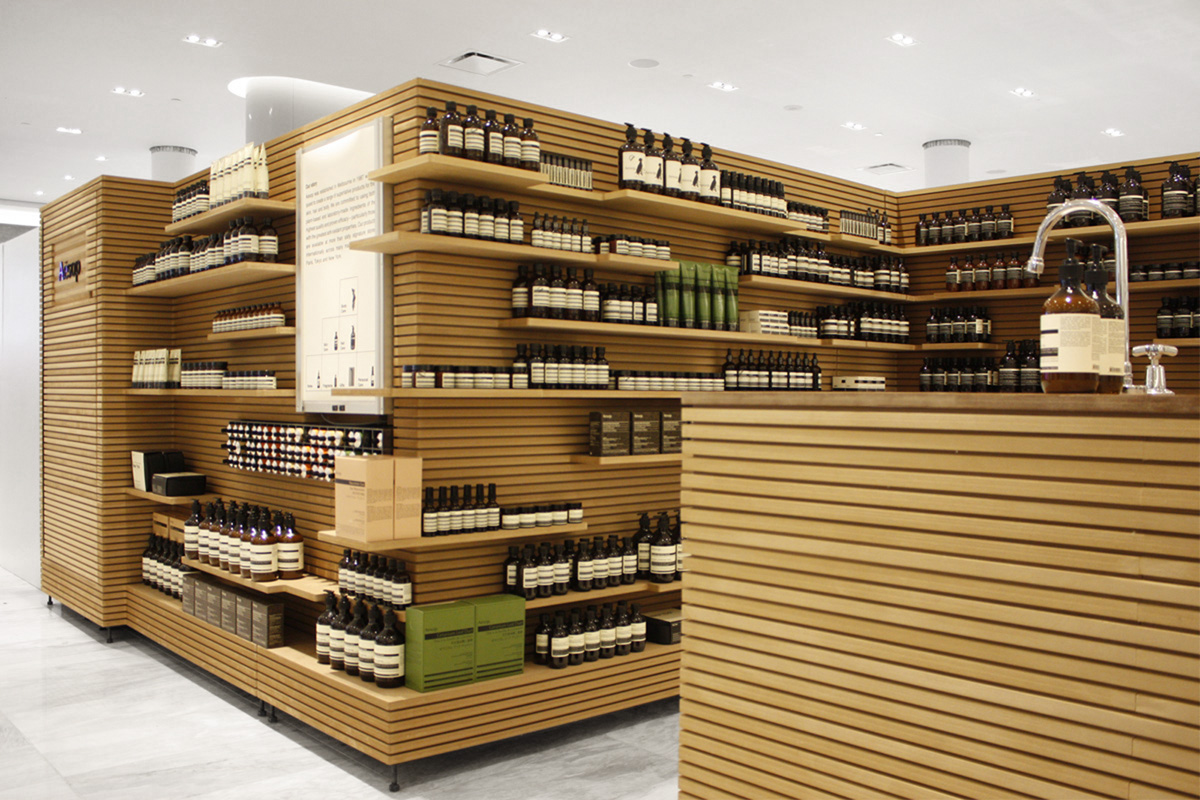
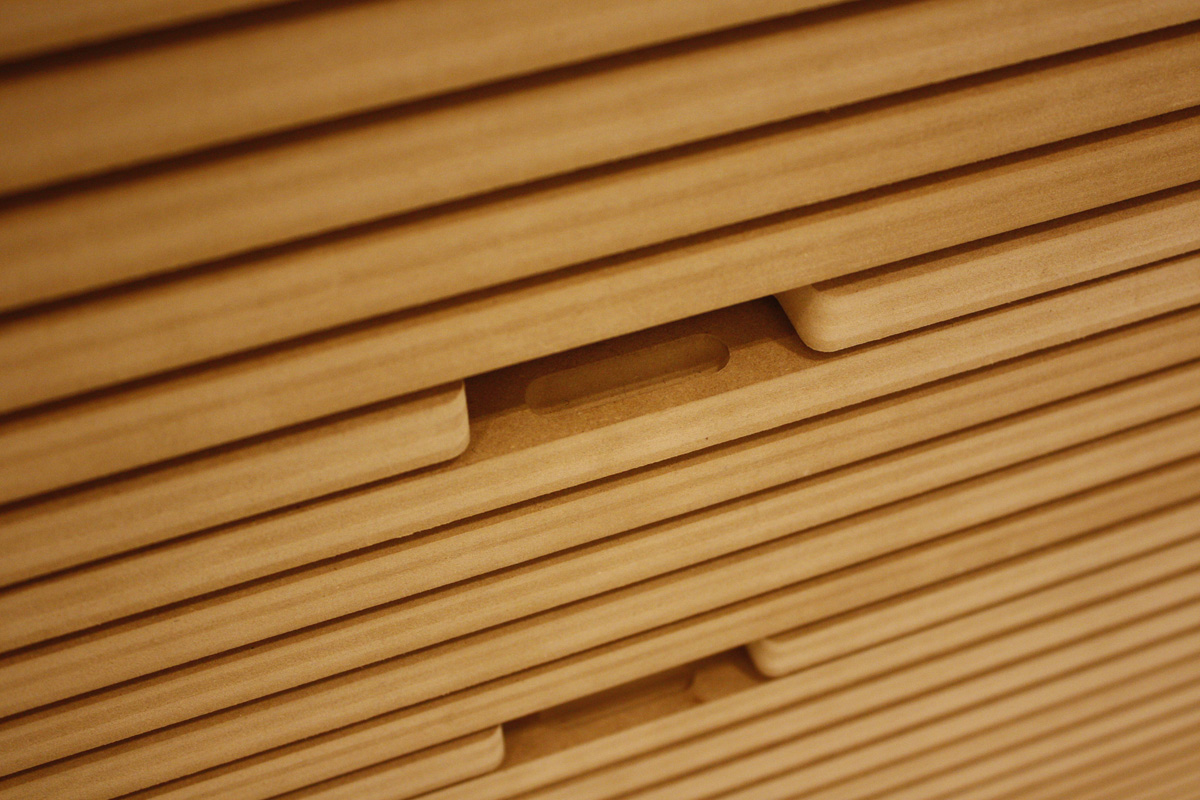
Negotiating the relationship between datum, display and surface, Aesop Toronto, Yorkdale comprises fiberboard layers spaced consistently from the floor to the top of the display region.  The layers create the demising wall as well as the cantilevered shelves for the display of specific product lines.  Utilizing the same tectonic logic, the basin is housed within a block of stacked layers, routed and cut to accommodate the various components of the demonstration area.
A highly efficient architect-as-fabricator delivery model minimized costs for the client, facilitated an accelerated project schedule, and guaranteed adherence to design intent.  As pressures of construction and installation were incorporated into the design process, the digital design model became a virtual “shop drawing.”  This synthesis allowed the fabrication team to strategize construction methodology, material procurement, and installation procedure simultaneously with design development.  Our in-house fabrication capacities here at NADAAA sponsor a feedback-loop between digital design and construction processes, challenging developing architectural concepts with the rigors of physical production in an immediate and informative way.


aesop_to_01

Custom pieces are cut on NADAAA’s CNC router for assembly in-house.


aesop_to_02

Large components, sized for ease of installation, are stacked to form the shelving wall.


aesop_to_03

A plasma-cut steel element for holding tubes of product is welded together and nested in the shelving.


aesop_to_04

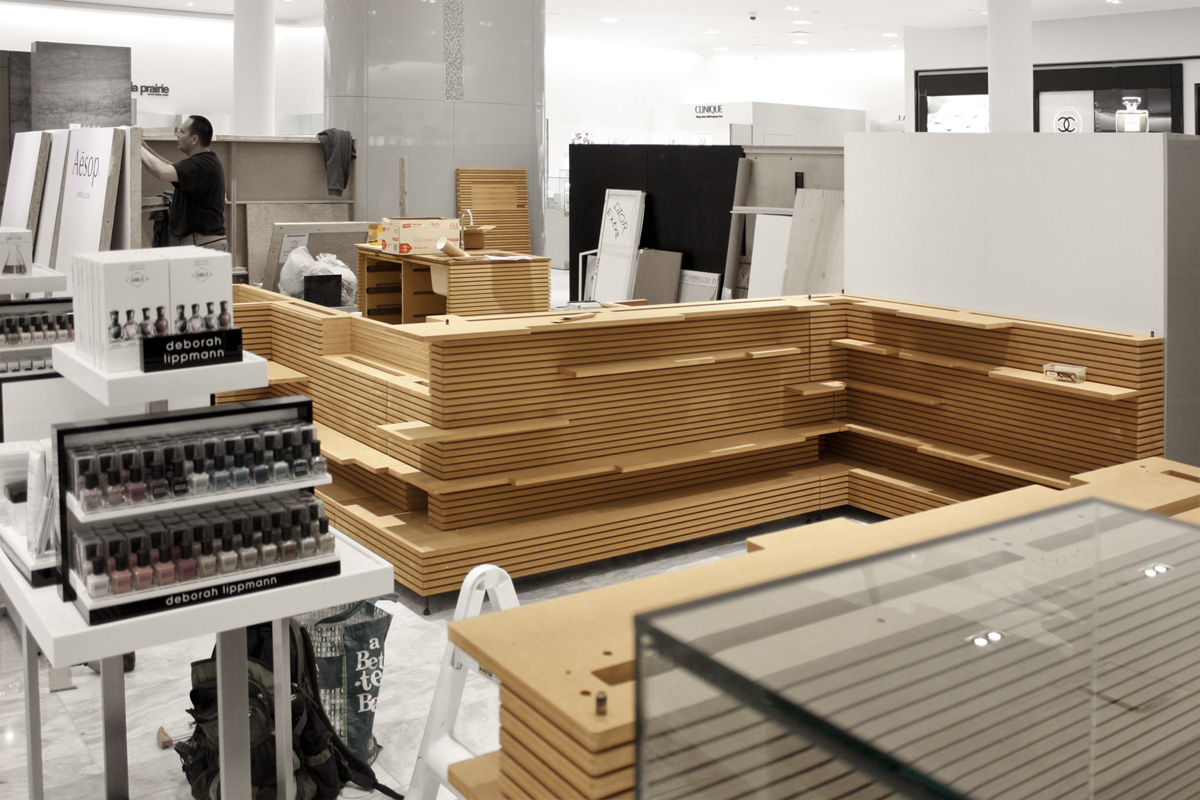
The installation team reassembled the millwork in Toronto overnight.


aesop_to_05

Through form and material sensibility, the installation establishes a distinct merchandising voice.


aesop_to_06

The width and position of the shelves respond to the requirements of specific product lines.


aesop_to_07

Functional detailing is integrated into the broader project form, as shown in the draw pull detail.


Comments Off on Aesop Toronto, Yorkdale

Adam Silverman’s Monograph Features Boolean Valley

Posted on November 15th, 2013 by Sia Herr

Posted under: Installations + Exhibitions, Press, Things We Like

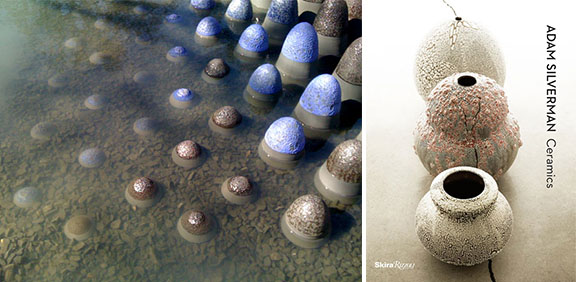
Boolean Valley, Nader Tehrani’s 2008 installation with potter Adam Silverman, is one of the works featured in recently published book Adam Silverman Ceramics.
boolean valley

boolean_valley_2

Image courtesy of www.atwaterpottery.com

Comments Off on Adam Silverman’s Monograph Features Boolean Valley

Gwangju Design Biennale 2011

Posted on November 12th, 2013 by Sia Herr

Posted under: Installations + Exhibitions, Press

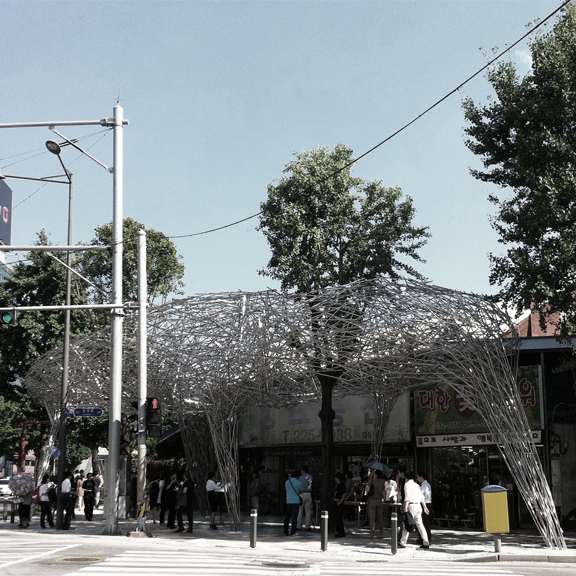
NADAAA designed one of 10 “urban follies” for Gwangju Design Biennale 2011 which also became a permanent installation after the event.
gwangjuimage2

Comments Off on Gwangju Design Biennale 2011

NADAAA Kibel Gallery Exhibit

Posted on October 28th, 2013 by kpierson

Posted under: Events, Installations + Exhibitions

See photos from the Catalytic Structures: Transformed Types at the University of Maryland School of Architecture, Planning & Preservation Kibel Gallery, open from Oct. 21, 2013 to Jan. 10th, 2014.


cstt-umd-2013_7

cstt-umd-2013_3

cstt-umd-2013_8

cstt-umd-2013_11

cstt-umd-2013_12crop

Comments Off on NADAAA Kibel Gallery Exhibit

Fabrication and Installation

Posted on October 9th, 2013 by kpierson

Posted under: construction, Installations + Exhibitions, Things We Like

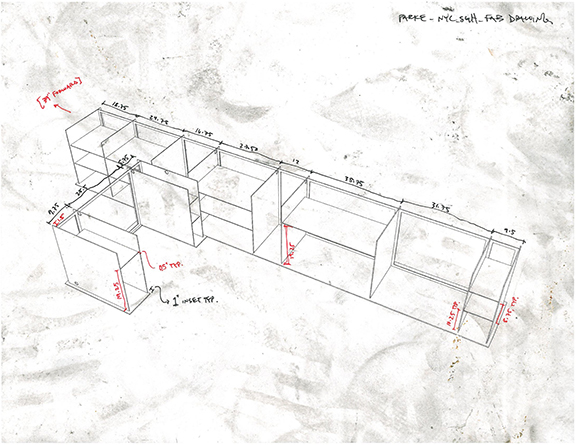
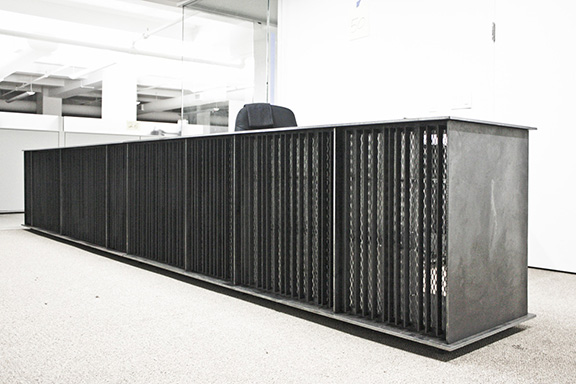
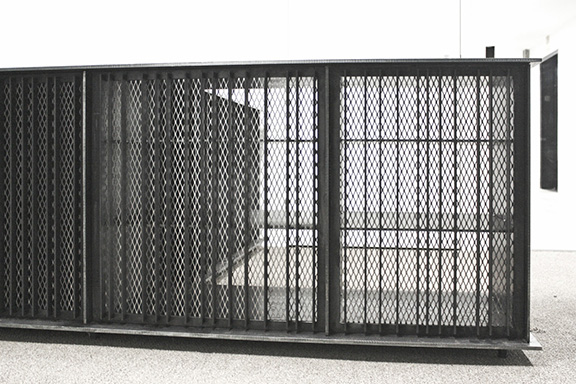
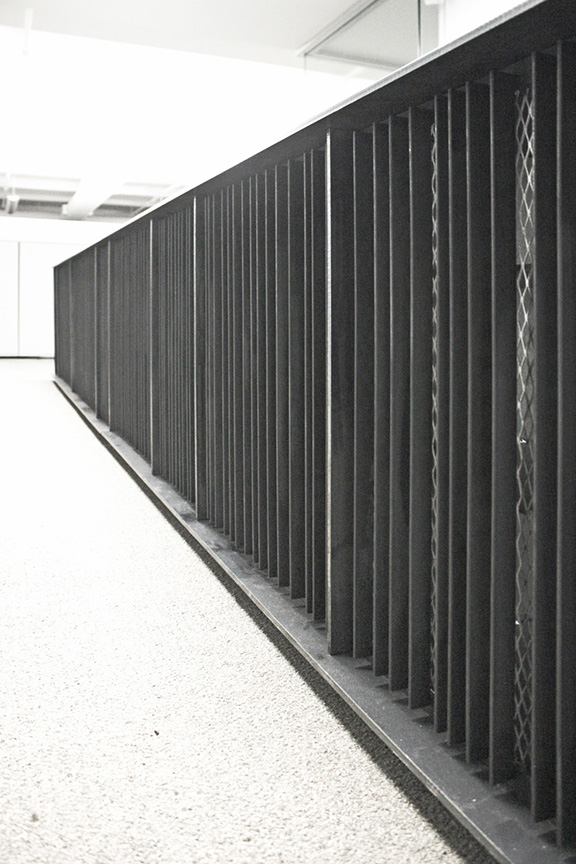
The reception desk for Simpson, Gumpertz and Heger’s New York Office was fabricated and installed by NADAAA.

INSTALL1


INSTALL3

INSTALL4


INSTALL6

Comments Off on Fabrication and Installation

Cold Rolled

Posted on September 30th, 2013 by kpierson

Posted under: construction, Installations + Exhibitions, NADLAB

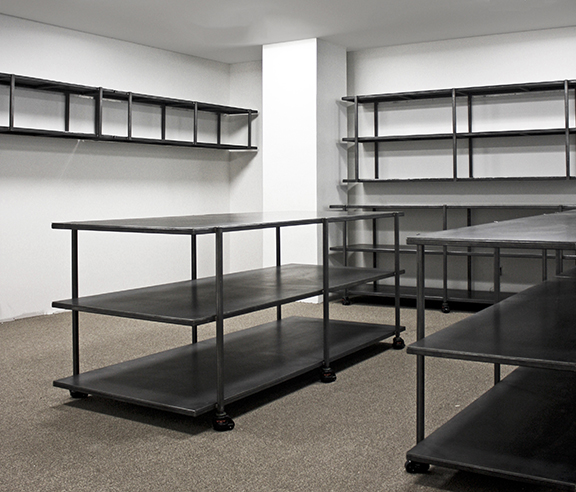
Installation of copy room steelwork by NADAAA

sgh_nyc_01_edited


Comments Off on Cold Rolled