The Storm of Creativity by Kyna Leski

Posted on May 18th, 2016 by Nader Tehrani

Posted under: Press

There is perhaps no intellectual who is as in tune with the vulnerability of the creative process and the uncertainty from which innovation emerges as Kyna Leski. On the one hand, her focus on ‘unlearning’ takes us back to our most elemental moments of learning as a child, but also, on the other hand, to our most corrupted ideological predispositions… Find the book through the MIT Press here.

Storm-of-creativity-Leski-2

Comments Off on The Storm of Creativity by Kyna Leski

Emerging Pedagogies: Beyond the Arab Domain to the World

Posted on May 9th, 2016 by Nicole Sakr

Posted under: Press

Nader writes on the CSBE Student Awards for the new global architecture platform TR—ANSFER

transfer-arch-csbe-2016-edit

“Behind the projects, there were what I like to call, shadows: pedagogies, ideologies and references that shed a different light on the nature of architectural work. Beyond reading a piece of architecture, we read lineages, debates and conversations that sometimes extended beyond the professors towards decades –sometimes centuries – of discursive platforms.”


Comments Off on Emerging Pedagogies: Beyond the Arab Domain to the World

designboom: Catenary Compression

Posted on April 28th, 2016 by Nicole Sakr

Posted under: Installations + Exhibitions, Press

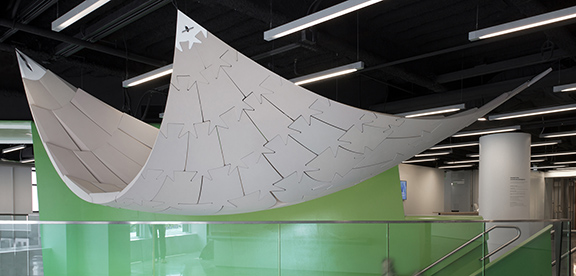
Designboom’s Philip Stevens writes on NADAAA’s Catenary Compression.

designboom-Catenary Compression

Comments Off on designboom: Catenary Compression

The Crush | Episode 06: Nader Tehrani on the Look and Feel of College Campuses

Posted on April 5th, 2016 by Nicole Sakr

Posted under: Academic, Press, The Cooper Union

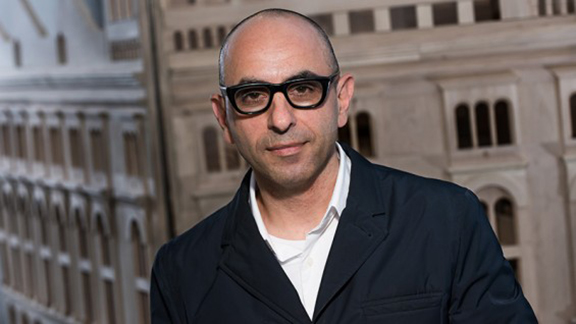
Davin Sweeney, an admissions counselor for the University of Rochester and creator of the podcast The Crush asks Nader about what’s behind the unique “feel” of college campuses and the power of a campus’s atmosphere to either attract or repel prospective students. Listen HERE.

NaderTehrani_052 LR_0

Comments Off on The Crush | Episode 06: Nader Tehrani on the Look and Feel of College Campuses

The Divine Lady Z – by Katherine Faulkner

Posted on April 4th, 2016 by Katie Faulkner

Posted under: Press

ZAHA-HADID

It is often in loss that we come to understand the full value of something dear to us.  Such was my discovery last week when I learned that Zaha Hadid had unexpectedly died; a fact that upon penetrating my confused fog, produced a nauseous panic.  With her sudden departure, I feel strangely rudderless, as if a small hole has been exposed to be a crater.  Looking for solace among the pantheon of powerful women architects that she leaves behind … well, they are huddled together on the head of a pin.

I did not know her personally, had never worked for her, studied under her, or even visited a single one of her completed buildings.  The worldly Baghdad-born Ms. Hadid was likely intimidating from her outset, and had I met her, I would have been overcome with awe. Her pedigree was near perfect.  Born to privilege and raised with a sterling education, Zaha Hadid entered London’s Architectural Association during a particularly dynamic moment of the 70s, studying with Rem Koolhaus and Elia Zenghelis – starting her career as their employee at OMA, arguably the most influential firm of the last thirty years.   By the time I was a student in the late 1980s, Zaha Hadid was already famous for her brazen self-confidence and her deft navigation of a male-dominated profession.  There was in fact, little in her that I could emulate, yet she was with me from the beginning. She was the only woman architect we students revered, despite that she’d had almost nothing built.   All of us called her “Zaha” as if she were among us, making jokes at her expense, while admiring her untamable talent for drawing unfathomable form and inspired compositions of dizzying force.

Zaha Hadid’s building’s challenge our conventional notions of beauty and utility. In their autonomy, they seem to completely disregard their context, although ZHA director Patrick Schumacher would likely cut me down for being obtuse.  For once that professional grumpyman would be right.  Long before parametric modeling, Ms. Hadid was expounding upon the Russian Suprematists of the 1920s, such that Malevich looked simple.  Her work was marvelous, in the most literal sense, as color, movement, and depth were conveyed with the emotion of a Bacon painting, and the rigor of perfect math. Many wrote her off as a paper architect, banishing Zaha Hadid to the world of the Russian avant-garde, John Hedjuk, Lebbeus Woods and other draftsmen whose exquisite drawings we coveted even as we knew we’d leave them behind with our childish things.   The palpable force of her work however, would not be contained to mere paper. When the Vitra Fire Station opened in the early 90s, Zaha Hadid strode loudly into that Manhattan all-male social club – the Century – invited to a table reserved only for those who both ruled the Academy and saw their work built.  Alas, poor Philip, move over.

Within hours of her death, tributes and admiration flooded the internet such that her many achievements are revisited; dozens of accolades that include “Best Dressed,” “Most Powerful,” gold metals, Stirling Prizes, and the coveted Pritzker for which she will always hold the distinction as having been the first woman to have won.  Her work transcends conventional architectural practice to film, fashion, furnishings, and set design.  A favorite rumor or fact – in 1999 Zaha designed the set for the Pet Shop Boy’s Nightlife tour. (Were she and Dusty Springfield the original West End Girls?)  Zaha was no stranger to controversy.  Neither she nor any of her team were invited to the opening of the London 2012 Olympic Aquatics Center – oversight or snub?  In 2014 she was depicted as both heartless and clueless in connection with the death of hundreds of migrant workers preparing for Qatar’s 2022 World Cup and the ZHA-designed Al-wakrah Stadium.  As recently as last month, she made headlines with her indignant refusal to cede copyright of her scrapped stadium design to organizers of the 2020 Tokyo Olympics.  In fact, the media critiqued her with scrutiny never inflicted upon her male peers.  Zaha was described as tempestuous – she dressed to be noticed; she was infinitely quotable.  Dig deep enough among her press clippings find she was a smoker – at least until recently.  She never married, had an enormous closet, loved jewelry, maintained her nails, dyed her hair, could be officious to wait staff, alternately mean and extraordinarily generous to her employees – a real diva.  Perhaps this treatment was intended to offer some logic, as if in painting her to be another Maria Callas, we could comprehend her extraordinary talent.  More likely however, critics and paparazzi-alike were fascinated by this rare bird of beauty, with a confounding ability to shape space beyond comprehension.

Reading the early postings, I am noticing pattern. “She was more than just a female architect!” her admirers proclaim, admonishing us not to remember Zaha Hadid as a great woman, but rather as a great architect.  That her legacy be protected from the inferior label of “greatest female” anything should not come as a surprise.  Whenever there is a list of most successful/powerful/influential women, at least one in the crowd will say “thanks, but I do not think of myself as a powerful woman.”  Amy Schumer becomes indignant when labeled a female comedienne (would anyone call Stephen Colbert a male comedian??), although her best material comes from the stereotypes and social norms that confine her gender.  Women want to believe they occupy the same meritocracy as men, and the women who achieve success in their male-dominated fields should be entitled to a pride in their hard work and talent. Nonetheless, whenever I hear a female colleague say she is immune to gender bias, I want to know where to get a ticket for that space shuttle – now there’s is a planet I’ve never been to. Lots of women practice in the field of architectural design – lots of women hold influential positions in schools of architecture, but very very few women ever claimed a seat at the table of the Century Club. Those seats were reserved for powerful professionals, with the ability to shape trends, shift opinion, and maintain their relevance within architectural discourse.

With her passing, Zaha Hadid gives women unanticipated (for which I’d gladly have waited decades more) gifts.  She reminds us that architecture is indeed an art; that in order to bring that art to life, one might have to sacrifice personal popularity, endure withering criticism, and expose femininity to ridicule. Zaha demonstrated that we are limited only by ourselves; that architecture’s relevance can extend far beyond conventional practice.  Above all, she exposed herself as alone on an admittedly small podium, as a singular woman among the world’s most formidable architects.  We can argue endlessly about other women, successful in their own right with bright futures, already recognized and imitated for their work.  Yet for a certain generation of architects – mine – the departure of Zaha Hadid exposes that things really are as imbalanced as they seem; that we have fallen short of the required combination of talent, endurance, and sheer bravado required for a seat at that powerful table.
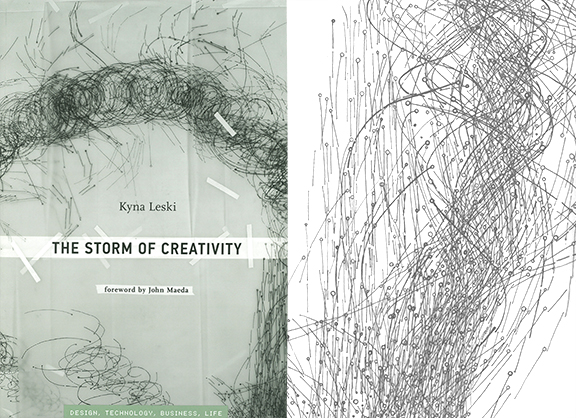
image above by Nicole Sakr, adapted from a photo by the Knight Foundation

Comments Off on The Divine Lady Z – by Katherine Faulkner

ZAHA HADID: PROJECTING FORTH

Posted on April 1st, 2016 by Nicole Sakr

Posted under: Press

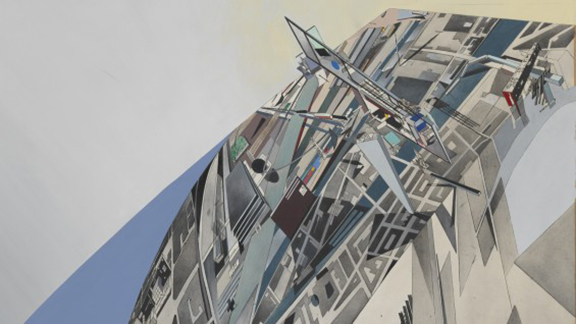
“She left behind many things, maybe too many to enumerate. But for us, one simple ethic: the will to draw and project forth.”

Cooper Union Drawing_Ambience6-Hadid-The_World_0

Detail: Zaha Hadid, The World (89 Degrees), 1984


Comments Off on ZAHA HADID: PROJECTING FORTH

Catenary in WAr

Posted on March 7th, 2016 by Nicole Sakr

Posted under: Installations + Exhibitions, Press

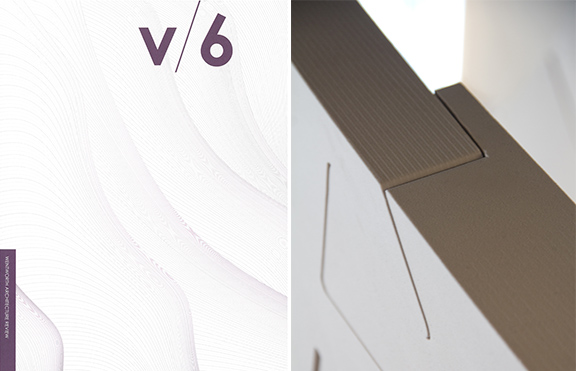
Wentworth Architecture Review asks Nader and NADAAA’s Matthew Waxman about the exploratory design process of Catenary Compression and testing to failure. Copies available here.

“Something so remarkable about this project is that it was a failure — a successful failure. It didn’t work as we had expected, but it worked in a way requiring us to ask new questions about how it works. The moment during the process where there was a collapse, prior to completion, was an incredible moment because it pressured all of us on the team to come up with a solution to bring the project forward, but also not shatter it along the way.” – MW

KM_C308-20160304134022

More about the Catenary Compression installation here.

Comments Off on Catenary in WAr

MSD up for Most Innovative Building

Posted on February 23rd, 2016 by Nicole Sakr

Posted under: _Melbourne School of Design, Press

The MSD is in the running to be named Australia’s best public building of 2016! More here.

business-insider-australia

Comments Off on MSD up for Most Innovative Building

GLX

Posted on February 15th, 2016 by Nicole Sakr

Posted under: Press, Urban Design

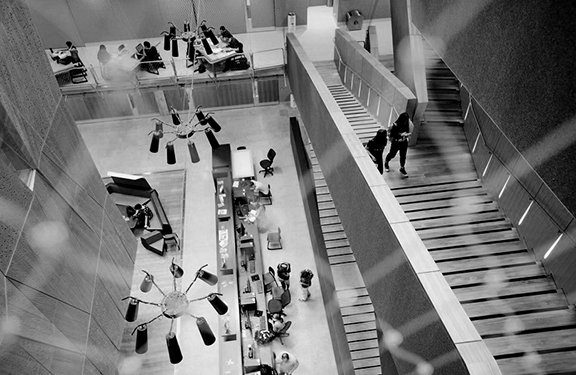
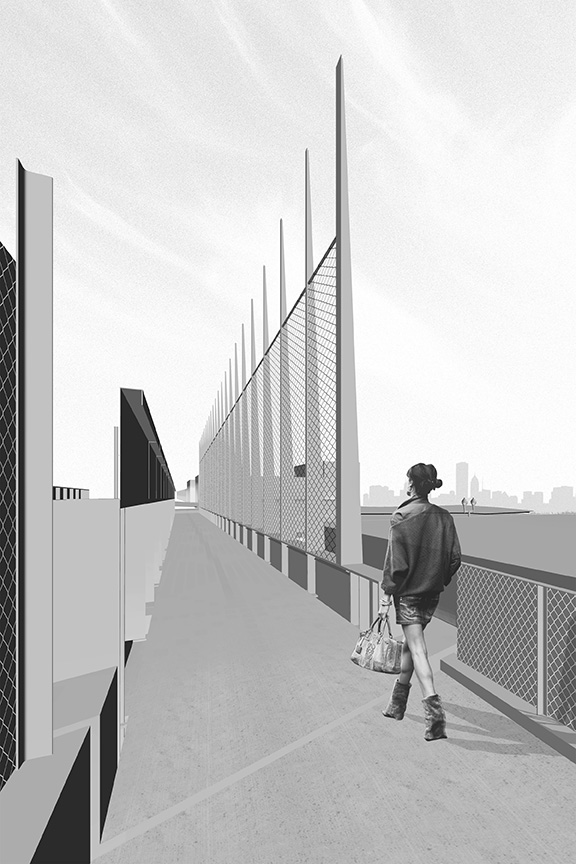
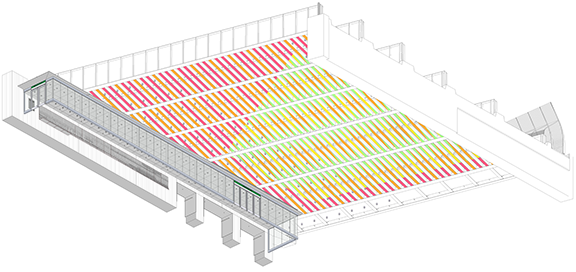
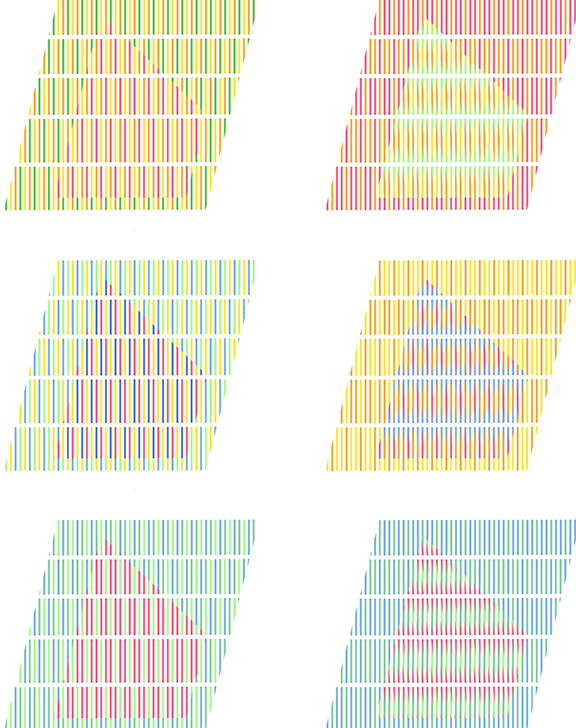
As part of the Green Line Extension into Somerville the MBTA has been working with designers and artists to create public art for the new stations. The art is conceived not only in its aesthetic capacity to captivate, but also to engage the public realm, to orient and give identity to the specificity of the place, to serve as an educational or pedagogical instrument, among other things to expand the definition of what art can serve. The pedestrian experience under and over bridges are considered and community paths connect sides of the train lines. NADAAA was engaged to create art installations for the new Washington Street Station. We have approached this project to give civic prominence to a piece of infrastructure that would otherwise be seen as a mere extension of transportation. In engaging the train system, cars, bikes and pedestrians, we also acknowledge that the public travels through the site in many ways, and thus experiences the place from a different vantage point. The language of our intervention speaks to the industrial landscape of which it is a part, transforming it to transcend its common terms.

NADAAA-GLX2
1 – a projectile fence that guards the walkway along the bridge where it stretches over Washington Street


NADAAA-GLX-art
150102_ART_color_ref
2 – a mural on the underbelly of the bridge


L:NADAAA Projects1408_GLXXXXX.09 DRAWINGSXX.09.00 Pre-Schema


20150209_board_-14
3 – a bench that runs along the entry hall made out of perforated steel panels. the perforations depict snippets from the MBTA safety manual


The Green Line Extension is currently on hold, but check here when work begins again for construction updates.


Comments Off on GLX

A HOUSE FOR HEJDUK

Posted on February 11th, 2016 by Nader Tehrani

Posted under: Press

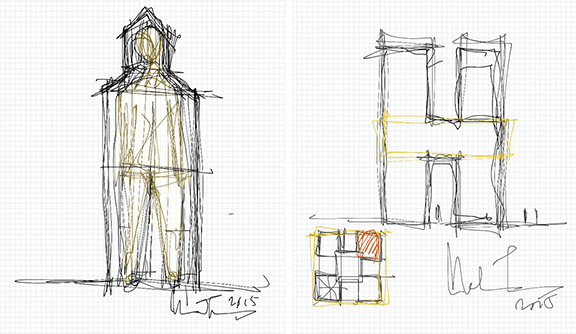
The German magazine [ark] recently asked Chris Precht, Krysztof Ingarden, and I: “for whom (architect, famous star e.g.) would your office like to build a house and what would it look like?”

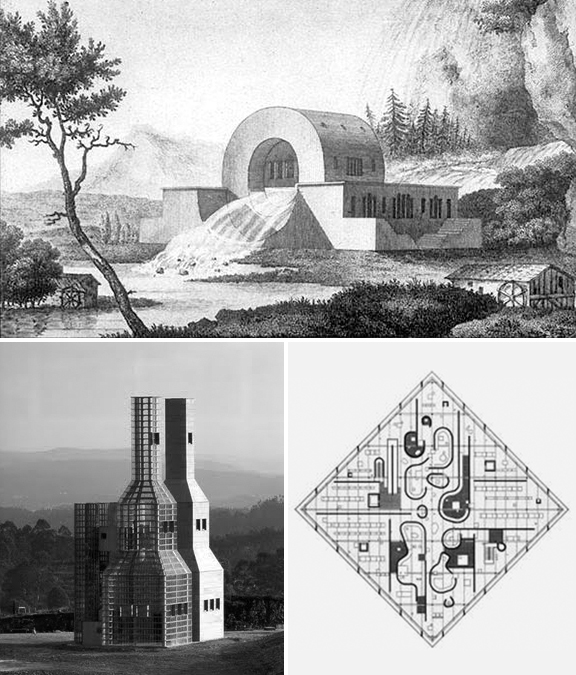
Designing a house for an individual is quite often misconstrued as requiring the kind of specification that is becoming of a suit, as if the house is made to ‘fit’. Ledoux raised the stakes through a series of polemical proposals under the banner of “architecture parlante”, invoking the idea that architecture speaks, communicates, embodies as part of a broader social contract. Between these two realms sits the generic found object –resilient, timeless, flexible, and trans-historical.

These divergent realms capture attitudes displayed by John Hejduk in the many chapters that defined his intellectual preoccupations, at once a deeply introspective poet, but also a discursive pedagogue whose didactic calisthenics defined not only an era, but a way of debating form, organization, and an architect’s education as part of a collective discourse.

hejduk blog-final

In these two sketches, I capture two modalities of that thinking: the first an industrial shed, encasing and memorializing his monumental figure, and the second, the paradigmatic exercise of nine-square grid, transformed three-dimensionally to suggest not only the configurative play of typological transformations based on monolithic aggregations, but also the building of the colossal figure that befits such a character: H.

John Hejduk House 1-blog4

Comments Off on A HOUSE FOR HEJDUK