Person of Interest: Nader Tehrani

Posted on August 1st, 2016 by Nicole Sakr

Posted under: Academic, Press

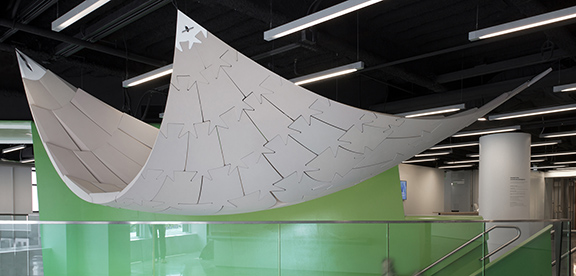
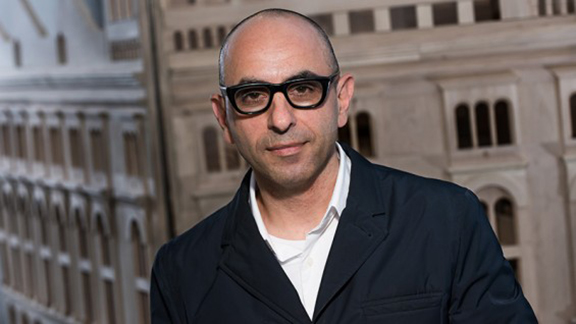
Nader is interviewed by Stephen Hopkins in the Metropolitan Society’s first issue of Persons of Interest. They discuss NADAAA’s approach to designing spaces for education, the “debundling” of systems, the power of the mock-up, and crowdfunding. Order your copy here.

Persons-of-Interest-cover-2

“What we are trying to create, whether through the digital process or not, is a situation where a certain ethic of control comes into being by gaining an insight about smart ways of using materials, effective ways of assembling them, and a more optimal way of impacting the use of labor on site. This control that you regain over the built artifact is not control for power’s sake, and nor is it a way of gaining efficiency, optimization, or intelligence per se, but it is a way of thinking of the designed environment as part of a dialogue between cultural, economic and social priorities all at once.”

Persons-of-Interest-2

Comments Off on Person of Interest: Nader Tehrani

Nader writes for first AIA SPP Journal

Posted on June 2nd, 2016 by Nicole Sakr

Posted under: Press

5

For this inaugural issue of the AIA Small Practice Practitioners Journal: Pleasure, Nader writes about his own history of practice and the intellectual project that continues to evolve in and out of NADAAA. “Launched as small endeavors under the banner of Office dA some thirty years ago, and now serving as the very platforms from which NADAAA undertakes explorations, this speculative ethic has helped to bind the research through the years, and in turn, connect the small scale experiment with the potential of large scale results.”

4


Comments Off on Nader writes for first AIA SPP Journal

Nader writes editorial critique for The Plan

Posted on May 31st, 2016 by Nicole Sakr

Posted under: Press

9

8


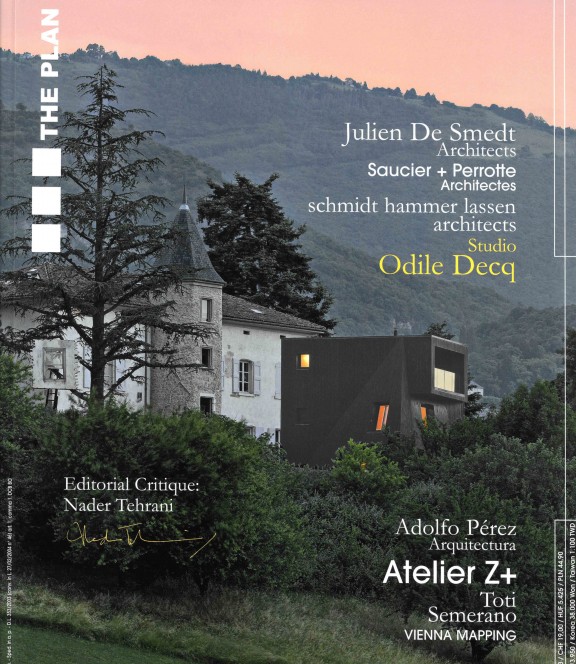
In A Disaggregated Manifesto, an editorial critique for The Plan, Nader discusses the fragmentation of practice, as a result of an expanded domain and ever-growing breadth of specialized consultants. The editorial is composed as a series of reflections, notes and projections, an index, comprising a broader research, “to reconstitute the political agency of the architect by re-engaging the means and methods of processes – which are ever expanding by the day – if only to reconnect with the very protocols of making that provide for the instrumentality of the designer’s intellectual craft.”

4

“…the detail can be seen as omnipresent, pervasive and malleable enough to play many roles – indeed a critical precondition for the spatial and formal potentials of an architecture yet to be determined.”

Find the article here as PDF.

Comments Off on Nader writes editorial critique for The Plan

KENDALL SQUARE INNOVATION DISTRICT MOVES FORWARD

Posted on May 25th, 2016 by Nicole Sakr

Posted under: _MIT Site 4, Press

20150510_NORTH EAST_cropped

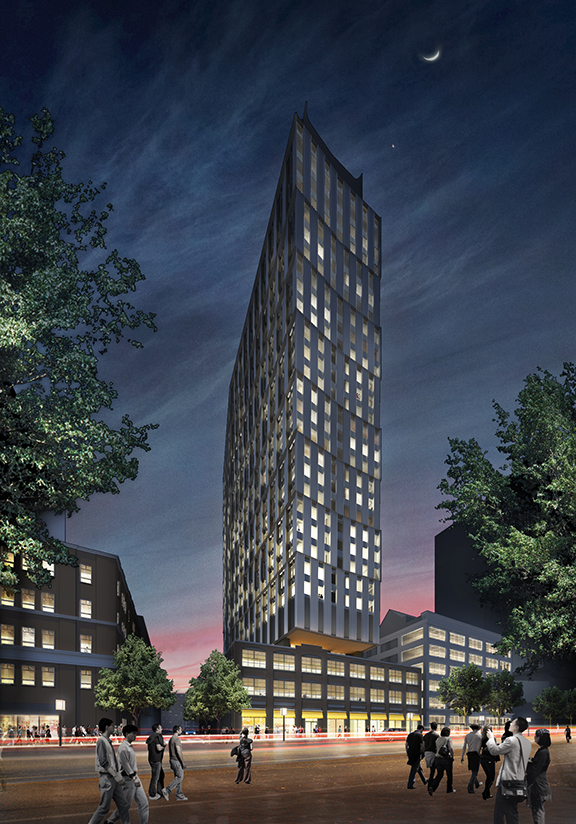
NADAAA (Design Architect) and Perkins+Will (Architect of Record) are collaborating on the design and development of a significant gateway project for MIT on East Campus at Kendall Square, pending the ongoing approval process of the City of Cambridge. The project is part of a multi-building institutional and commercial development that will revitalize existing buildings on Main Street with new high rises and a new open space to the south. The diverse program typologies and the urban influences from adjacent developments and the existing fabric have largely factored into the organizational framework and design concept. The project is a combination of renovated buildings at the podium and new construction in a tower. The program will include approximately 450 graduate student apartments in a mix of one-bedroom, two-bedroom, and efficiency units. The podium of the project is a combination of existing buildings and new construction. The entire ground plane of the podium will be for retail use. The upper levels of the podium for the new construction scope will include a new Child Care center with an elevated playground, and the Social Commons for the residents of the apartment tower with an outdoor terrace. The Innovation and Entrepreneurship Center will be in the upper levels of the existing buildings, along with additional space for future tenants.

“The approval came in a unanimous vote of the Cambridge Planning Board, providing for MIT’s special permits as part of its “Planned Unit Development” in the Kendall Square/East Campus area… All in all, the plan will lead to a little more of everything in Kendall Square: more housing for both MIT students and the community, more open spaces for recreation and socializing, and more space for research and for retail businesses.” – David L. Chandler | MIT News Office

More information on the project is also available here.


Comments Off on KENDALL SQUARE INNOVATION DISTRICT MOVES FORWARD

CCA show on Azure

Posted on May 24th, 2016 by Nicole Sakr

Posted under: Events, Press

Azure reviews ‘Archaeology of the Digital’ which includes Office dA’s Witte Arts Center. More on Witte here.

witte arts archaeology of the digital

witte arts archaeology of the digital 2

Comments Off on CCA show on Azure

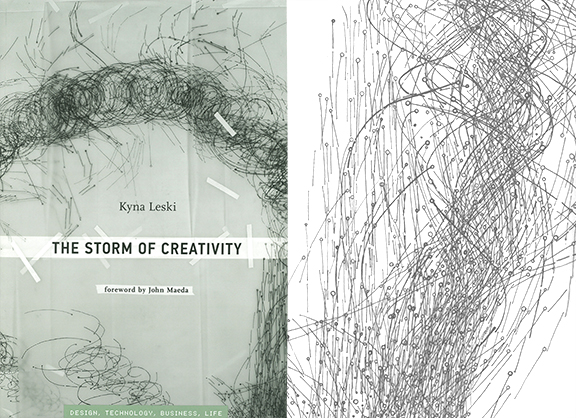
The Storm of Creativity by Kyna Leski

Posted on May 18th, 2016 by Nader Tehrani

Posted under: Press

There is perhaps no intellectual who is as in tune with the vulnerability of the creative process and the uncertainty from which innovation emerges as Kyna Leski. On the one hand, her focus on ‘unlearning’ takes us back to our most elemental moments of learning as a child, but also, on the other hand, to our most corrupted ideological predispositions… Find the book through the MIT Press here.

Storm-of-creativity-Leski-2

Comments Off on The Storm of Creativity by Kyna Leski

Emerging Pedagogies: Beyond the Arab Domain to the World

Posted on May 9th, 2016 by Nicole Sakr

Posted under: Press

Nader writes on the CSBE Student Awards for the new global architecture platform TR—ANSFER

transfer-arch-csbe-2016-edit

“Behind the projects, there were what I like to call, shadows: pedagogies, ideologies and references that shed a different light on the nature of architectural work. Beyond reading a piece of architecture, we read lineages, debates and conversations that sometimes extended beyond the professors towards decades –sometimes centuries – of discursive platforms.”


Comments Off on Emerging Pedagogies: Beyond the Arab Domain to the World

designboom: Catenary Compression

Posted on April 28th, 2016 by Nicole Sakr

Posted under: Installations + Exhibitions, Press

Designboom’s Philip Stevens writes on NADAAA’s Catenary Compression.

designboom-Catenary Compression

Comments Off on designboom: Catenary Compression

The Crush | Episode 06: Nader Tehrani on the Look and Feel of College Campuses

Posted on April 5th, 2016 by Nicole Sakr

Posted under: Academic, Press, The Cooper Union

Davin Sweeney, an admissions counselor for the University of Rochester and creator of the podcast The Crush asks Nader about what’s behind the unique “feel” of college campuses and the power of a campus’s atmosphere to either attract or repel prospective students. Listen HERE.

NaderTehrani_052 LR_0

Comments Off on The Crush | Episode 06: Nader Tehrani on the Look and Feel of College Campuses

The Divine Lady Z – by Katherine Faulkner

Posted on April 4th, 2016 by Katie Faulkner

Posted under: Press

ZAHA-HADID

It is often in loss that we come to understand the full value of something dear to us.  Such was my discovery last week when I learned that Zaha Hadid had unexpectedly died; a fact that upon penetrating my confused fog, produced a nauseous panic.  With her sudden departure, I feel strangely rudderless, as if a small hole has been exposed to be a crater.  Looking for solace among the pantheon of powerful women architects that she leaves behind … well, they are huddled together on the head of a pin.

I did not know her personally, had never worked for her, studied under her, or even visited a single one of her completed buildings.  The worldly Baghdad-born Ms. Hadid was likely intimidating from her outset, and had I met her, I would have been overcome with awe. Her pedigree was near perfect.  Born to privilege and raised with a sterling education, Zaha Hadid entered London’s Architectural Association during a particularly dynamic moment of the 70s, studying with Rem Koolhaus and Elia Zenghelis – starting her career as their employee at OMA, arguably the most influential firm of the last thirty years.   By the time I was a student in the late 1980s, Zaha Hadid was already famous for her brazen self-confidence and her deft navigation of a male-dominated profession.  There was in fact, little in her that I could emulate, yet she was with me from the beginning. She was the only woman architect we students revered, despite that she’d had almost nothing built.   All of us called her “Zaha” as if she were among us, making jokes at her expense, while admiring her untamable talent for drawing unfathomable form and inspired compositions of dizzying force.

Zaha Hadid’s building’s challenge our conventional notions of beauty and utility. In their autonomy, they seem to completely disregard their context, although ZHA director Patrick Schumacher would likely cut me down for being obtuse.  For once that professional grumpyman would be right.  Long before parametric modeling, Ms. Hadid was expounding upon the Russian Suprematists of the 1920s, such that Malevich looked simple.  Her work was marvelous, in the most literal sense, as color, movement, and depth were conveyed with the emotion of a Bacon painting, and the rigor of perfect math. Many wrote her off as a paper architect, banishing Zaha Hadid to the world of the Russian avant-garde, John Hedjuk, Lebbeus Woods and other draftsmen whose exquisite drawings we coveted even as we knew we’d leave them behind with our childish things.   The palpable force of her work however, would not be contained to mere paper. When the Vitra Fire Station opened in the early 90s, Zaha Hadid strode loudly into that Manhattan all-male social club – the Century – invited to a table reserved only for those who both ruled the Academy and saw their work built.  Alas, poor Philip, move over.

Within hours of her death, tributes and admiration flooded the internet such that her many achievements are revisited; dozens of accolades that include “Best Dressed,” “Most Powerful,” gold metals, Stirling Prizes, and the coveted Pritzker for which she will always hold the distinction as having been the first woman to have won.  Her work transcends conventional architectural practice to film, fashion, furnishings, and set design.  A favorite rumor or fact – in 1999 Zaha designed the set for the Pet Shop Boy’s Nightlife tour. (Were she and Dusty Springfield the original West End Girls?)  Zaha was no stranger to controversy.  Neither she nor any of her team were invited to the opening of the London 2012 Olympic Aquatics Center – oversight or snub?  In 2014 she was depicted as both heartless and clueless in connection with the death of hundreds of migrant workers preparing for Qatar’s 2022 World Cup and the ZHA-designed Al-wakrah Stadium.  As recently as last month, she made headlines with her indignant refusal to cede copyright of her scrapped stadium design to organizers of the 2020 Tokyo Olympics.  In fact, the media critiqued her with scrutiny never inflicted upon her male peers.  Zaha was described as tempestuous – she dressed to be noticed; she was infinitely quotable.  Dig deep enough among her press clippings find she was a smoker – at least until recently.  She never married, had an enormous closet, loved jewelry, maintained her nails, dyed her hair, could be officious to wait staff, alternately mean and extraordinarily generous to her employees – a real diva.  Perhaps this treatment was intended to offer some logic, as if in painting her to be another Maria Callas, we could comprehend her extraordinary talent.  More likely however, critics and paparazzi-alike were fascinated by this rare bird of beauty, with a confounding ability to shape space beyond comprehension.

Reading the early postings, I am noticing pattern. “She was more than just a female architect!” her admirers proclaim, admonishing us not to remember Zaha Hadid as a great woman, but rather as a great architect.  That her legacy be protected from the inferior label of “greatest female” anything should not come as a surprise.  Whenever there is a list of most successful/powerful/influential women, at least one in the crowd will say “thanks, but I do not think of myself as a powerful woman.”  Amy Schumer becomes indignant when labeled a female comedienne (would anyone call Stephen Colbert a male comedian??), although her best material comes from the stereotypes and social norms that confine her gender.  Women want to believe they occupy the same meritocracy as men, and the women who achieve success in their male-dominated fields should be entitled to a pride in their hard work and talent. Nonetheless, whenever I hear a female colleague say she is immune to gender bias, I want to know where to get a ticket for that space shuttle – now there’s is a planet I’ve never been to. Lots of women practice in the field of architectural design – lots of women hold influential positions in schools of architecture, but very very few women ever claimed a seat at the table of the Century Club. Those seats were reserved for powerful professionals, with the ability to shape trends, shift opinion, and maintain their relevance within architectural discourse.

With her passing, Zaha Hadid gives women unanticipated (for which I’d gladly have waited decades more) gifts.  She reminds us that architecture is indeed an art; that in order to bring that art to life, one might have to sacrifice personal popularity, endure withering criticism, and expose femininity to ridicule. Zaha demonstrated that we are limited only by ourselves; that architecture’s relevance can extend far beyond conventional practice.  Above all, she exposed herself as alone on an admittedly small podium, as a singular woman among the world’s most formidable architects.  We can argue endlessly about other women, successful in their own right with bright futures, already recognized and imitated for their work.  Yet for a certain generation of architects – mine – the departure of Zaha Hadid exposes that things really are as imbalanced as they seem; that we have fallen short of the required combination of talent, endurance, and sheer bravado required for a seat at that powerful table.
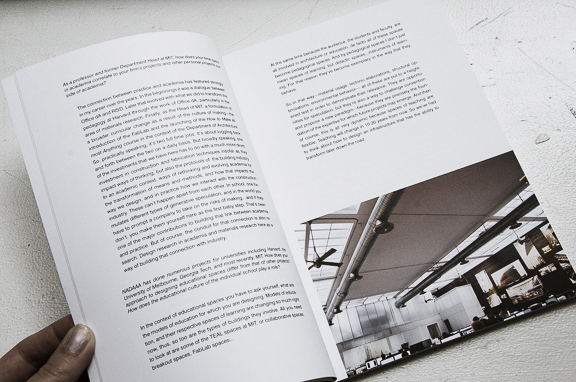
image above by Nicole Sakr, adapted from a photo by the Knight Foundation

Comments Off on The Divine Lady Z – by Katherine Faulkner