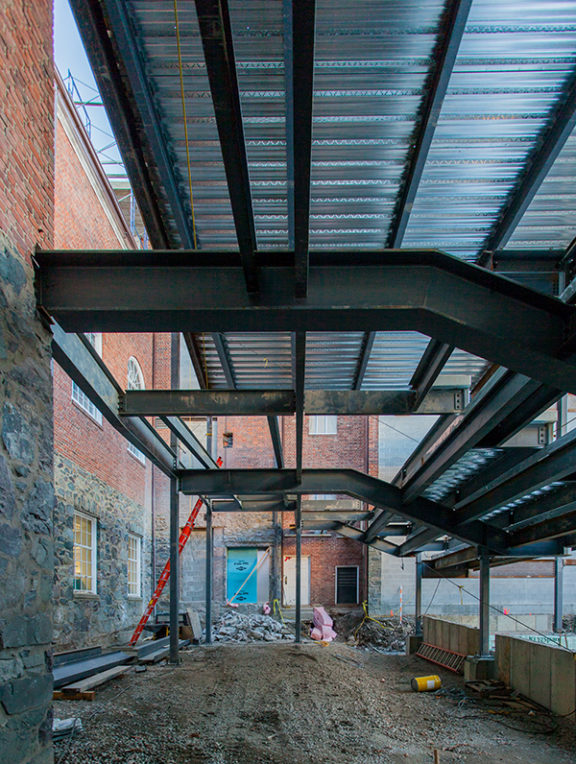
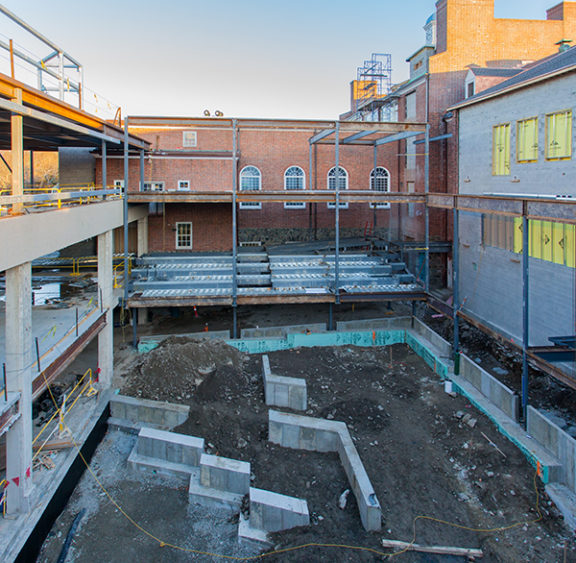
The structure for the new third floor addition and the northern facade profile are in place.
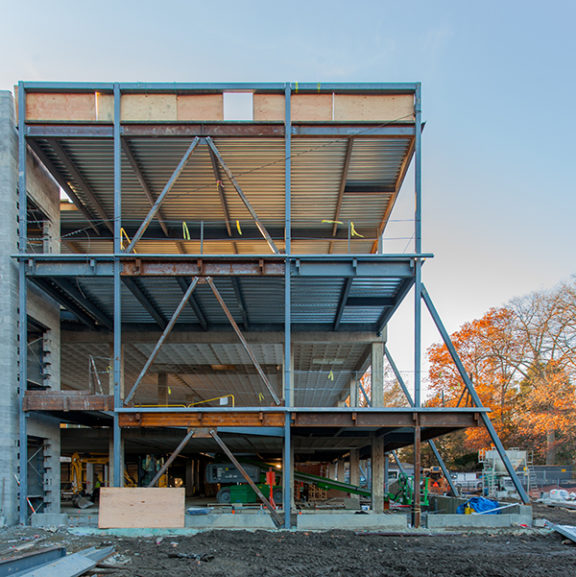
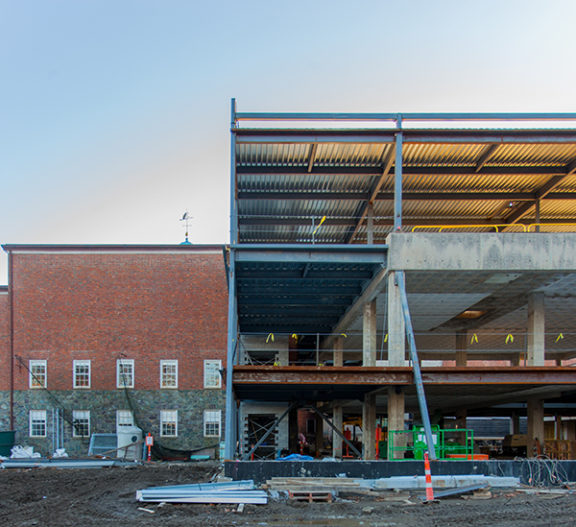
Bleacher structure in place
Photos by Erica Dorenkamp
Comments Off on BEAVER CONSTRUCTION UPDATE
The structure for the new third floor addition and the northern facade profile are in place.
Bleacher structure in place
Photos by Erica Dorenkamp
Comments Off on BEAVER CONSTRUCTION UPDATE
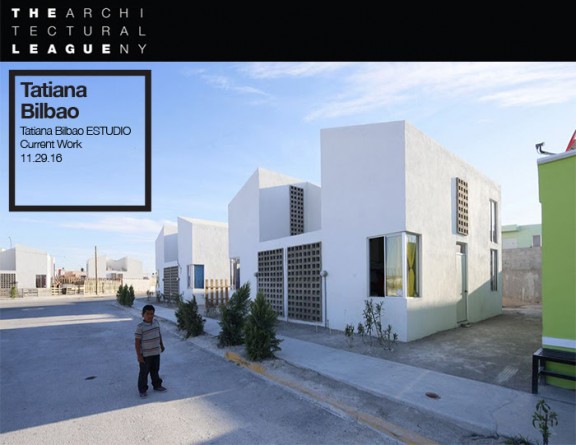
Tomorrow at Cooper, Tatiana Bilbao of ESTUDIO analyzes urban and social issues to rethink how spaces can be “reactive to global capitalism, opening up niches for cultural and economic development.” Learn more or Get Tickets.
This event is sponsored by The Irwin S. Chanin School of Architecture of The Cooper Union.
Comments Off on TATIANA BILBAO AT COOPER TOMORROW
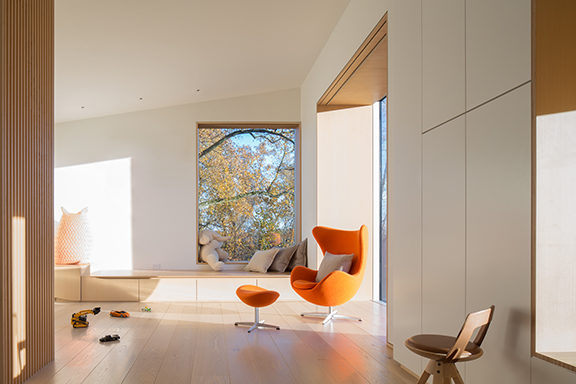
Rock Creek House is featured in the Italian publication Abitare. Read more HERE.
Comments Off on ROCK CREEK HOUSE FEATURED IN ABITARE
Annemarie Brissenden writes on NADAAA’s project for DFALD that is nearing completion. Read on HERE.
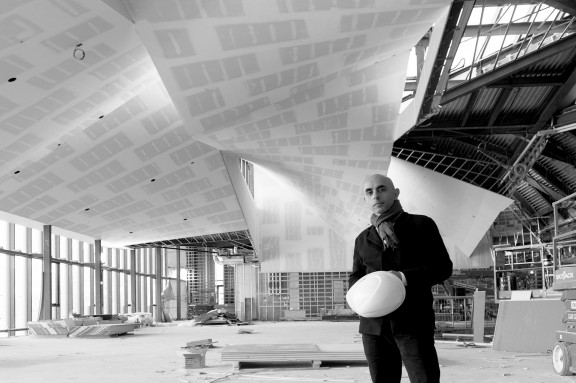
photo by NEILAND BRISSENDEN
Comments Off on ‘One Spadina Crescent Integrates New Into Old’
Elizabeth O’Donnell and Nader will moderate.
“As one small community, we can offer a model of engagement, that through dissonance and even disagreement, can yet channel the intelligence of dialogue towards a larger understanding of our cultural condition.”
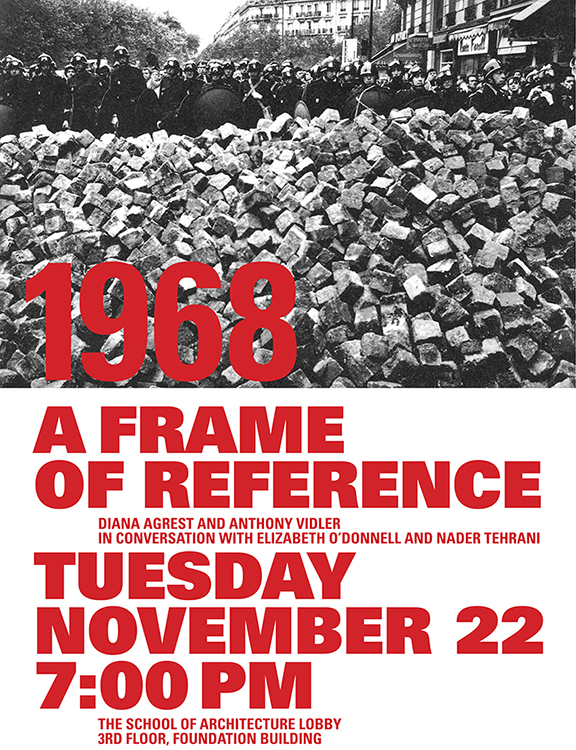
Comments Off on DIANA AGREST AND ANTHONY VIDLER AT COOPER TONIGHT
Last week was an interesting one for mavens of Boston’s housing scene. Mayor Walsh made an appearance at ABX, on the “Boston You’re Our Home” panel discussion. Although the Mayor left the room before the Q + A, he did listen to the presentations of his fellow panelists, as well as contribute a few remarks of his own, queuing up Imagine Boston Expanding Opportunity, the City’s 2030 draft plan of priority initiatives which was released two days later (final master plan to come out next year). Kudos to whomever designed the program for this ABX session – the perspectives were different and fascinating. In his opening remarks, Mayor Walsh reminded the room that Boston is more than halfway toward meeting its goal of 53,000 new dwelling units by year 2030. Tamara Roy, current BSA president, echoed her long-held championship of small housing units, most recently touring the city with Uhu, a 385-square foot prefabricated urban house. Kimberly Sherman Stamler, the young and articulate president of Related-Beal, effectively communicated the complex web of partnerships required to achieve success for her firm’s mixed-use Parcel 1B. Finally, Mark Erlich (Executive Secretary-Treasurer of the Carpenter’s Local 40) tempered the festive mood with harrowing statistics of under-paid construction workers. Something we all know, even if we do not think about it, is that the low-bid system encourages cutting labor costs (see Beth Healy and Meghan Woolhouse, September 18th Globe Spotlight article HERE).
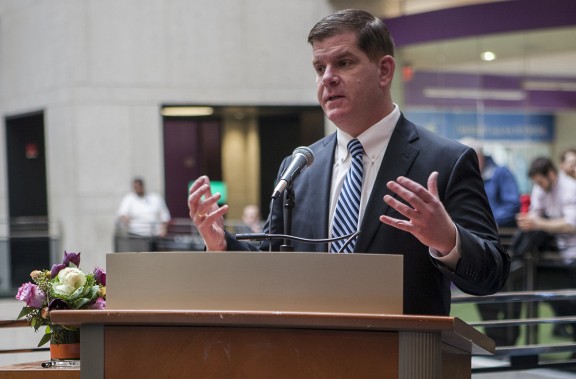
PHOTO BY OLGA KHVAN FOR BOSTONMAGAZINE.COM
The takeaway was thus: Boston is building 53,000 new dwellings, and they are going to be small. In order to “make the numbers work,” there will be city-sponsored partnerships with developers, and some percentage of the construction workers are likely to be undocumented and/or under-paid. Thus as architects, we should understand the landscape (literally) as we contribute our part to this building boom. As Dr. Krakower said to Carmela Soprano: One thing you can never say: You haven’t been told.
Keeping it Big Around the Edges
The 152-page Expanding Opportunity report is a colorful, easy read, and indicative of the trends and preferences of Boston’s housing cognoscenti. Consistent with the panel’s focus, the 2030 document is concerned with significantly increasing housing stock without sacrificing Boston’s unique urban character. The document presents much to be hopeful about: a reasonable percentage of low, moderate, and mid-level housing; healthy, walkable neighborhoods with open space and access to public transit; prioritization of good education with economic opportunity; reduction of green house gases; support for smart-city technology; and a commitment to arts and culture. Potentially troubling however is the “Expand the Neighborhoods” chapter. Let’s face it. 53,000 is a lot of apartment, and Boston is an old city without much frontier. So in order to hit the number, you are going up or pushing out. Given that skyscrapers are near impossible – thwarted by the FAA, geology, and general disdain for ostentation – Boston will see more of the latter, mega-blocks at the edges of neighborhoods with hundreds of small to mid-sized rental units. A ride to Forest Hills on the Orange Line takes one by some mighty big sites. You have to wonder what Jane Jacobs would say about the bigness and sameness going up in the name of transit-oriented development. Admittedly, these parcels were created by the kind of urban planning that put I-93 between the South End and South Boston, but simply extruding big parcels does not create the kind of density that sponsors the honorable initiatives proposed by the Mayor’s team.
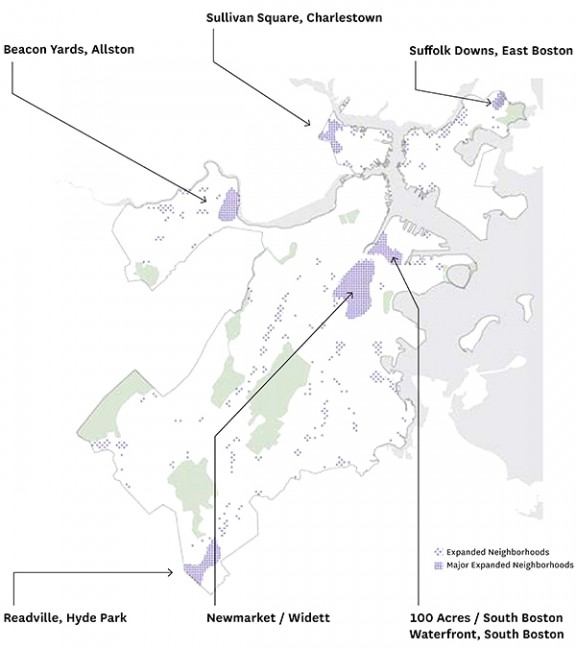
According to the Mayor’s report, “in workshops and on-line”, Boston residents agreed that the edge areas – those industrial blocks in neighborhoods like Allston, Sullivan Square, Roxbury, and Readville – are places where Boston can grown. Of course this makes sense because no one lives there to object, and in many cases, the parcels are changing use from something like a transit depot to affordable dwellings. If we do not want to become like San Francisco, a beautiful city where most of us could never afford to live, we have to increase the supply to meet the demand. As someone from the Mayor’s office noted, “the units have to go somewhere.”
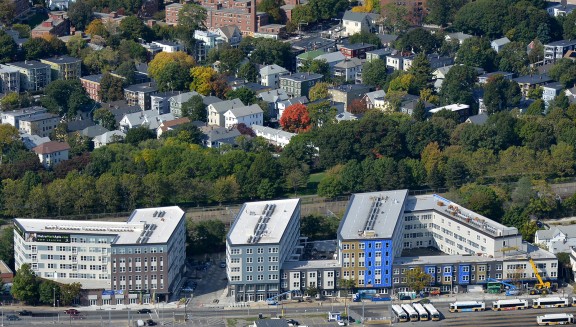
The authors of the plan are doing a good job reaching the neighborhoods, and odds are strong that the 2030 plan will sponsor positive outcomes. These are smart people who know that mixed-use development depends on the success of ground floor retail, walk-able sidewalks with civic destinations (libraries, parks, schools), with more than one primary function so that people are going outdoors on different schedules, at different times of day. Smaller blocks facilitate mixed use because smaller businesses have a chance to participate in the mix. If you want to see another Flour, Clover, Boomerangs, Newbury Comics, or Haley House grow its business in your neighborhood, look for smaller building footprints punctuated by cross streets.
A few months ago, in her article Boston is Getting Really Expensive, Rachel Slade called out the fact that many of us already cannot afford to live here. That creative class that I like to think I’m a part of, is seeking more-affordable towns, taking Boston’s funkier side with them: “I hope you like T. J. Maxx and Starbucks” Slade says, because all the cool people are leaving. She’s right, and the best way to solve this problem is to increase the supply of housing, accessible to multiple income levels. And those units have to go somewhere- but perhaps not all of them need go on the same block.

ILLUSTRATION BY JOSH COCHRAN
Comments Off on BOSTON’S GOT A PLAN – SORT OF
New photos of One Spadina! Also check out construction updates from Torontoist and Azure.
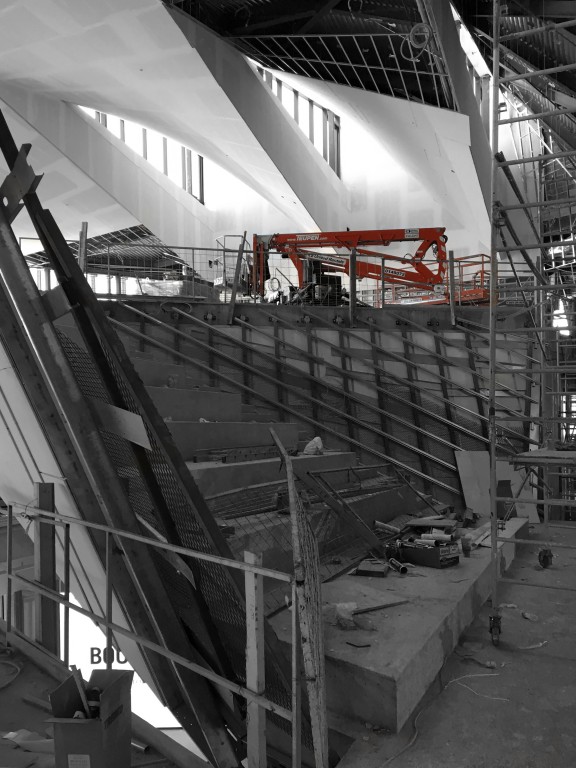
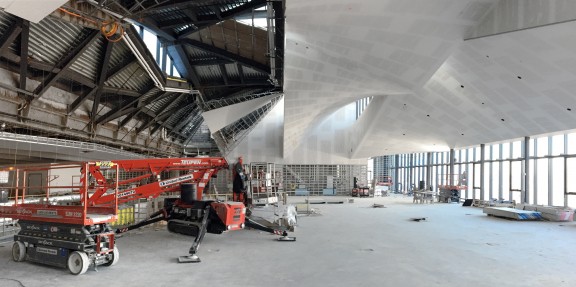
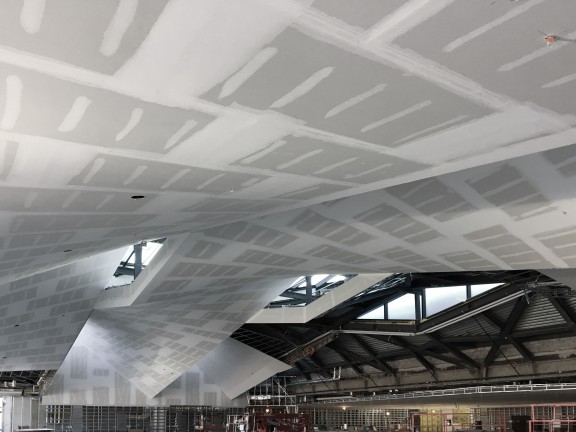
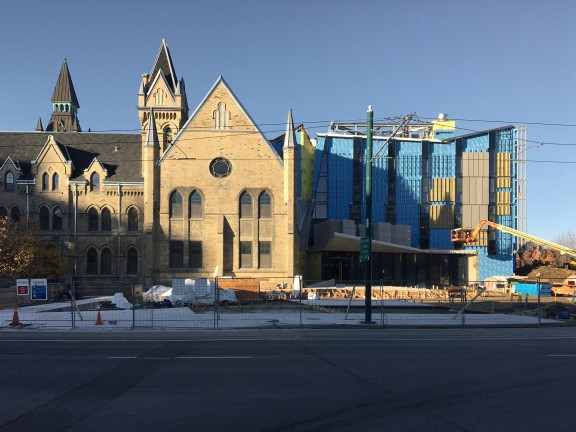
Comments Off on DFALD CONSTRUCTION UPDATE
Dean Richard Sommer hosted a fund-raising event at the (nearly completed!) One Spadina building last week. Read more about this event on Urban Toronto, Canadian Architect and on the Daniels Faculty blog.
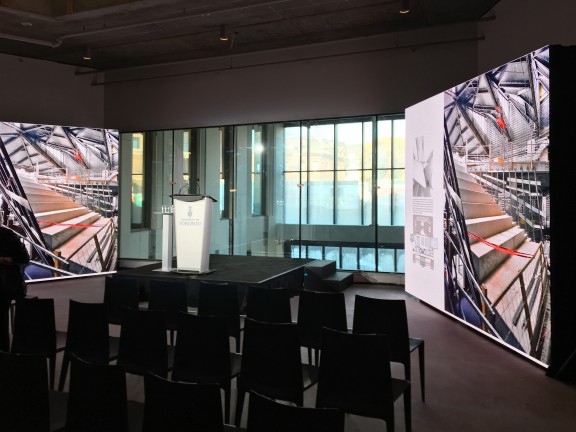
Comments Off on DFALD EVENT FEATURED ON URBAN TORONTO
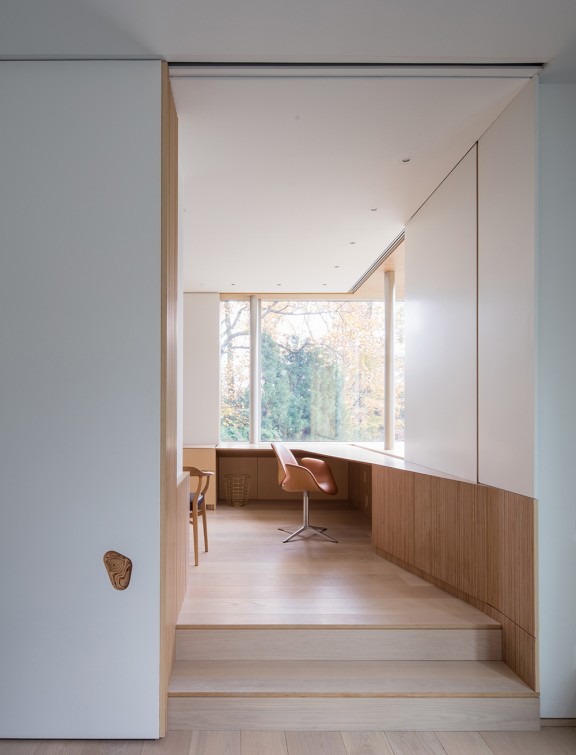
Of the 1,048 projects entered, the Rock Creek House was selected as a finalist! On December 1st winners of the BoY Awards will be announced live in New York at the IAC Building. See the full list of finalists here.
Comments Off on ROCK CREEK HOUSE FINALIST FOR ID’S BEST OF YEAR AWARD
In what turned out to be a fortuitous turn of events, John Wardle was out of the country when we were to lecture together at the University of Melbourne – this in a bid to win the commission for the new Melbourne School of Design (MSD) building. John was unfazed, although he understood how important it was for us to speak as one on the same podium. Coming together – not as the traditional, international-local shotgun marriage, but as a true collaboration – we had yet to prove how we could bridge the Pacific to convene on the same conceptual platform. Though we shared a common intuition, we had not actually worked together; we could only interpret commonalities through a series of projects that, in our minds, could be construed as blood relatives, no matter how far apart they were conceived and built.
John imagined his absence as an opportunity – the chance for me to speak to his projects without his presence, outside of his voice, and, in doing so, to overcome any perceived or actual gaps. This was the only genuine way to establish parity, kinship and a grounded collaboration. This short essay recollects that talk and how the collaborations that came later embellished those instincts.
I had visited Melbourne Grammar School a year earlier, without the corollary pleasure of meeting its architect. In that building, I witnessed a conceptual affinity that I attributed to a set of common intellectual projects, concerns that are engrained in the discipline of architecture and thus span generations, geographies and mentalities.
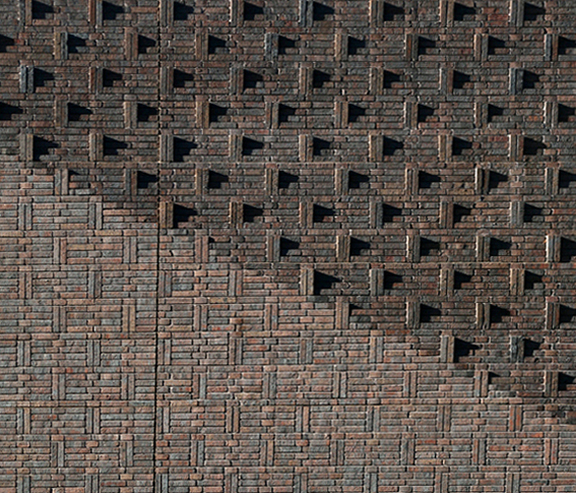
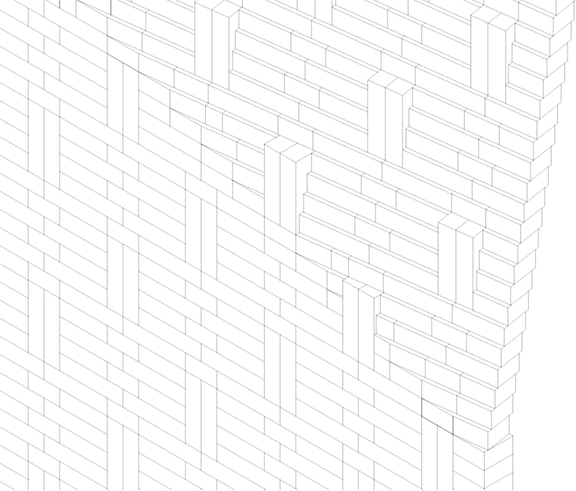
A complex and rich work, the Melbourne Grammar project is, in great part, known for its powerful face onto the city. This is more than a facade for the school. It encompasses the panoramic vista to the Royal Botanic Gardens, acknowledges the monumental importance of the Shrine of Remembrance, and works from the outside in as well as from the inside out. As such, the scale and grain of the glass panels and the adjoining brick wall both reflect the content (expressing its interior) and provide a mirror onto the city: a backdrop for the foliage and an edge that is larger than the school itself. The brick-bonding pattern constructs a relationship between part and whole, oriented at once perpendicular and parallel to the street. The running bond is oriented lengthwise along the street edge (as is customary), but this pattern is interjected with a systemic series of soldier courses, composed as duets that face the street. Through a cunning twist, the wall plane folds at the end of the building, forcing the running bond to corbel back while the ‘soldiers’ read as objects against the canted face of the wall. This enables the wall to reinforce the street edge, while also confronting it.
From this short visit, I recognised an affinity for the work, and also realised how that sensibility is shared among a larger authorship – Stefan Mee, whose drawings bring to light the work’s tectonic depth, and the collaborators who are central to JWA. These commonalities can also be traced within the larger arc of history, providing a lineage of intellectual strands. In particular, I focused on one simple technique: the use of the architectural ‘grain’. This is the conceptual tool with which JWA masterfully weaves the constructive composition of the Melbourne Grammar facade.
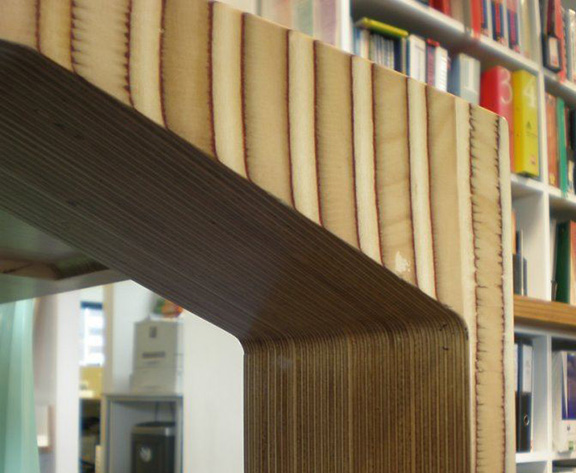
The grain is present in JWA’s work at many scales. We see it in the aggregated butcher-block grain of stacked plywood in John’s office table – rich in texture from the cross laminations, the tables are cut at each end, slightly oblique to the grain of the laminates. The plywood grain runs parallel to the orientation of the building, while the tables themselves are oriented oblique to the other office furnishings, making them a figurative presence within the space. Here, the grain materialises the figurative potential of a simple four-legged furnishing, in its formal misalignment, and in the end-grain detail that emphasises that orientation as a meticulous index.
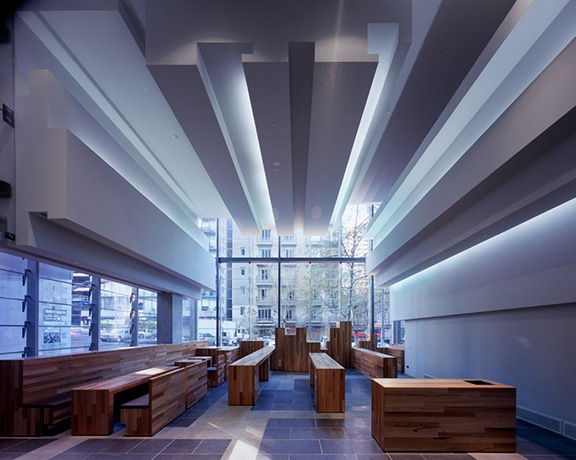
As the work shifts in scale, there is a deliberate formal connection between furnishings and broader architectural strategies. In the lobby of the Urban Workshop, the grain materialises at both macro and micro scales. The entire space is a monumental extrusion – the formal expression of benches, tables, counters and lighting is suppressed under a regime of non-referential figuration. (And yet, all fulfil their function without compromise.) Within this, the elements are expressed in relation to material tectonic logics; wooden floorboards are laid length-wise in relation to the extruded logic and reinforce the striated organisation, while the plaster overhead maintains an immaterial presence, formally extruded yet materially a-tectonic.
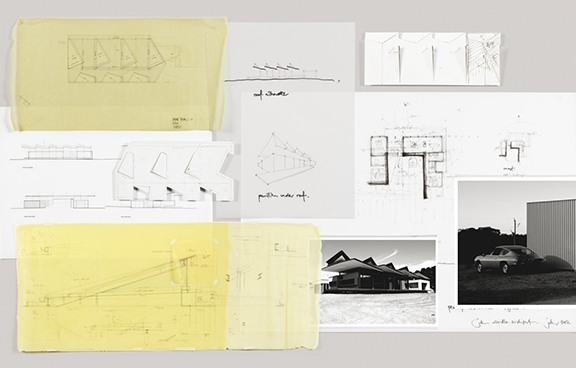
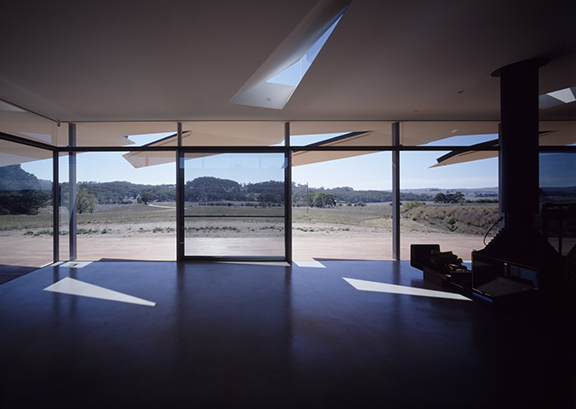
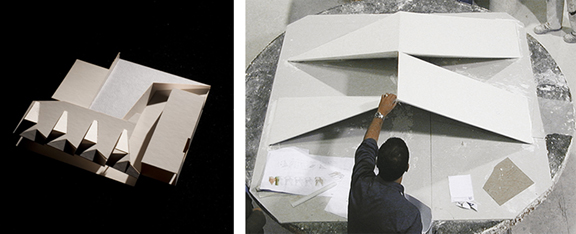
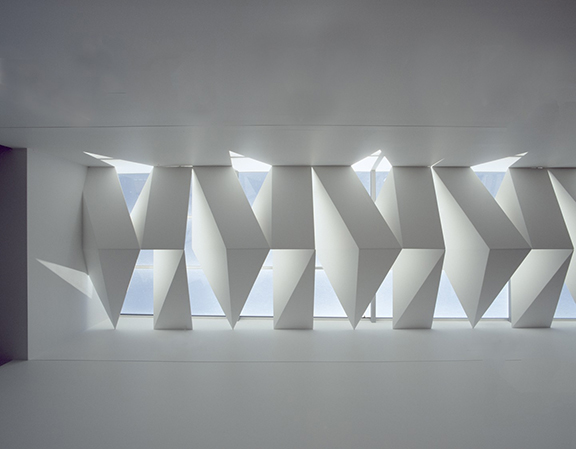
This focus on materiality and the cleverness of tectonic play is underpinned by the sophistication of abstraction. JWA toggles back and forth between tactics of representation, models of form generation and actual building industry collaborations. The use of the model, in the nimble hands of Andy Wong, exemplifies this. The technique of paper folding takes on a life of its own, as thin laminate is scaled ten-fold and translated into the building industry. The Kyneton and Yarra Bend houses both take on this approach. While the Kyneton house radicalises the folded planarity of the white ceiling plane, the field of skylights in the Yarra Bend house gives depth and weight to the thinness of the plaster face that supports them. Both look impossible. Yet both are built impeccably well, and are even better crafted at an intellectual level, making the seemingly implausible real.
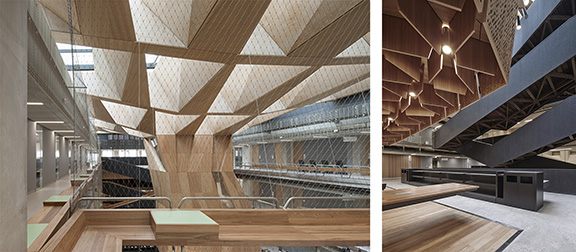
These reflections were formed somewhat off-the-cuff in the context of courtship, but they have evolved as an operative intellectual instrument and an extension of our mutual interests in the design process. It is no accident then that the Yarra Bend house came to influence our collaborative thinking on the MSD, completed in 2014. If Yarra Bend’s ceiling gains delight in its abstraction, MSD reverts to the material grain of wood laminates to help bridge a twenty-two meter span. Moreover, Wardle’s humorous account of D. H. Lawrence’s Upside Down at the Bottom of the World eventually gave form to the inverted tectonic of the suspended studio at MSD. This totemic wood object extends the grain of the structural ceiling back towards the ground; incrementally reducing the depth of wood towards its nadir, where thin laminates of wood fins produce a counter-coffering of acoustic tiles at the bottom of the suspended structure. Thus, the studio maps out the reduction of structural forces – from thick to thin, from compression to tension, and from materiality to abstraction – in a linear narrative from top to bottom. Located asymmetrically, the figural geometry of the suspended studio torques, as if in contrapposta, while its formal configuration simply extends the logic of the two-way coffering overhead into the body of the vertical shaft. Thus, the mat grain of the ceiling is translated into the singularity of vertical forces on the shaft. This is expressed in the grain of the wood veneer, and in the proportions of wood panelling that enables its construction.
The grain of Wardle’s work takes on many faces and interpretations. While he works with graining in its most material sense, it is also a conceptual platform from which experience is constructed. The grain is an intellectual ploy; it works ‘against the grain’ of facility to require conceptual friction. In this feat, Wardle displays virtuosity, rigour and invention.
Comments Off on JOHN WARDLE ARCHITECTS RELEASES NEW BOOK, ‘THIS BUILDING LIKES ME’