Patkau Architects Release New Book ‘Material Operations’

Posted on June 15th, 2017 by Jalisa Joyner

Posted under: Press

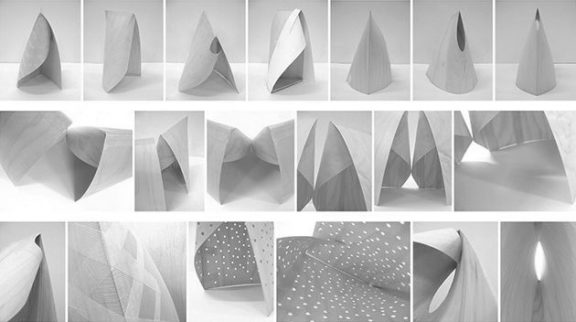
The newly released Patkau Architects: Material Operations demonstrates how the firm utilizes traditional building material and unconventional construction methods to produce poetic forms with a unique identity. The book includes a preface from Nader:

“[Patkau’s] work has always maintained a deep commitment to the development of a ‘tectonic culture,’ using construction elements not only for the fabrication of buildings but indeed to transcend the ‘merely material’ and create artful and poetic assemblies that dematerialize the conventions with which common construction is oft associated.”

Buy the book HERE. Read Nader’s preface HERE.

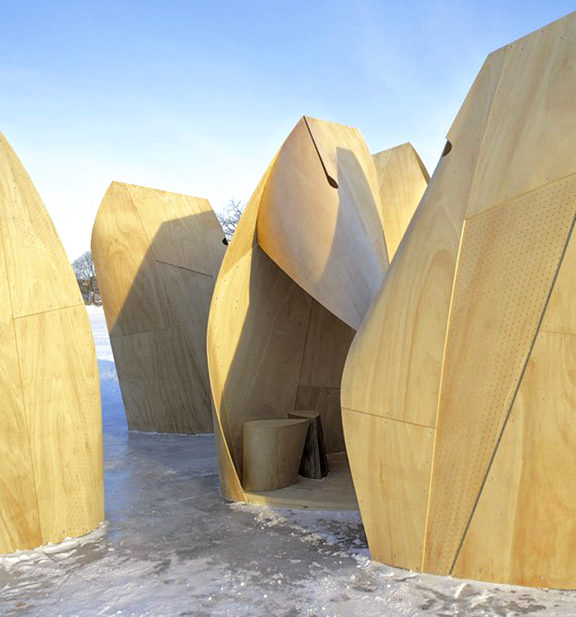
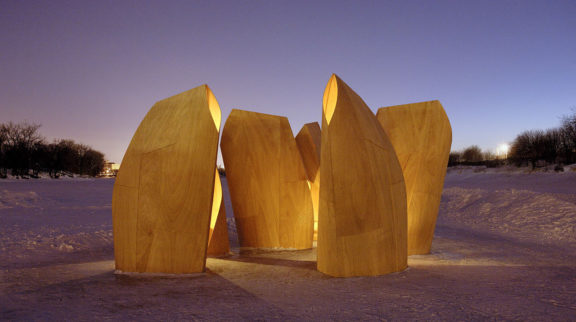
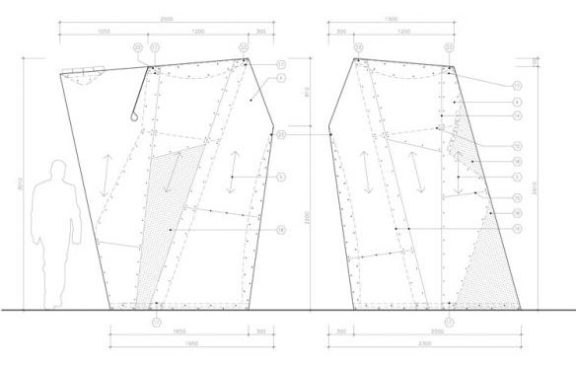
“Engaging the grain of wood for the Skating Shelters is a way of understanding how its fibers may inform the possibility of spatial and formal pliancy. In contradistinction to classical modes of composition, where the figurative and compositional aspects of design are assumed, this suggests a bottom-up approach: discovering through tinkering. By extension, their requisite play with plywood acknowledges the dual directionality of plywood laminates, the overlay of which offers a structural composite that defies that very natural grain to work at a modular scale of industrial production. The 4′ x 8′ sheet here becomes a unit of production that helps not only to extend seamless surfaces but also to create the very joints that make its tectonic ethic an irreducible part of its inventive expression.”

Patkau Architects Material Operations (c) 2017 Patkau Architects, published by Princeton Architectural Press.  Reprinted with permission of the publisher.

Comments Off on Patkau Architects Release New Book ‘Material Operations’

Sarah Goldhagen Releases Book ‘Welcome to Your World’

Posted on June 14th, 2017 by Nader Tehrani

Posted under: Press

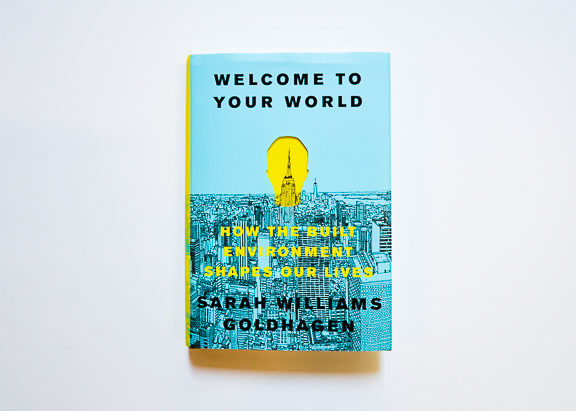
Sarah Goldhagen brilliantly prompts the allegory of “blindsight” to show how the recent findings of cognitive neuroscience and neuropsychology can become the basis for a thoroughgoing paradigm shift in the understanding and construction of the built environment. In explaining the connection between human experience and the world as an embodied phenomenon, she reconfigures the foundations of thinking that have dominated the scholarly, design and building professions. But she does more: bringing the sciences deep into the humanities, she reconceptualizes our understanding of the built environment’s profound effects on individuals, communities, and societies.

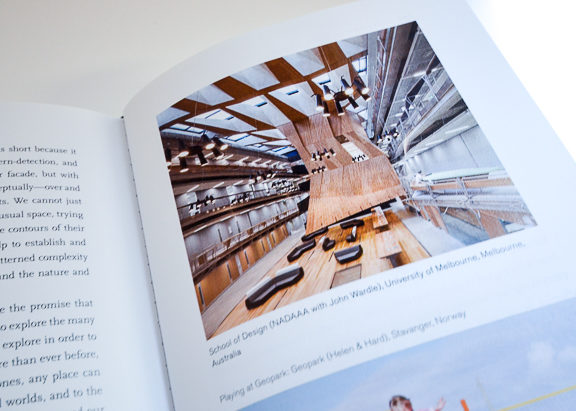
Goldhagen’s sharp eye as a design thinker maps out this new terrain through an array of specific and illuminating architectural, landscape, and urban explorations, offering examples that span ages, styles, and sensibilities. In reading this book, architects and planners will continually be asking themselves to rethink their own design practices and methodologies. Even more importantly, the tenets of the book stand to have a sweeping impact on a much broader audience of policy makers and the general public by helping us to gauge how we build, construct policy, integrate disciplines, define design agency, and produce rich and ennobling environments in a rapidly changing world around us.

Lucidly written in beautiful prose, this book will stimulate and delight professionals, students, and non-professionals alike. A must-read for all of us, there is much to learn from it!

Buy it HERE.

Comments Off on Sarah Goldhagen Releases Book ‘Welcome to Your World’

One Spadina Featured in Toronto Life

Posted on June 13th, 2017 by Jalisa Joyner

Posted under: _Daniels Building, Press

Toronto Life takes a look inside of One Spadina. Read more HERE.

Comments Off on One Spadina Featured in Toronto Life

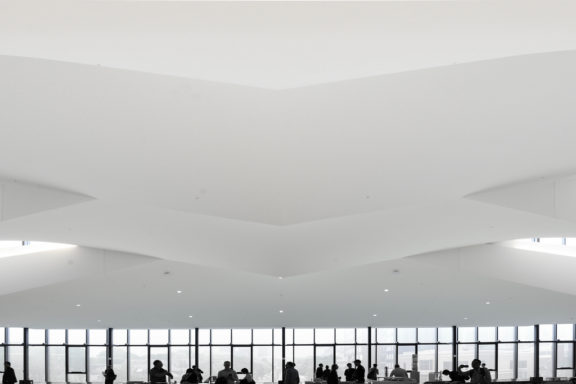
DFALD makes Urban Toronto’s Photo of the Day

Posted on June 5th, 2017 by Nicole Sakr

Posted under: _Daniels Building, Press


photo by Lori Whelan

Comments Off on DFALD makes Urban Toronto’s Photo of the Day

New York Architecture Diary

Posted on June 1st, 2017 by Nicole Sakr

Posted under: Academic, Press, Things We Like

Nader has curated a list of key NYC Summer Events for the New York Architecture Diary including the Cooper Union’s annual End of Year Student Exhibition and MoMA PS1’s exhibits of James Turrell and Jenny Sabin.

Comments Off on New York Architecture Diary

Domestic Tectonic: Translations Across Scales

Posted on May 22nd, 2017 by Lisa LaCharité

Posted under: Installations + Exhibitions, Lectures, Press

Nader Tehrani and Katie Faulkner presented the 2017 RISD Shoemaker Lecture on April 24, 2017 after the opening of the RISD Shoemaker Exhibit by NADAAA, Domestic Tectonic: Translations Across Scales, at the RISD BEB Gallery. Below is a summary and guide to the exhibit.
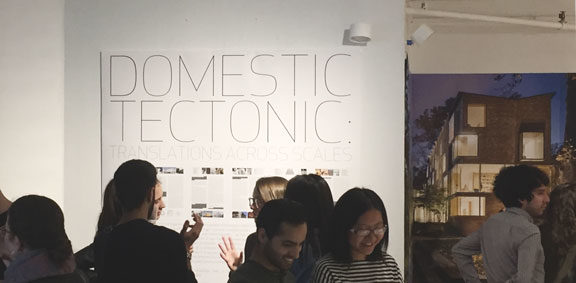
Domestic Tectonic occurs at a moment in our trajectory when the dialogue between research and practice has intertwined, not only in confluence, but in moments of friction when our design ambitions have not aligned with the possibilities of patronage, construction norms, or the fluctuations of the economy. The Rock Creek House, as such, does not so much represent the culmination of a form of thinking, but strategic compromise, reconciliation, and opportunism. The seeds for current thinking can be found in history, and many of the early works of both Office dA and NADAAA were houses. Taken together, the houses reveal not only speculation on the domestic realm, but also ways in which a small project may become an ‘amuse bouche’ for a larger construction.

Thus, we link the design and craft usually reserved for the scale of a home to the architecture of the very institutions that train the designers. Below are a few examples of these links as themes that stand out in our work: The first theme deals with the basic proposition of architectural composition in the context of typology, organization and configuration: each of these houses have explored the tensions between received conventions on the one hand –whether from history or the construction industry– and the idea of transformation and invention on the other. A second theme has transported each project into a research about the relationship between material units, their methods of assembly and the way in which means and methods might become transformative –formally, spatially, and technologically– as the basis for the production of new forms of knowledge. Thirdly, each project establishes some relationship with its site, if only as a reminder that architecture does not only operate in a vacuum, but also in a deeply entrenched relationship with its context, and hence a social, political and collective environment.
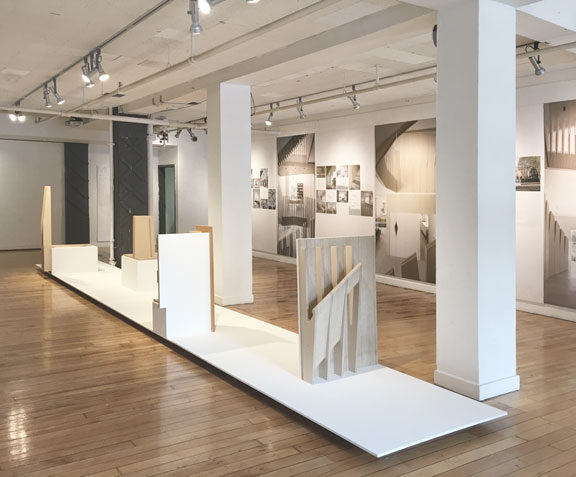
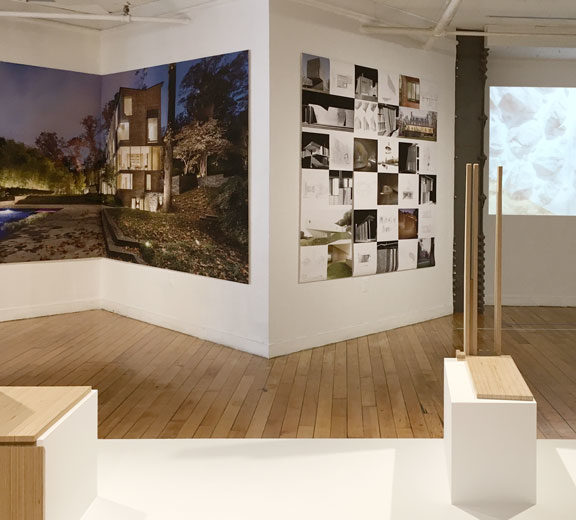
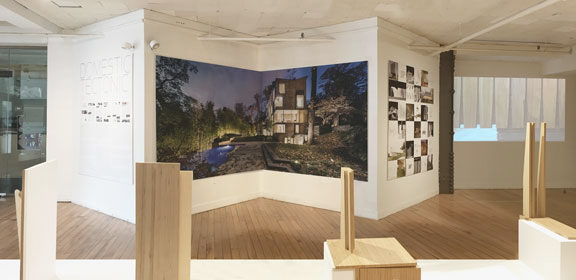
Below is an outline of the work included in the exhibit to provide a tour of the exhibition. The exhibition was organized around five episodes; each episode title is a link that provides additional information and context:

1 The Rock Creek House

As the centerpiece of the exhibit, the Rock Creek House represents the challenges of working with the infrastructure of an existing building, and how its history and embodied energy serves to advance an idea about resilience and preservation. At the same time, the project tests the limits of such a logic, radically transforming the southern side of the building to open it up to the landscape, framing broader views, letting in the sun, and consequently transforming the otherwise load-bearing brick wall into a curtain wall. The sectional excavations of the project are maybe its most transformative, effectively mining space out of an existing basement and attic to double the size of the house. Significant portions of existing brick were removed on the southern façade to make way for larger window sizes, and then subsequently recycled to expand the façade of the attic space: a conceptual cut and fill.
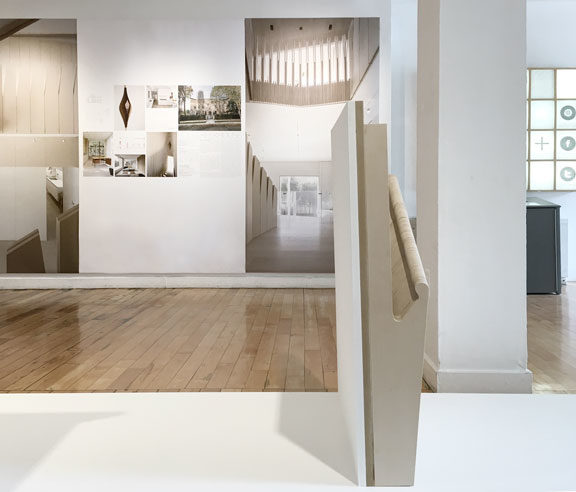
2 MOCK-UPS

The mock-ups in this exhibit are a key part of the research undertaken by NADAAA in collaboration with C.W. Keller & Associates to advance some of the material thinking of the project. Much of that thinking was aimed at organizing the house on the north-south grain of its structural walls and –with the insertion of diverse plywood elements– reinforcing that grain with the orientation of plywood laminations. These laminations then translate into butcher block stairs, picket railing, blank panel interior facades on the east-west grain, and a medium through which to organize all mechanical and electronic elements.

3- Tectonic Domestic Grid**

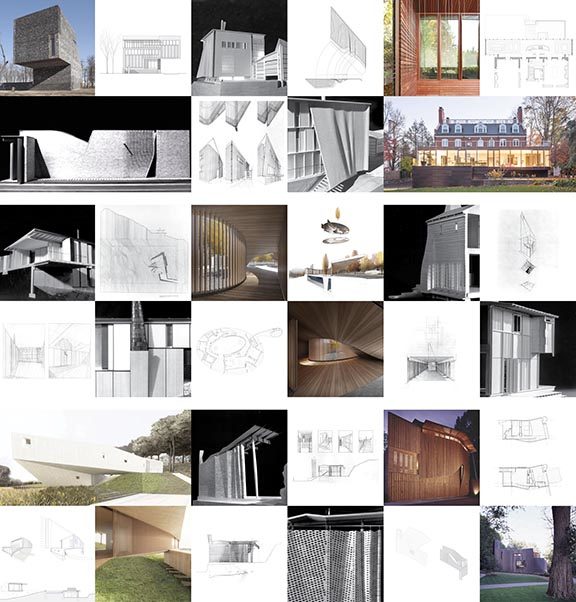
The grid of projects on the north-west corner of the gallery places this project in the context of other residential projects through which some of the key ideas have been iterated.
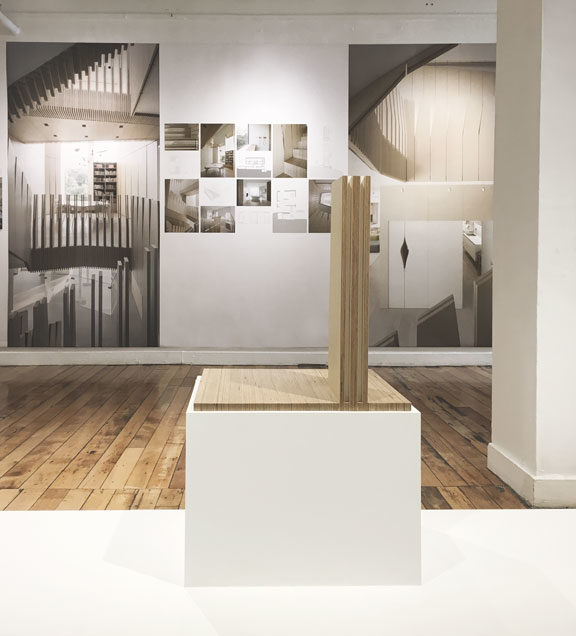
4 The Animations 

The projection wall brings the various projects into dialogue with each other through added images, and more importantly through animations that advance both the conceptual and experiential aims of each project.
5 The preface to the May 2016 issue of The Plan 

The preface to the May 2016 issue of The Plan is included as an introduction to the exhibit. It outlines some of our architectural preoccupations over the past years and how they have impacted the relationship between practice and pedagogy.
** Residences from left to right, top to bottom: Tongxian Art Center, Weston House, Newton House, Phoenix Residence, New Hampshire Retreat, Mill Road Residence, Villa Varoise (Dortoir Familial), Casa La Roca, House in New England
Comments Off on Domestic Tectonic: Translations Across Scales
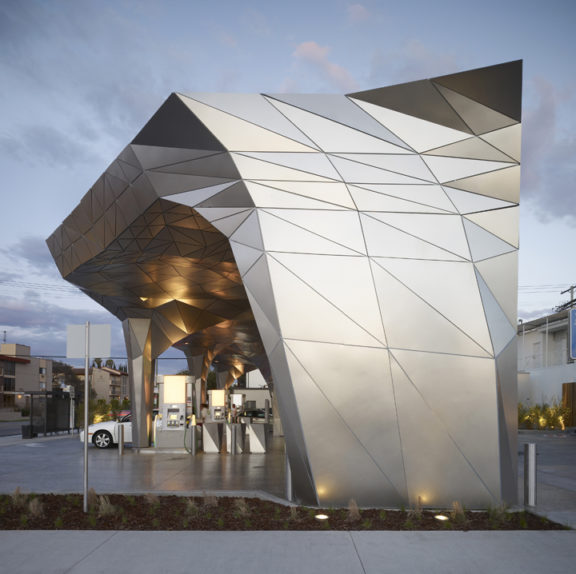
Helios House Featured in 2017’s 10 Best Gas Stations

Posted on May 19th, 2017 by Jalisa Joyner

Posted under: Press, Things We Like

Helios House was #8! Read more HERE.

Comments Off on Helios House Featured in 2017’s 10 Best Gas Stations

Nader Selects His Favorite New NYC Architecture

Posted on May 10th, 2017 by Jalisa Joyner

Posted under: Press, Things We Like

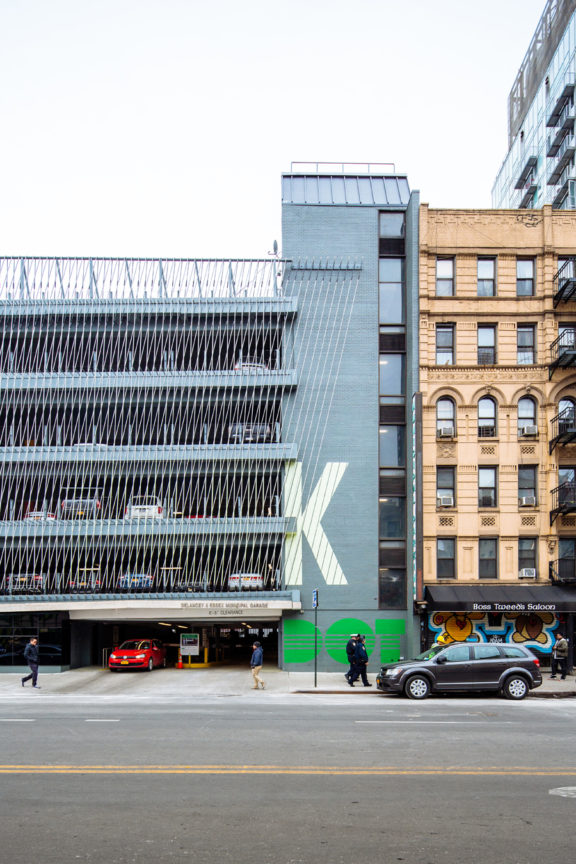
Along with other architects, designers, and key influencers, Nader nominated his favorite recently constructed project in New York for Metropolis Mag.

“As with all other cities, New York City is challenged by a range of buildings that may not have an overt civic or public function to be celebrated as such. At the same time, infrastructural projects such as parking structures often end up becoming one’s threshold into the city: a front door. This modest project, located in the margins of a main promenade, brings attention to a latent iconic and urban function such a threshold could contain, and it does it with a certain economy.”

Read more HERE.

DELANCEY AND ESSEX MUNICIPAL PARKING GARAGE
designed by Michielli + Wyetzner Architects

Comments Off on Nader Selects His Favorite New NYC Architecture

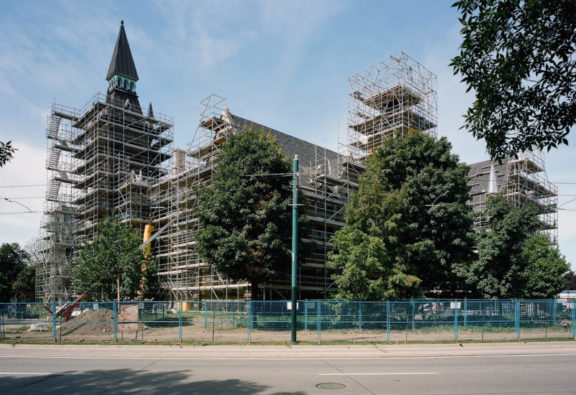
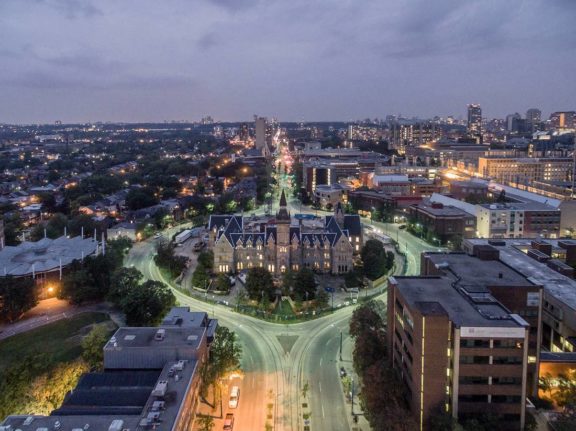
The Globe and Mail Features DFALD

Posted on May 8th, 2017 by Jalisa Joyner

Posted under: _Daniels Building, Press

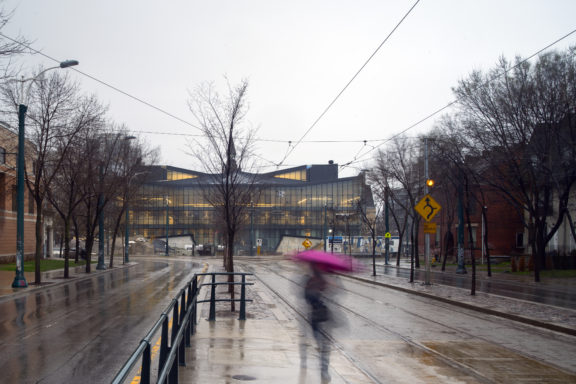
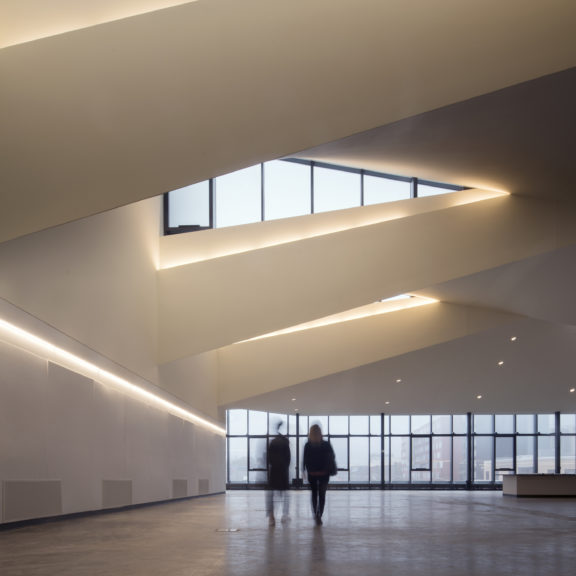
“After years of complex construction, it’s not quite done […] Yet it is already spectacular – one of the best buildings in Canada of the past decade, rich with arguments about how contemporary architecture, landscape and urbanism can work with history and build the city of the future.”

-Alex Bozikovic

Read more HERE.

Comments Off on The Globe and Mail Features DFALD

Nader Participates in Drive, Design, Desire Roundtable

Posted on April 28th, 2017 by Jalisa Joyner

Posted under: Events, Lectures, Press

Drive, Design, Desire – dna10 Roundtable – moderated by Rodman Primack with Kelly Behun, Marc Benda, Jordan Hruska, Christian Larsen, Jeanne Greenberg Rohaytn, Christopher Schanck and Nader Tehrani

Saturday, May. 6th, 11am -1:30pm

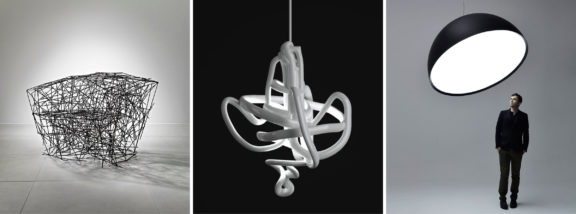
Nader will participate in a freeform discussion on the current state of design. The event coincides with Friedman Benda Gallery’s 10th anniversary exhibition, dna10, which runs from May 4th to June 10th. To learn more click HERE and HERE.

Limited seating, please r.s.v.p gallery@friedmanbenda.com

Comments Off on Nader Participates in Drive, Design, Desire Roundtable