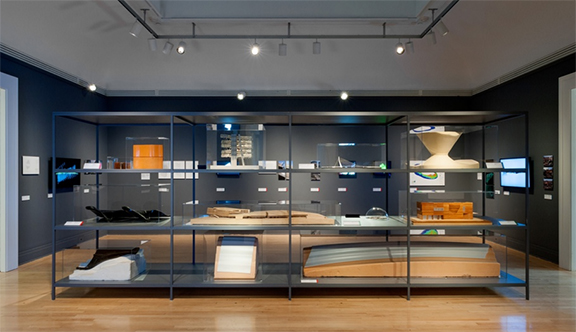
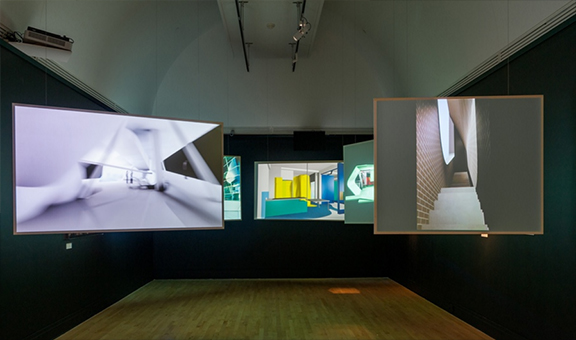
Azure reviews ‘Archaeology of the Digital’ which includes Office dA’s Witte Arts Center. More on Witte here.
Comments Off on CCA show on Azure
Azure reviews ‘Archaeology of the Digital’ which includes Office dA’s Witte Arts Center. More on Witte here.
Comments Off on CCA show on Azure
This annual exhibition will showcase work from the Irwin S. Chanin School of Architecture, the School of Art, and the Albert Nerken School of Engineering. The opening reception will be on Monday, May 23, from 5 to 9 p.m. in The Foundation Building, 7 East 7th Street, and 41 Cooper Square. The exhibit will run through June 12 and is free and open to the public during these times: Tuesday – Saturday, 12 – 7 p.m.
Comments Off on COME TO THE COOPER UNION OPENING!
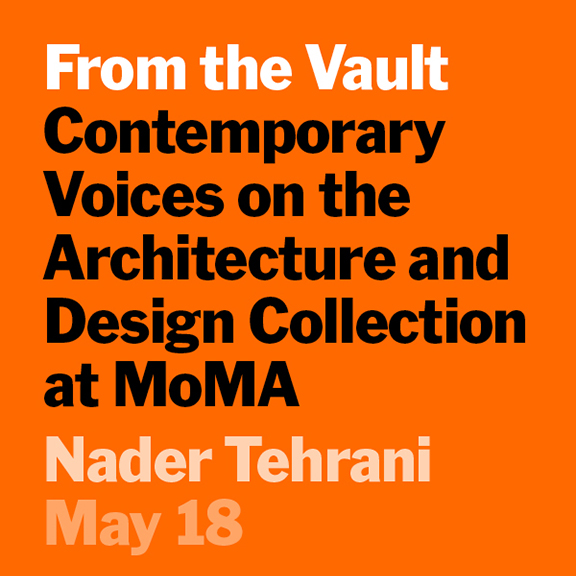
Nader will present a selection from MoMA’s vast collection of modern architecture and design as part of the From the Vault series. The lecture will include a conversation with Martino Stierli, Philip Johnson Chief Curator of Architecture and Design, MoMA. To join tomorrow evening at 6:00pm please RSVP to adevents@moma.org.
Comments Off on Nader leading a lecture at MOMA tomorrow evening
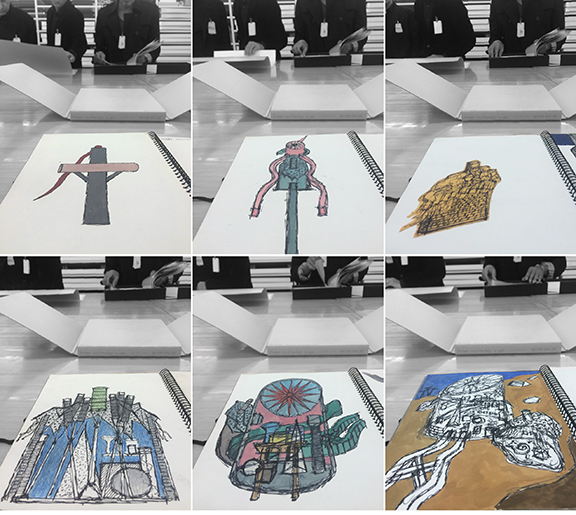
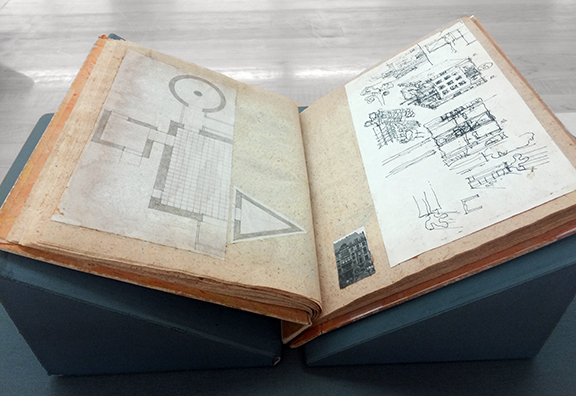
On a recent visit to the CCA to take in the Archaeology of the Digital exhibit I took the chance to look through their large archives, a collection which hosts the work of over 140 artists and architects. The collection includes work by Peter Eisenman, Cedric Price, and Aldo Rossi to name a few. I was struck by two of John Hejduk’s sketchbooks….
Some of these works are available in the CCA’s online archive through the support of the Andrew W. Mellon Foundation. A selection of Hejduk’s work can be viewed full screen here.
Comments Off on CCA Archives: John Hejduk sketches
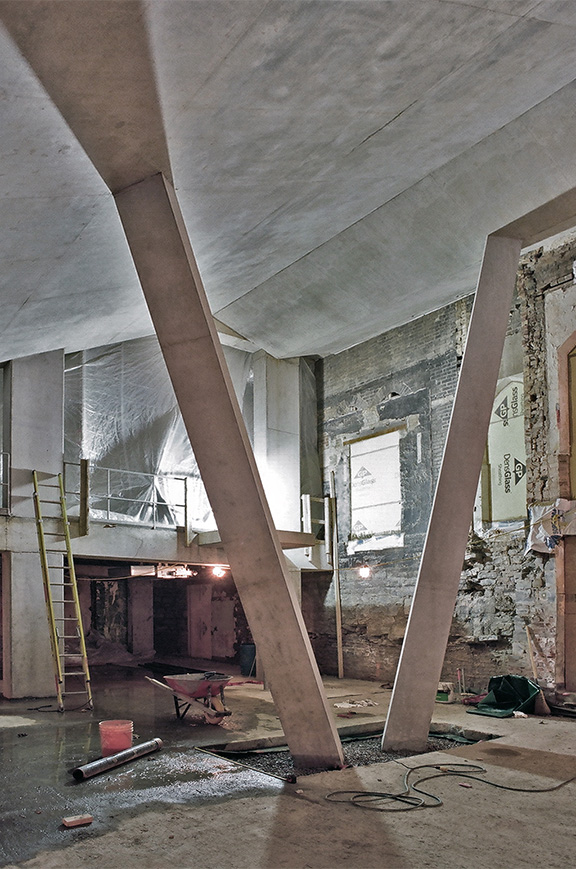
Photo by Peter MacCallum courtesy of the Daniels Faculty
Take a live look at DFALD construction
Comments Off on V-Columns at One Spadina
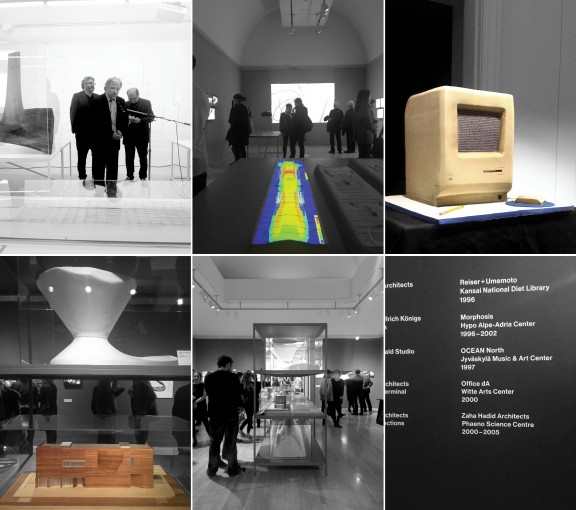
In the new exhibition at the Canadian Centre for Architecture, The Archaeology of the Digital: Complexity and Convention, a generation of contemporary work crosses the line to become part of history. The work of Office dA, under Nader Tehrani and Monica Ponce de León, is presented in relation to five conceptual categories: High-Fidelity 3D, Topology and Topography, Photorealism, Data, and Structure and Cladding.
In the third and final installation of a series curated by Greg Lynn, the exhibition unearths a body of work from a wide array of architects in the infancy of digital speculations. With much of the work done on software now long obsolete, the CCA archivists had to undertake a long forensic process of recovering data that would otherwise be inaccessible.
Capped off by the Greg Lynn Show, all architects were interviewed, Letterman-style in front of a live audience. This and an e-publication will be available to the public in the near future.
Comments Off on Archaeology of the Digital
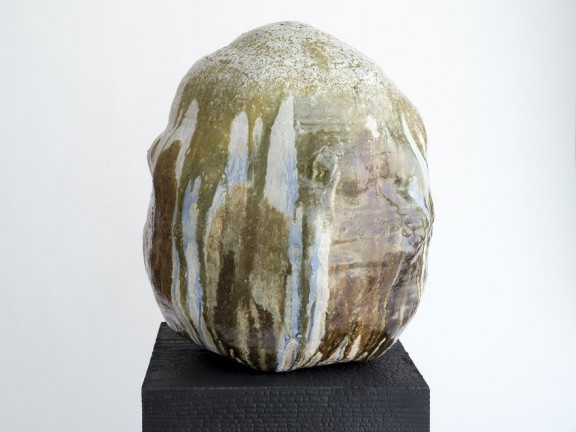
Entering the work of Adam Silverman
Nader Tehrani, 2016
It is always comforting to be able to enter into someone’s work –to make it legible, available, and accessible. And yet, much of the substance of art is to resist easy entry, if only to defer consumption on the one hand, or at least to delay it in the service of the many forms of cognition that art can release. In this delay, one can see a form of redemption, something that can challenge, produce new forms of knowledge, or even just tweak our subjectivity. Coming from the architectural realm, I will invariably slip into interpretations that are biased by my disciplinary predispositions; it may not hurt that Adam Silverman comes from a common background, but that would also limit the reading in the context of his panoramic capacity. The work of Silverman denies the immediacy of access, deferring meaning in any strict sense to capture the attention of its audience in a state of anticipation, beckoning readings of his artifacts in a delicate suspense between objects and the processes that make them come to life.
Silverman emerged from the arts into architecture, but then took a turn towards the world of apparel, and not without significant success. His eventual departure from XLARGE, the clothing company he co-founded, to the realm of pottery and ceramics would seem like a complete reversal of direction. However, if all these disciplines suggest media that are substantially different, they all come together in an investment in “making” as an intellectual enterprise. Maybe the one difference that pottery offered Silverman was the element of personal control: the power to calibrate the content of his work, while patiently building its audience as part of the act of making. If the biographical is not a convincing route from which to map this trajectory, then what it demonstrates, at least, is a protean sensibility that is able to navigate questions of materiality, fabrication and the means and methods that each chapter in his life has brought to him. Though the varied media in which he has worked have their own instrumentality, one can also see the way in which certain themes may be translated from one to the other: namely, the way in which the idea of structure and surface establish a dialogue through each art form. While each medium will offer a radically different set of technical constraints, they come together in an intellectual dialogue that Silverman weaves together across time.
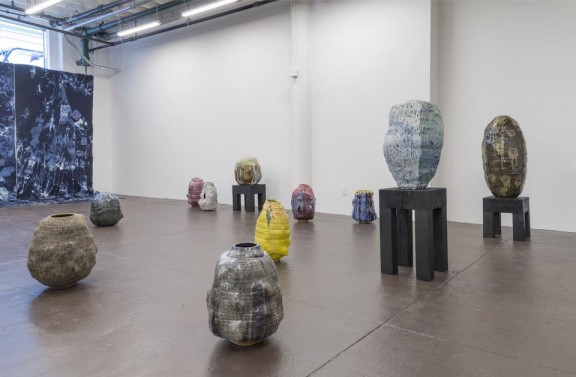
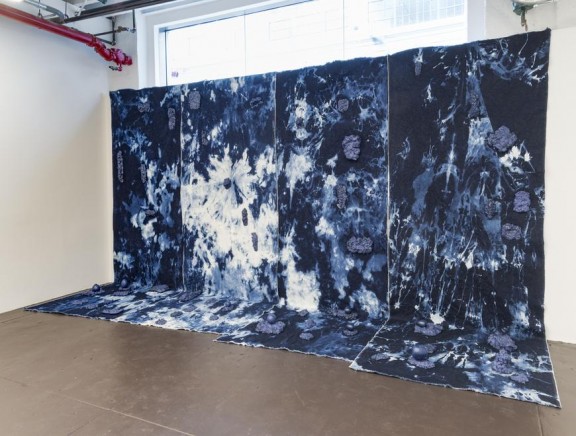
If the discipline of architecture has always required a mediated relationship to the things we build –by way of models, drawings, and mockups, the realm of apparel bridges the gap between the meticulous control of the tailor on the one hand, and the advent of mass production on the other. In his transition to pottery, the entire relation to industry, collaboration and external constraints are somehow reframed, as he, himself focuses on guiding the challenges of building through the internalities of the medium itself—by way of the hand, the kiln, and the material composition of clay as foundation. Effectively, the trajectory brings him back to the irreducible aspects of a medium: spinning, firing, and the post-production aspects of surface manipulation, all elements of production that can become the basis of a patient inquiry.
In pottery, spinning offers the centrifugal inevitability of a figure in the round; it also produces constraints that guide proportion, shape and reach. However, maybe more importantly, it defines the certainty of an objet-type around which Silverman can experiment; it’s platonic clarity and archetypical qualities are, at once, pure, recognizable and incontestable. They neither offer resistance, nor need for elaboration, at least as a point of departure. From there on, it is pure warfare and uncertainty; with mallets, baseballs bats and fists, Silverman unleashes his own force onto the orbs he has handled with such care, pushing them just short of their yield point. Then, added layers of clay, varied in thickness and color are applied onto the bruised foundational shell, melding into its constitution. Silverman produces a tension between the configuration of the surface and the figure of the vessel such that the qualities of the former begin to challenge the structure of the latter.

It is here that his platonic geometries are confronted with the advent of nature, by way of artifice: through a layered process of glazing and firing, Silverman dissimulates the effects of perfection that are an innate part of his craft. Each glaze and chemical admixture has different results, some more or less desirable, and yet they all play a critical part in the game of improvisation, systemic play, and an outcome that has as much to do with the identification of an uncanny artifact as its stealth presence –camouflaged as a geological mass. That nature should serve as an inspiration for art is nothing new, since many eras have grappled with seeing the world through varied lenses, groping with vision through mimesis, perspective, color, and figuration. But if each process involves its own techniques, then they also are in service of a representational aim. Instead, Silverman takes nature as geological substance, and the systemic pulverization of his surfaces, the crafting of sedimentation, and the erosion of the geographic terrain on which he works is not so much in conversation with representational goals (even if that is it’s delightful by-product), but rather a recreation of natural phenomena through an alchemic process. The tension between artifice and nature, then, is one of the curious and productive aspects of his process; in turn, each object can be seen as an index of the experimental protocols that they undergo. In a medium that is, more often than not, part of a “kind and gentle” culture of craft, it is also a refreshing advent to witness the punishment and brutality of a process that can yield aesthetic reappraisal –tipping it into critical discourse.
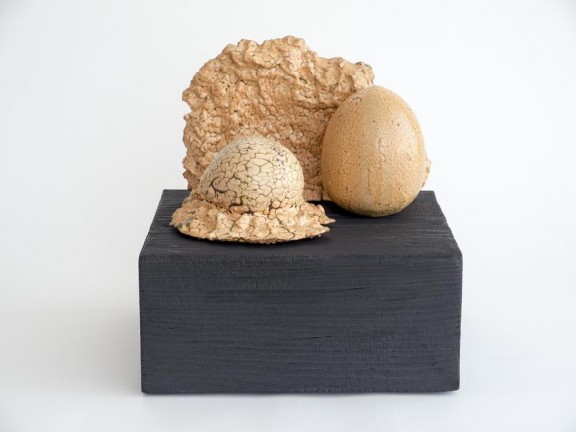
Adam Silverman’s investment is in the process of working his process. He shows no anxiety of getting ‘there’, as his pleasure is precisely in the incertitude of the working path. Though the results may vary and even fail, his greatest moments come at the threshold of collapse. He is neither married to medium, nor to the singularity of discipline; however, he is adopting and internalizing the constraints of each to its maximum potential. As he travels from one art form to another, his ceramic orbs are akin to rolling stones, but with the luxury of gathering the moss of the varied disciplines he carries as part of his kit of intellectual tools.
Read more about Silverman’s current exhibit below.
Comments Off on A ROLLING STONE, PATIENTLY GATHERING MOSS
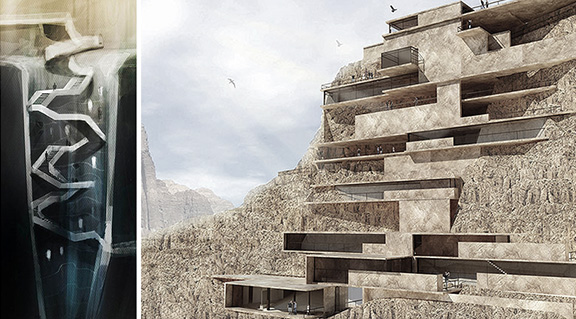
Nader writes on the CSBE Student Awards for the new global architecture platform TR—ANSFER
Comments Off on Emerging Pedagogies: Beyond the Arab Domain to the World
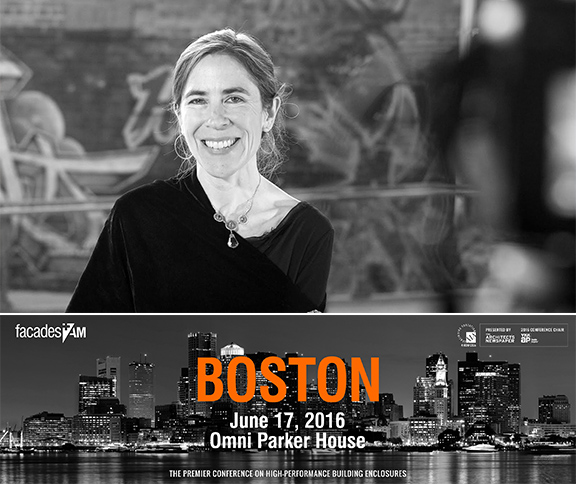
Facades+ is coming to Boston on June 17th at the Omni Parker House. Katie is co-chairing the conference with Ryan Salvas of CW Keller + Associates and Diana Darling of Architect’s Newspaper.
The program includes three sessions focused on current Boston issues: The Seaport District Reconsidered, Facade and Regional Architecture, and Boston’s High Performance Skyline –which will include a presentation by Nader, Christopher O’Hara and Andrea Love. Also joining the discussions will be Richard Askin, Director of Planning and Design at WS Development, David Carlson of the BRA, Tim Love, David Nagahiro, Mark Pasnik, and Gerrar Gutierrez.
Comments Off on KATIE CO-CHAIRING FACADES+ IN BOSTON THIS JUNE
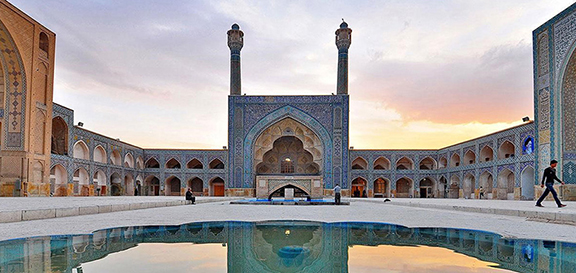
As part of the Van Alen Institute’s Auction of Art + Design Experiences – Nader is auctioning a two-day tour in Isfahan, to benefit The Van Alen Institute. He is joined by other architects including Rafael Moneo, Richard Rogers, Daniel Libeskind, Greg Lynn, Amale Andraos, and Winy Maas offering everything from yacht tours to dinner at The French Laundry. The tour with Nader includes 17th- century heritage sites like the Sheik Lotf Allah mosque and Naghsh-i Jahan.
Bidding will be open for only a few more days!
Comments Off on VAN ALEN INSTITUTE | ONLY SIX DAYS LEFT TO PLACE YOUR BID