The Daniels Faculty of Architecture, Landscape and Design project is featured on Azure.
“a teaching tool in and of itself” – Azure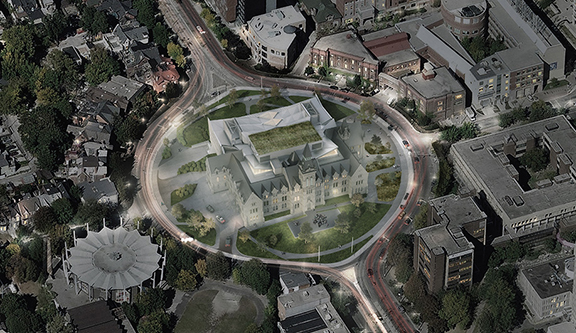
Comments Off on DFALD ON AZURE
The Daniels Faculty of Architecture, Landscape and Design project is featured on Azure.
Comments Off on DFALD ON AZURE
Dispatches from 1 Spadina: ongoing demolition work has almost completely exposed the original north wall of Knox College (constructed 1875), which has revealed the layers of nearly 150 years of alterations and retrofits to serve uses as varied as academic, hospital, military, research, and mechanical plant space.
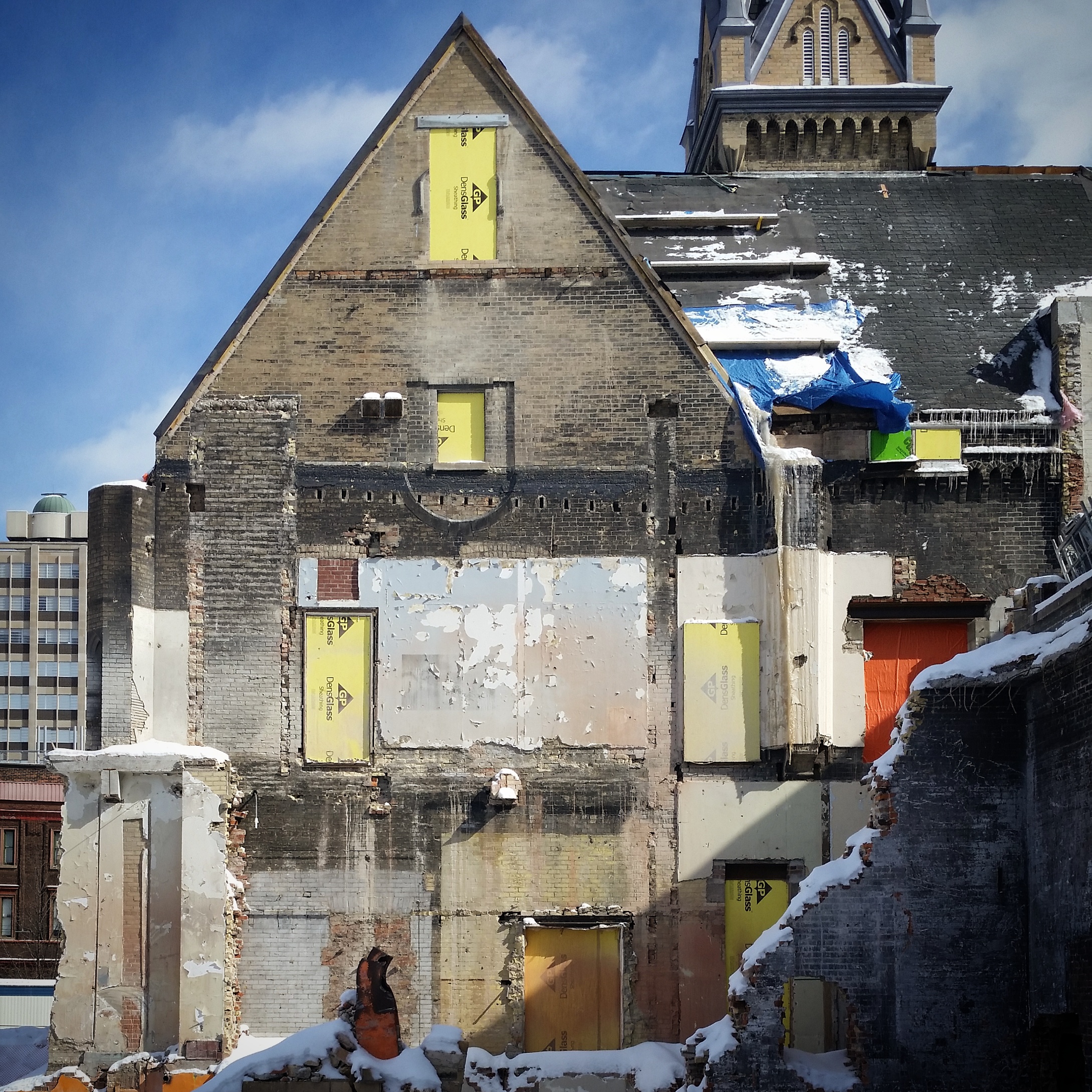
West face of the 1 Spadina east heritage wing, after demolition of 20th century additions.
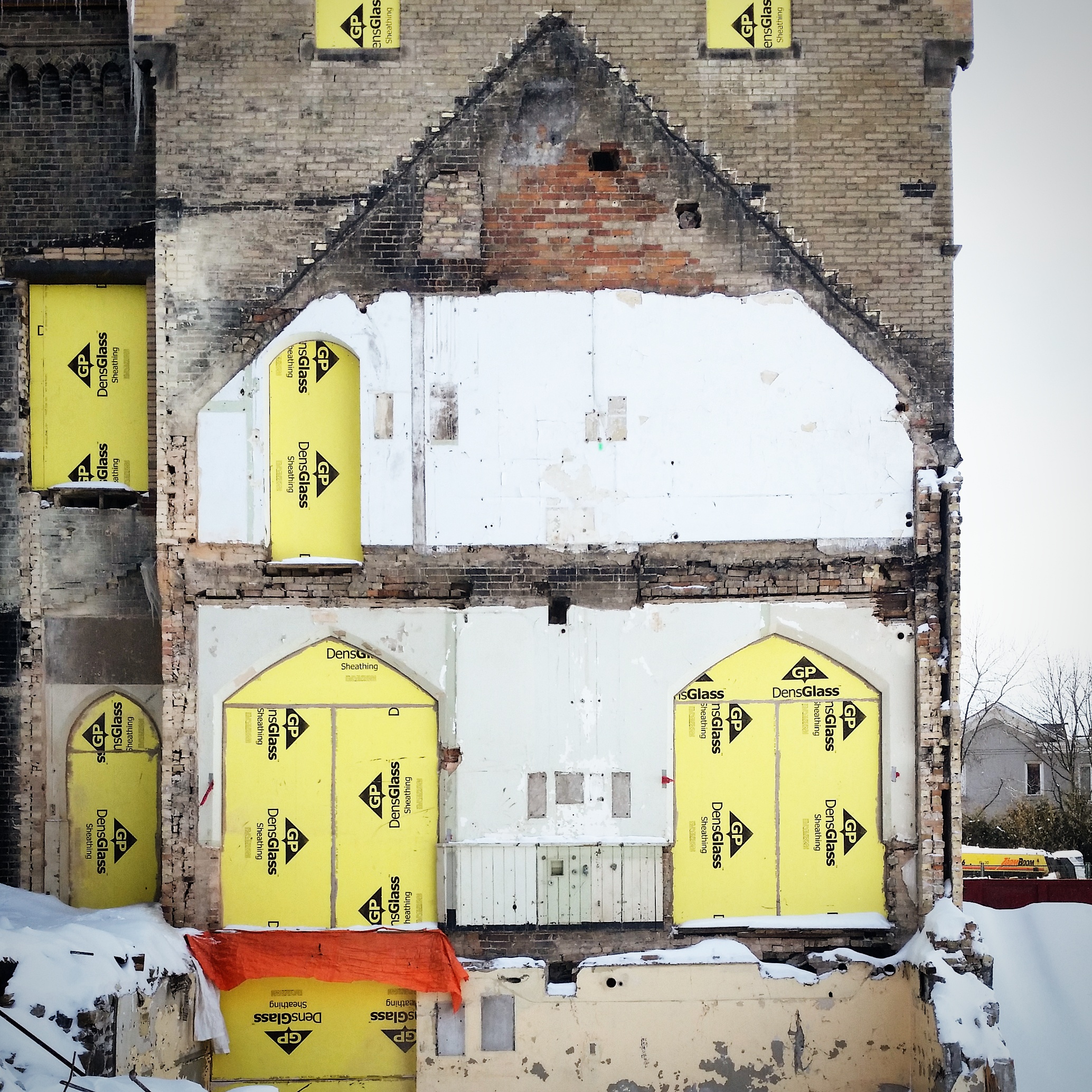
East face of the 1 Spadina west heritage wing, after demolition of 19th and 20th century additions.

A view of the central tower block, looking south-east from the third floor level of a 20th century addition in the process of being demolished. Existing gothic arches are evident in the right foreground, which were originally expressed on the exterior. The larger relieving arch had been truncated by the installation of a concrete slab, which is now visible as a saw-cut section (with some reinforcing steel remaining to be cut). The new DFALD addition will lap over this slab edge onto the heritage roof beyond. New concrete blocks are visible at left, which enclose a retrofitted elevator shaft. Beyond, new buff replacement brick are visible at the gable of the central block.
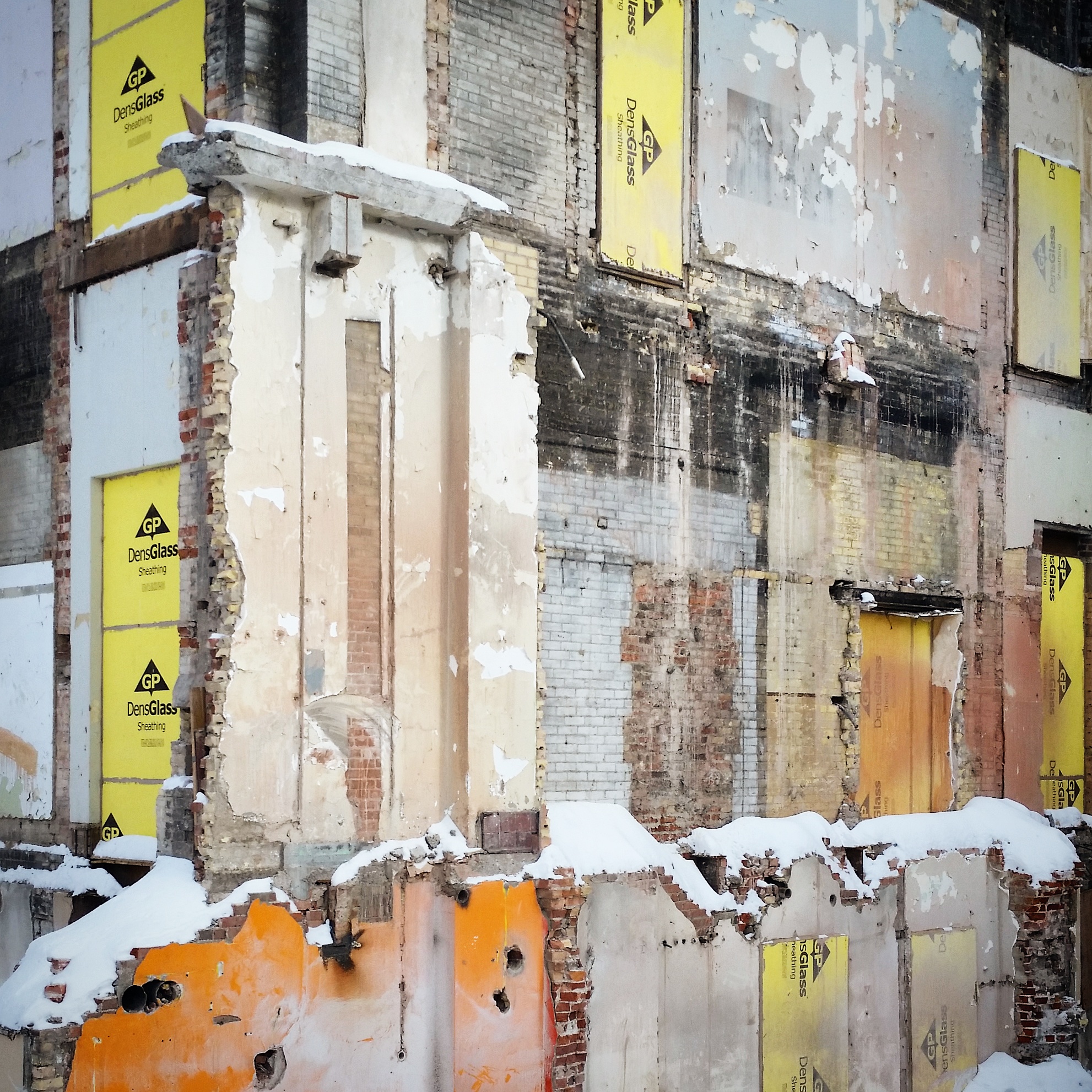
View of the west wall of the original east wing. A palimpsest of previous interior wall finishes and various cut slabs and masonry construction has appeared between new and existing opening hoarded temporarily with sheathing.
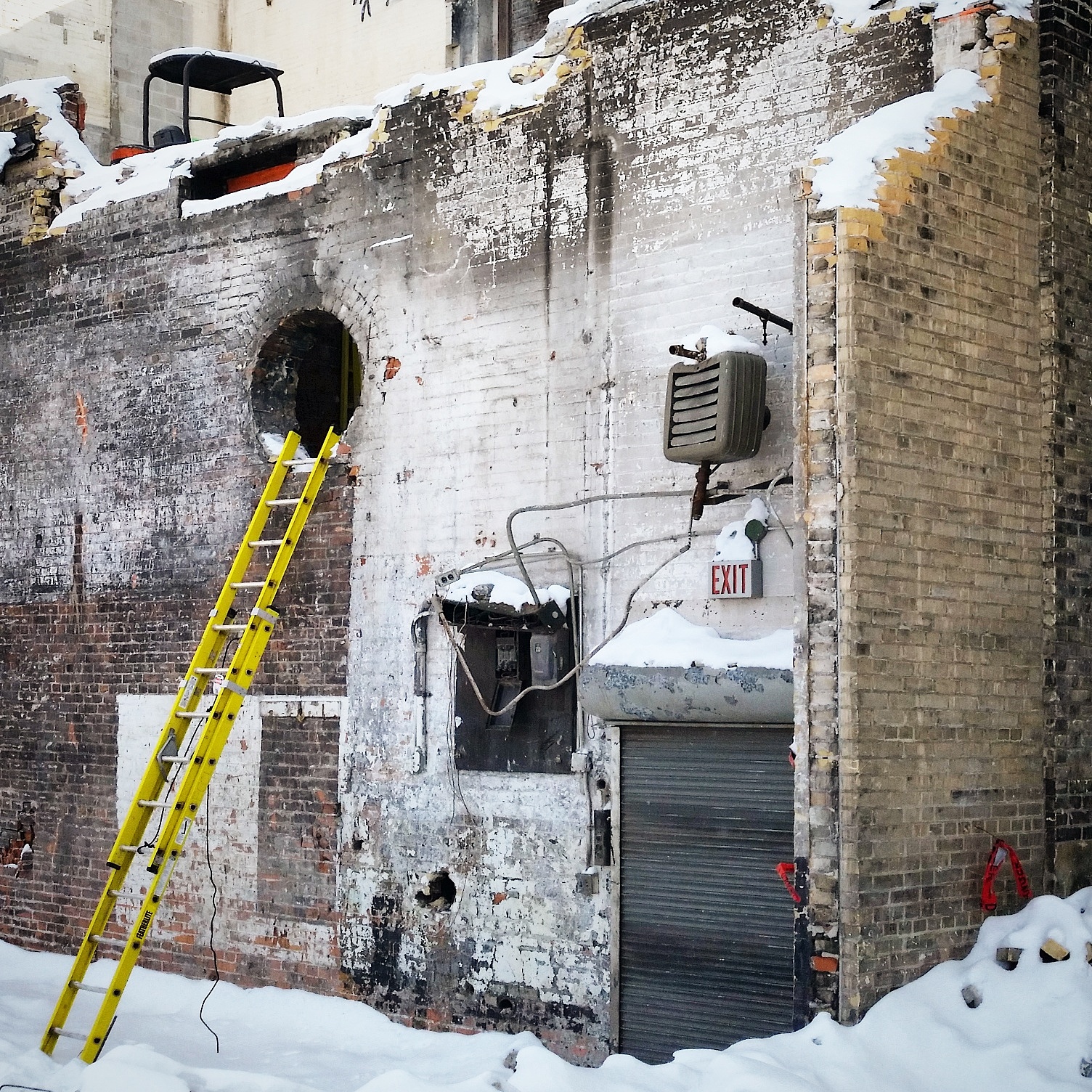
View of 20th century addition at the southeast corner of the original 1 Spadina courtyard. Over the course of demolition, access has become restricted; here, ongoing structural separation work beyond the masonry wall in the foreground is accessible only via ladder through an existing portal. A slab-chipping machine is visible beyond at upper left.
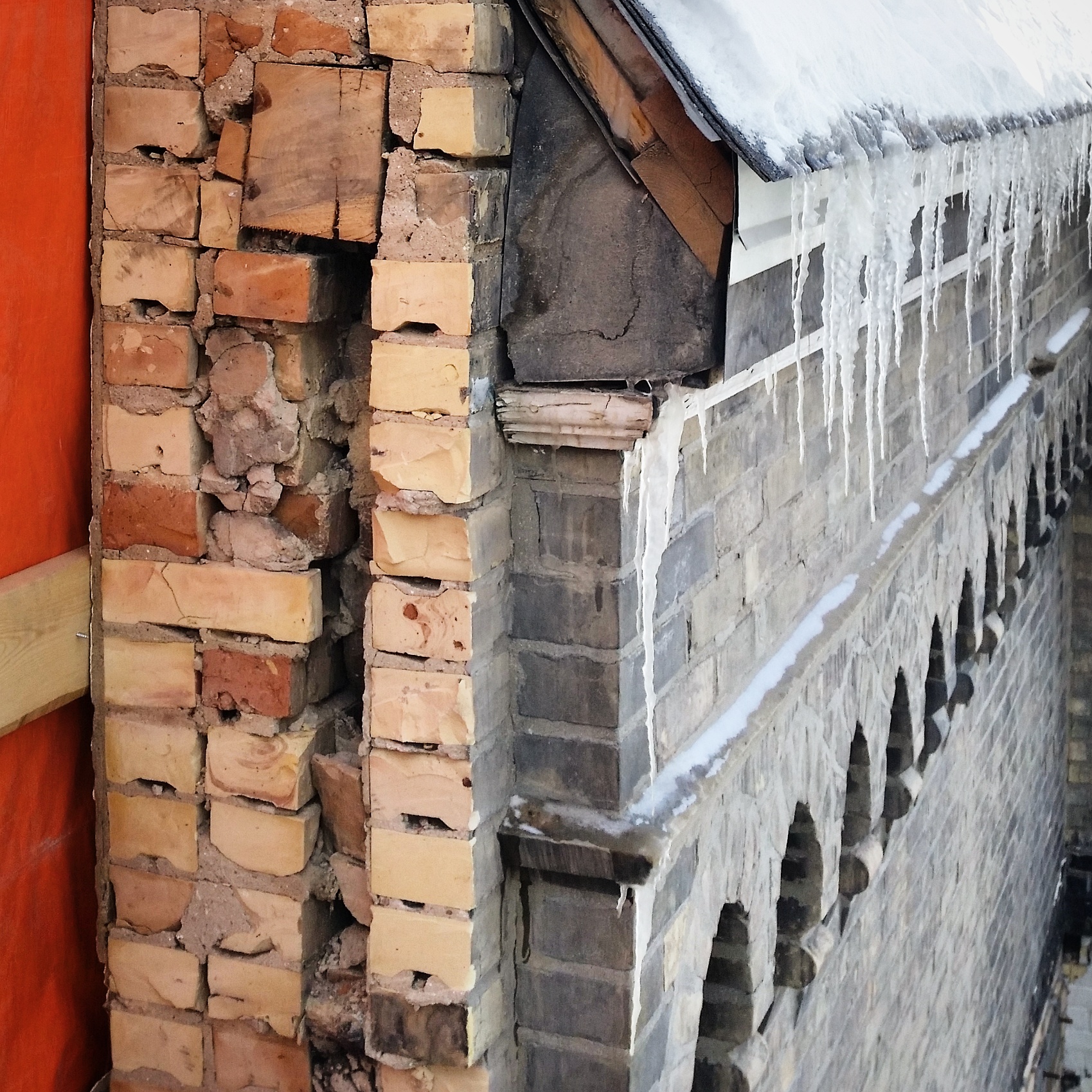
Brick wythes are visible at a section of wall to host an enlarged opening for a doorway. Outer wythes are often infilled with rubble in the original construction. A section of former wood lintel is evident.
Comments Off on Demolition Sublime
Comments Off on KATHERINE SPEAKS ON SUSTAINABILITY FOR THE HOLCIM FOUNDATION
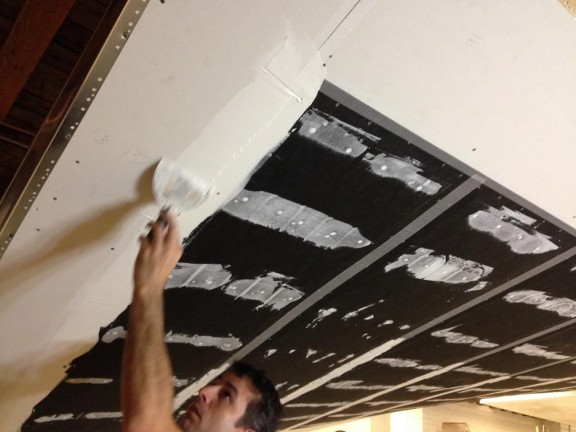
A year ago, NADAAA blogged about our hyperbolic paraboloid ceiling mock-up, which will be featured above the third floor design studio at the new Daniels Faculty of Architecture, Landscape and Design. Since that time, the client has charged us with an additional mandate: to reduce projected mechanical energy through the incorporation of radiant mechanical systems throughout the building. This mandate presented a unique challenge for our feature ceiling: radiant chilled panels are almost always flat, where our design distinguishes itself through a subtle ruled curvature.
Radiant panels are widely used in Europe, but are less common in North America. Nevertheless, we corresponded with several vendors, all of whom were enthusiastic about helping us resolve this technical hurdle. This fall, we provided space and support to enable Twa Panel to replicate our mockup, only this time using a new graphite-core radiant panel product with embedded copper hydronic tubing, provided by SGL Group. Twa Panel gambled that the graphite panel and tubes would be flexible enough to conform to the gradual curvature, which is smaller in degree (approx. 550″ radius) than it appears when viewed in composite across a surface. The mock-up proved successful, as the panels twisted with relative ease:
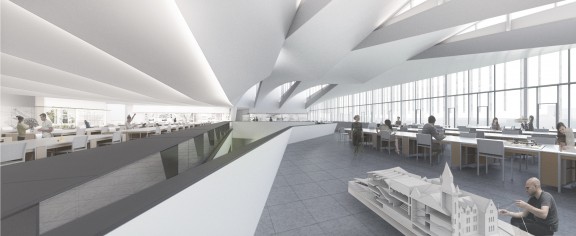
Rendering of the Level 03 Design Studio feature ceiling at the new Daniels Faculty of Architecture, Landscape and Design at the University of Toronto
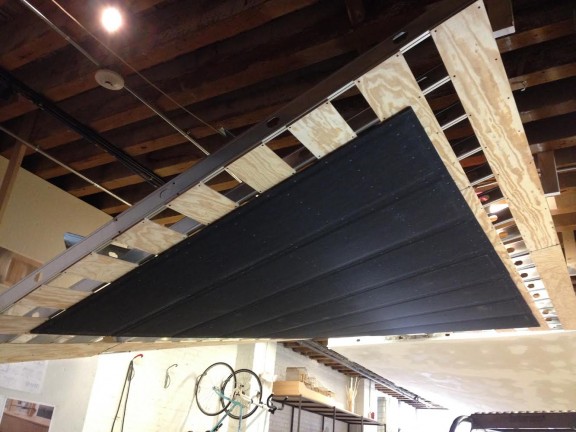
HyPar Mockup No.2: 2’x8′ radiant graphite-core panels on 1/4″ plywood strapping, over light gauge stud backup framing. NADAAA’s original mockup is seen beyond.
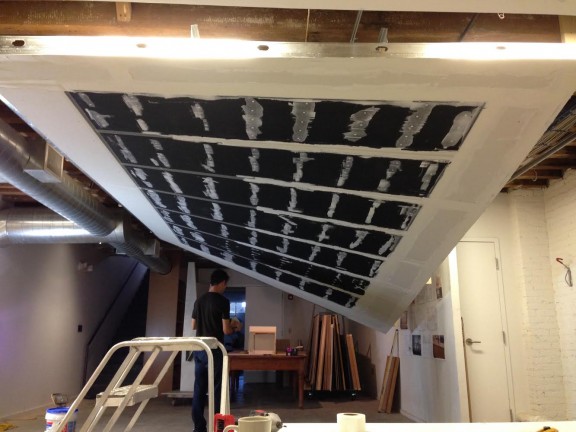
In this image, the radiant graphite panels are mudded and taped against a perimeter of conventional 1/2″ thick gypsum board, ready for a standard paint finish.
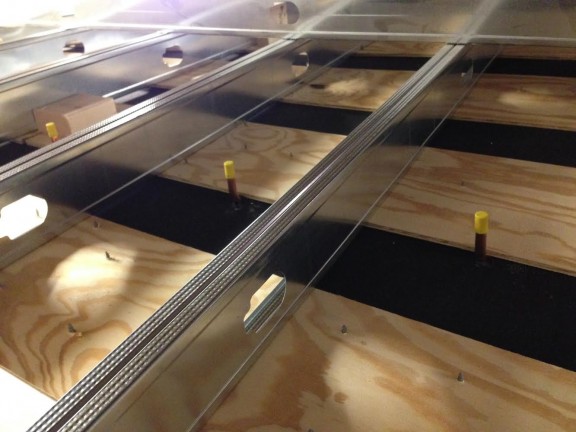
This image shows the backside (top) of the mockup, where copper leaders penetrate the backside of the panels for connection to hydronic tube supply/return connections.
Comments Off on DFALD Hyperbolic Paraboloid Ceiling Mockup #2 – Radiant Panels
NADAAA wins a 2014 Holcim Acknowledgement award for the University of Toronto Daniels Faculty of Architecture, Landscape and Design. Congratulations to the entire project team! Text from the Holcim website:
The proposed building provides a new home for the John H Daniels Faculty of Architecture, Landscape & Design on the site of a culturally significant nineteenth century structure.
The project’s basic objectives are to rehabilitate existing urban, landscape, and architectural elements – and, to demonstrate the university’s aim to foreground sustainability as part of its pedagogic program via state-of-the-art construction materials and energy systems.
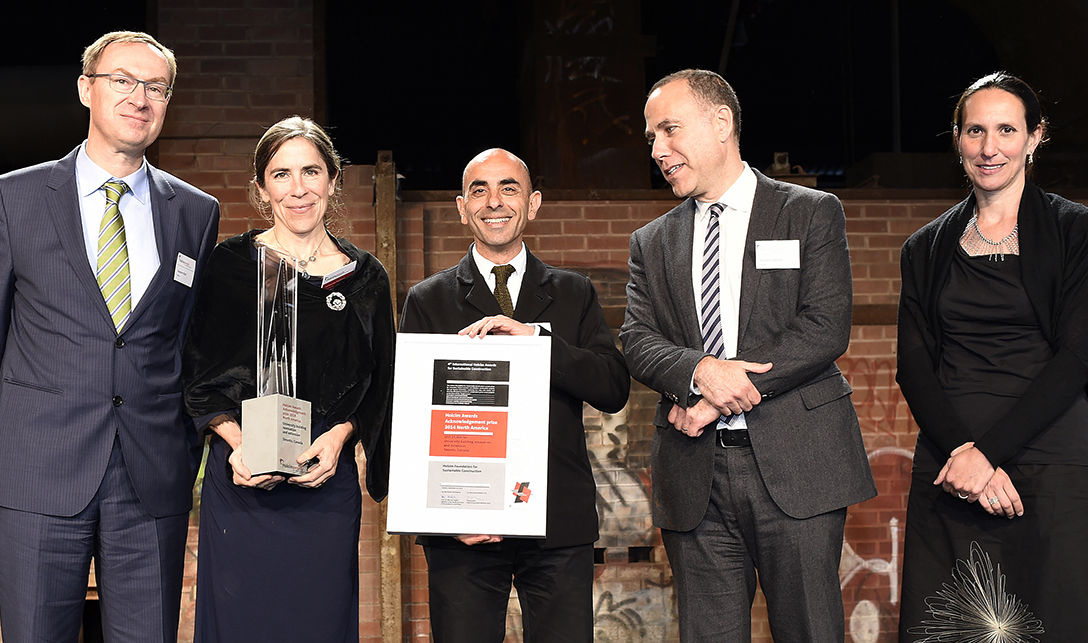
Presenting an Acknowledgement prize for “Heritage Reframed: University building renovation and extension” (l-r): Baudoin Nizet, CEO Holcim Canada; prize winners Katherine Faulkner and Nader Tehrani, NADAAA architects, Boston; Richard Sommer, Dean of John H Daniels Faculty of Architecture, Landscape & Design (DFALD), University of Toronto; and jury member Lola Sheppard, Partner, Lateral Office, Toronto, Canada.
Comments Off on NADAAA WINS HOLCIM ACKNOWLEDGEMENT PRIZE
The results of vine removal and ongoing masonry cleaning at 1 Spadina Crescent, as part of the Phase I Renovations for the University of Toronto Daniels Faculty of Architecture, Landscape + Design. (In collaboration with Adamson Associates and ERA Architects).
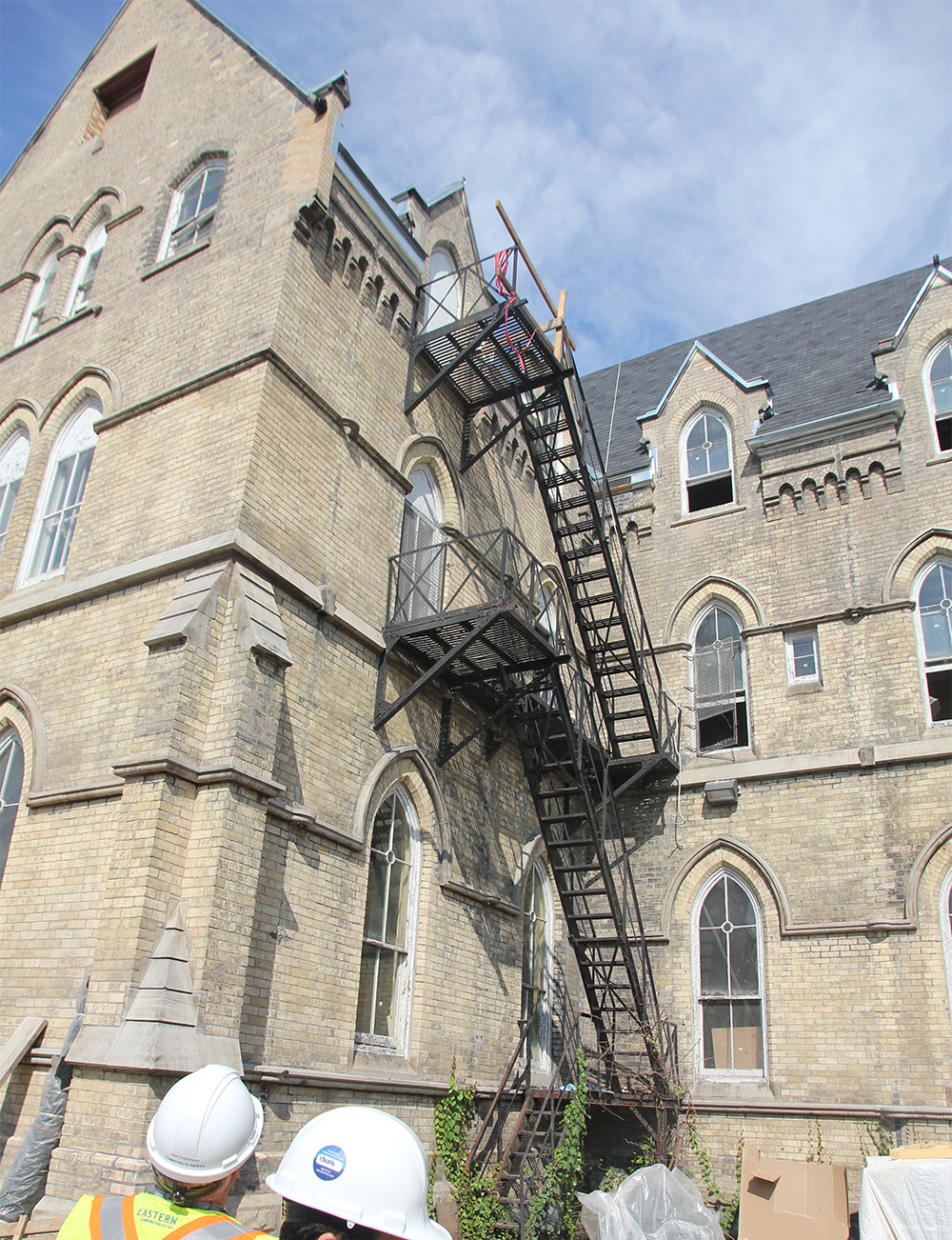
AFTER: 1 Spadina Crescent, west wing pictured after vine removal and masonry cleaning (August 2014)

BEFORE: 1 Spadina Crescent, west wing pictured (December 2012)
Comments Off on NIGHT AND DAY
Nader gives his lecture ‘Pedagogical Constructs’ at UCLA Architecture & Urban Design on October 27, 2014 at 6:30pm.
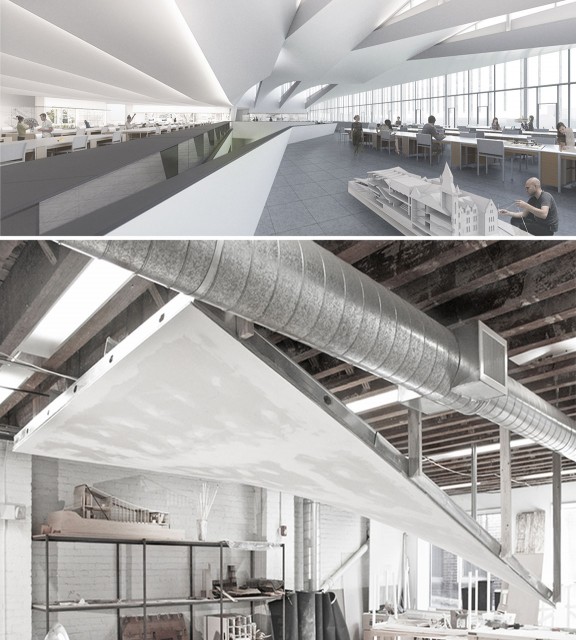
The above image is a rendering and mock-up for the Daniels Faculty of Architecture, Landscape and Design. See our NADLAB post on the mock-up for further details.
Comments Off on Nader lectures at UCLA
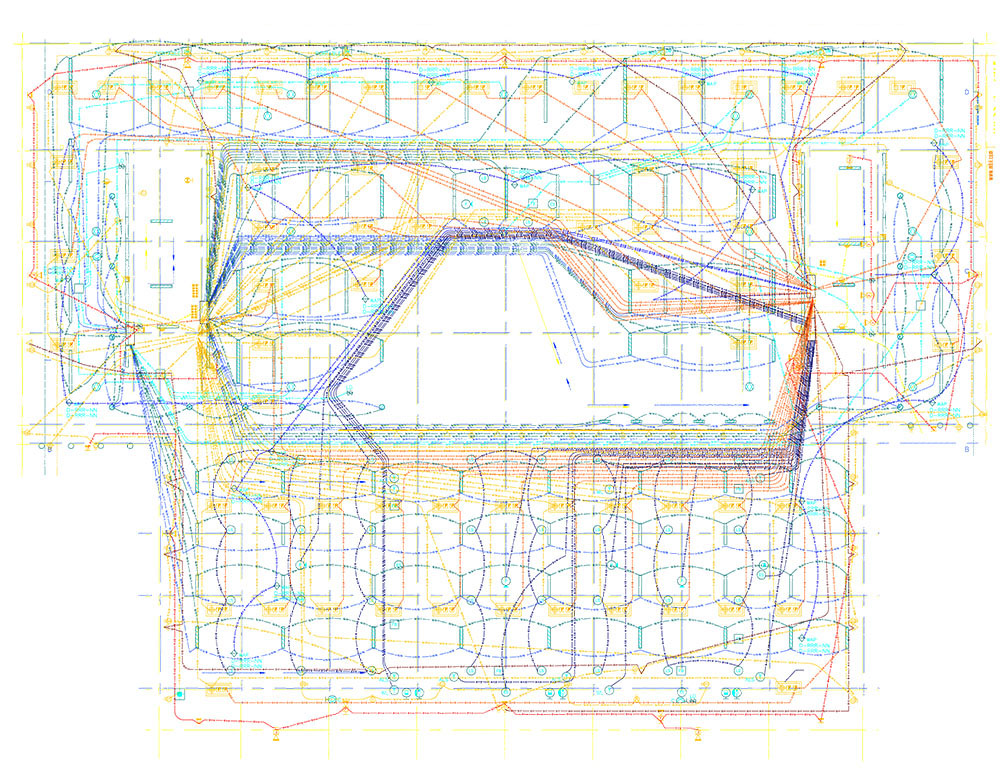
All slab-bourne conduit serving level 03/level 02 ceiling electrical, IT and A/V devices. (courtesy Mulvey Banani Intl Inc.)
These are images of the electrical nervous system to be embedded in the concrete slabs supporting the graduate design studios at the new U of Toronto Daniels Faculty of Architecture. Lines shown in cool/blue tones indicate conduit that will serve devices mounted to or embedded within the exposed concrete ceilings below. Lines shown in warm tones indicate conduit that will serve floorboxes at the top of the floor slab. If we are lucky, we will be able to embed/conceal all of these conduits within the congested 12 inch thickness of concrete also containing hydronics for radiant cooling/heating, reinforcing bar, and voids that will reduce the slab’s dead load self weight.

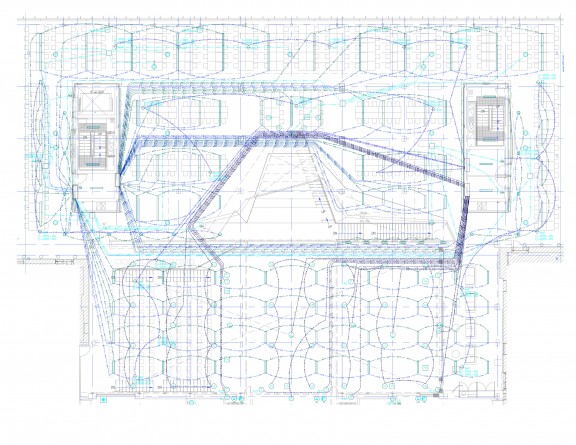

There are two major bottlenecks that correspond roughly with the locations of the “spinal cord/brain”: the electrical and IT closets located at the the northeast and northwest stair cores, respectively. From these locations, conduit fan out in all directions. However, the local bottlenecks are exasperated by a large, floor-through penetration right at the center of the plan, which corresponds with a large amphitheater sunken to the level below. We will try to mitigate the need for additional slab thickness at areas of congestion by omitting slab voids in those locations.

Detail of data (orange) and electrical (yellow) conduits serving cast-in floor boxes at the graduate design studio level. (courtesy Mulvey Banani Intl Inc.)
Comments Off on SLAB XRAY: NERVOUS SYSTEM
A large section-model of our proposed design for the University of Toronto Daniels Faculty of Architecture and Urban Design was commissioned for an on-site exhibition. Challenged by an extremely fast delivery schedule, the model was an opportunity to flex our digital design and fabrication capabilities.
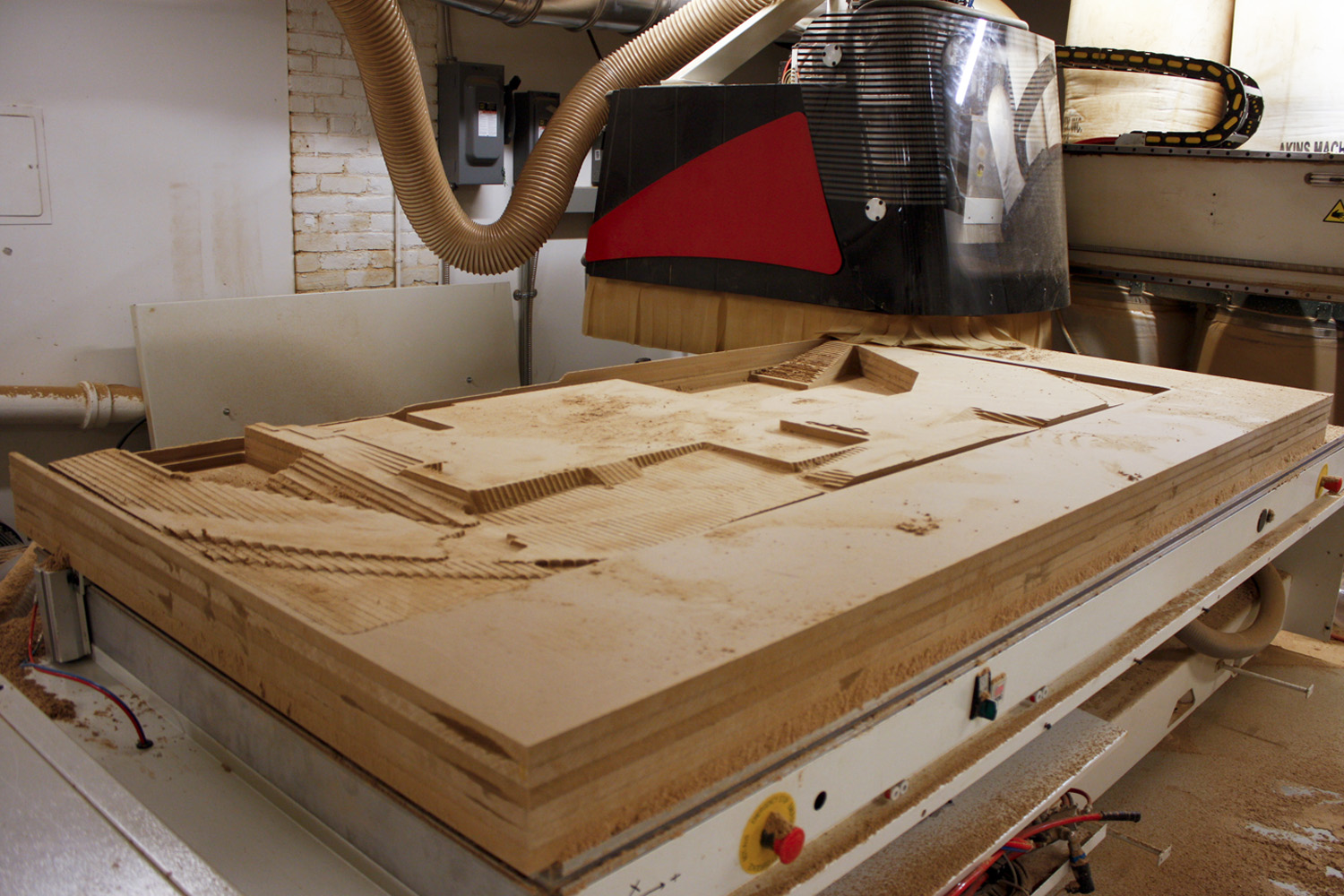 The 7’x3′ landscape is cut on our CNC router out of laminated fiber board.
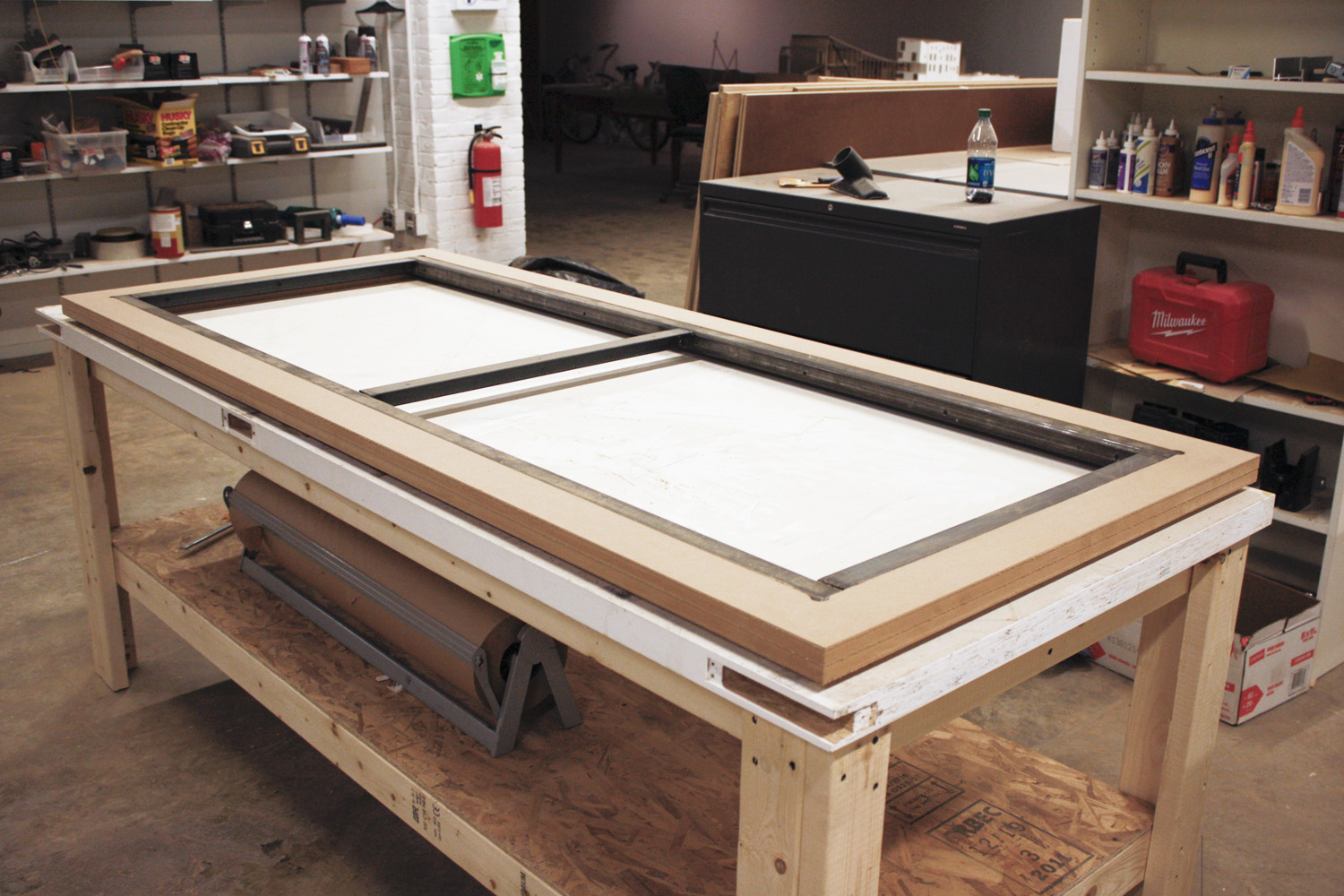 The model base incorporates a internal steel frame for strength and rigidity.
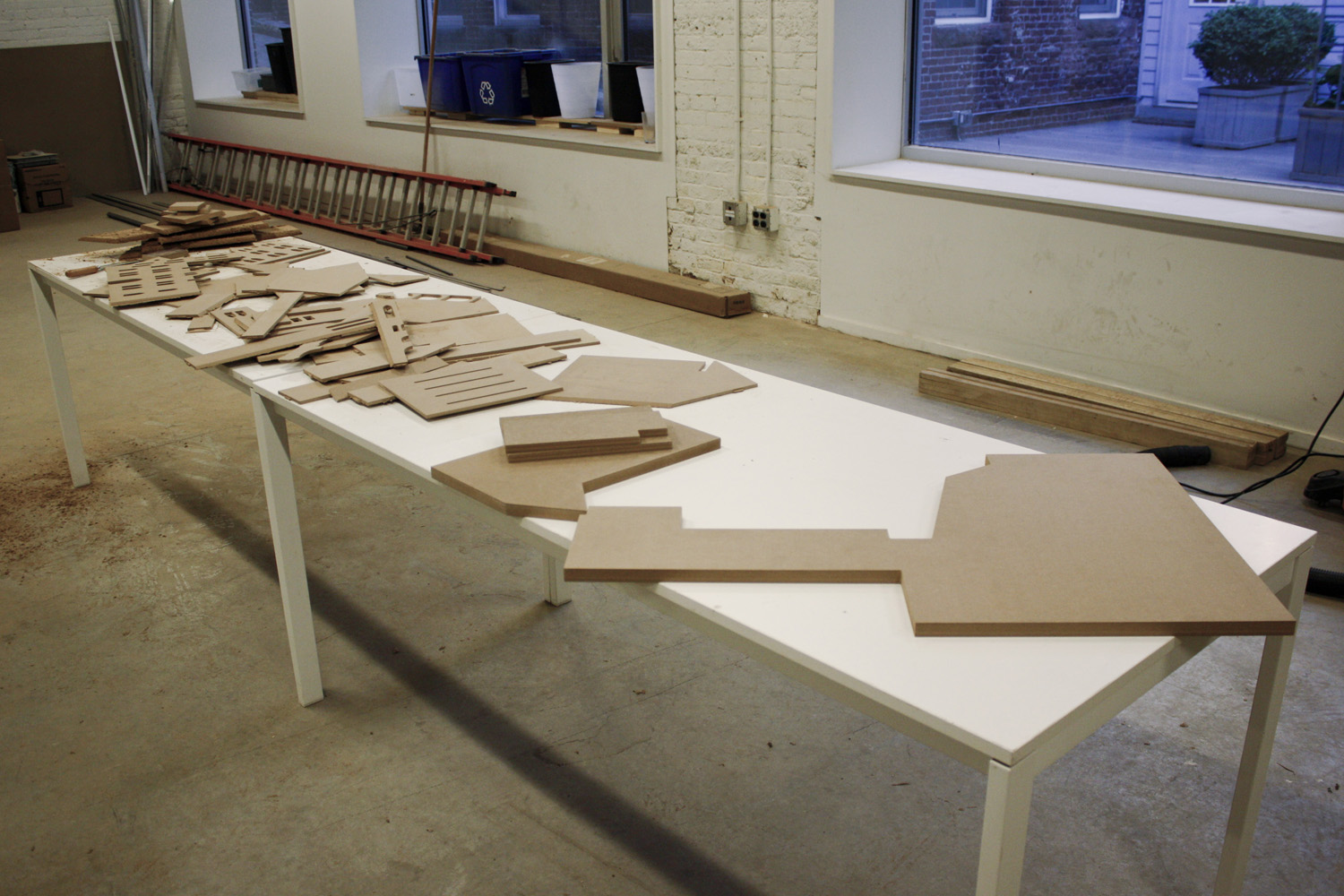 Model pieces are cut on the router, cleaned, and arrayed for ease of assembly
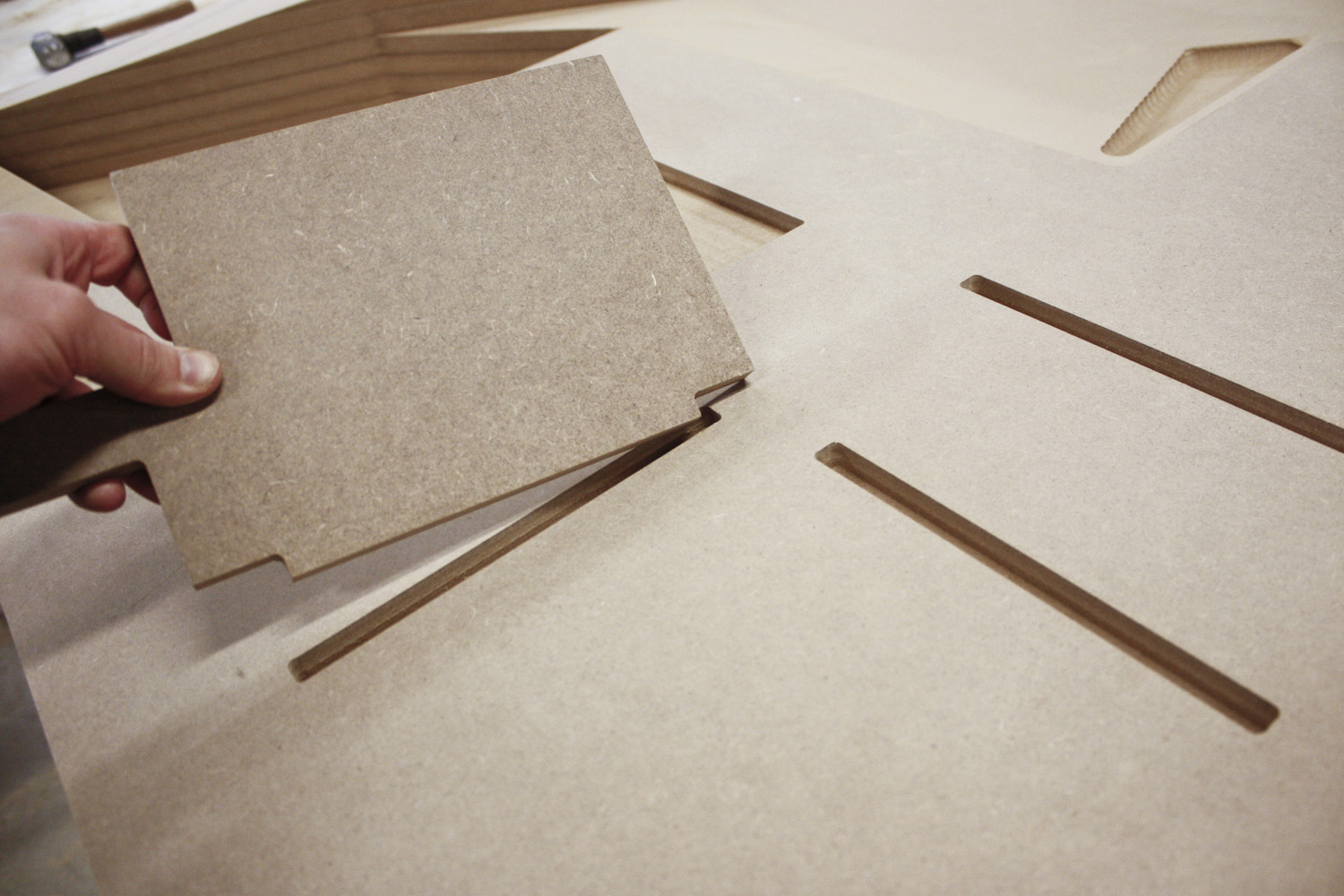 A system of interlocking joints ensures strong, accurate connections and incredibly rapid assembly.
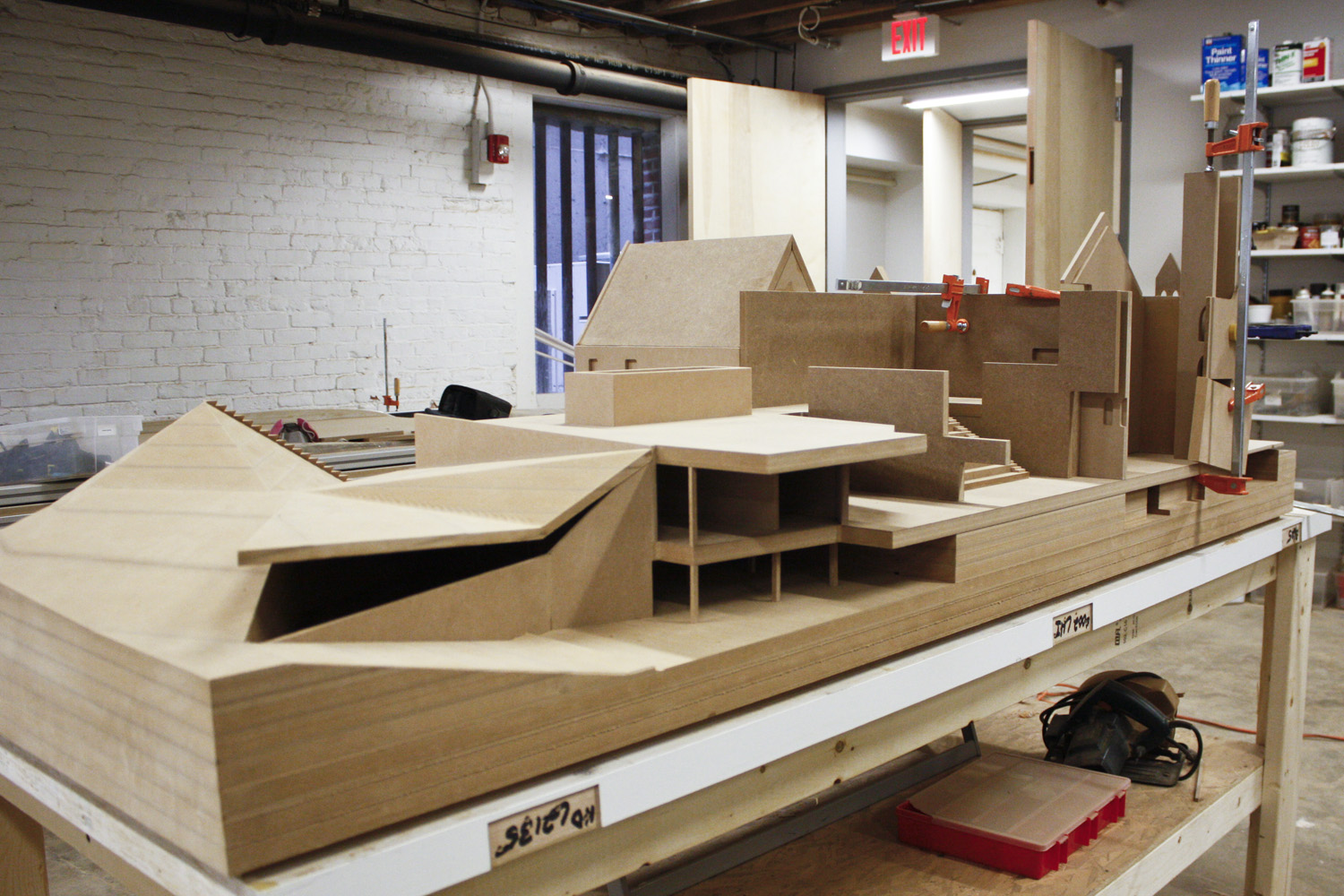 The model is pegged, clamped, and glued like a robust piece of furniture.
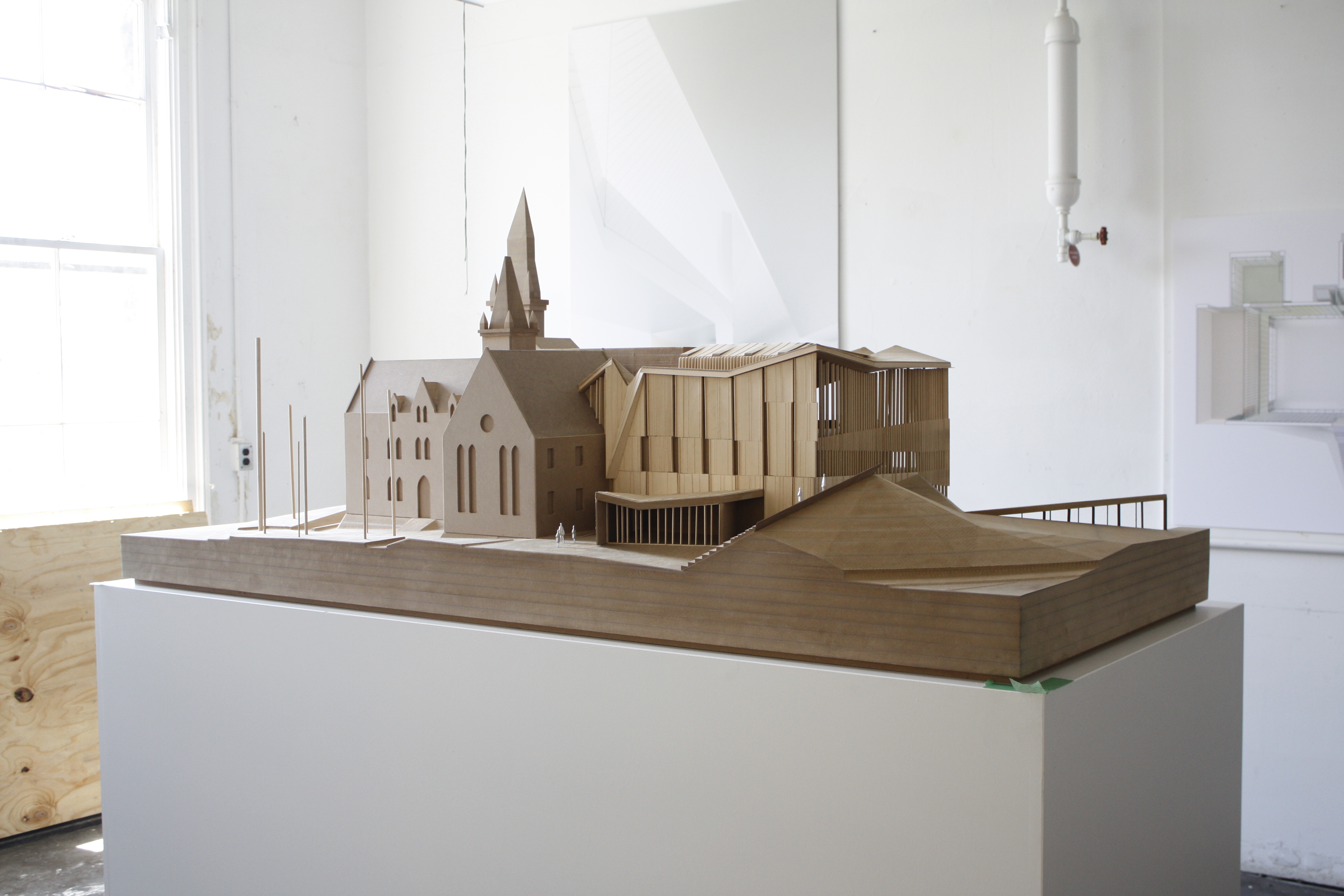
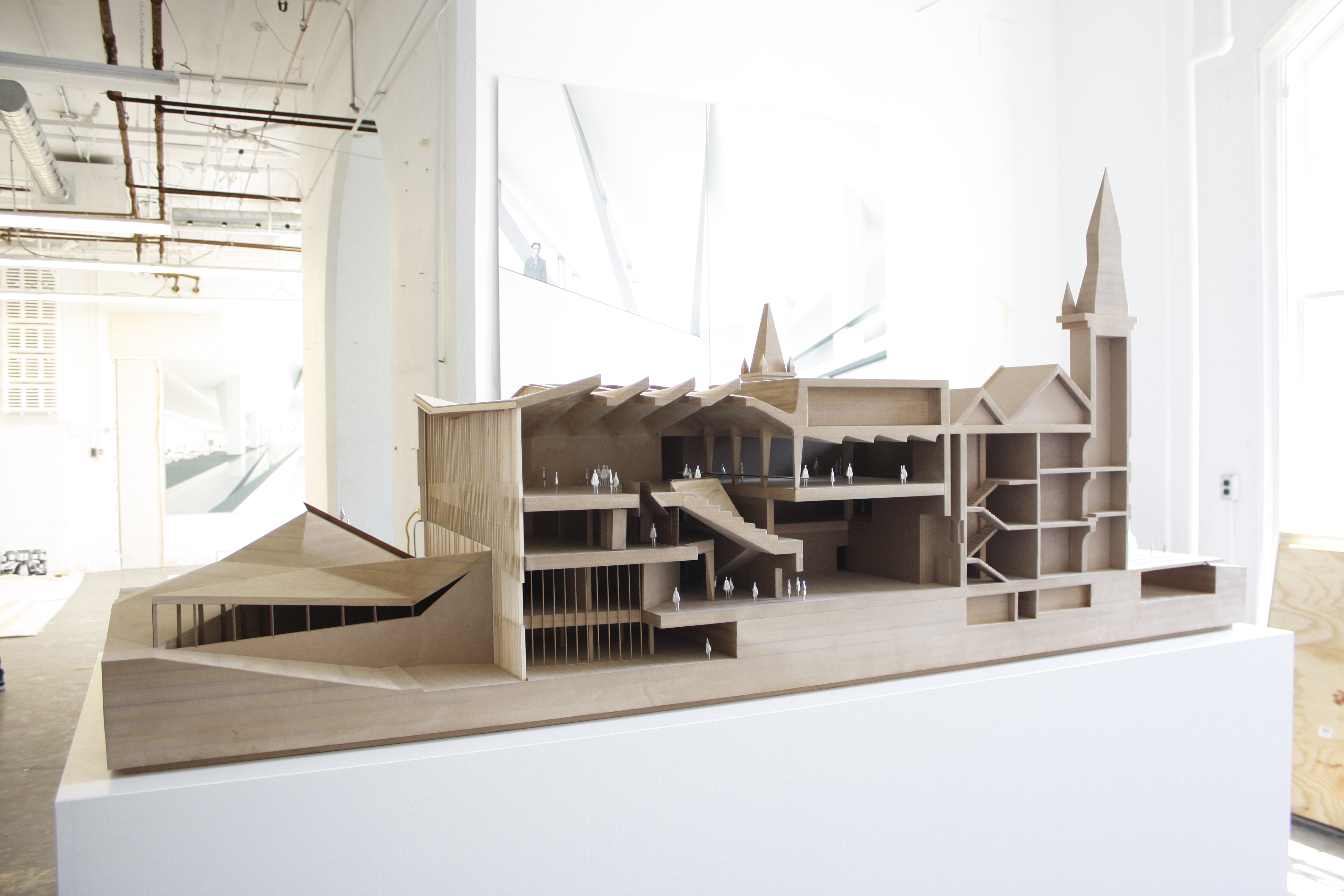 The completed model on display at the University of Toronto Faculty of Architecture and Landscape Design.
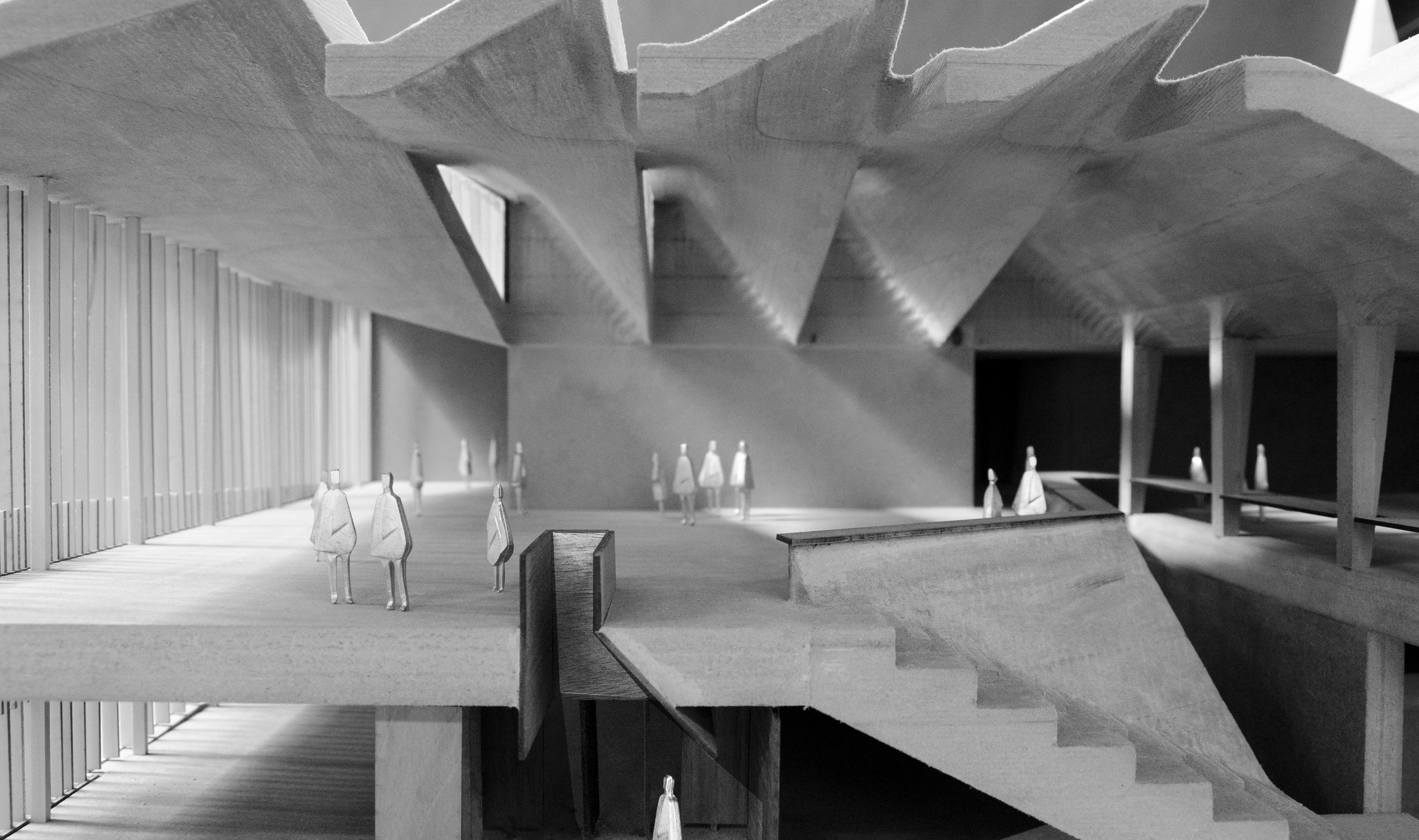 Many parts of the model, like the roof surface, required milling on both sides.
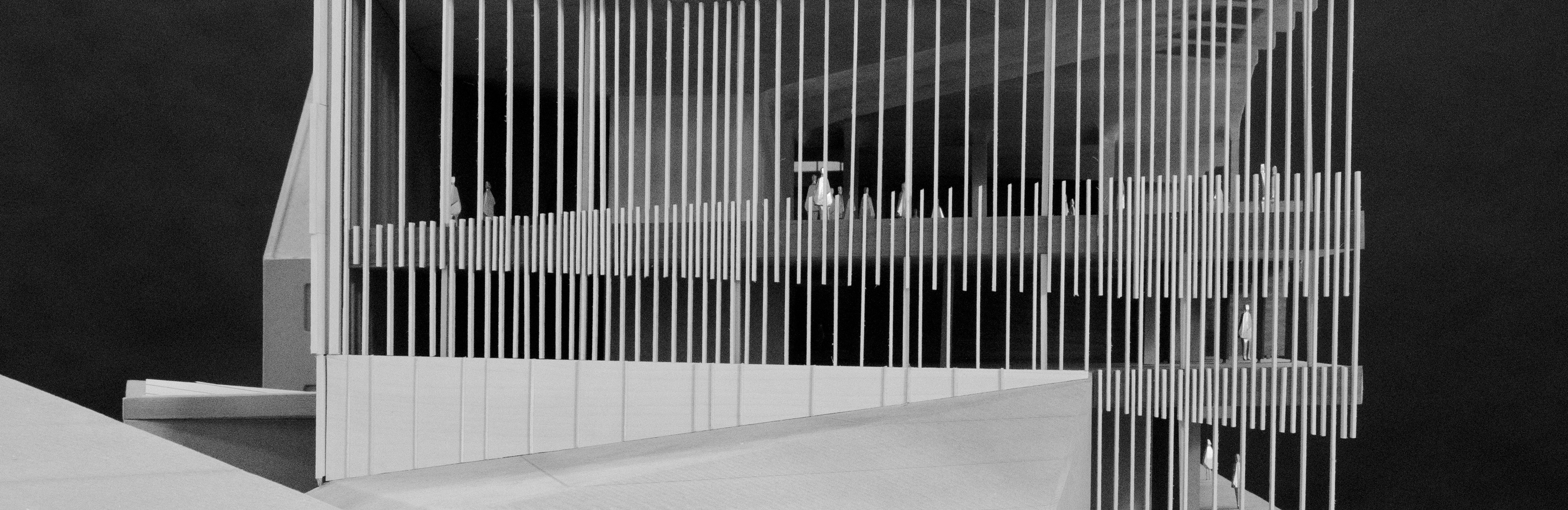 A laser-cut jig was used to accurately position the decorative fins on the north facade of the building.
Comments Off on DFALD Section Model
In Shenzhen, Alexander D’Hooghe presents the virtues of a ruled surface to the Queen of Belgium using the University of Toronto Daniels Faculty of Architecture, Landscape and Design at 1 Spadina Crescent as an example.

Comments Off on Virtues of A Ruled Surface