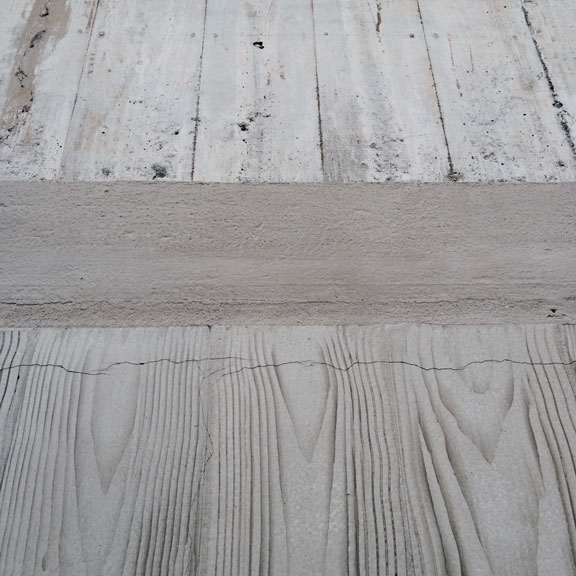
The horizontal crack smuggles itself between the cast and painted concrete at Tokyo Tech.
Comments Off on The art of painted concrete over cast concrete
The horizontal crack smuggles itself between the cast and painted concrete at Tokyo Tech.
Comments Off on The art of painted concrete over cast concrete
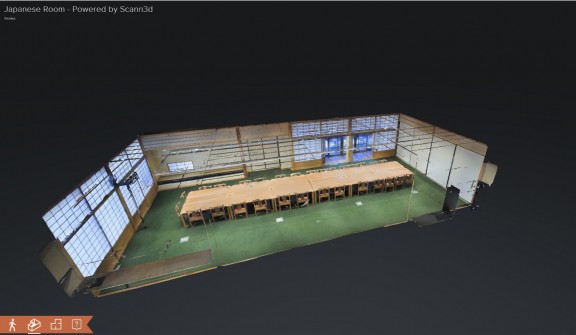
The Japanese Room, tucked in the corner of the 1st floor of the original FABP Building, was commissioned in 1963 by then Chair in Architecture, Professor Brian Lewis to raise the profile of Asian architecture at the University of Melbourne. Architect Shigeru Yura, was invited along with a group of teaching staff to design one of three theme meeting rooms. The room was designed in the Shoin-Zukuri domestic style of the 17th century was thought to be suitable for educational purposes. The room is still one of the best examples of traditional Japanese architecture in Australia.
All of the components were fabricated in Tokyo and arrived in Melbourne in November 1965. The architect had negotiated that the Australian workmen installing were to wear white gloves on the left hand. The same care was taken in the dismantling of the Japanese Room before the FABP was demolished in 2013. The relocation provided an opportunity to improve the Japanese room as many compromises to the design had been made over the years to accommodate its original location.
Now in its new home on the top floor in the North West corner of the FABP paired with the Japanese Garden, the Japanese Room sits in a privileged position overlooking the concrete lawn. Recently a 3d laser scan was created of the space you can link to it here.
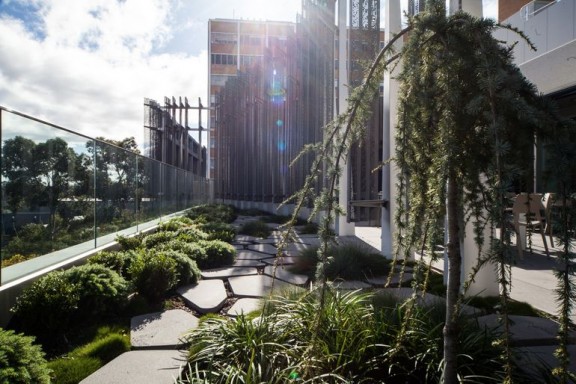
photo: Nick Lavars
Comments Off on Japanese Room at the University of Melbourne FABP
Thanks to all our interns for hosting an amazing lunch down in the shop today!

Comments Off on Office Lunch
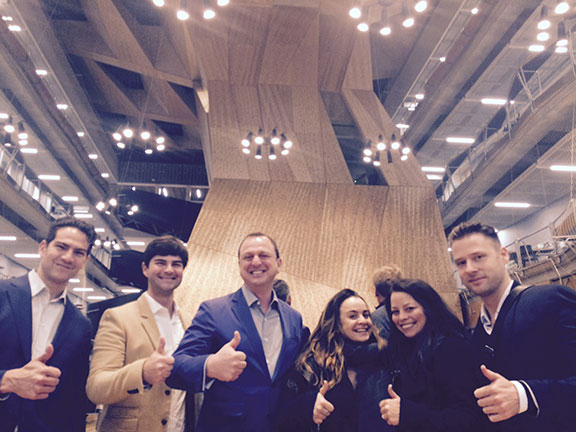
Comments Off on Pasquarelli drops MSD
Since March 1, I have read Casey Ross’ A New Age for an Old Town dozens of times. The Boston Globe feature is interesting on a number of fronts; Mr. Ross describes our current “golden age of building” within the context of earlier waves of the 19th and 20th centuries that produced some of the city’s most beloved landmarks. He takes us back to the 1964 construction site of the Prudential Tower, and even quotes John Hynes referring to Boston as the “Athens of America.” The best thing about the article however, is the link to the sidebar graphic – a collection of articles chronicling 52 buildings that have either been provisionally approved or have actually started construction. There is remarkable similarity among the images, and it is tempting to sort the buildings into piles: the plane-slippers, the wrapper-shifters, and the skirt-lifters. In short, most are variations on the theme of maximizing a floor plate.
According to Casey Ross, and generally backed up by the BRA website, there is 34 million square feet of new building in the near-term Boston pipeline – this is Boston alone. Imagine if we could add in Cambridge and Somerville. Within that number are other interesting stats. At least 7 of the proposals are legitimate skyscrapers; 63% of the projects have a significant residential component, and most often the housing is paired with a hotel. There are 29 development teams financing these projects, although there are recombinations and LLC’s that make it hard to count the players. In a subsequent letter to the editor, architects Mark Pasnik and Michael Murphy note that Ross’ list of projects illustrates that development is an “insider’s game.” They point out that two architecture firms are producing nearly a third of the 52 projects but stop short of revealing that Elkus Manfredi is involved with 25% of them. In total there are about a dozen firms in the mix, with Miami’s Arquitectonica winning the “traveled the farthest” award.
If it hasn’t happened already, the City will soon designate a development team for the Winthrop Street Garage. Ten years ago we would have called this Trans National Place. At that time, developer Steve Belkin had engaged Renzo Piano to design a 1,000 foot tower. The details of that project are the stuff of legend, and the upshot is that one cannot build a super-tower so close to Logan Airport. Nonetheless, Belkin gets points for raising the architectural bar. The original proposal had elegant proportions and tectonic heft that somehow gave unity to the eclectic volumes of Downtown. The reincarnation of the project promises to be both shorter and less inspired, but it will nonetheless take its place on Boston’s skyline as a marker of this our 21st century “golden age of building.”
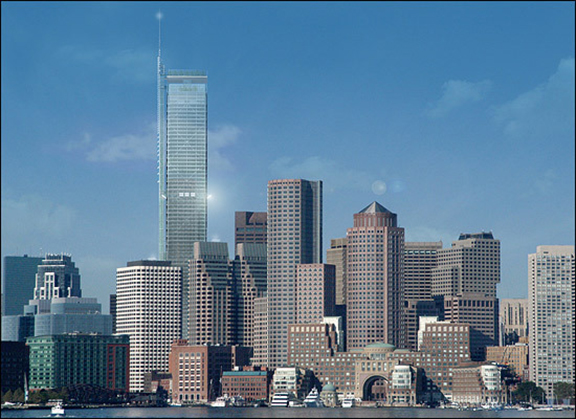
Trans National Place designed by Renzo Piano
Harvard professor Edward Glaeser wrote that “(r)eally tall buildings provide something of an index of irrational exuberance,” and he points to the iconic Empire State and Chrysler Buildings as examples. To his point, towers generally go up in economic boom times, and emerging economies continue to show their might by sponsoring increasingly stunning and tall buildings. In contrast, Boston towers do not tend to be particularly tall, and the City seems not to see them as icons of our urban greatness, which is a shame because once it is up, a tower becomes an indelible part of our identity. Much as we might like to erase One International Place, it’s not going anywhere.
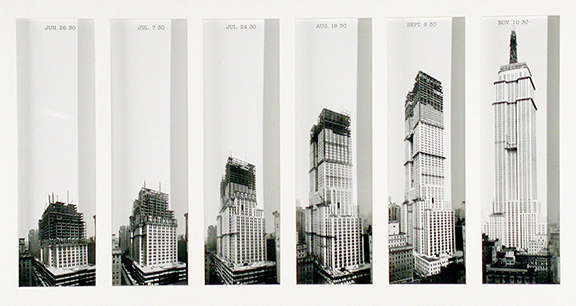
Construction of the Empire State Building
As I was penning this blog, Rachel Slade published her scathing “Why is Boston so Ugly?” piece in Boston Magazine. This is the article many of us have wanted to write but could not articulate. She called out the visual affront of 111 Huntington, and the lost opportunities of the Seaport District. The conventional wisdom that it is hard to get anything built in Boston is called a bluff. It is actually ridiculously easy to build just about anything if you know the right people. Ms. Slade takes on the BRA and exposed the long tenure of the BCDC members. Most endearing was that she listed NADAAA among the “most vigorous design firms,” although I did not appreciate her assessment that firms like ours lack the capacity for big buildings. Capacity is not the issue. Jonathan Levi Architects won the Harleston Parker medal with an 84,000 square foot public school and the firm has designed millions of square feet of institutional, residential, and educational buildings. Anmahian Winton Architects have a high-rise under construction in Ankara. David Hacin has mid-rise residential buildings all over town, and is in fact one of the prospective design teams for Winthrop Square. NADAAA just completed the 250,000 square foot Melbourne School of Design, the result of an open international competition, and has larger projects in design and construction. What binds the work of these firms together is not their relatively small size. The common thread is architectural intent, which unfortunately has become separated from the merely functional as if to say that the added value of design is luxurious excess. Undaunted, Rachel Slade looks for bigger fish out of town and references significant buildings in New York and Chicago, cities with a legacy of great architectural ambition and civic pride. In her assessment, Boston comes up short and she is right. With notable exceptions, Boston developers are generally indifferent to design. At a ULI meeting last year, a prominent Boston developer admitted that ultimately he does not care what his buildings look like. There are complex negotiations, oversight agencies, fickle markets, and prescribed profit margins to be dealt with — this is perhaps why few locals hang out in the Seaport District. Ultimately one does need to care.
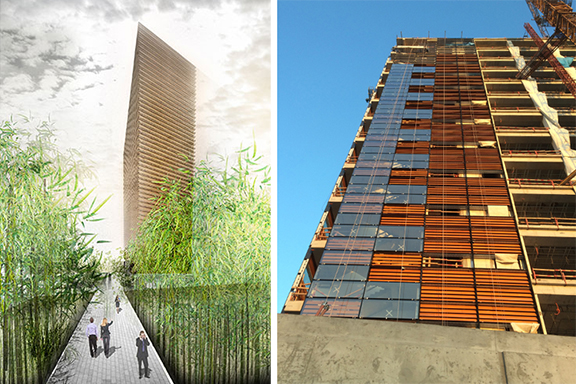
Ankara Office Building designed by Cambirdge-based Anmahian Winton Architects
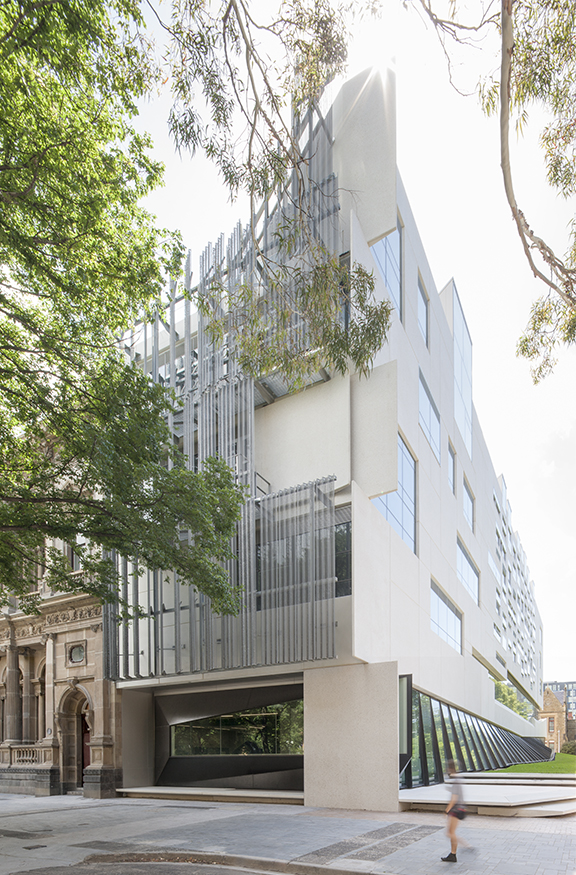
Melbourne School of Design by Boston-based NADAAA
The combination of the current gilded age with a new administration has provided an opportunity to correct the trajectory of the current building boom, and there are guiding principles to light the way. First, Boston’s built environment should reflect the region’s rich culture, and the ambition of what we’d like to be. Architecture carries the weight of history as well as the demonstration of invention, technology and civilization. Related to this is the obligation to be respectful of the historical layers of our urbanism without being imitative or mocking. Second, it is incumbent upon all constructors – designers, policy makers, and builders – to respect a kind of Hippocratic oath. Do no harm, and when possible advance social well-being. Architecture has the power to mediate certain landscape and urban challenges in ways no other medium can. Consider the legacy of Mecanoo/Sasaki’s Bolling Municipal Building. Surely it deserves some credit for the fact that for the second quarter in a row (according to Boston Business Journal), Roxbury’s Dudley Square neighborhood ranked as the Commonwealth’s hottest real estate market. Finally, one should not separate the functional from the courageous; a well-designed building is not a luxury, it is a basic right like clean water, functional infrastructure and access to the Internet. By separating the practical from the beautiful, we are all but guaranteeing bad design, undermining our potential as a progressive city. When our own mayor joins the chorus by calling Boston’s latest bumper crop of buildings “merely functional”, it is time to expect more.
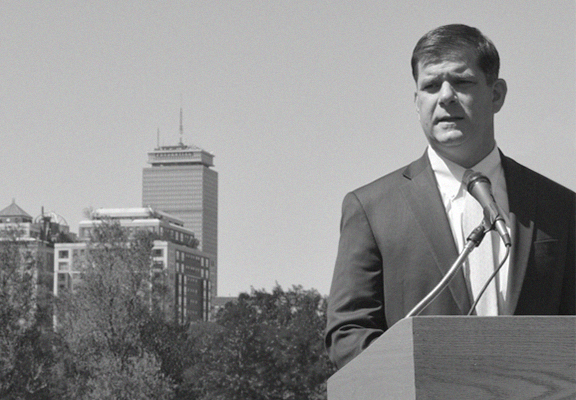
Mayor Marty Walsh, photo from Bostoninno
Comments Off on New Age Old Town
The hanging studio has been re-imagined as wearable art by Shereen Amin and Amanda Luu, students of Monash University’s Art, Design and Architecture program (MADA). ‘After painstakingly developing a gradient panelization system, thick and massive on one end while thin and suspended on the other, the Beaux Arts Ball rectified this trope by a classical tri-partite rendition with a base, shaft, and top section strategically aligned with figural protrusions.’ – Nader Tehrani
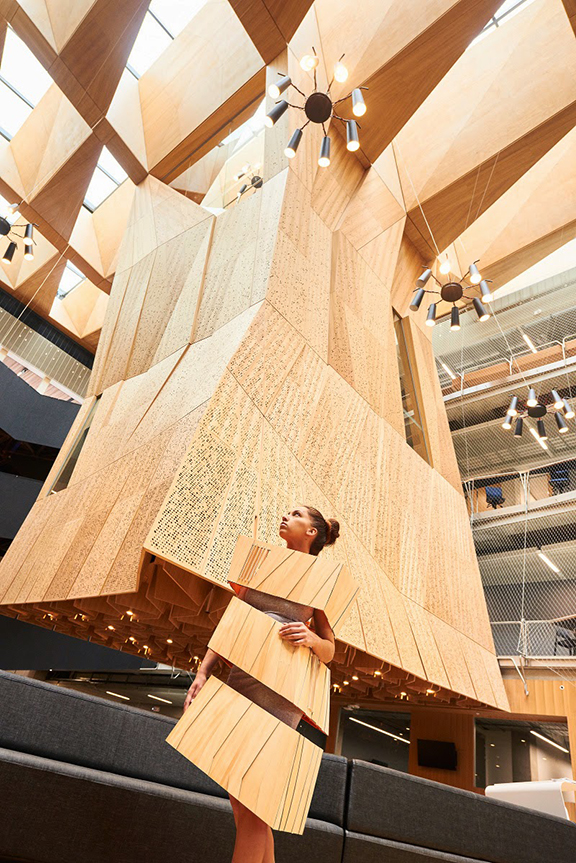
Photograph: Matthew Stanton
Comments Off on WEARING THE MSD
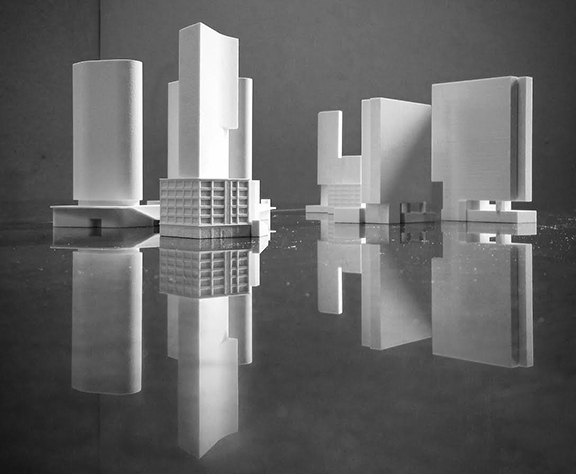
at the office, photo by Tom Beresford
Comments Off on MID-RISE MEDLEY
Kai joins NADAAA table for a warm p/a dinner. BIG wins on 57th Street and Amager! Conversation revolves around Yes is More in Farsi (the rigors of its translation tbd), architectural business models (the virtues of BIG/small), and La Perla lingerie (for men and women).
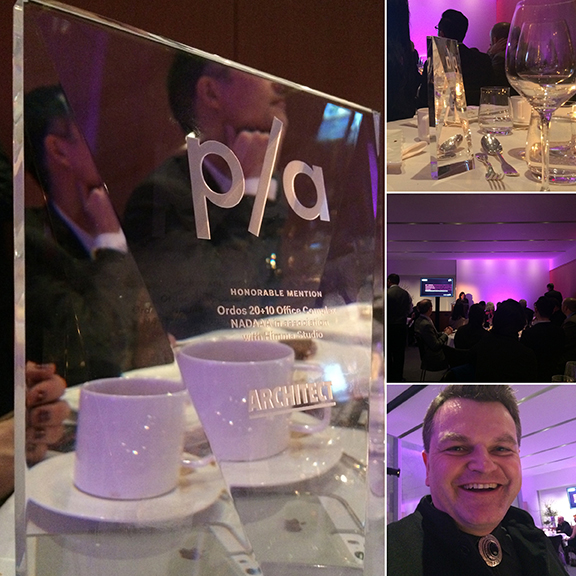
Comments Off on 2015 P/A AWARDS CEREMONY
 NADAAA is currently seeking a Designer to join our Fabrication Lab (NADLAB), as well as our architectural team, in the design of progressive projects ranging from gallery installations to large institutional buildings. Applicants must have the following qualifications to be considered for the position:
Other position qualifications include:
Type of Employment: Full Time Location: Boston Start date: ASAP Contact Information: Please submit qualified resumes and portfolios in PDF format under 20 MB to nada@nadaaa.com. Please do not send hard copy portfolios.
Comments Off on NADAAA IS HIRING
NADAAA!
The Glasnevin Chapel won the Hobson award at the 2014 BSA Design Awards Gala last night. This is NADAAA’s second Hobson award, the first was won in 2012 by the Hinman Research Building.

Comments Off on AND THE HOBSON GOES TO…