NIGHT AND DAY

Posted on September 16th, 2014 by tberesford

Posted under: _Daniels Building, construction

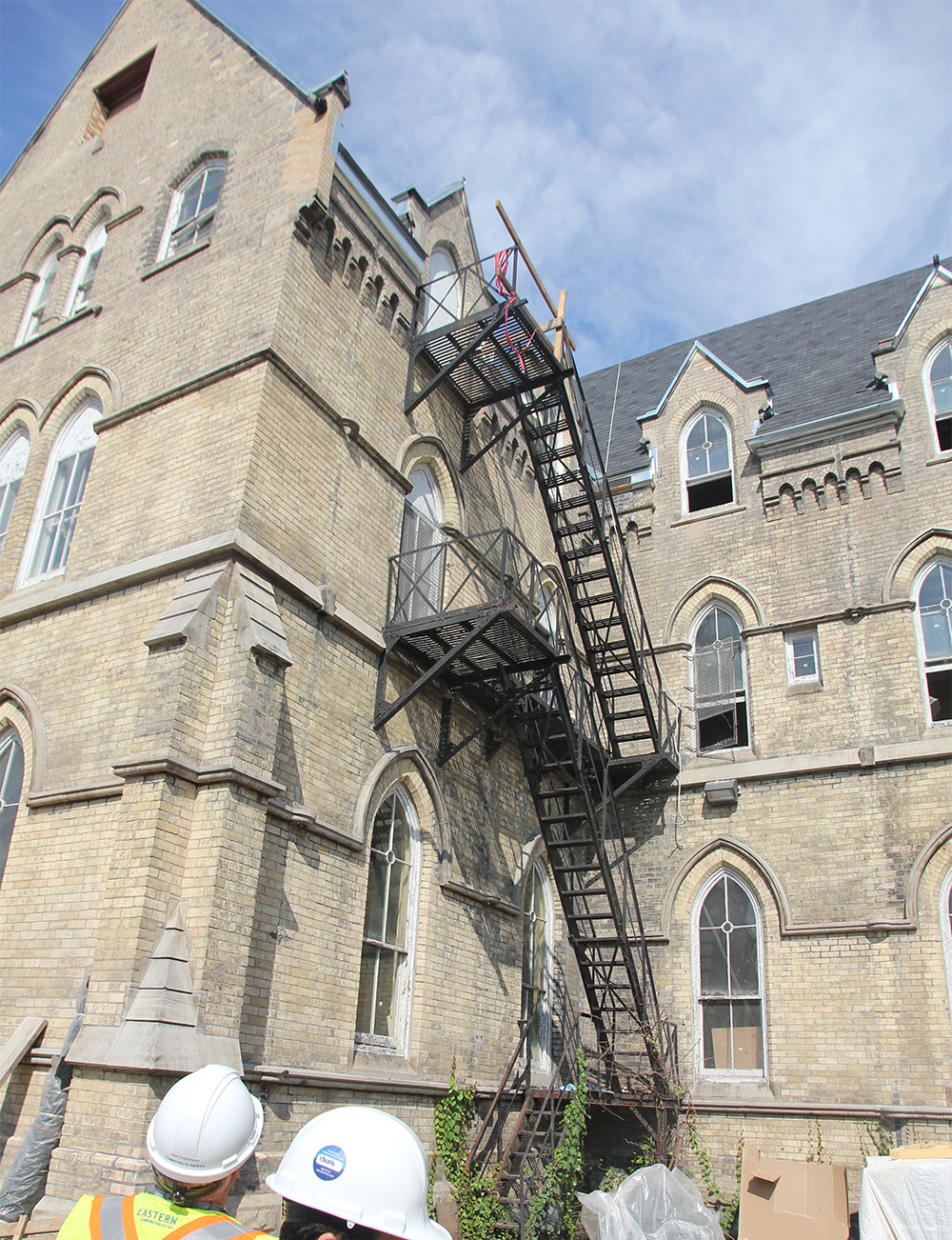
The results of vine removal and ongoing masonry cleaning at 1 Spadina Crescent, as part of the Phase I Renovations for the University of Toronto Daniels Faculty of Architecture, Landscape + Design. (In collaboration with Adamson Associates and ERA Architects).

clean

AFTER: 1 Spadina Crescent, west wing pictured after vine removal and masonry cleaning (August 2014)

dirty

BEFORE: 1 Spadina Crescent, west wing pictured (December 2012)

Comments Off on NIGHT AND DAY

Nader lectures at UCLA

Posted on August 11th, 2014 by Lisa LaCharité

Posted under: _Daniels Building, construction, Lectures

Nader gives his lecture ‘Pedagogical Constructs’  at UCLA Architecture & Urban Design on October 27, 2014 at 6:30pm.

toronto-ucla-2014


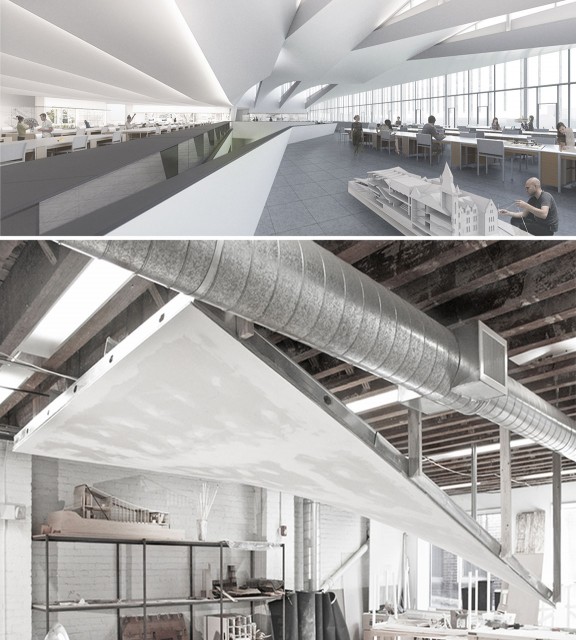
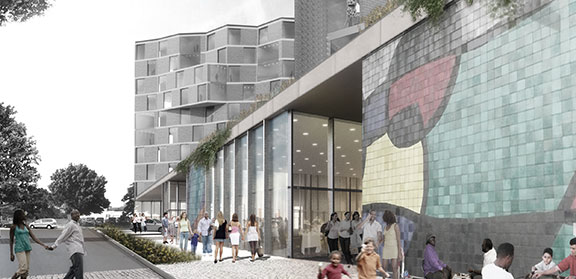
The above image is a rendering and mock-up for the Daniels Faculty of Architecture, Landscape and Design. See our NADLAB post on the mock-up for further details. 

Comments Off on Nader lectures at UCLA

SLAB XRAY: NERVOUS SYSTEM

Posted on July 19th, 2014 by tberesford

Posted under: _Daniels Building, construction

conduit_plan_combined2

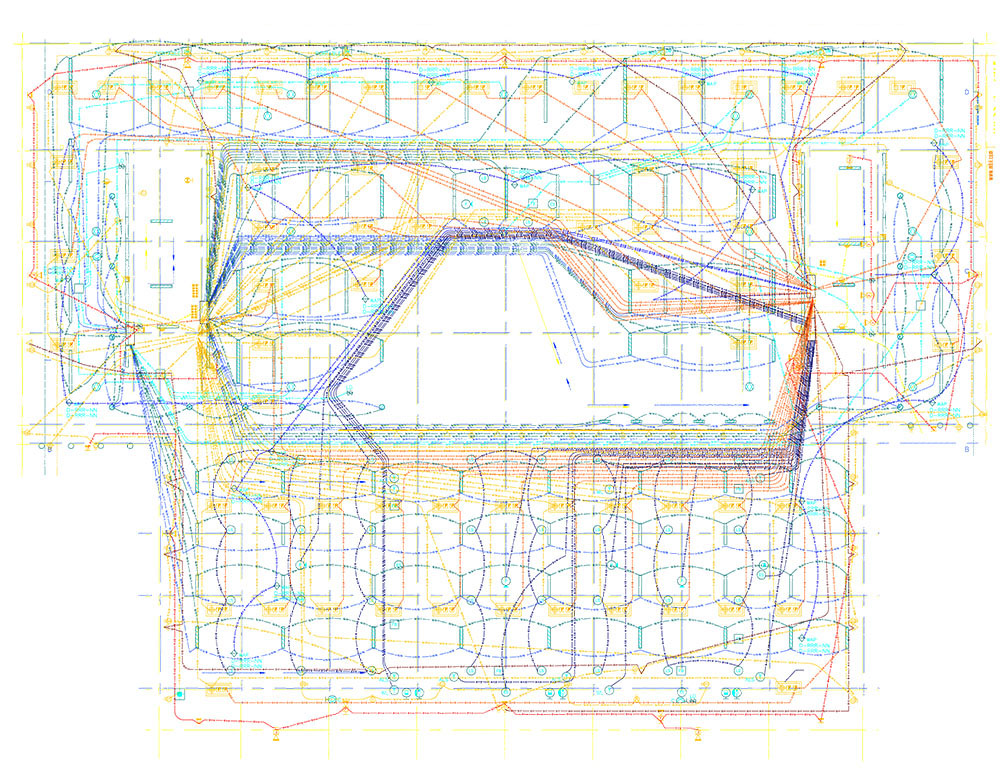
All slab-bourne conduit serving level 03/level 02 ceiling electrical, IT and A/V devices. (courtesy Mulvey Banani Intl Inc.)


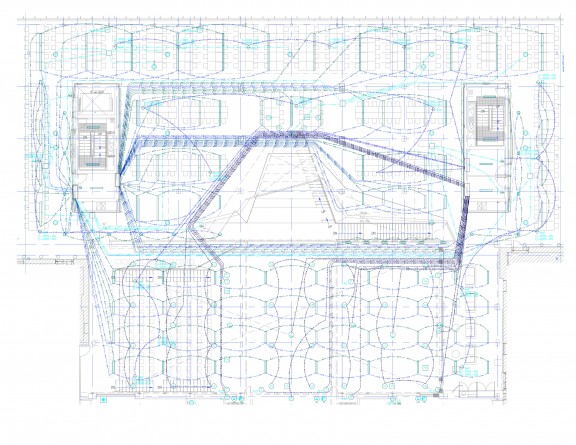
These are images of the electrical nervous system to be embedded in the concrete slabs supporting the graduate design studios at the new U of Toronto Daniels Faculty of Architecture.  Lines shown in cool/blue tones indicate conduit that will serve devices mounted to or embedded within the exposed concrete ceilings below.  Lines shown in warm tones indicate conduit that will serve floorboxes at the top of the floor slab.  If we are lucky, we will be able to embed/conceal all of these conduits within the congested 12 inch thickness of concrete also containing hydronics for radiant cooling/heating, reinforcing bar, and voids that will reduce the slab’s dead load self weight.

conduit_plan_floor

conduit_plan_ceiling

conduit_plan_ceiling


There are two major bottlenecks that correspond roughly with the locations of the “spinal cord/brain”: the electrical and IT closets located at the the northeast and northwest stair cores, respectively.  From these locations, conduit fan out in all directions.  However, the local bottlenecks are exasperated by a large, floor-through penetration right at the center of the plan, which corresponds with a large amphitheater sunken to the level below.  We will try to mitigate the need for additional slab thickness at areas of congestion by omitting slab voids in those locations.


conduit_plan_floor_detail

Detail of data (orange) and electrical (yellow) conduits serving cast-in floor boxes at the graduate design studio level. (courtesy Mulvey Banani Intl Inc.)


Comments Off on SLAB XRAY: NERVOUS SYSTEM

Green Good Design Awards

Posted on June 27th, 2014 by Sia Herr

Posted under: Awards

NADAAA has always been dedicated to advancing construction and green development. We are proud that two our projects, University of Melbourne FABP and University of Toronto DFALD, are receiving Green Good Design Awards for 2014.

good_design

Comments Off on Green Good Design Awards

MASONRY SURGERY + TIMBER PROSTHETICS

Posted on June 24th, 2014 by tberesford

Posted under: construction

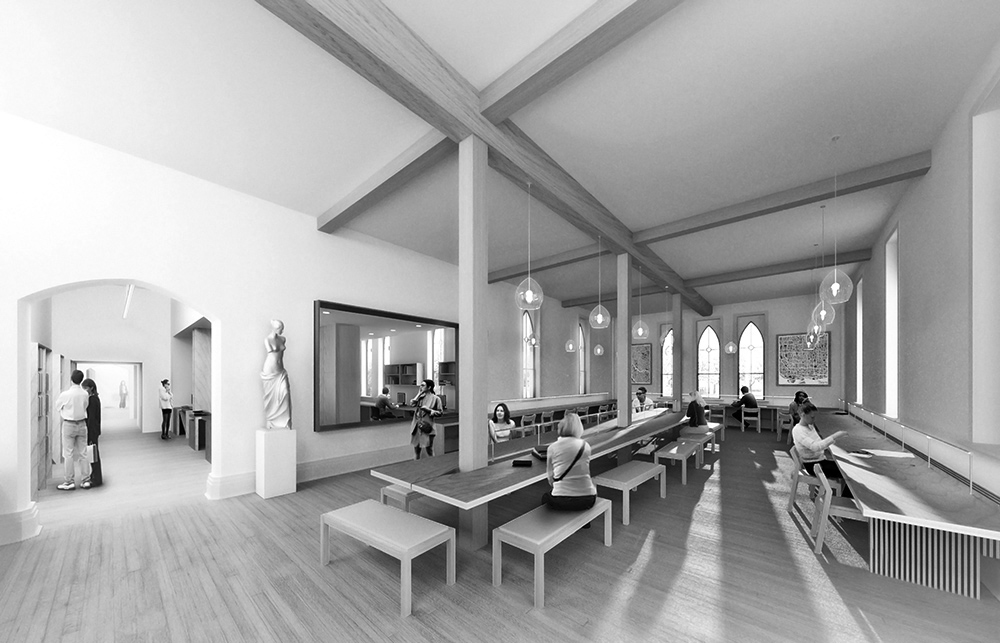
dfald_libraryView1_highRes

Another dispatch from the ongoing Phase I renovation of Knox College at 1 Spadina Crescent for the University of Toronto Daniels Faculty of Architecture, Landscape and Design.   Structural masonry retrofit work is costly, and NADAAA has endeavoured to avoid it wherever possible in the project.  Nevertheless, there were several locations where the requirements of the program, security or new building services have necessitated masonry removal and the installation of steel lintels to transfer loads bearing down from above.  Depending on the lintel’s span/size of opening below, the shoring work required to stabilize loads above can be complex and time-consuming.

ABOVE RIGHT:  NADAAA rendering of the new library study room, complete with new masonry opening to suit a service counter and clear site-lines from the adjacent library workroom, as required by the client’s program.  (see rectangular opening adjacent to the existing arched doorway).


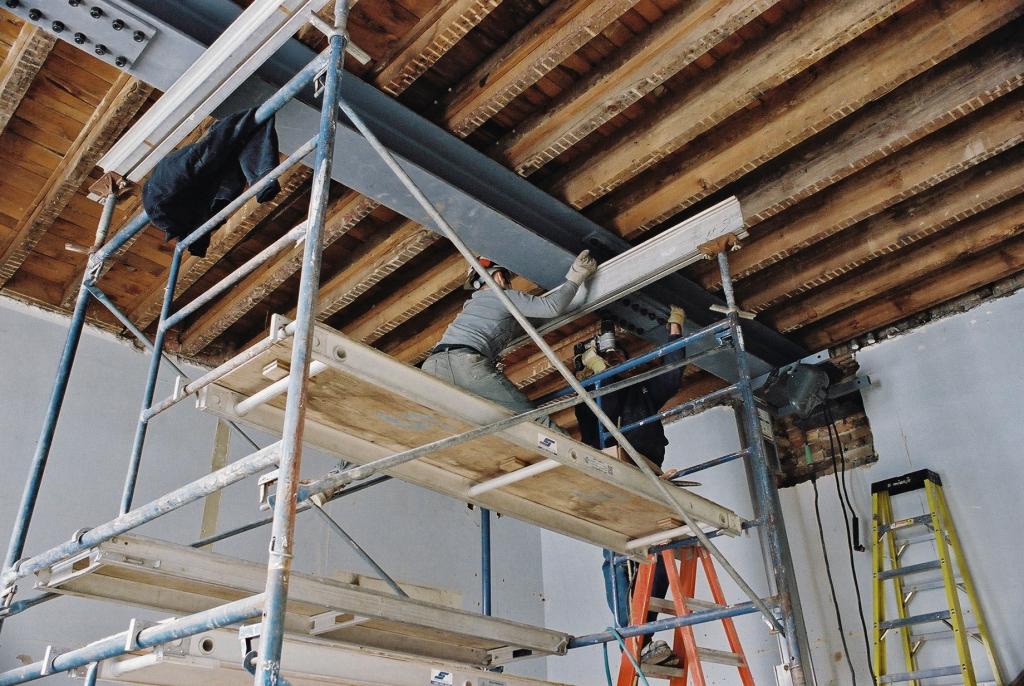
IMG_9986

ABOVE: Needle shoring was required to stabilize the loads above for work to proceed: masonry demolition and installation of the permanent steel w-section lintel for this 3.5 meter wide opening. “Needling” gets its name from the (in this case aluminum) structural sections penetrating the masonry, and resting on shores at either side of the wall.


f-29.dan-14-32a

ABOVE: Inspection of the building’s original sawn timber joists by a wood specialist uncovered the need to reinforce the floor assembly to achieve code compliance in many locations. This was accomplished either by sistering steel c-channels to each individual joists (thereby maintaining maximum ceiling clearance), or through the installation of a new steel girder below mid-span of the joists, as shown above.  (photo courtesy Peter MacCallam / The Daniels Faculty)


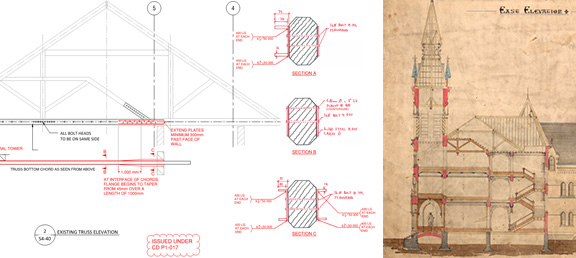
Untitled-11

ABOVE LEFT: The wood consultant also identified the need for reinforcement of two monumental timber trusses that support the attic and roof above the central block on the top level.  Entuitive, our structural engineer, provided steel plate strapping, bolted to either side of the cracked bottom timber cords in response to the wood consultant recommendations.   (sketches courtesy Entuitive Corporation).  ABOVE LEFT: An original building section drawing dated 1873 shows the referenced space and trusses, which flank the central masonry tower. (courtesy U. of Toronto archive.


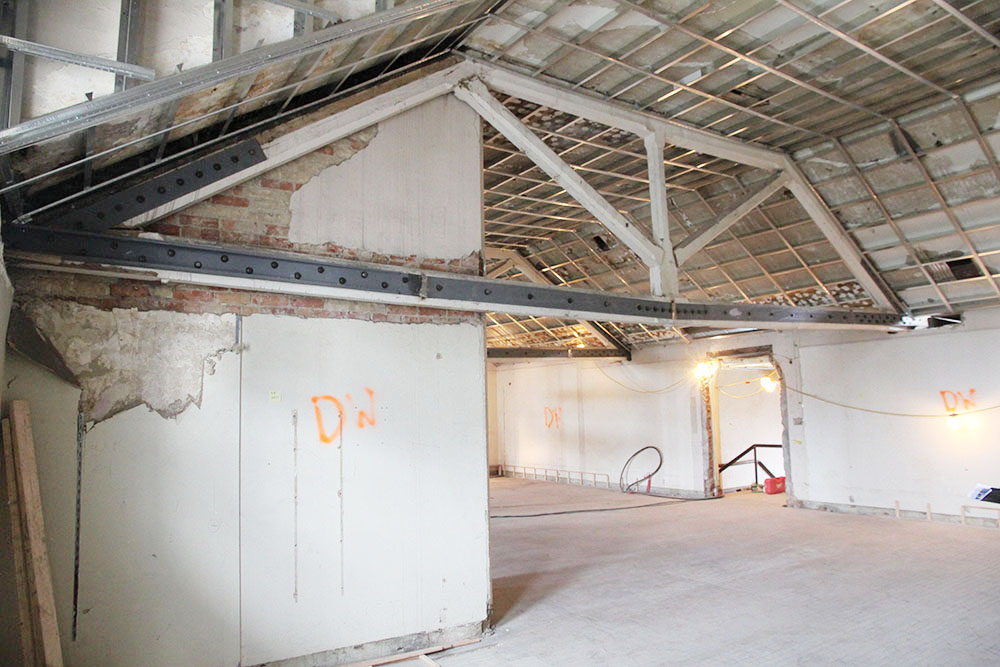
IMG_0088

ABOVE: The timber trusses, after installation of steel plate strapping. These will be painted a uniform color. The clear span allows this feature space to support various configurations of graduate studios and student exhibition/crit space over the course of the phased project.


Comments Off on MASONRY SURGERY + TIMBER PROSTHETICS

Reinstating the Convocation Hall

Posted on June 16th, 2014 by tberesford

Posted under: construction


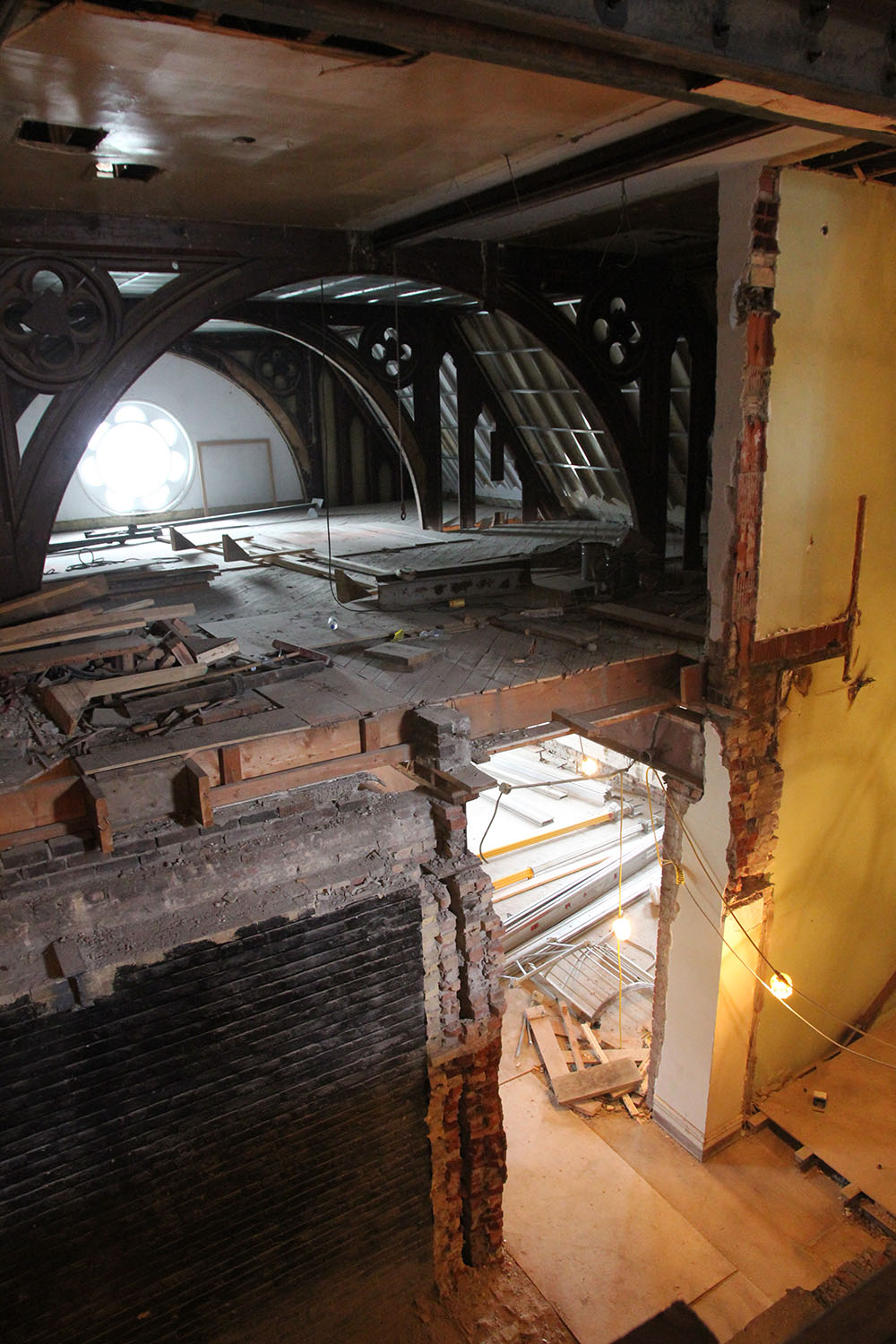
Phase I renovation of Knox College at 1 Spadina Crescent is progressing for the University of Toronto Daniels Faculty of Architecture, Landscape and Design.  Currently, demolition, restoration and structural work is underway at the former original Convocation Hall, which forms the east wing of the neo-gothic structure.  The monumental triple-height volume of the hall had been subdivided into three floors during  19040’s era alterations to suit the needs of the former Connaught laboratories.  The current renovation calls for a double-height space to be carved out of the second level, with intent to at least partially reinstate the grandeur of the original hall.

IMG_0069

ABOVE: Ongoing demolition and structural retrofit to the fomer Convocation Hall at Knox College / 1 Spadina Crescent.  The original timber trusses have been exposed at level 03 as seen beyond.  The Level 03 floor structure in the foreground has been removed in preparation for shoring to support a new composite mezzanine floor.  Steel moment frames have been installed where some of the original timber trusses were removed.  The moment frames serve to stabilize lateral forces on the building while also retaining the open floor clearance at the level 03 mezzanine.  The level 03 floor seen beyond in the image above will be removed after the mezzanine slab is poured.  In the foreground, walls added in the 1940s that supported storage vault rooms and a stair are being removed.


Untitled-1

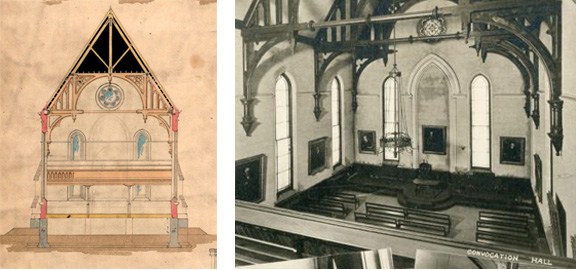
ABOVE LEFT: Original sectional drawing of the Knox college convocation hall (1873). ABOVE RIGHT: The convocation hall in its original condition.  The timber hips shown below the timber trusses were removed when the hall was subdivided into three floors.


IMG_0048

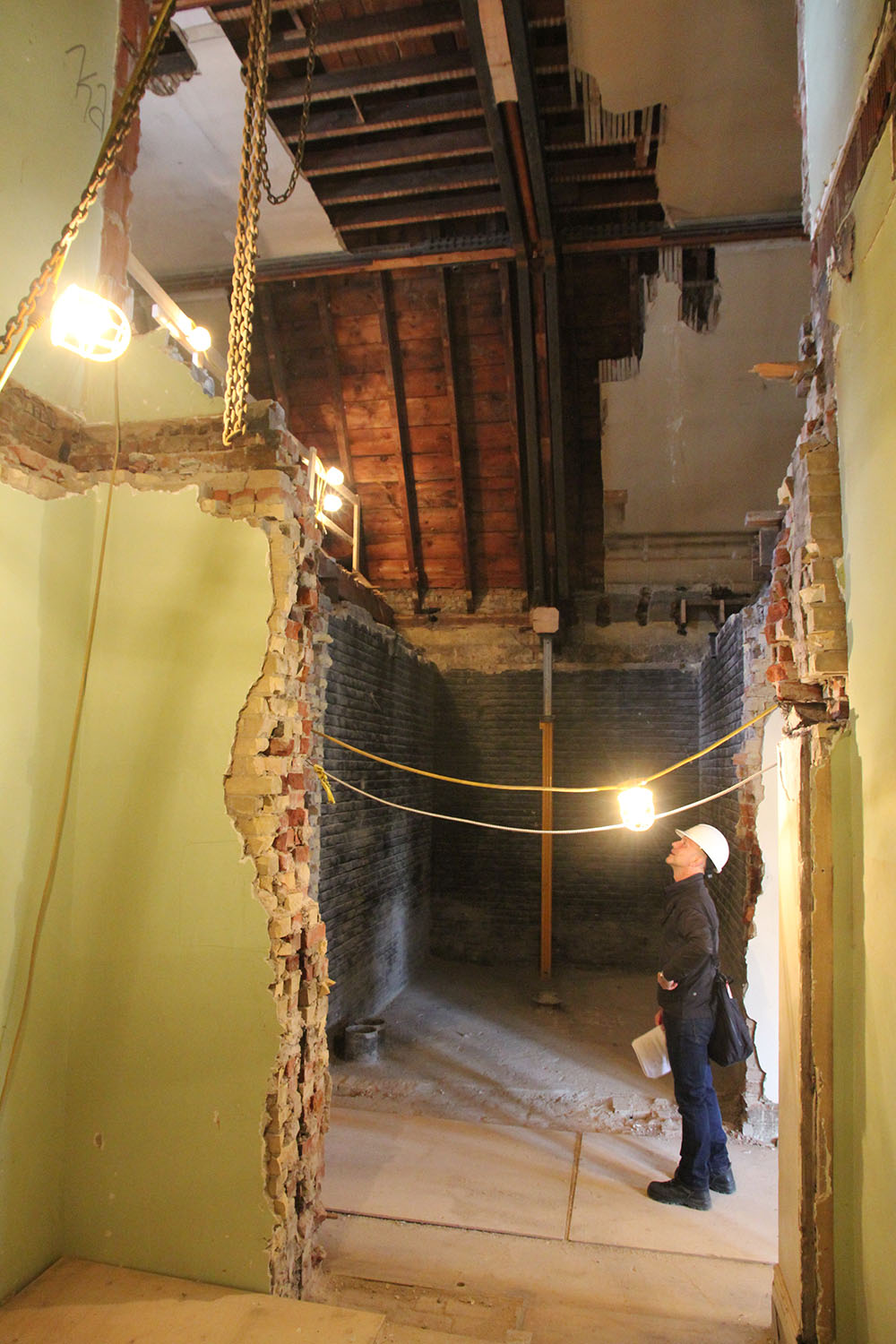
ABOVE: this image was taken from level 02, below the floor structure that was demolished in preparation for the new level 03 mezzanine structure. This space was also flanked by a stair and a series of storage vaults, both of which have been removed.  The bottom cord of the original timber truss in this zone has truncated/sawn in this location, and a pair of c-channel moment frames have been sistered to either side of the upper cord.


Document1 Page 004

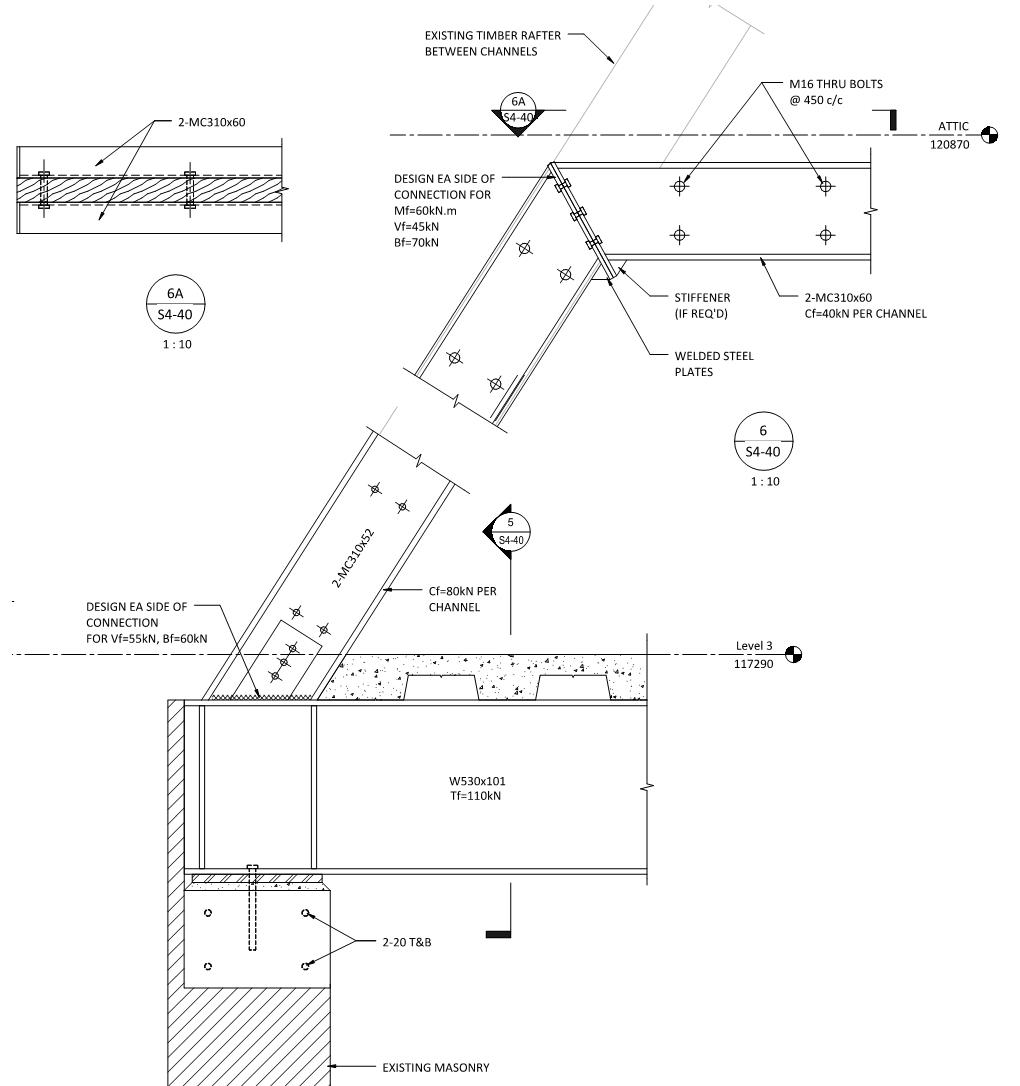
ABOVE: A structural detail indicating the retrofit c-channel moment frames, and the new composite mezzanine slab. (courtesy Entuitive Corporation)


IMG_0066

ABOVE: A detail of the original timber truss top cord, with sistered c-channel moment frames installed at either side.


Document1 Page 003

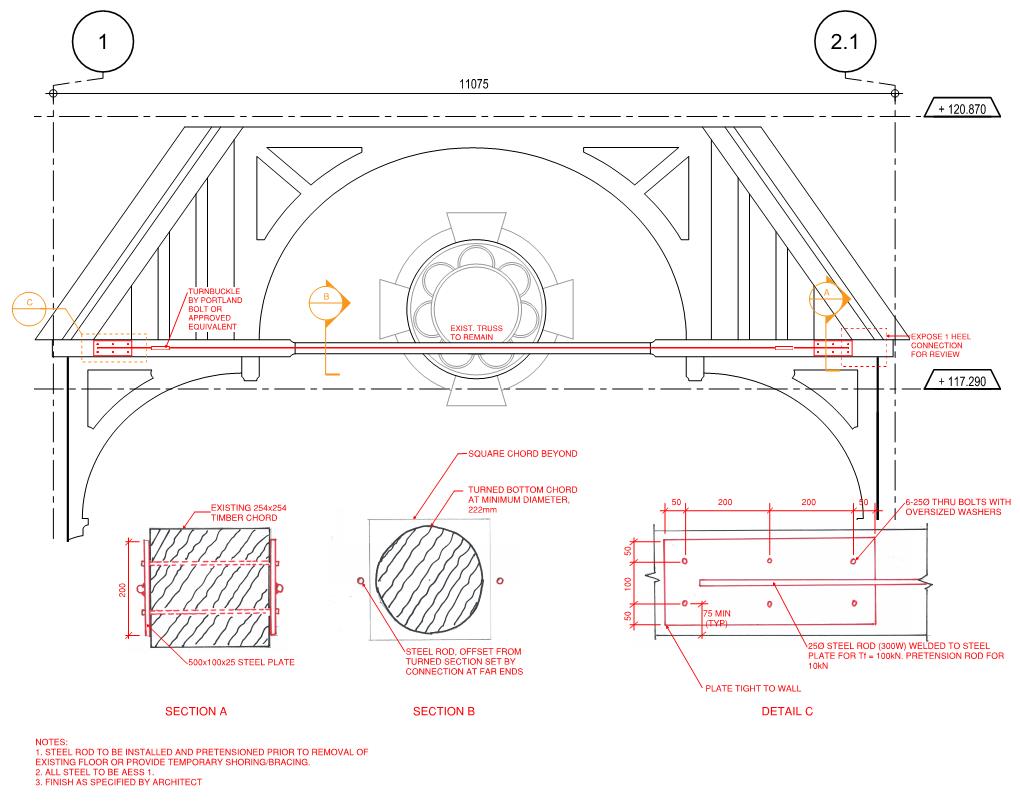
ABOVE: Sketch indicating retrofits to repair damaged timber trusses at the east end of the former convocation hall. The original trusses will be featured in this location upon removal of the existing level 03 wood floor structure. This sketch documents steel tension rods that have been installed to relieve forces on the existing timber ties (which have sustained cracks/damage over the years).  (courtesy Entuitive Corporation)


IMG_0055

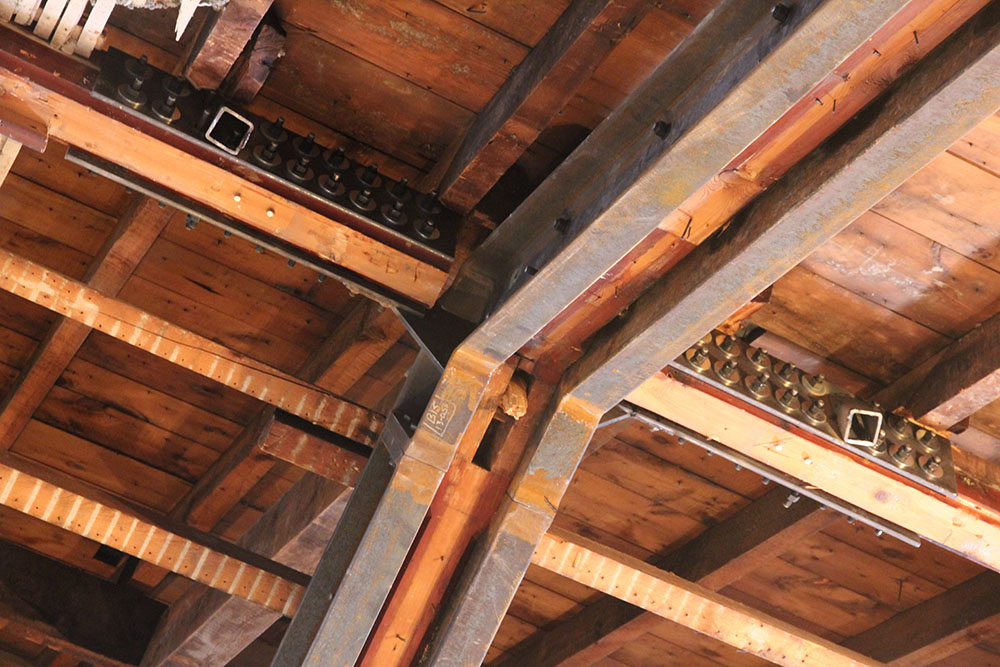
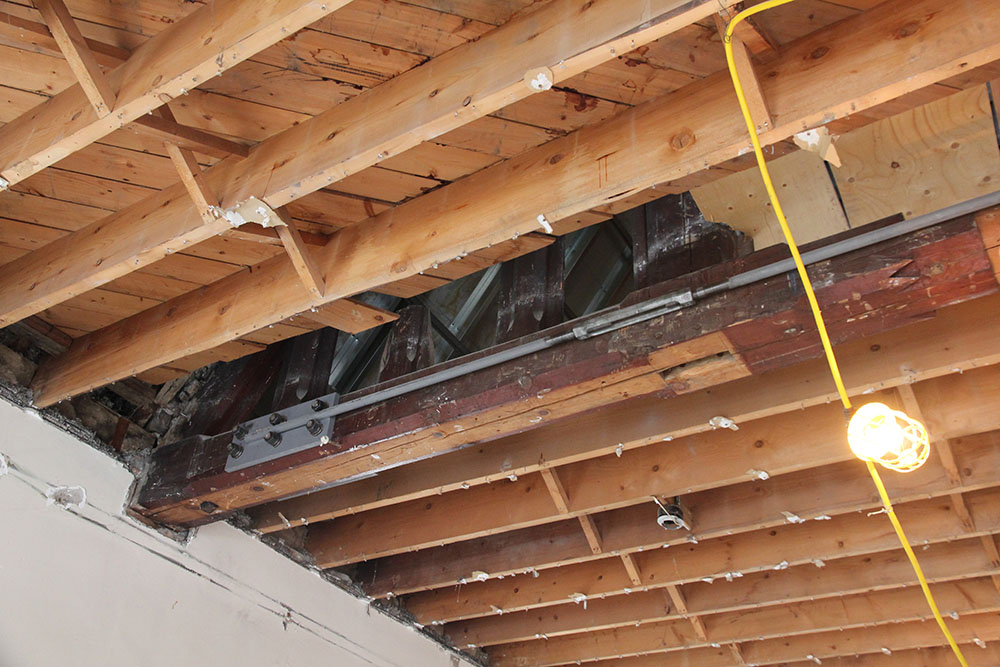
ABOVE: Detail showing steel rod reinforcement installed to reinforce the bottom ord of the original timber trusses. The level 03 floor structure on either side will be removed to open a double-height space, reminiscent of the original convocation hall.  Original hip support to the bottom of truss had been removed at the time of previous renovation.


Comments Off on Reinstating the Convocation Hall

BSA Design Gala

Posted on February 4th, 2014 by Sia Herr

Posted under: Awards, Events

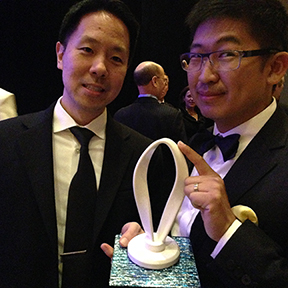
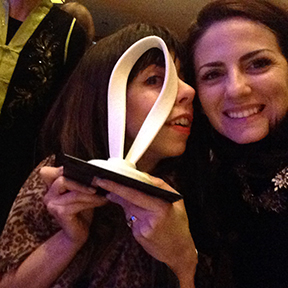
Last Friday, NADAAA joined the rest of the Boston architecture community in celebrating the 3rd Annual BSA Design Awards.  NADAAA won an Unbuilt Architecture Award for University of Toronto DFALD, Unbuilt Architecture Honorable Mention for New Hampshire Retreat and the People’s Choice Award for Macallen Building.  Thank you to everyone that voted! More photos here.
bsa3bsa2
bsa4bsa7
bsa6bsa5
bsagroup

Comments Off on BSA Design Gala

DFALD Section Model

Posted on January 22nd, 2014 by pmacdowell

Posted under: _Daniels Building, NADLAB

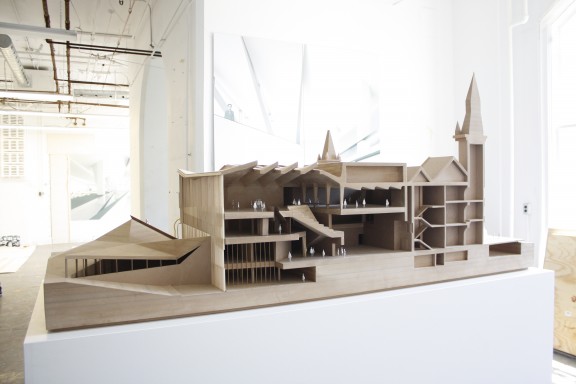
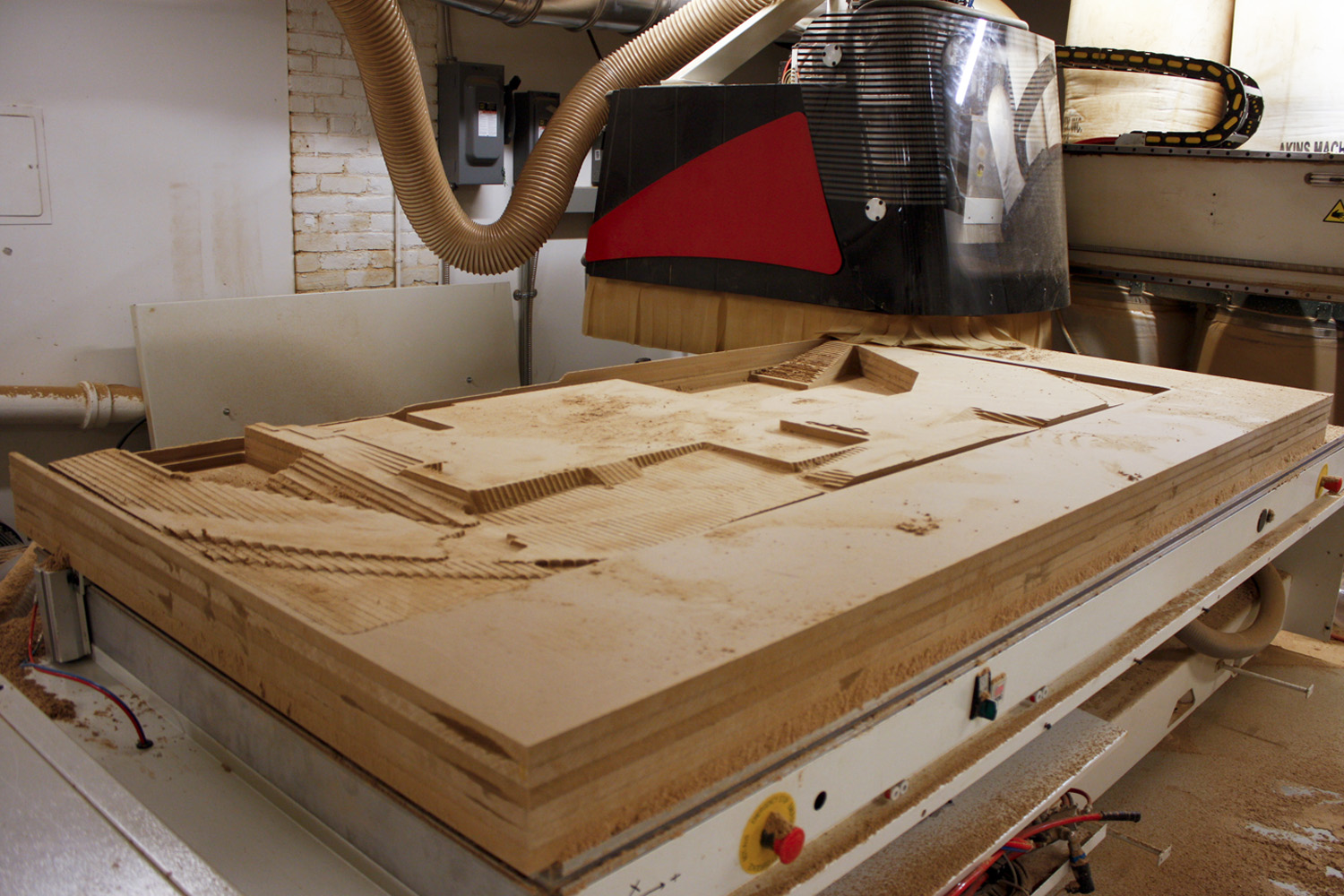
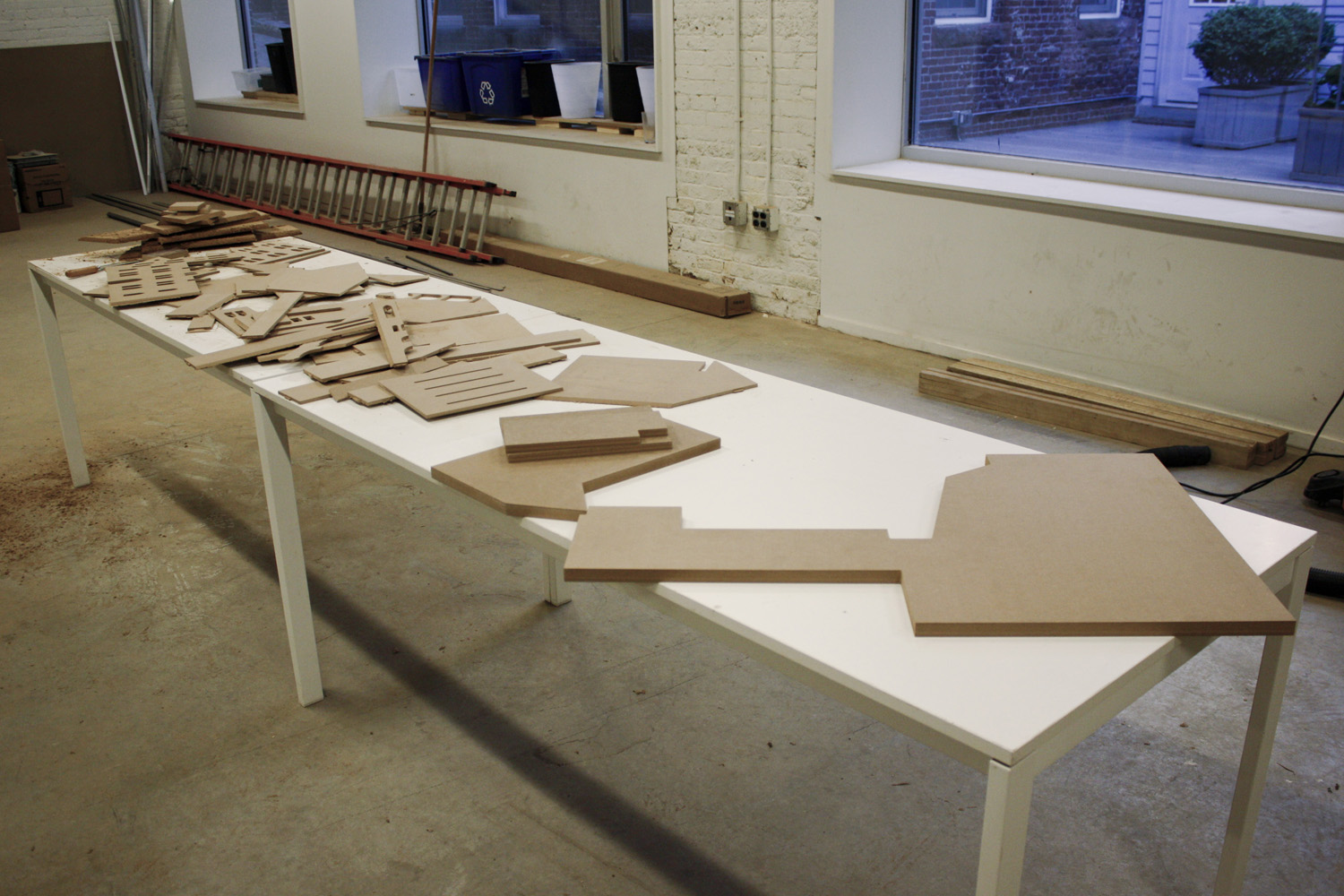
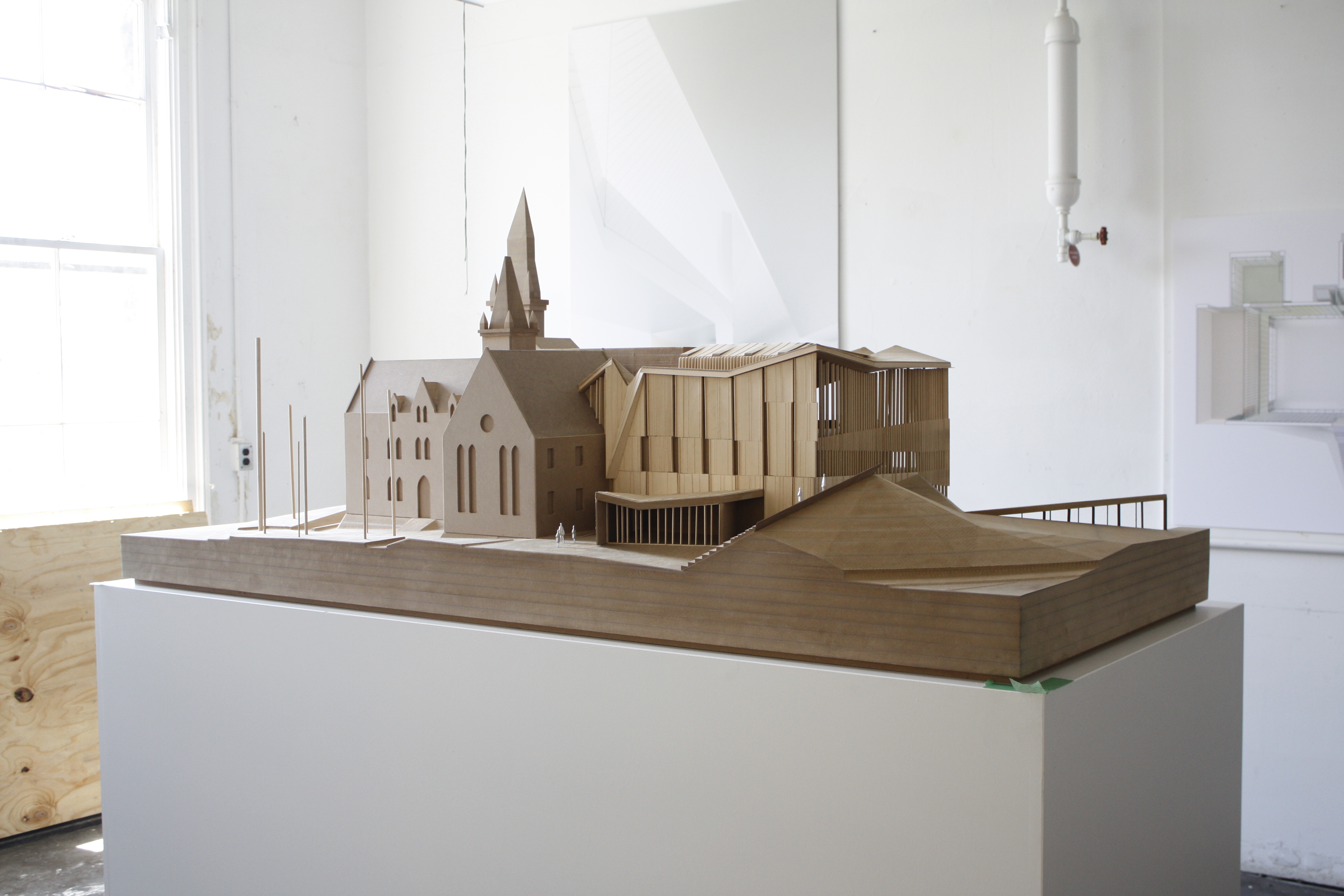
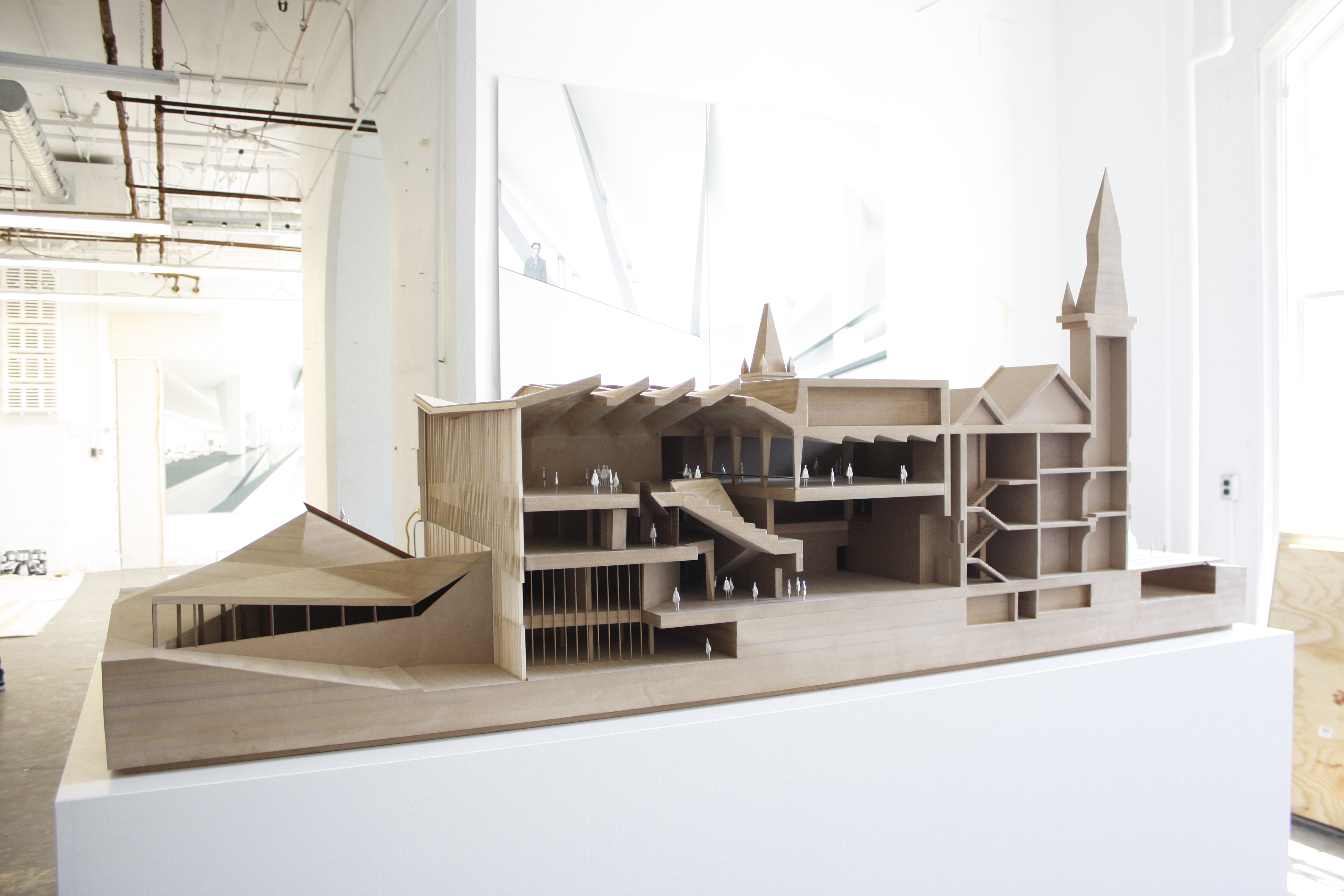
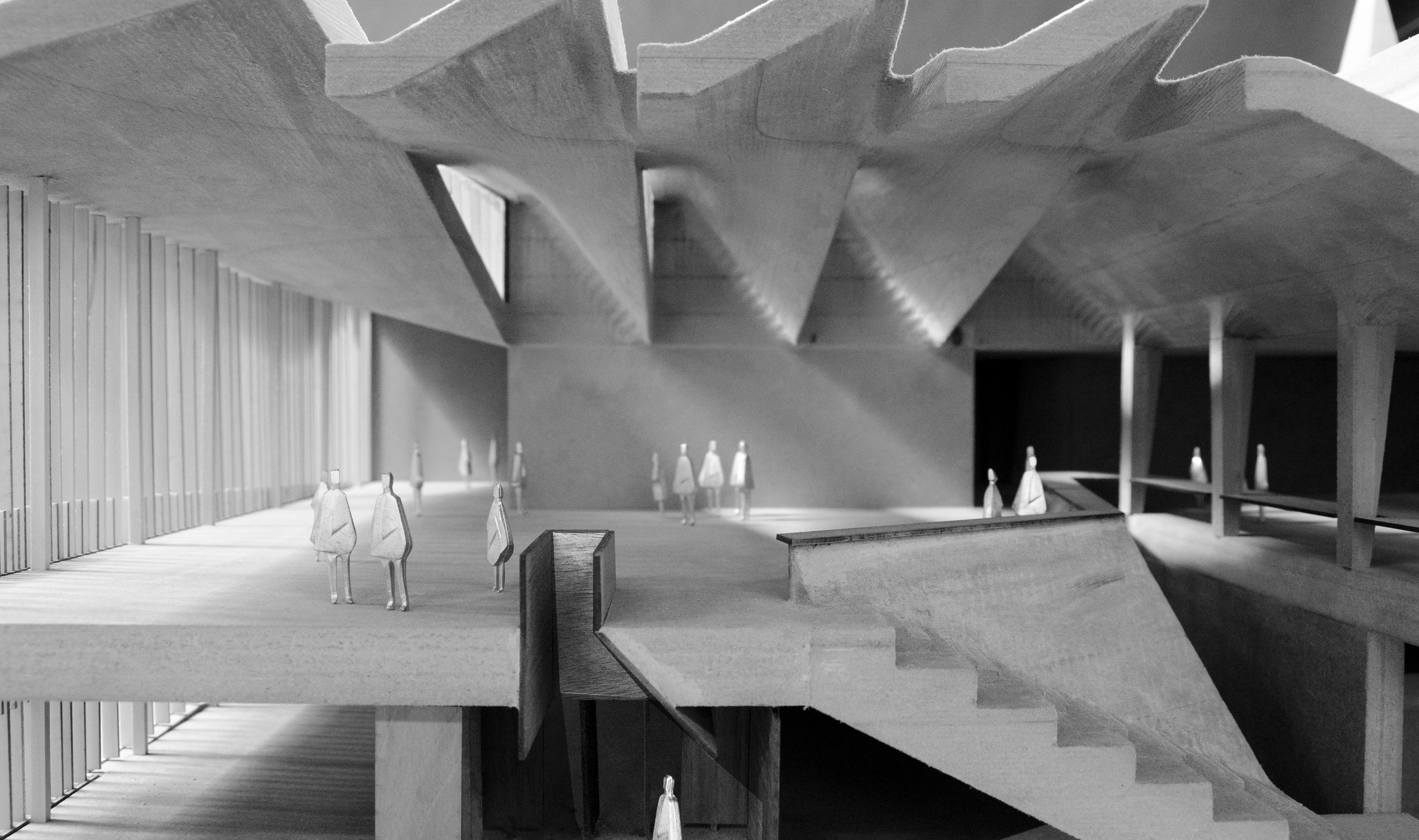
A large section-model of our proposed design for the University of Toronto Daniels Faculty of Architecture and Urban Design was commissioned for an on-site exhibition.  Challenged by an extremely fast delivery schedule, the model was an opportunity to flex our digital design and fabrication capabilities.
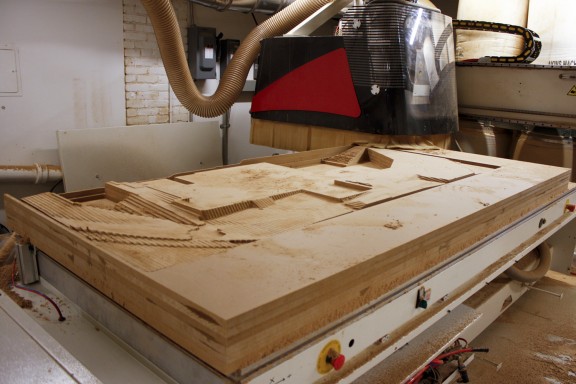
sectionModel_01The 7’x3′ landscape is cut on our CNC router out of laminated fiber board.
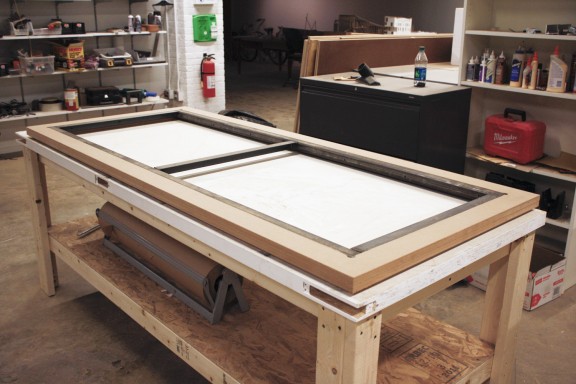
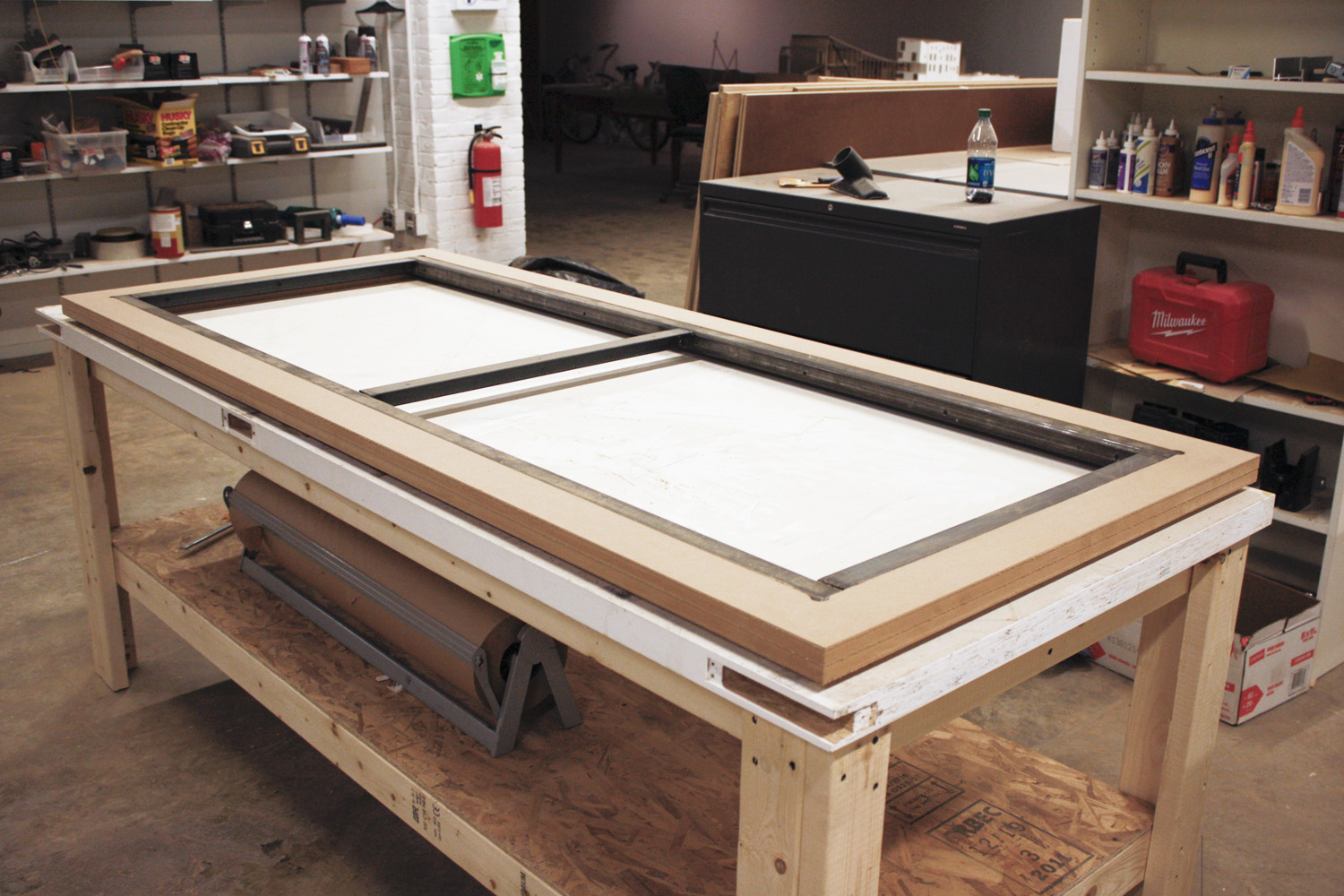
sectionModel_03The model base incorporates a internal steel frame for strength and rigidity.
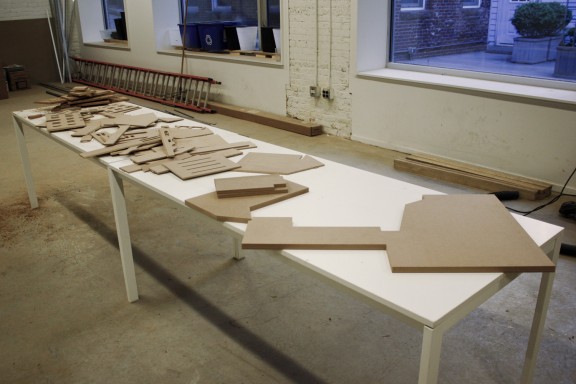
sectionModel_11aModel pieces are cut on the router, cleaned, and arrayed for ease of assembly
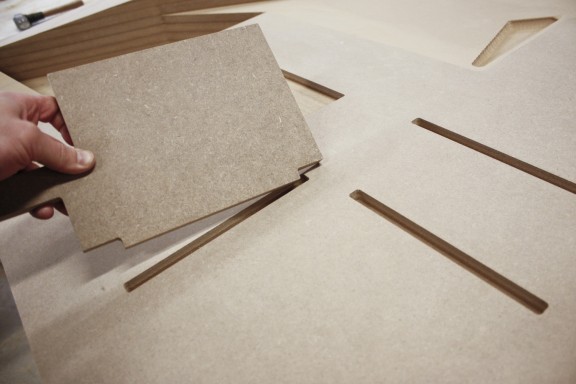
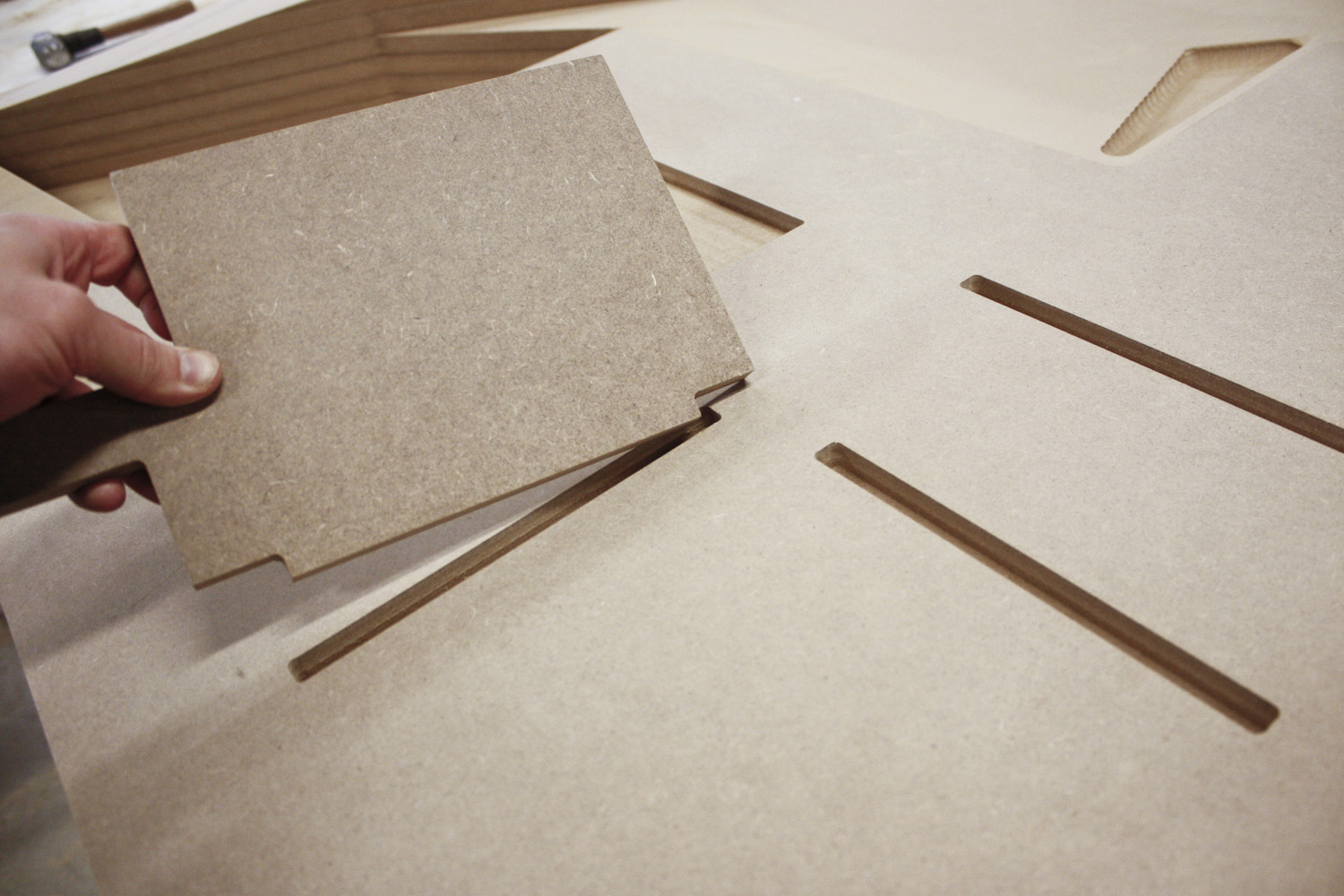
sectionModel_08A system of interlocking joints ensures strong, accurate connections and incredibly rapid assembly.
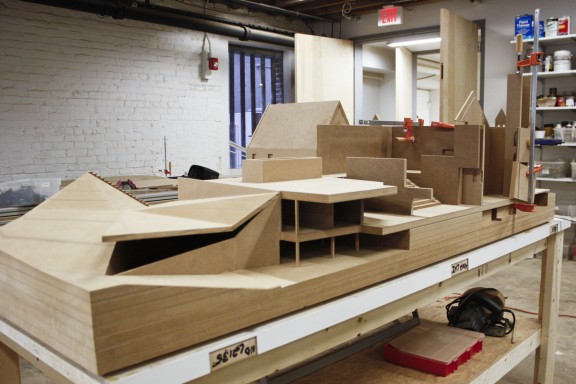
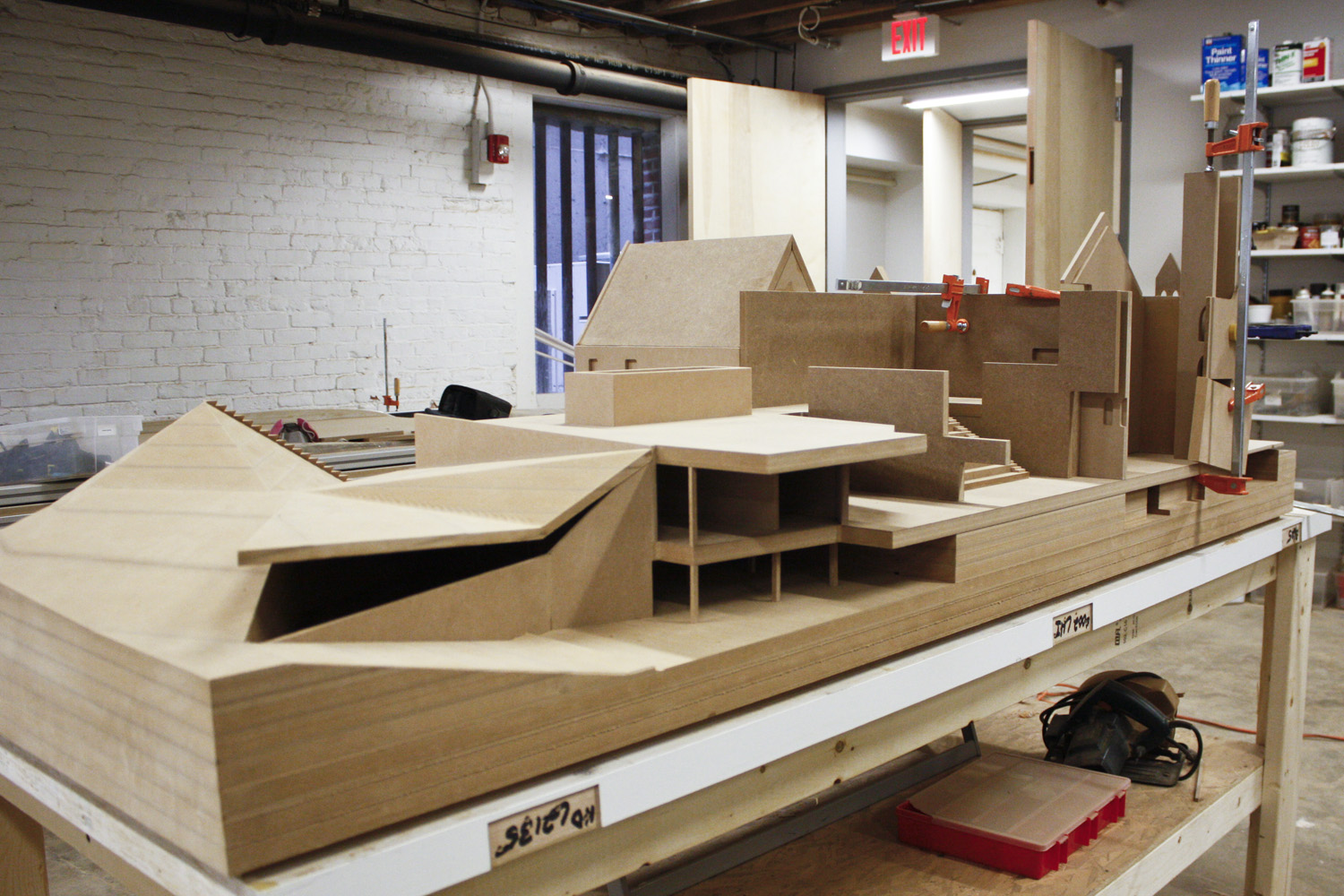
sectionModel_13The model is pegged, clamped, and glued like a robust piece of furniture.

_MG_0320

_MG_0321The completed model on display at the University of Toronto Faculty of Architecture and Landscape Design.

DSC_1017BMany parts of the model, like the roof surface, required milling on both sides.
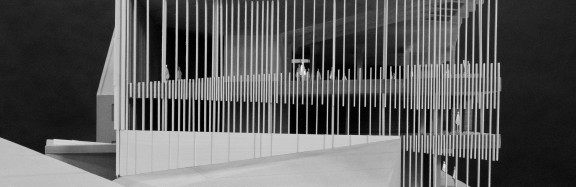
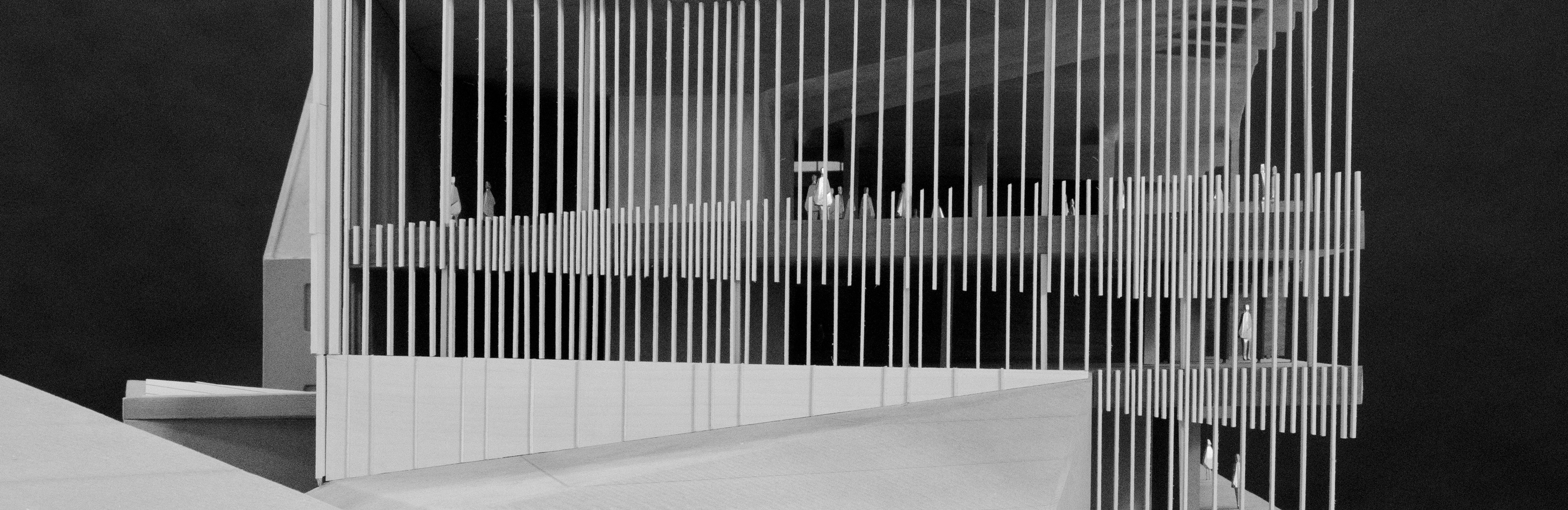
DSC_1024A laser-cut jig was used to accurately position the decorative fins on the north facade of the building.


Comments Off on DFALD Section Model
NOTES FOR THE NEW YEAR

Posted on January 6th, 2014 by Katie Faulkner

Posted under: Competitions

On January 2, NADAAA turned three years old, which seems as good a time as any to look back on 2013 and look forward to the New Year. While we never forget our legacy of Office dA, we annually set goals that surpass achievements and provide opportunity to expand our craft. Over the past year, the paramount objective remained to enable the designs to be built, with a close second being the expansion of our fabrication lab to both inform the design and support the first objective of GETTING IT BUILT. Thirdly, NADAAA continued to expand globally, with projects in Melbourne, Toronto, Villa Varoise. Tropez, and Kuwait. Closer to home, the office sought to more boldly occupy our Lower Roxbury address by renovating our storefront, as well as work with Urbanica toward the successful development of Melnea Cass’s Parcel 9. As a gift to both our peers and ourselves, we endeavored to invite the broader public to scheduled gallery shows as a way to inspire conversation and debate regarding the potential of Architecture. KuwaitHouse_SM
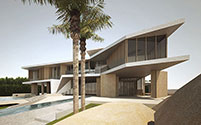
KUWAIT HOUSE: A complex residential organization, the result of nuanced mediation between public, private and services area.

1920washington

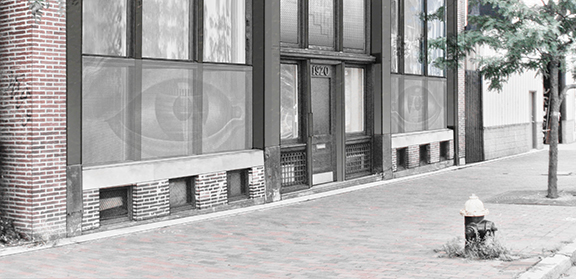
1920 WASHINGTON ST: NADAAA facade opens up onto the street with eyes wide open.

Building the Parts and the Whole  Several projects were completed: Cornell Bridges, Beacon Street Residence, 57 East Concord, and SGH NY Office and Furniture. For Aesop USA, we delivered stores in East Hampton, Toronto, Venice Beach, San Francisco, and Hong Kong. This was the first year that we detailed, fabricated, and installed significant components of our design work, a trend that began with Aesop Toronto. During the last quarter of the year our team enjoyed the success of executing a full scale mock-up of a simple-to-install but complex-in-appearance gypsum ceiling – demonstrating to the Construction Manager the system’s feasibility, and resulting in a significant cost reduction of the sub consultant’s estimate.

Reaching Globally  Architecture has always been an international profession, made more possible than ever through digital platforms and teleconferencing. New opportunities were explored in Saudi Arabia, Basra, and Tehran, while ongoing work continued in France. Two competitions were entered: a tower for Parramatta, Australia; and a chapel in Ireland. Phase One of University of Toronto, Daniels Faculty of Architecture, Landscape and Design broke ground in June; University of Melbourne Faculty of Architecture, Building and Planning proved to be moving well ahead of schedule with substantial completion anticipated in 2014.

CornellBridges_SM

CORNELL BRIDGES: Safety mesh barriers work in tandem with structural configurations to form a new figure over the ravines in Ithaca. Photo by John Horner

CentenaryChapel

CENTENARY CHAPEL: A concrete suspension structure forms the vault for the funerary space of mourning.

Working in the Neighborhood  We had mixed success in our own back yard. On the one hand there were multiple successful exhibits; we kicked off 2013 with PINNED UP, an exhibit demonstrating the developments of NADAAA’s work. In April, NADAAA introduced Drawing Surfaces: Computing and a Vintage Pen Plotter. The November show, Makers in the Making, featured the work of six MIT faculty who share a progressive stance toward their respective disciplines.

Becoming more involved in the urban design of our own city is a goal to carry forward. Watching much of the current Boston construction from the sidelines, we remain committed to proving that excellent design does not burden Project Costs. Like everyone else in town, we are watching the transformation of Dudley Square thanks in part to the renovated Ferdinand’s Building, and we remain confident that our block is not far behind. A small contribution will be the storefront development (the design for which is complete, provocative, and approved by the Washington Gateway Main Street) of our offices at 1920 Washington Street. A larger stake would be the commencement of Parcel 9, a mixed used development on Melnea Cass Boulevard featuring a hotel, housing, retail and underground parking.

Finally, the greatest achievement of 2013 remains the collective talent of NADAAA employees, who take the firm’s ambitions as their own, and somehow make possible the impossible. Their abilities, ingenuity, and hard work continue to amaze our clients as well and Nader, Dan, and me.

May all of you find as much joy in your work as we do in ours — Happy New Year from all of us at NADAAA.

Paramatta

PARRAMATTA: The Gemini Towers help to form a new skyline for Sydney, creating a new hybrid that engages the urbanism of the site.

PARCEL 9  DEVELOPMENT: Mixed-use block designed to create a public base with a residential and hotel mass above.

Parcel_9

Comments Off on NOTES FOR THE NEW YEAR

Virtues of A Ruled Surface

Posted on December 18th, 2013 by Sia Herr

Posted under: _Daniels Building

In Shenzhen, Alexander D’Hooghe presents the virtues of a ruled surface to the Queen of Belgium using the University of Toronto Daniels Faculty of Architecture, Landscape and Design at 1 Spadina Crescent as an example.

UOT_Queen-Visit

Comments Off on Virtues of A Ruled Surface